The first meeting is often the easy one. Someone offers a table, everyone brings a bottle and the conversation runs late. The harder moment comes a month later, when nobody knows who is buying, what it should cost or whether the next date was ever agreed.
Start a wine study group with one shared purpose, a spending rule and a named owner for the next session. Interesting wines help, but clear arrangements let people keep coming without one generous organiser quietly doing everything.
Agree What People Are Joining
Ask each person what they want to learn and how much experience they have. “Understand the wines we buy” needs a different pace from exam preparation. A mixed group can work if the questions and vocabulary leave room for beginners.
Agree a cadence people can sustain, a start and finish time, and the practical access needs: step-free venue, seating, lighting, travel home, food requirements and an alternative way to contribute. Declining alcohol or a particular sample should require no explanation. Provide water and spittoons, allow observation and aroma discussion, and plan transport without driving after drinking. Sample sizes are for comparison, not targets to finish.
WSET’s advice on sustainable tasting practice supports groups as a way to share costs, maintain motivation and hear other perspectives. It also recommends agreeing a budget and a suitable theme. Our operating plan below is independent editorial advice, not a WSET-approved programme or evidence of a successful pilot.
Set the Cost Rule Before Anyone Buys
Specify a total bottle budget, venue costs, incidental supplies and who may approve an exception. A per-bottle ceiling alone leaves the buyer guessing how many bottles everyone expects.
In this fictional six-member group, the agreed session cap is £90: £72 for bottles, £12 venue contribution and £6 supplies. £90 divided by six is £15 each. If one person misses a session after purchases are committed and the agreed rule keeps their contribution payable, the other five still pay £15. If the group instead excuses that person, the same bill becomes £18 each. Decide this in advance, including exceptions for hardship, rather than presenting a surprise bill.
Nobody should buy first and seek approval afterwards. Use your ordinary shared note or chat for confirmations, and keep payment records in the tool you already trust.
Copy a One-Page Group Agreement
The example is a desk-based operating walkthrough with invented people and arrangements. Replace it with what your group explicitly accepts.
| Field | Synthetic example | Your agreement |
|---|---|---|
| Purpose and experience | Everyday buying confidence; mixed beginners | ___ |
| Cadence and access | Monthly, 19:00 to 20:30; accessible local room | ___ |
| Bottle and venue cap | £72 wine, £12 room, £6 supplies; £90 total | ___ |
| Buying approval | Buyer posts selection and total before purchase | ___ |
| Extra costs | Unanimous approval before committing | ___ |
| Attendance deadline | Confirm one week before meeting | ___ |
| Missed attendance | After committed purchase, contribution remains; discuss hardship privately | ___ |
| Alcohol choice | Observe, smell, spit or decline without explanation | ___ |
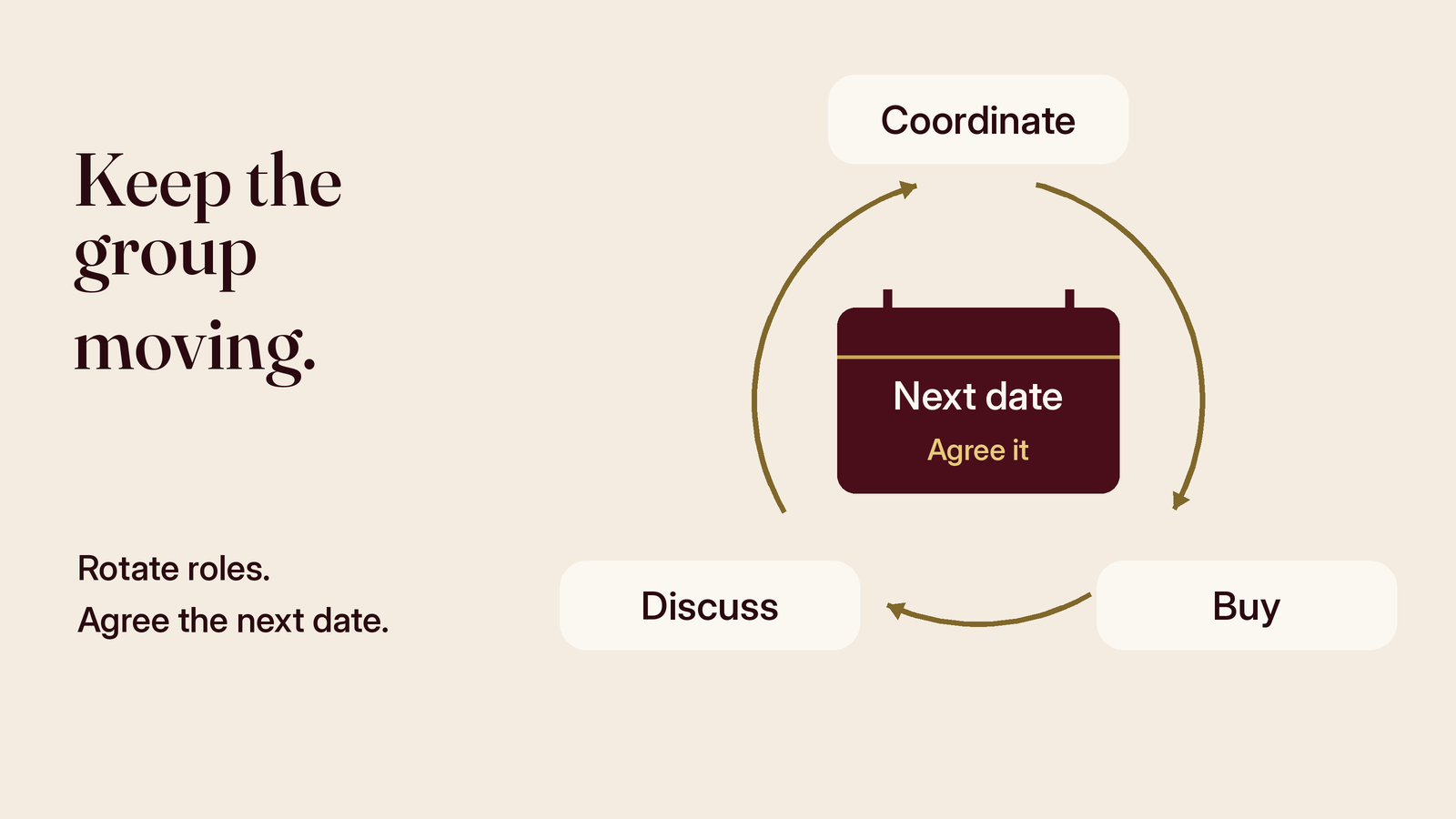
| Rotating roles | Coordinator, buyer and discussion lead change each session | ___ |
| Records | Individual notes first; shared question and follow-up afterwards | ___ |
| Next meeting | Date, coordinator and question agreed before leaving | ___ |
| Review | After session three and session six | ___ |
A coordinator arranges the date, access and confirmations. A buyer sources representative examples within the approved budget. A discussion lead protects quiet note-taking time and invites people to explain their evidence. One person can cover two roles in a small group, but name that workload and rotate it deliberately.
An Editable Six-Session Starter Plan
Six sessions are an example planning horizon, not a proven optimum. Use fewer if that is all people can commit to. The sample choices below are styles to source, not promises that any two bottles will display a precise contrast. Check the actual descriptions and labels before buying.
| Session | Written question and sample brief | Owners, date and follow-up |
|---|---|---|
| 1 | Which differences can we describe confidently? Two dry whites with contrasting stated styles | Alex coordinates; Jo buys; Kim leads; date ___; collect unclear terms |
| 2 | What makes a wine useful with our usual food? Two suitable contrasting styles, one agreed dish | Jo / Kim / Alex; date ___; record each person’s preference |
| 3 | Can we separate fruit character from sweetness? Choose examples with verified style information | Kim / Alex / Jo; date ___; review cost and access rules |
| 4 | What evidence supports a description of oak? Compare stated production information after notes | Alex / Jo / Kim; date ___; list unresolved production questions |
| 5 | Does the earlier preference still hold? Revisit one prior style with a new representative bottle | Jo / Kim / Alex; date ___; compare individual records |
| 6 | What should the next cycle answer? Members choose one question left open | Kim / Alex / Jo; date ___; decide continue, change or stop |
| Your next session | Question ___; sample brief ___ | Coordinator ___; buyer ___; lead ___; date ___; follow-up ___ |
Do not force these sessions into exam calibration. For that specific job, use the WSET Level 3 tasting-calibration workshop; the Level 2 tasting kit offers a separate sample-selection framework. Keep official course requirements with your provider.
Protect Independent Notes, Then Discuss
Give everyone a quiet first look before anyone announces a grape, a score or a favourite. Blind tasting is optional; visible labels can help newer tasters connect a wine with its context. The tasting-party guide handles practical service for an individual evening.
Use three separate lines in each person’s note:
- Evidence: what I observed and the words I can support.
- Preference: whether I enjoyed it and where I might serve it.
- Unknown: what I cannot tell, or need to check after the reveal.
For example, a fictional note might read: “Evidence: drying sensation persists after tasting. Preference: would prefer this with food. Unknown: cannot infer the ageing vessel.” That is more useful than converting a popular guess into a fact. Invite disagreement and look up unresolved claims after the meeting.
Finish with an Actual Next Step
Before leaving, confirm the next date, coordinator, written question and buying deadline. Give each unresolved question an owner and a manageable follow-up, such as checking a producer’s technical sheet. At the periodic review, ask whether the cost, pace, access and workload still work. Ending or pausing a group is acceptable if the purpose has changed.
Choose software after settling those arrangements. The wine club app comparison separates administration from tasting records. Sommo’s Sharing Party keeps ratings independent until the host reveals them and lets guests save personal results. Hosting is Premium; joining and rating are free. Keep your calendar, payments and agreement in your usual tools.
Use Sommo for the tasting record, then leave the table knowing who will bring everyone together next time.