South African wine has a habit of winning blind tastings and then being forgotten at the shelf, which makes it one of the best-value serious wine countries on the planet. It also owns one of wine’s strangest birth certificates: a New World country that has been making wine since 1659. Here is the Cape, mapped.
The Oldest of the New World
The first Cape harvest was pressed in 1659, barely a decade after the Dutch settled the Cape of Good Hope, and by the 1700s the sweet wines of Constantia were being poured in the courts of Europe. In the Old World vs New World divide, South Africa is technically New, but three and a half centuries of practice show in the glass: the wines often combine New World ripeness with an earthy, savoury restraint that reads as European. Sommeliers love them for exactly this double accent.
The Grapes: One Invented, One Adopted
Pinotage is the country’s own creation, crossed in 1925 from Pinot Noir and Cinsault. At its best it is dark, smoky and plush, with plum and a signature whiff of the braai; at its cheapest it can be rustic, which fed decades of unfair reputation. Modern producers have transformed it, and a good Pinotage with barbecued food is a national pairing for a reason.
Chenin Blanc is the adopted child who took over the house: South Africa grows more Chenin than the rest of the world combined, including its Loire homeland. Old dry-farmed bush vines give whites of remarkable depth for the money, from zippy and unoaked to honeyed, barrel-fermented bottlings that embarrass white Burgundy on price.
Beyond the two flagships: powerful Cabernet Sauvignon and Syrah, grassy Sauvignon Blanc, and Cap Classique, traditional-method sparkling wine that delivers Champagne technique at supermarket-fizz prices. Chenin, Cabernet and Syrah are all core material in the WSET Level 2 grape varieties quiz, if you are studying.
The Places
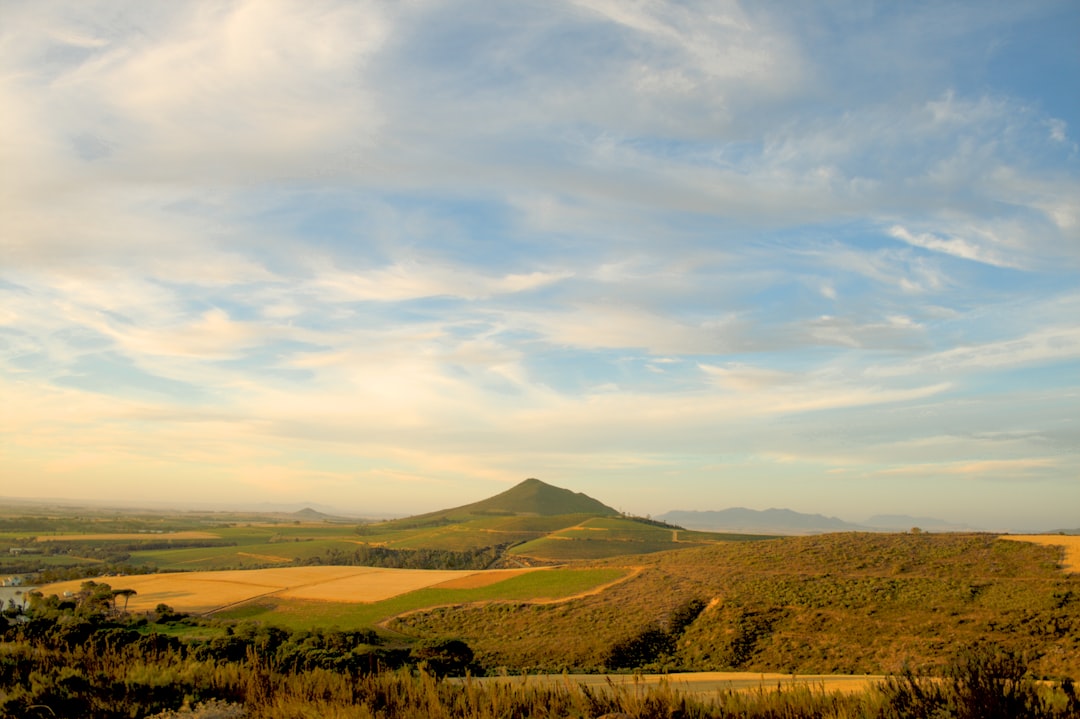
The Cape winelands cluster around some of the most beautiful vineyard country anywhere; our region guide to South Africa has the full map. The essentials:
- Stellenbosch: the grand cru of the Cape, mountain-ringed and Cabernet-led, with university-town charm.
- Swartland: the rebel zone, where old bush-vine Chenin and Rhône-style blends made the country’s hippest wines.
- Walker Bay and Elgin: cool, ocean-cooled pockets producing refined Pinot Noir and Chardonnay.
- Constantia: the historic sweet-wine cradle, still making its legendary dessert wine.
Frequently Asked Questions
What wine is South Africa known for?
Pinotage, its signature red grape, and Chenin Blanc, of which South Africa grows more than anywhere on earth, including France. Add world-class Cabernet and Syrah from Stellenbosch, cool-climate Pinot Noir, and traditional-method Cap Classique sparkling wine.
Is South African wine Old World or New World?
Officially New World, but it is the oldest of the New: the first Cape wines were made in 1659. Its style often sits between the camps, with New World fruit and Old World earthiness, which is exactly why sommeliers reach for it.
What is Pinotage?
Pinotage is South Africa’s own grape, a 1925 crossing of Pinot Noir and Cinsault. It makes dark, smoky, plummy reds that range from rustic to genuinely fine, and it appears in everything from easy braai wines to serious barrel-aged bottlings.
Explore with Sommo
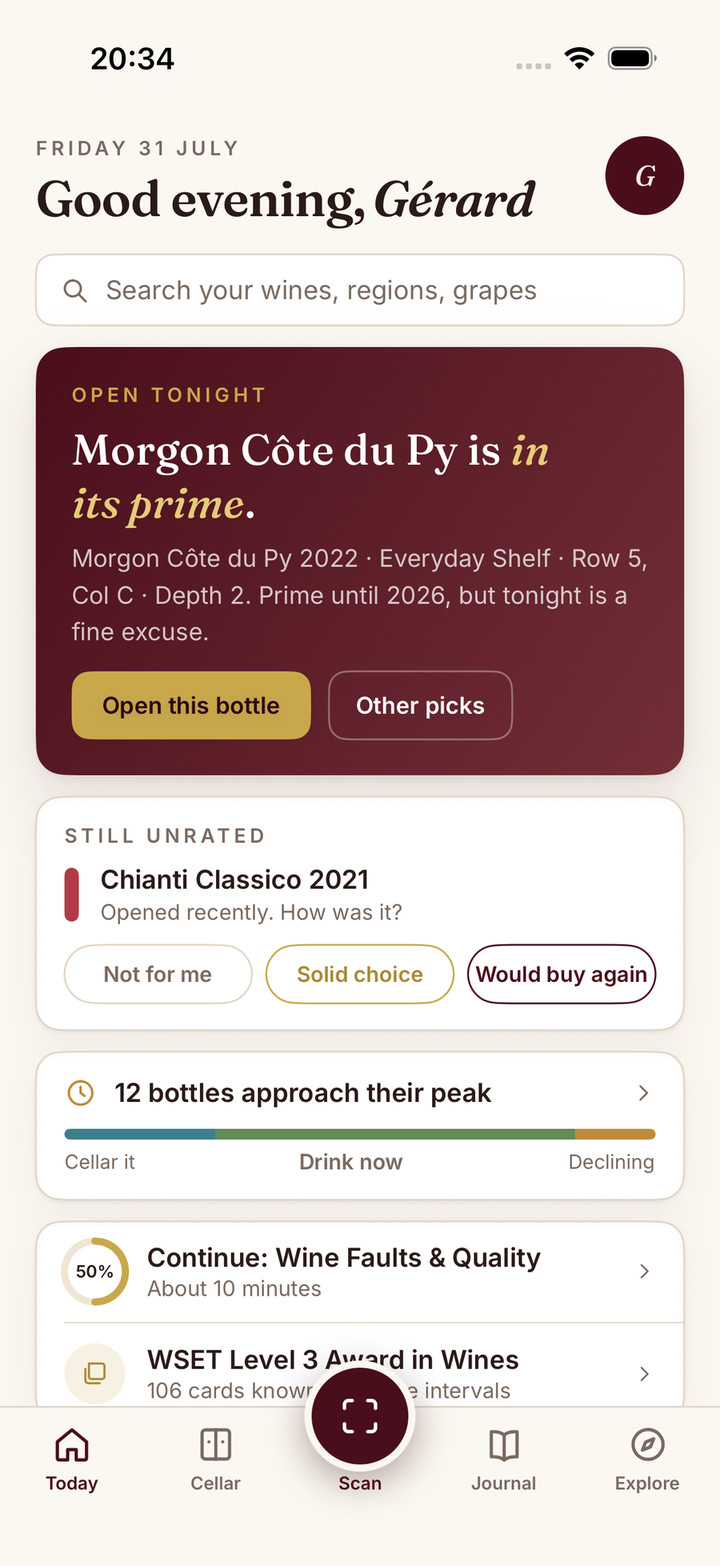
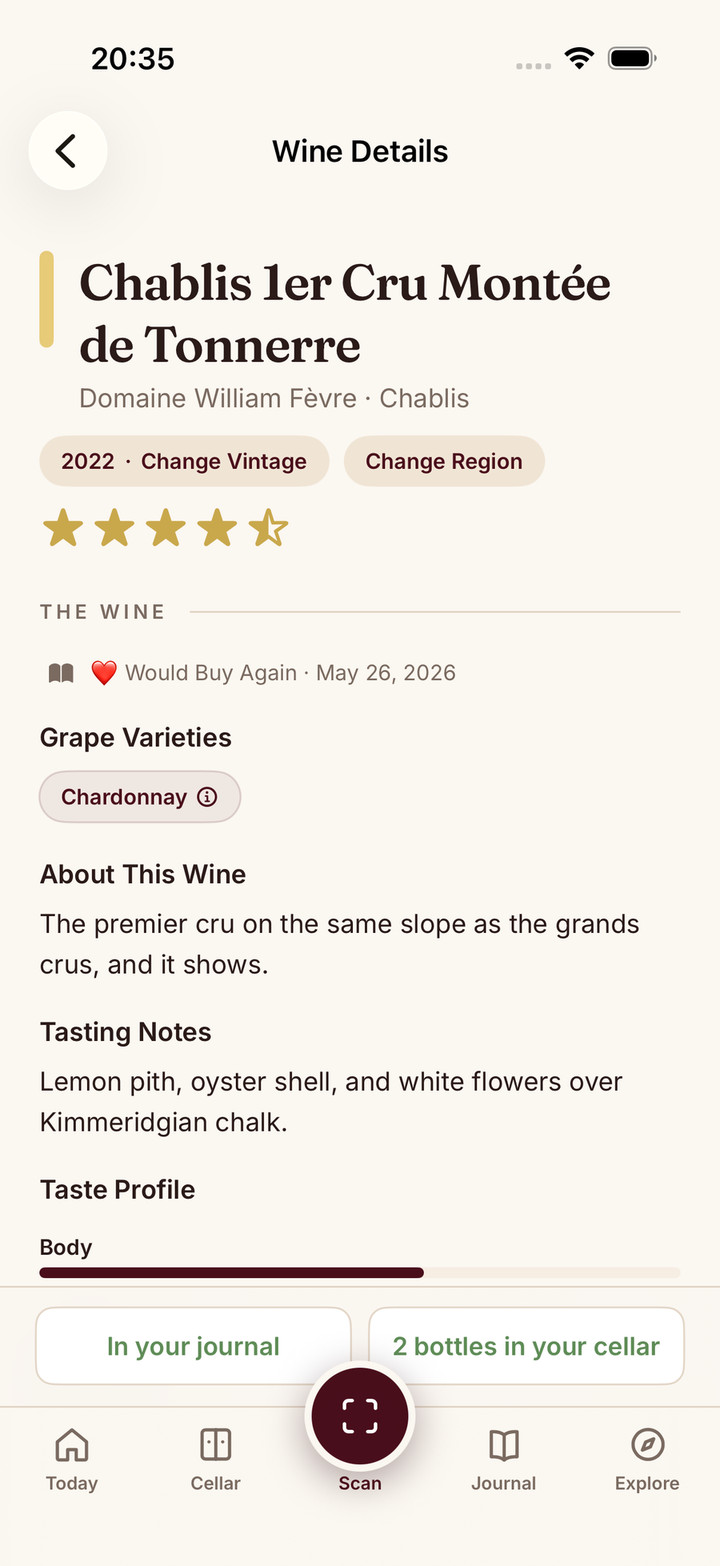
The Cape rewards the curious: scan a bush-vine Chenin or a smart Pinotage with Sommo and see the region, the style and the story behind the label, then log it in your journal and mark Stellenbosch as explored on the wine map. Few countries move the needle on your palate education per pound spent like South Africa.
Download Sommo free and give the Cape the attention it has earned.