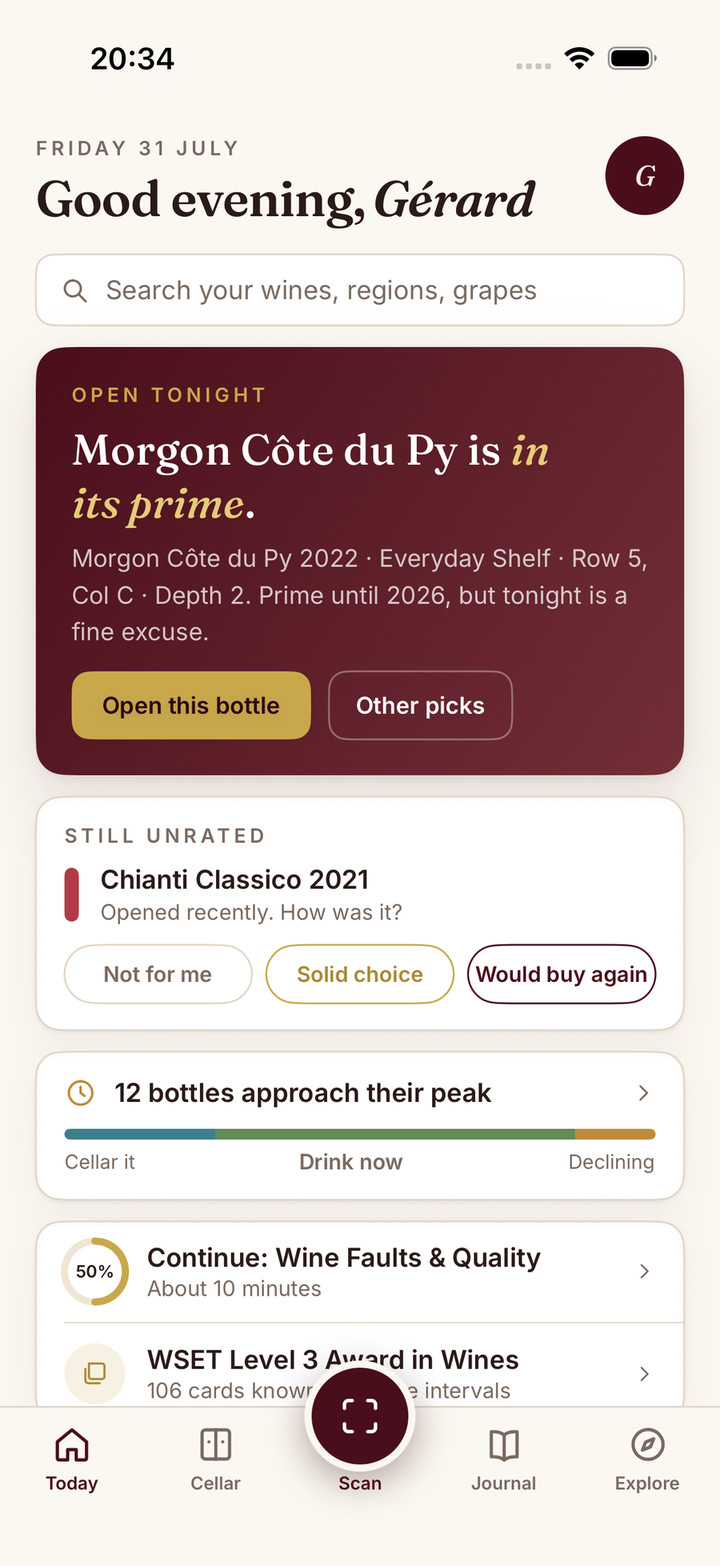
Sommo now speaks Japanese across the interface, WSET study tools and the writing created for your own wine journey. Scan a bottle, write a tasting note or ask what to open with dinner, and the explanation arrives in Japanese. Proper wine names stay proper names; everything around them becomes easier to understand and remember. The authored learning modules and wine-region guide library are the two current exceptions: they still read in English while their Japanese editions are completed.
More Than Translated Buttons
Localising a wine app properly is difficult because wine has three languages at once. There is the interface, the technical vocabulary of tasting and production, and the proper names on a label. Translating all three indiscriminately would make the result less useful.
Sommo takes a deliberate approach. Navigation, instructions and explanations are written in Japanese. Grapes, producers, appellations and established regional names keep the spelling a reader needs to recognise on the bottle. That means a scan can explain why Chablis tastes as it does without turning Chablis into a different product name.
The language guide shows the exact boundary. Already in Japanese:
- AI label scans and wine briefings
- the full interface, including the structured tasting journal
- food pairing and menu guidance
- WSET Levels 1 to 4 study tools
- cellar guidance, drinking windows and palate insights
The authored learning modules and region-guide copy remain in English for now. This is not a separate Japanese edition: it is the same Sommo account and feature set, with those two content libraries being localised progressively.
Wine Guidance in the Language You Think In
Wine vocabulary is easier to learn when the explanation does not create a second decoding task. If a tasting note says a wine has high acidity, fine tannin and a long finish, the useful part is understanding how those traits feel together. Struggling through an unfamiliar interface steals attention from the glass.
In Japanese, Sommo can explain the structure first, then keep the internationally recognised terms visible when they help. That matters at the table and in study. A recommendation for sushi can describe the role of acidity, umami and wasabi in natural Japanese, while linking you to the full wine with sushi guide. Region names stay recognisable throughout the app even while the longer authored atlas guides await their Japanese editions.
WSET Study Without the Language Tax
WSET publishes qualifications in several languages, including Japanese at Level 1. Sommo supports the work between lessons: flashcards, practice questions, revision sessions and a record of the bottles you taste. Start at the WSET study hub and choose the level you are taking.
The official specification and the materials supplied by your Approved Programme Provider remain the exam source. Sommo is the practice layer. It helps you retrieve facts, spot weak topics and connect classroom vocabulary to actual bottles, now without forcing Japanese candidates to do that practice in English.
How to Switch
Open Profile, tap Language, and choose 日本語. Select System Default instead if you want Sommo to follow the language of your phone automatically. The choice applies to the interface and to new AI writing, so the next scan or tasting response arrives in Japanese as well.
Your wines, journal and study progress do not move or reset. Language changes the way Sommo speaks to you, not the account underneath it.
A Better First Bottle
The point of localisation is not the setting itself. It is the moment after it: scanning an unfamiliar bottle and getting an answer that feels immediate, or finally understanding why a pairing worked well enough to repeat it.
Download Sommo, choose 日本語, and let the next bottle explain itself.