You have probably seen it on restaurant menus, spotted it in the hands of someone impossibly stylish, or noticed that amber-coloured glass catching the light across the room. Skin-contact wine is having a serious moment, and for good reason. But what exactly is it?
What Is Skin-Contact Wine?
Skin-contact wine is made from white or rosé grapes that are fermented with their skins left in contact with the juice, rather than being pressed off immediately as in conventional white winemaking. That extended skin contact is what gives the wine its characteristic amber or golden-orange hue, which is why it is commonly called orange wine: the name refers to the colour, not the fruit.
The technique itself is ancient. Winemakers in the country of Georgia have been fermenting grapes this way in large clay vessels called qvevri for over 8,000 years. Friuli in north-east Italy and Slovenia kept the tradition alive in Europe when it fell out of fashion elsewhere. Today, producers across the globe have picked it up again, drawn by its complexity and its fit with the natural wine movement.
If you want a deeper dive into the orange wine category specifically, read our orange wine guide: this post focuses on the broader world of skin contact and what makes it distinct from your everyday white.
How It Differs from Regular White Wine
Conventional white wine is pressed quickly to separate the juice from the skins before fermentation begins. The result is a clean, fresh, often delicate drink with minimal tannin.
Skin-contact wine turns that logic on its head:
- Colour: The skins leach pigment into the juice, producing shades from pale gold through deep amber, depending on how long the contact lasts.
- Tannins: Like red wine, skin-contact wines carry tannin from the grape skins. Expect a slight grip or dryness on the finish.
- Texture: Fuller, more structured, and often richer in mouthfeel than a typical white.
- Stability: The tannins and phenolic compounds act as natural preservatives, making these wines surprisingly robust once opened.
The longer the maceration, the deeper the colour and the more pronounced the tannin. Some producers macerate for just a few days; others leave the skins in contact for weeks or even months. Maceration is a favourite topic of the WSET Level 2 grape growing and winemaking quiz, if you like testing yourself on the process.
What Does It Taste Like?
Skin-contact wine is not like any other category. Common tasting notes include:
- Honeyed and dried fruit: Apricot, dried mango, quince
- Nutty and oxidative: Walnut, hazelnut, almonds, beeswax
- Tea-like and herbal: Chamomile, dried flowers, green tea
- Savoury and textured: Ginger, turmeric, bitter orange peel
The overall impression is one of depth and complexity, with that distinctive tannic structure cutting through any richness. It is not for everyone on first sip, but the style tends to grow on you quickly.
Why It Is Having a Moment
Several forces have pushed skin-contact wine from niche curiosity to mainstream menu staple:
The natural wine movement. Many skin-contact wines are made with minimal intervention: native yeasts, no fining or filtering, little or no added sulphur. That philosophy resonates with drinkers who want to know what they are putting in their glass.
Restaurant credibility. Sommeliers love skin-contact wines for their food-friendliness and their ability to bridge red and white on a pairing menu. Once it appeared in serious restaurants, it acquired a stamp of approval that spread quickly.
Visual appeal. The amber colour photographs beautifully. On Instagram and social media more broadly, a glass of skin-contact wine looks unlike anything else on the table. That visual distinctiveness has done more marketing work than any ad campaign could.
Curiosity. Wine drinkers are increasingly adventurous. Skin-contact wine offers something genuinely different without requiring you to abandon grape varieties you already know.
Food Pairings
Skin-contact wine shines alongside complex, savoury, umami-rich food. The tannins and texture mean it can hold its own where a delicate white would be overwhelmed:
- Aged hard cheeses and cheese boards
- Roast chicken, guinea fowl, or pork belly
- Middle Eastern and North African spiced dishes
- Charcuterie and cured meats
- Mushroom-based pasta or risotto
- Thai and Vietnamese cuisine with fish sauce and fresh herbs
Avoid very sweet dishes: the dryness of skin-contact wine will clash. It also works brilliantly as an aperitivo alongside olives and salty snacks.
How to Choose a Bottle
Look for these clues on the label or shelf:
- Country of origin: Georgia, Slovenia, Friuli-Venezia Giulia, and Austria are traditional strongholds. New producers in South Africa, Australia, and the United States produce excellent examples.
- Grape variety: Rkatsiteli (Georgia), Ribolla Gialla (Friuli), Pinot Gris (Alsace), and Gewurztraminer respond particularly well to skin contact.
- Maceration time: Some producers note this on the back label. Shorter maceration means lighter colour and less tannin; longer means deeper amber and more structure.
- Natural or low-intervention: If the producer mentions native yeasts or minimal sulphur, you are likely in skin-contact territory.
Ask your wine merchant or restaurant sommelier; they will almost always be enthusiastic about guiding you.
What to Expect If You Are New to It
Pour it into a larger glass than you would use for white wine. Serve it slightly cooler than room temperature but warmer than you would serve a standard white, around 12 to 14 degrees Celsius. Do not be put off by any slight haze or sediment; that is perfectly normal and a sign of minimal processing.
The first sip may surprise you. Skin-contact wine does not taste like white wine or red wine. Give it a moment, take another sip, and let the flavour develop. Most people find themselves reaching for a second glass.
Explore with Sommo
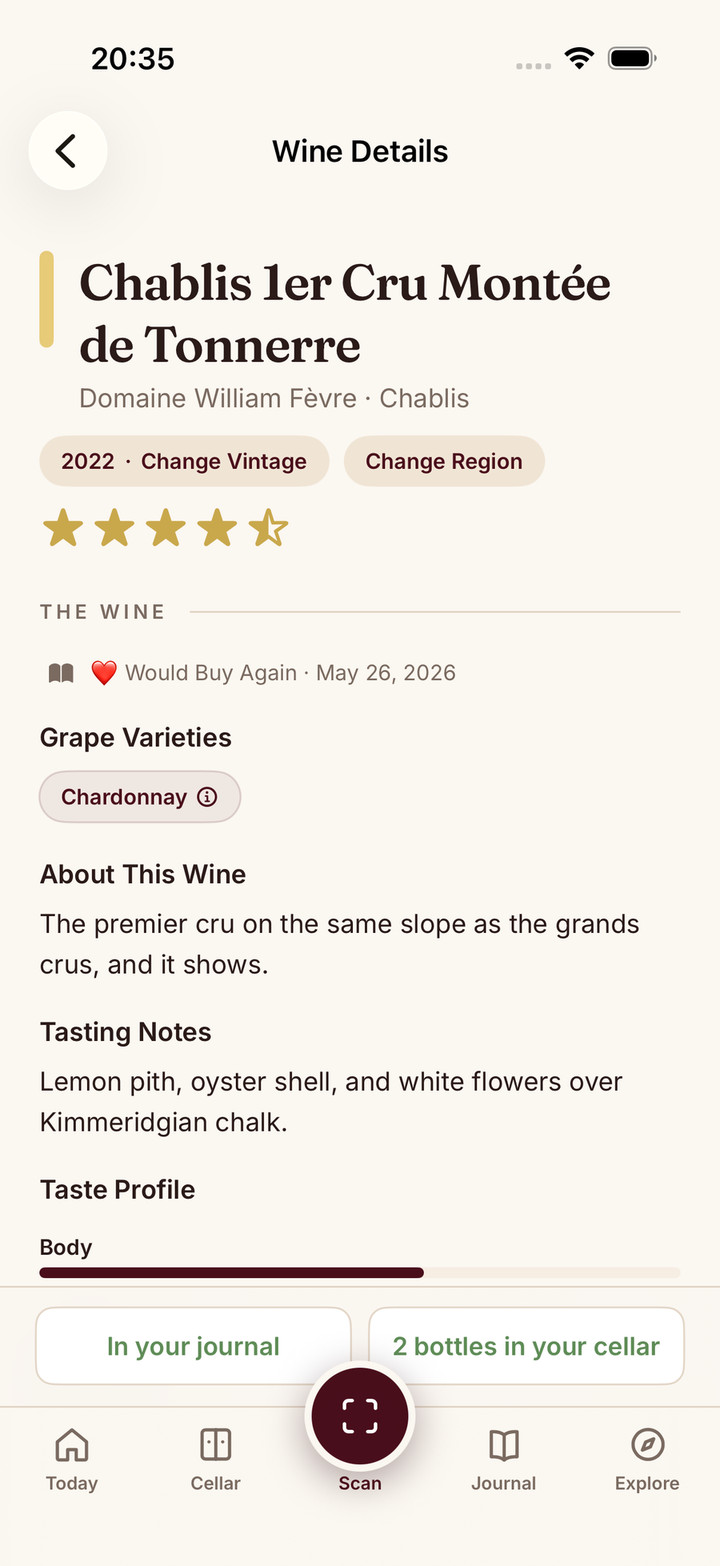
Navigating skin-contact wine in the wild is exactly where Sommo earns its keep. Scan any bottle with Sommo’s AI scanner to instantly learn what you are looking at: the grape variety, the region, the winemaking style, and whether it is likely to suit your palate. Sommo’s discovery features also surface skin-contact and natural wine options near you, so you can find a great bottle without the guesswork.
Ready to explore? Download Sommo and scan your first skin-contact wine today.