6 Months of Wine Learning: What to Expect
What happens when you commit to learning wine for six months? Here's the realistic timeline of knowledge, confidence, and setbacks.
You’ve decided to actually learn about wine. Not just drink it, but understand it.
What happens over the next six months? What will you know that you don’t know now? How will your experience of wine change?
Most wine education content glosses over the messy middle. The confusion. The plateaus. The moments when you feel like you’re going backward.
Here’s an honest timeline based on thousands of wine learners’ experiences.
Month 1: The Overwhelm Phase
What You’re Doing
- Drinking wine more consciously (actually paying attention)
- Reading articles, watching videos, absorbing information
- Trying to remember grape names and regions
- Feeling intimidated by wine lists and shop shelves
What You’re Learning
- Basic differences between major grape varieties
- That wine names can refer to grapes (Chardonnay) or places (Burgundy)
- How to sort-of read a wine label
- That there’s way more to know than you expected
How You’ll Feel
Overwhelmed. There’s so much. How does anyone learn this? Every wine opens ten new questions. You’ll wonder if you’re even making progress.
Reality Check
This is completely normal. You’re building foundation. It feels like chaos because you don’t have a mental framework yet. The framework comes later.
Month 1 Milestones
- You can name 8 to 10 major grape varieties
- You understand red wine and white wine come from different grapes (mostly)
- You can identify if a wine is dry or sweet
- You have a sense that “big wine regions” exist
Practical Tip
Don’t try to memorize everything. Focus on tasting. Drink 2 to 3 different wines per week. Record impressions in Sommo or a notebook. The information will stick better when attached to actual experiences.
Month 2: The Pattern Phase
What You’re Doing
- Actively comparing wines (same grape, different regions)
- Developing preferences (you actually have opinions now)
- Taking notes, even basic ones like “liked this” or “too bitter”
- Visiting wine shops and asking questions
What You’re Learning
- How climate affects wine style (cool vs. warm regions)
- That terroir is a real concept, not pretention
- Which styles you actually enjoy vs. which you think you should enjoy
- That expensive doesn’t always mean better for your palate
How You’ll Feel
Less overwhelmed. You’re starting to see patterns. You have a few “safe” wines you can order confidently. The world is organizing itself.
Month 2 Milestones
- You can explain what Pinot Noir generally tastes like
- You have a go-to white and go-to red
- Wine shop staff recognize you (and maybe your preferences)
- You’ve tried wines from at least 5 different countries
The Key Shift
You stop asking “Is this wine good?” and start asking “Do I like this wine?” These are fundamentally different questions. The second one matters more.
Month 3: The Vocabulary Phase
What You’re Doing
- Using tasting terms correctly (acidity, tannin, body)
- Identifying specific aromas beyond “smells like wine”
- Reading wine reviews and understanding most of the language
- Tracking wines systematically
What You’re Learning
- The structured approach to tasting (look, smell, taste, evaluate)
- How to articulate what you’re experiencing
- That professional tasting notes aren’t pretentious nonsense (mostly)
- Your personal vocabulary for describing wine
How You’ll Feel
More confident. You can hold a conversation about wine without faking it. You’re starting to trust your own palate.
Month 3 Milestones
- You can blind taste and distinguish light-bodied vs. full-bodied
- You describe wines beyond “good” or “bad”
- You notice oak influence (vanilla, toast, coconut)
- You understand what “tannins” actually feel like
The Vocabulary That Matters
| Term | What It Really Means | How You’ll Use It |
|---|---|---|
| Dry | No sweetness (not “bitter”) | “I prefer dry wines” |
| Body | Weight in your mouth | “I like medium-bodied reds” |
| Tannin | Mouth-drying sensation | “This is too tannic for me” |
| Acidity | Tartness, brightness | “High acid wines pair well with food” |
| Finish | How long flavor lingers | “This has a really long finish” |
Month 4: The Region Phase
What You’re Doing
- Deep diving into specific regions (maybe one captures your interest)
- Understanding appellations and classification systems
- Matching wines to food with intention
- Possibly hosting wine tastings with friends
What You’re Learning
- How Burgundy differs from Oregon (same grape, different place)
- Why Bordeaux is classified the way it is
- That wine regions have distinct personalities
- How geography shapes flavor
How You’ll Feel
Genuinely interested. This isn’t homework anymore. You want to know more about that Portuguese red you loved. Wine becomes a hobby, not just a beverage.
Month 4 Milestones
- You can name major wine regions in 3 to 4 countries
- You understand why climate matters
- You buy wines specifically for food pairing
- You have opinions about at least one region
Warning: The Knowledge Dip
Around month 4, many learners experience what feels like regression. You learn enough to realize how much you don’t know. Experts seem impossibly far ahead. This is normal. Push through.
Month 5: The Confidence Phase
What You’re Doing
- Ordering wine at restaurants without anxiety
- Recommending wines to friends (and being right)
- Exploring less common varieties
- Maybe considering a formal course (WSET, Court of Master Sommeliers intro)
What You’re Learning
- That your preferences are legitimate and worth defending
- How to find value on wine lists (second-cheapest isn’t always bad)
- That natural wine, orange wine, and other trends have their place
- Your palate is valid even when it differs from critics
How You’ll Feel
Confident but humble. You know enough to be useful. You know enough to know how much you don’t know. This combination is actually ideal.
Month 5 Milestones
- Friends ask you for wine recommendations
- You can navigate any wine list without panic
- You have strong opinions about at least one grape or region
- You can spot when someone is bluffing about wine
The Confidence Breakthrough
The shift from “I hope this is right” to “This is what I like, and here’s why” is transformational. It usually happens around month 5.
Month 6: The Integration Phase
What You’re Doing
- Drinking wine as part of life, not as study
- Building a small collection (maybe)
- Planning wine trips
- Continuing to learn but not obsessing
What You’re Learning
- That wine learning never really ends
- How to balance knowledge with enjoyment
- Where your interests lie (regions, grapes, styles, production methods)
- That the goal is pleasure, not expertise
How You’ll Feel
Comfortable. Wine is no longer intimidating. It’s a source of ongoing enjoyment and discovery.
Month 6 Milestones
- You have a personal wine “identity” (what you like, what you seek)
- You can taste wine critically when you want to, or just enjoy it
- Learning continues naturally as you drink
- You’re considering your first wine region trip
The Realistic Progress Chart
| Month | Knowledge Level | Confidence Level | Enjoyment Level |
|---|---|---|---|
| 1 | Low (building) | Low (overwhelmed) | Medium |
| 2 | Low-Medium | Growing | Medium-High |
| 3 | Medium | Medium (vocabulary helps) | High |
| 4 | Medium-High | Medium (knowledge dip) | Very High |
| 5 | High | High | Very High |
| 6 | High | High (natural) | Integrated |
What You Won’t Know After 6 Months
Let’s be honest about limitations:
- You won’t blind taste a wine and name producer, vintage, and vineyard
- You won’t know every obscure grape variety
- You won’t have expert-level regional knowledge
- You won’t always know why a wine costs what it costs
- You won’t be able to evaluate wine quality like a professional
And that’s completely fine. Most people who love wine their whole lives don’t know these things either.
What You Will Know After 6 Months
This is what matters:
- How to buy wine you’ll enjoy consistently
- How to order wine in restaurants confidently
- How to talk about wine without embarrassment
- What styles suit your palate
- Enough foundation to continue learning forever
That’s a genuine transformation in 180 days.
How to Accelerate the Journey
Taste Comparatively
Two wines side by side teaches more than two wines separately. Try:
- Same grape, different regions (California vs. French Chardonnay)
- Same region, different producers (two Chianti Classicos)
- Same producer, different vintages (vertical tasting)
Take Notes (Even Brief Ones)
“Liked it, cherries, would buy again” is infinitely better than nothing. Review notes weekly. Patterns emerge.
Find Community
- Local wine classes (WSET, community college, wine shop tastings)
- Tasting groups (or start one with friends)
- Knowledgeable wine shop staff (they love sharing)
Use Sommo
Track everything. Your history becomes your curriculum. After 6 months, you’ll have data on what you actually like vs. what you thought you’d like.
Stay Curious
Every “I wonder why…” is a learning opportunity. Why is this Riesling sweet when that one isn’t? Why does this Pinot Noir taste different from last week’s? Follow the questions.
The Six-Month Investment
| Resource | Monthly Cost | Total 6-Month |
|---|---|---|
| Wine (2 to 3 bottles/week) | $80 to $150 | $480 to $900 |
| Tastings/classes (optional) | $0 to $100 | $0 to $600 |
| Books (1 to 2 recommended) | $30 one-time | $30 |
| App/tracking | $0 to $10 | $0 to $60 |
| TOTAL | $510 to $1,590 |
For less than a gym membership you won’t use, you can develop a skill and hobby that enhances dinners, travel, and social situations for the rest of your life.
Start Now
Six months from today, you’ll look back and be amazed at how far you’ve come.
Or you won’t have started, and you’ll still be intimidated by wine lists.
Open a bottle tonight. Pay attention. Write one sentence about what you taste.
The journey begins there.
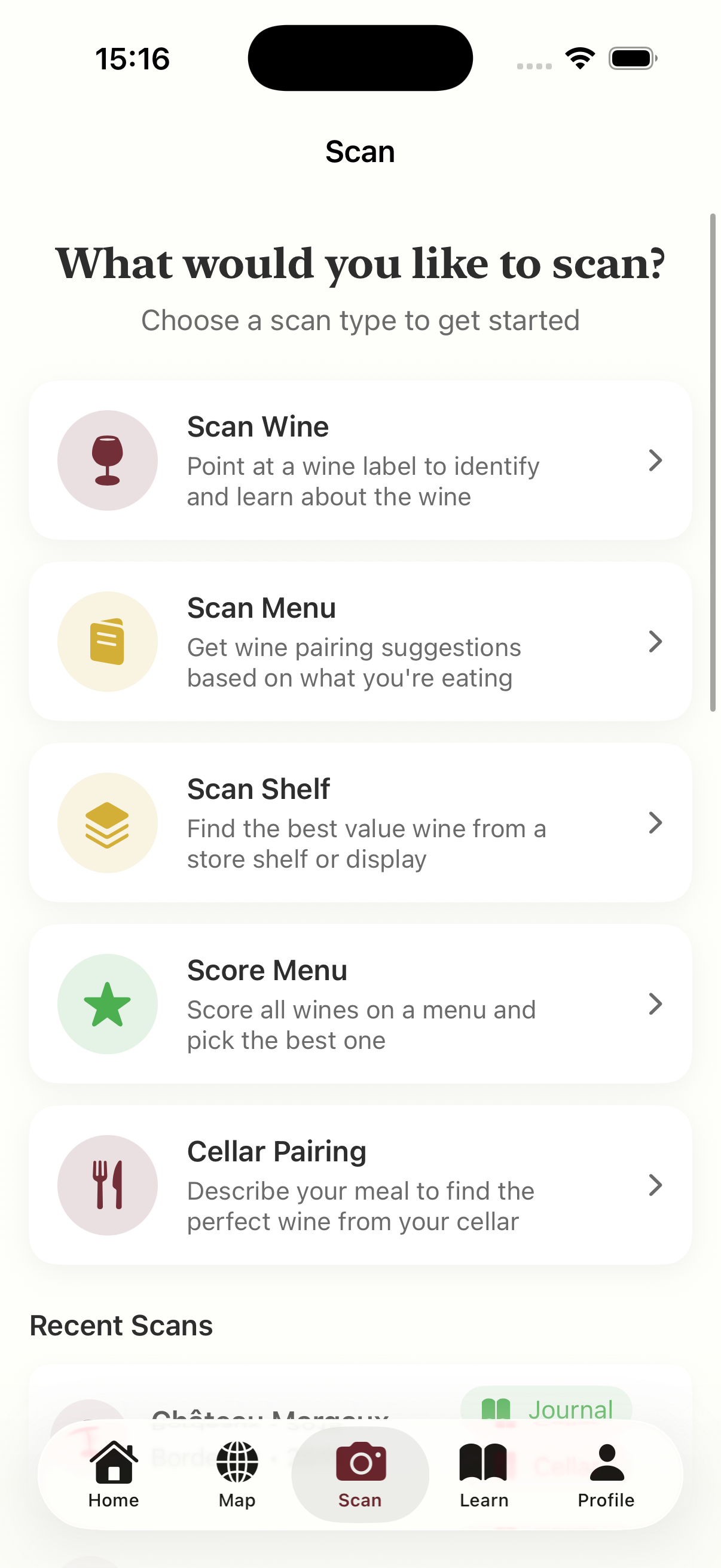
Liked this read? Try the app.
Scan any wine label with AI, build your tasting journal, and learn wine your way.