Sangiovese: The Grape Behind Chianti, Brunello, and Italy's Greatest Reds
Sangiovese is Italy's most planted grape — and its most versatile. From everyday Chianti to aged Brunello di Montalcino, here's the guide to understanding it.
Sangiovese is Italy’s most planted red grape, and that single fact undersells it. This is the grape behind Chianti, Brunello di Montalcino, Vino Nobile di Montepulciano, and a dozen other wines you’ve probably encountered without realising they all come from the same variety. The name translates as “blood of Jove” – Jupiter’s grape – and it has been central to Tuscan winemaking for centuries.
What makes Sangiovese remarkable is its range. A $10 Chianti and a $200 Brunello Riserva are both Sangiovese, yet they barely resemble each other. Understanding the grape means understanding why those differences exist – and how to navigate them without wasting money.
What Does Sangiovese Taste Like?
Sangiovese has a distinctive flavour profile that’s immediately recognisable once you know what to look for:
- Sour cherry and red plum – the dominant fruit character, leaning tart rather than sweet
- Dried tomato and sun-baked herbs – oregano, thyme, a savoury quality that’s unmistakably Italian
- Leather and earth – especially in aged examples
- Firm tannins – that dry, gripping sensation (like strong black tea)
- High acidity – this is the defining trait, and it’s what makes Sangiovese one of the most food-friendly red grapes on earth
With age, quality Sangiovese develops tobacco, dried roses, balsamic notes, and a complex spice character that can be genuinely thrilling. But even young, inexpensive Sangiovese has that bright acidity and savoury edge that sets it apart from fruitier grapes like Merlot or Grenache.
The Key Expressions: Same Grape, Different Wines
Sangiovese appears under several names on Italian wine labels. Here are the ones that matter.
Chianti Classico
The most famous Sangiovese wine. Chianti Classico DOCG must be at least 80% Sangiovese, grown in the historic hills between Florence and Siena – look for the black rooster (Gallo Nero) on the label. Classic cherry and herb character, medium body, firm tannins. The three tiers are:
- Chianti Classico – ready to drink, $15 to $35
- Chianti Classico Riserva – aged 24+ months, more depth, $30 to $60
- Chianti Classico Gran Selezione – top tier, single vineyard or best barrels, $50 to $150
Note: plain “Chianti” (without “Classico”) comes from a much larger zone and is generally simpler and cheaper. It’s fine for everyday drinking but a different league from Classico.
Brunello di Montalcino
Italy’s most prestigious Sangiovese. 100% Sangiovese (locally called Brunello), grown in the hilltop town of Montalcino south of Siena. Aged a minimum of five years before release – Riserva gets six. These are powerful, structured wines built for decades of cellaring. Prices start around $50 and climb quickly. For a deeper comparison, see our Chianti vs Brunello guide.
Rosso di Montalcino
The “baby Brunello.” Same vineyards, same grape, but aged for a shorter period and released younger. It’s the way to taste Montalcino’s character without the Brunello price tag – typically $18 to $35. Drink it within five years.
Vino Nobile di Montepulciano
Made from Sangiovese (locally called Prugnolo Gentile) in the town of Montepulciano. Elegant and slightly softer than Brunello, often representing exceptional value at $25 to $60. Don’t confuse this with Montepulciano d’Abruzzo, which is a completely different grape from a completely different region.
Morellino di Scansano
The coastal Tuscan expression. Sangiovese (called Morellino here) from the Maremma coast, producing softer, fruitier wines with less tannic grip. Approachable and affordable – $12 to $25. A good summer Sangiovese.
How to Read Sangiovese Labels
Italian wine labels can be intimidating, but for Sangiovese the key information is straightforward:
The place name tells you the style. Chianti Classico, Brunello di Montalcino, Vino Nobile di Montepulciano – these are geographic designations, not grape names. The grape is always Sangiovese (or a local clone of it).
DOCG is the quality indicator. All the major Sangiovese wines carry DOCG status, meaning strict production rules govern grape percentages, yields, and ageing minimums.
Riserva means longer ageing. More time in barrel and bottle before release, generally more complexity and structure.
Gran Selezione (Chianti Classico only) is the top tier – the producer’s best vineyard or barrel selection.
IGT on a Sangiovese-based wine usually indicates a “Super Tuscan” – a wine that blends Sangiovese with international grapes like Cabernet Sauvignon outside the traditional rules.
Food Pairings
This is where Sangiovese genuinely excels. The combination of high acidity and firm tannins makes it a natural partner for food in a way that smoother, fruitier reds simply cannot match.
Classic pairings:
- Pasta with tomato-based sauces – the acidity mirrors the tomato, and it works beautifully
- Pizza – Chianti Classico is arguably the perfect pizza wine
- Grilled and roasted meats – bistecca alla fiorentina demands Sangiovese
- Aged hard cheeses – Pecorino Toscano, Parmigiano-Reggiano
- Mushroom dishes – risotto, bruschetta, grilled portobello
- Charcuterie – salami, prosciutto, bresaola
What to avoid: Delicate fish, cream-based sauces, and very spicy dishes. The tannins will clash with the first two, and heavy spice overwhelms the wine’s subtlety.
How to Start: What to Buy First
If you’re new to Sangiovese, don’t start with Brunello. Start where the grape is most accessible and best value.
Entry level ($10 to $20): A good Chianti Classico or Rosso di Montalcino. Look for producers like Melini, Rocca delle Macie, or Banfi Rosso di Montalcino. Pair it with pasta or pizza and the grape will make immediate sense.
Mid-range ($25 to $50): Chianti Classico Riserva or Vino Nobile di Montepulciano. This is where Sangiovese starts showing real complexity. Producers like Fontodi, Isole e Olena, Felsina, and Poliziano are consistently excellent.
Serious ($50 to $150+): Brunello di Montalcino or Chianti Classico Gran Selezione. These are wines that reward patience – if you can, decant them an hour before drinking, or better yet, cellar them for a few years. Biondi-Santi, Poggio di Sotto, and Casanova di Neri are benchmarks.
If you’re coming from beginner-friendly reds like Merlot or Pinot Noir, Sangiovese’s acidity and tannins might catch you off guard. That’s normal. Give it food – it’s a wine that doesn’t make sense on its own the way a fruity New World red does. Put a plate of pasta in front of it and everything clicks.
Frequently Asked Questions
What does Sangiovese taste like?
Sangiovese tastes of ripe cherry, dried tomato, leather, and earthy herbs, with firm tannins and high natural acidity. The acidity is the defining characteristic – it makes Sangiovese wines feel bright and food-friendly, even when the wine is quite full-bodied. Quality examples develop notes of tobacco, dried roses, and spice with age.
Is Sangiovese the same as Chianti?
Chianti is a wine, not a grape. Chianti Classico must be at least 80% Sangiovese, grown in the hills between Florence and Siena. So Sangiovese is the primary grape in Chianti – but the two aren’t synonymous. Sangiovese also makes Brunello di Montalcino (100% Sangiovese, aged longer) and Montepulciano d’Abruzzo has nothing to do with the town of Montepulciano, where the grape Prugnolo Gentile (a Sangiovese clone) makes Vino Nobile.
What is the difference between Chianti and Brunello di Montalcino?
Both are Sangiovese-based, but Brunello di Montalcino is 100% Sangiovese grown in Montalcino (a specific hilltop town in Tuscany), aged a minimum of 5 years before release. Chianti Classico can blend in other varieties, is grown across a wider zone, and is typically ready to drink earlier. Brunello is Italy’s most collectible red wine – and priced accordingly.
Is Sangiovese good for beginners?
Everyday Chianti and Chianti Classico are excellent entry points – they’re food-friendly, fairly priced ($5 to $25), and widely available. The high acidity and firm tannins might surprise newcomers expecting a smooth, fruit-forward red, but pair it with Italian food and it clicks immediately. Start with Chianti Classico rather than Brunello, which needs time and context to appreciate.
What food pairs with Sangiovese?
Sangiovese’s high acidity and firm tannins make it a natural with tomato-based dishes – pasta, pizza, risotto, ragu. It also works beautifully with grilled meats, roasted chicken, aged cheeses (Pecorino, Parmigiano), mushroom dishes, and charcuterie. Avoid pairing it with fish or delicate, cream-based dishes – the tannins will clash.
Your Next Bottle
Sangiovese is one of those grapes that rewards exploration. The jump from a simple Chianti to a Chianti Classico Riserva to a Brunello is one of the most instructive progressions in wine – you’re tasting the same grape through increasingly ambitious winemaking and terroir. Track your Sangiovese discoveries with Sommo – scan the label, save your tasting notes, and build a personal map of which Tuscan appellations and producers speak to you. Your preferences will surprise you.
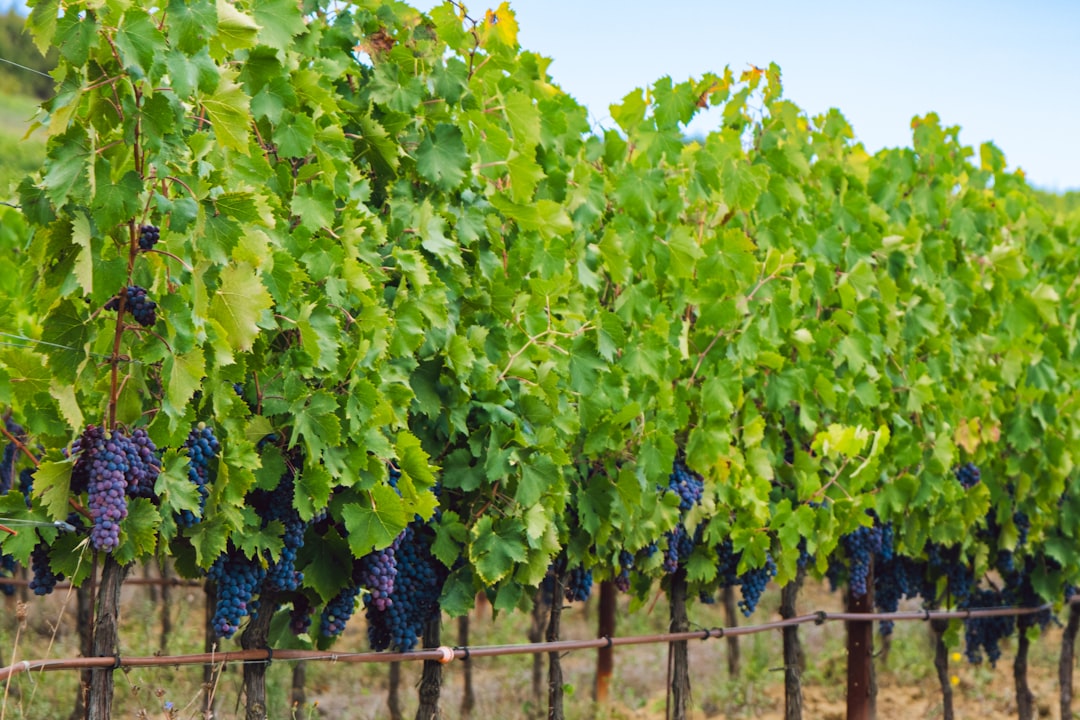
Photo by Sue Winston on Unsplash