I have paid restaurant prices for the wrong bottle more times than I like to admit, so I built the fix into Sommo.
Here is the short answer. In the UK, restaurants usually charge about 2.5 to 4 times what the same wine costs in a shop. When the restaurant critic Andy Hayler analysed UK wine lists, he found an average of about three times retail, and 14% of the lists he looked at had at least one bottle marked up ten times or more, as The Independent reported. Markup is normal. Paying a high markup for a dull wine is the bit you can avoid.
This guide explains how restaurant wine pricing works, where the markup hides, and how I pick the bottle worth paying for.
How much do restaurants mark up wine?
Restaurants usually think in terms of what a bottle costs them, not what it costs you in a shop. Jancis Robinson describes the London rule of thumb as three to four times the ex-VAT cost price, which works out at roughly two to three times the retail price you would see in a shop. She notes that in New York the multiple is now often four.
The trade view is similar. Wine-Searcher, quoted in the same Independent piece, puts a typical UK multiple at about four times the ex-VAT cost, driven by restaurants aiming for a gross profit of around 75% on wine.
So when you see a bottle at £40, a fair working assumption is that it sells for somewhere around £10 to £16 in a shop. That is the starting point for every decision below.
Why is wine so expensive in restaurants?
A restaurant is not a wine shop with chairs. The list price pays for a lot more than the liquid:
- Service. Someone opens, pours, checks and tops up. A good sommelier is a skilled job.
- Glassware and breakage. Proper glasses are expensive and they break.
- Storage. Wine needs space and the right temperature, often for months before it is sold.
- Stock risk. Restaurants buy wine they may not sell quickly, and bottles get corked or go over.
- Rent and VAT. Every square metre of the room is paid for by what you order, and VAT sits on top.
Wine also tends to carry more of the margin than food, which is why the multiple can look so steep. None of this means every price is fair. It means the question is not “is there a markup?” but “is this bottle worth its markup?”
Where does the markup hide on a wine list?
Not in the place most people expect. The old advice is that the second cheapest bottle is the trap, because diners who feel awkward ordering the cheapest wine reach for the next one up. The evidence does not back that up. A study of London wine lists by the economists David de Meza and Vikram Pathania, reported by Food & Wine, found that markups averaged just over three times retail, that percentage markups peaked in the middle of the list, and that the second cheapest wine was not the most marked up.
Jancis Robinson makes a related point: cheaper wines tend to carry higher multiples, while the most expensive bottles usually carry lower ones. In plain terms:
- The cheapest bottles often have high multiples, because the fixed cost of serving a bottle is the same whatever is inside it.
- The middle of the list is where percentage markups can peak, according to the London study.
- The top of the list usually has a lower multiple, but the cash margin per bottle can still be large.
That is why I never pick by position on the page. I pick by what the wine is.
How do you work out the markup on a bottle?
The maths is simple: divide the list price by the shop price for the same wine and vintage.
- Shop price £12, list price £36: markup of three times.
- Shop price £20, list price £50: markup of two and a half times.
- Shop price £8, list price £32: markup of four times.
Make sure you compare like with like: same producer, same wine, same vintage, same bottle size. UK shop and menu prices both include VAT, so you can compare them directly.
By the glass is worth checking too. UK law lets restaurants sell still wine by the glass in 125ml, 175ml or multiples of those measures, and a 750ml bottle holds just over four 175ml glasses. Multiply the glass price by four and a bit and compare it with the bottle price before you order three rounds. My guide to wine by the glass versus the bottle has the full sums.
For the bottle comparison, I use the wine markup calculator to work out the multiple from the shop and list prices.
How do you pick the bottle worth paying for?
A markup is easier to swallow when the wine is genuinely good and genuinely right for the meal. This is my order of play.
- Set your budget first. Decide what you want to spend before you open the list. It stops the list deciding for you.
- Look for the restaurant’s passions. A short, odd section, a region the chef clearly loves, or a page of grower wines usually signals bottles someone chose with care rather than a distributor’s default.
- Favour less famous regions. Famous names carry a price premium before the restaurant adds anything. A good wine from a lesser known region often gives you more wine for the money.
- Ask the sommelier with a price in mind. Point at a price and say what you like. “Something around this, fresh and not too oaky” is a perfectly normal request.
- Match the food, not the label. The best value bottle is the one that makes the meal better.
For a fuller walkthrough of reading a list from top to bottom, see my guide on how to choose wine from a restaurant wine list.
Is bringing your own bottle cheaper?
It can be. Some restaurants let you bring your own wine and charge a corkage fee, and some BYOB places charge nothing at all. Whether it saves money depends on the fee and the bottle: a modest fee on a special bottle from home is often excellent value, while a high fee on a cheap bottle is not. Always ask before you go. My corkage and BYOB guide covers the etiquette and the questions to ask.
How does Sommo help you get value from a wine list?
This is the part I built for myself, and I will be direct about it: no other way of reading a wine list I have used understands my taste the way Sommo does.
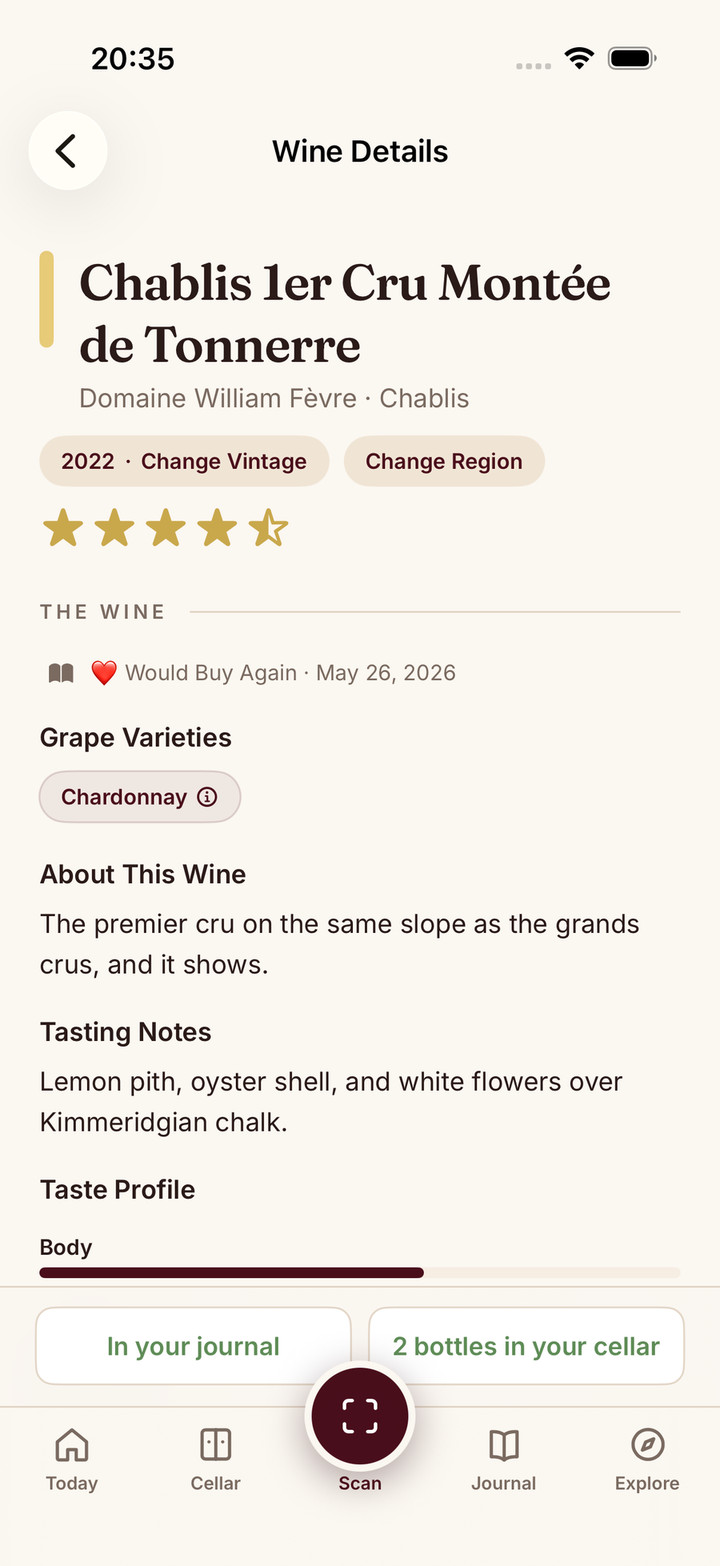
Score the whole list in one go. Point your camera at the list and Sommo reads it. With Premium, Score Menu gives every wine it reads on the list a quality score, so you can see at a glance which bottles are worth their place and which are coasting on a famous name. Tap any wine for grapes, region, tasting notes and food pairings.
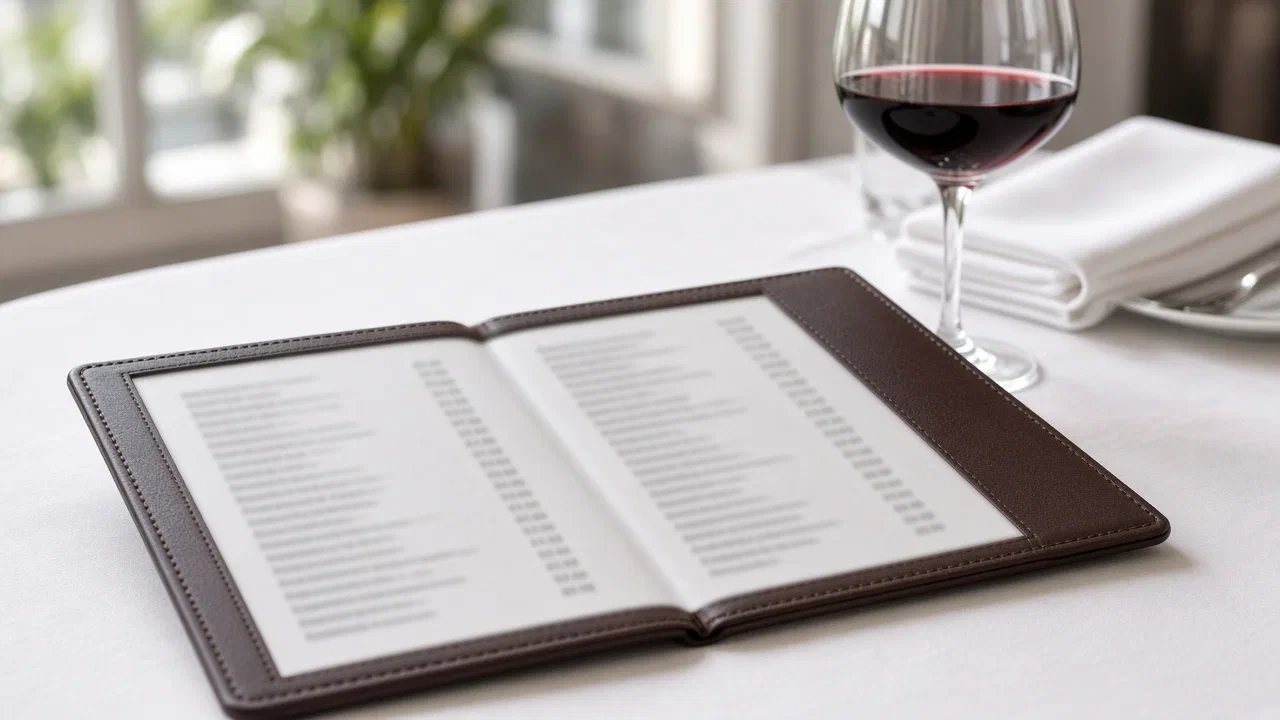
Get picks shaped by your taste. Even on the free plan, you can photograph a list and get menu picks shaped by the meal you are eating and the wines you’ve rated. You are not getting a generic “best wine” answer. You are getting the bottle that suits you and the dish in front of you.
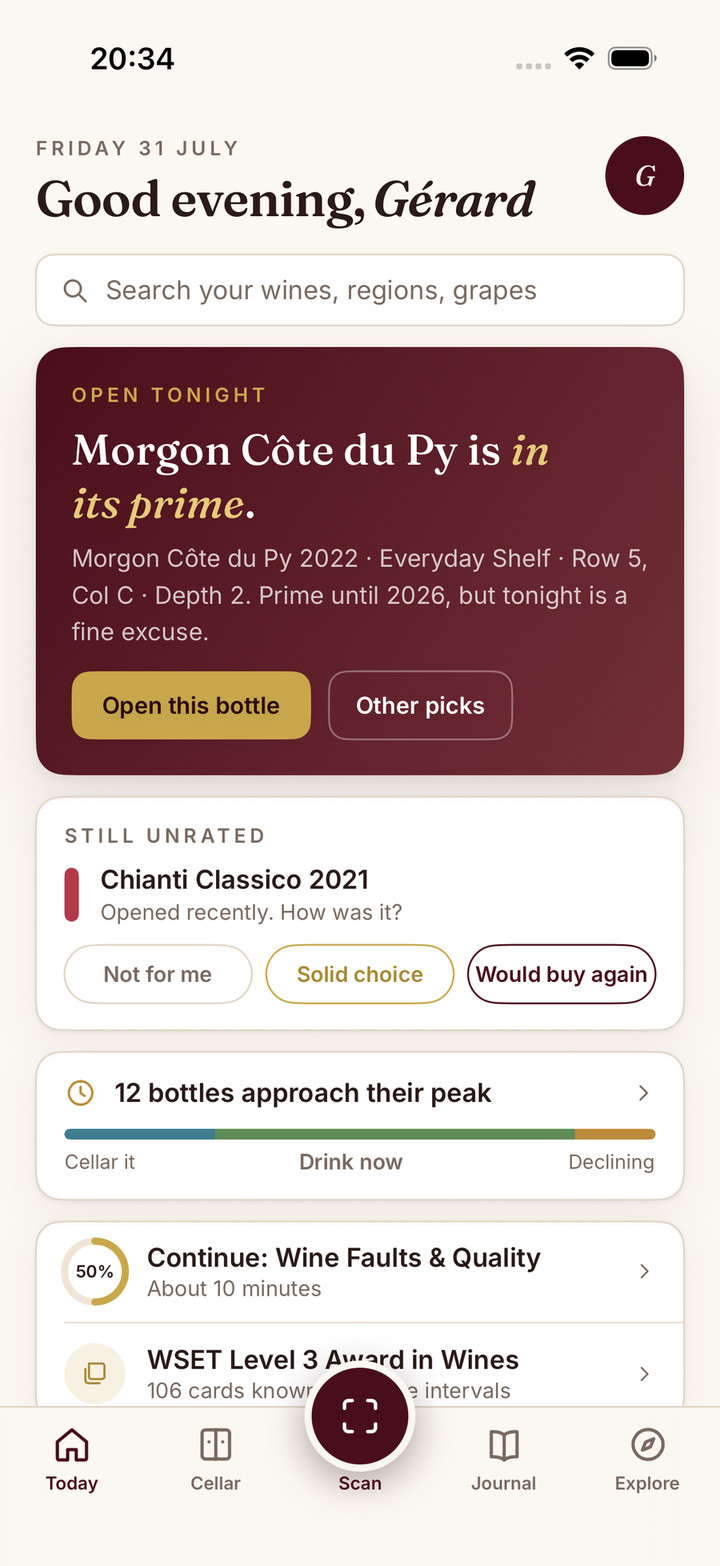
Remember the good ones. When a bottle works, save it to your wine journal in a tap. On iPhone, when you scan it again, Sommo shows your verdict and the date you had it, so you never pay restaurant prices twice for a wine you did not enjoy.
Behind every answer is proprietary wine-tuned AI grounded in a hand-maintained wine library, so the wines it names are wines that exist. Label scans come back in seconds; a label scan takes about 10 seconds.
The free tier gives you 5 lifetime AI scans per device, shared across label, menu and shelf scans, plus the journal and 30 days of journal history. Premium unlocks unlimited scans, Score Menu, lifetime history and the rest of the toolkit for $4.99 a month or $29.99 a year in the US; prices vary by country and store. Sommo runs on iPhone, iPad, Android, HarmonyOS and the web. See Score Menu in detail, or how Sommo fits a night out at a restaurant.
If you want to weigh Sommo against other apps that read a wine list, I compare them in my guide to the best apps to scan a restaurant wine list.
Next time the list lands on the table, you do not need to guess. Download Sommo and score your next wine list.
The bottom line
Restaurant wine markup in the UK usually runs at two and a half to four times retail, with about three times as a common average. That is the price of service, glassware, storage and rent, and it is not going away. What you control is the bottle. Ignore its position on the page, do the quick division when you can, lean towards less famous regions and the restaurant’s own passions, and let a scored list tell you which wines are worth their price.