A bottle from your cellar can make dinner feel personal. It can also create an awkward conversation if you arrive assuming the restaurant will open it.
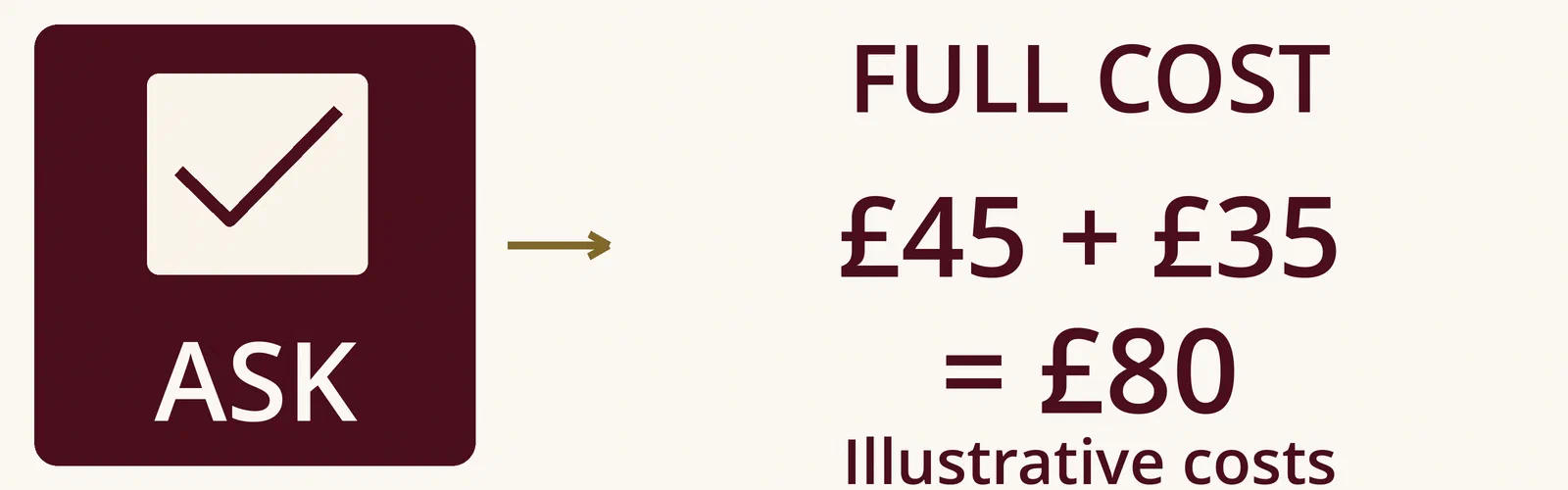
Bringing your own wine is worth considering when the venue approves the exact bottle and its full corkage charge makes sense to you. Confirm the terms before travelling, then compare the restaurant bill and the cost of using your bottle. A headline fee alone cannot settle either question.
Corkage is the restaurant’s charge for serving wine you supply. “BYOB” describes bringing your own bottle, but the permission, limits and service arrangements still belong to the particular venue and booking.
Published policies show why you must ask
Two official London policies, checked on 16 October 2026, illustrate the differences. These are dated examples, not a typical fee range or confirmation for a future reservation.
| Venue | Published policy | Still needs confirmation |
|---|---|---|
| The Clove Club | One bottle per two guests; £75 per bottle excluding service charge | Your exact bottle, format and full payable charge |
| Roast | Red/white 75cl £42; red/white magnum £85; Champagne/sparkling £48; wine must not be listed on its menu | Your bottle’s eligibility, format where unspecified, tax/service treatment |
A bottle allowance is not a drinking recommendation. A magnum is not automatically treated as two standard bottles, and a sparkling fee does not automatically cover every sparkling format. Ask the venue rather than extending the policy yourself.
We checked the public pages; we have not contacted either restaurant or obtained approval for a bottle. Policies can change, and a general FAQ may not describe private dining, event nights or your particular booking.
Send one complete enquiry
A useful message gives the restaurant enough detail to answer once. Copy and adapt this original script:
Hello, I have a reservation for [name], [date/time], for [number] guests. May we bring [quantity, producer, exact wine, vintage, colour/category and bottle size]? Please confirm that it is permitted for this booking and is not excluded by your wine list. What is the total corkage, including any applicable tax and service charge? Are there bottle or format limits, or any requirement to order wine from the list? Could you also confirm whether you can chill, open and, if appropriate, decant it, and when we should bring it? If the bottle is faulty, what corkage would apply and could we choose a replacement from your list? Thank you.
Do not send a vague “Do you do corkage?” and assume the answer covers an unusual format or a wine the venue sells. Ask whether the exclusion concerns the exact vintage or a wider listing if that distinction matters.
If the restaurant declines, choose from its list or find another venue. Our restaurant ordering guide helps you describe your preferences and budget clearly.
Keep a confirmation card
Save the reply with the booking. If permission comes by phone, record who you spoke with and ask for the relevant details to be attached to the reservation.
| Field | Synthetic completed example | Your booking |
|---|---|---|
| Date / guests | 24 October / two | ______ |
| Approved bottle | One 750ml still red, exact identity recorded | ______ |
| Permission evidence | Written reply saved | ______ |
| Corkage / extra charges | £40; 12.5% service on corkage; no further tax added | ______ |
| Service plan | Arrive with bottle; opening agreed; decanting to discuss | ______ |
| Fault / backup plan | Fee treatment confirmed; choose backup from list | ______ |
Every entry in that example is invented. Its fee and service rate are unrelated to the two restaurants above. An unanswered field is a reason to clarify the plan, not evidence that the service is included.
Compare two kinds of cost
If you already own the bottle, there may be little cash to spend before dinner. You are still using something with value. Keep these two calculations separate:
Incremental cash: new spending caused by bringing the bottle, such as corkage, service on corkage, transport specifically needed for it, or a newly purchased bottle.
Economic cost: that spending plus a reasonable value for an owned bottle you will use. State the basis: your actual acquisition cost or a credible current replacement cost. A past purchase price and a replacement price answer different questions, so do not silently swap between them.
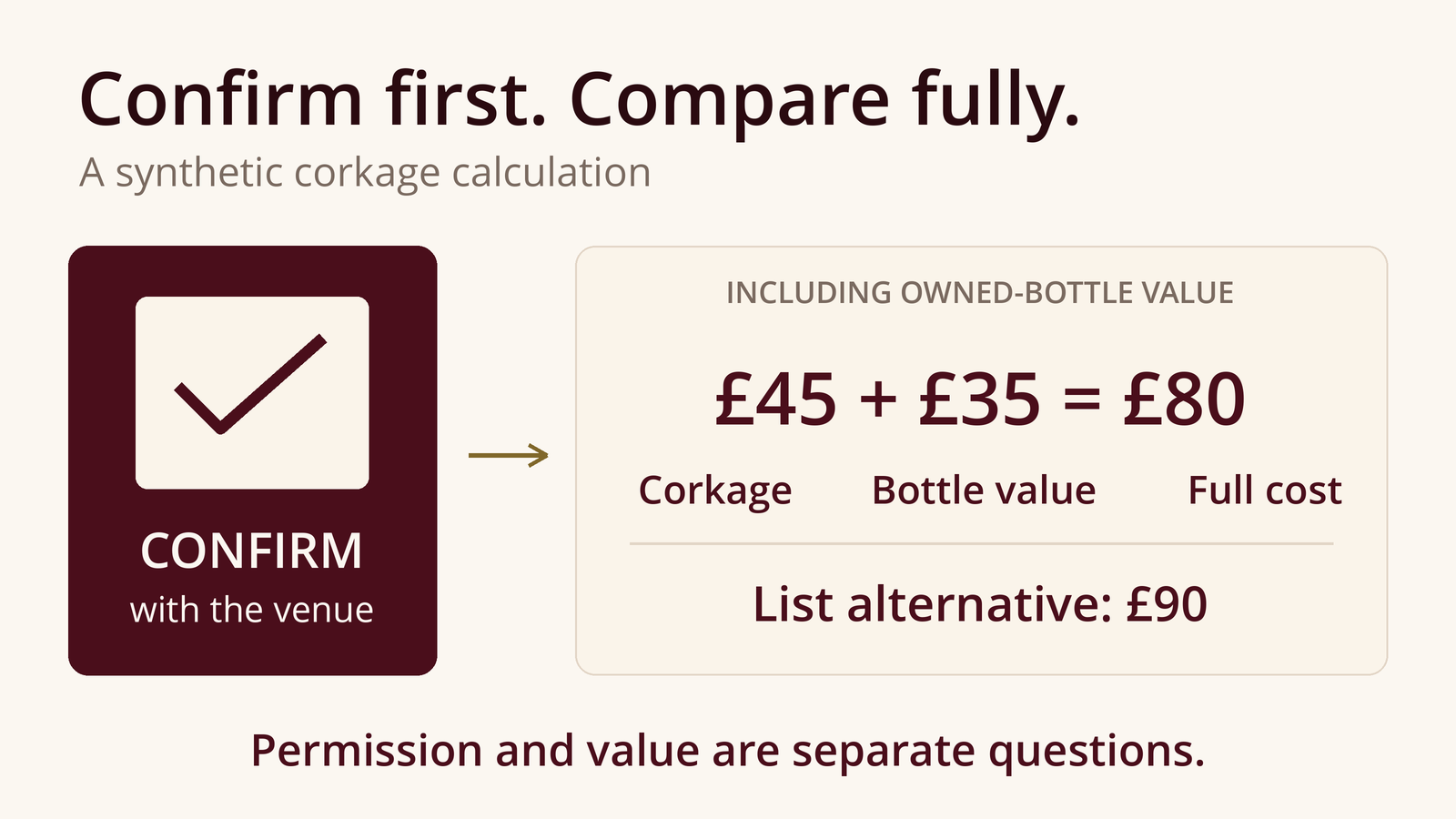
Here is a synthetic comparison. Assume one bottle suits the table, the venue has confirmed a 12.5% service charge on either choice, displayed prices include tax, and no other costs differ:
| Choice | Cash at dinner | Total including bottle value |
|---|---|---|
| Restaurant list bottle at £80 | £80 × 1.125 = £90 | £90 |
| Owned bottle valued at £35; £40 corkage | £40 × 1.125 = £45 | £45 + £35 = £80 |
| Buy a £35 bottle for this dinner | £45 at dinner, plus £35 purchase | £80 |
Using the owned bottle saves £45 of new cash against ordering from the list, but £10 after including its assumed value. It is not the same saving. If you value that bottle at £60 instead, the economic cost becomes £105, which is £15 above the list option. The wines may also differ in quality, sentiment and suitability; arithmetic cannot make them identical.
Your blank calculation: list total £______ ; corkage plus applicable charges £______ ; extra costs £______ ; supplied bottle value and basis £______ ; cash difference £______ ; economic difference £______ .
Agree the service, then enjoy the occasion
Tell the team if the bottle has sediment or needs chilling. Agree the arrival time and opening plan rather than delivering an already-opened bottle or insisting on a fixed decanting time. Ask what happens if the bottle is faulty; do not assume the venue will replace a wine it did not sell.
Have a backup from the list, including a smaller commitment if the table wants less wine. The by-the-glass versus bottle guide helps compare that choice without expecting anyone to finish a bottle.
Sommo’s cellar can help you identify what you own, while menu scoring can help explore the restaurant’s listed wines. Neither grants corkage permission or confirms the bill. The useful final record is the venue’s answer, your full calculation and a bottle the table actually wants to share.