Prepare a verified bottle list and ask suitable specialists for written proposals before packing or accepting a price. A retail listing, an auction estimate and the money a seller eventually receives are different figures. Good preparation makes those differences visible and reduces the chance that an offer changes because the bottles arriving do not match the list.
Start with the part of the collection you actually want to sell. If ownership is unclear, resolve it first. For a collection forming part of an estate, the inherited-cellar guide covers the initial triage and authority questions.
Make a sale pack that another person can check
Count the bottles physically. Record producer, cuvée, vintage or edition, bottle size, quantity and location. A case description is not a substitute for checking what remains inside it. Distinguish an unopened original case from a collection of loose bottles.
Photograph labels, capsules, fill levels and case markings without attempting cosmetic restoration. Describe visible damage and gaps in storage history plainly. Attach relevant invoices and storage statements, with unrelated personal information removed. Keep unknown provenance labelled unknown.
Use the cellar inventory template as a starting point, then add a sale reference for each proposed lot. A concise cover note should explain the scope: for example, “18 bottles offered; the remaining 54 bottles are being retained”. This prevents a quote for selected stock being mistaken for an offer on the whole cellar.
Sotheby’s wine consignment page requests photographs and wine information for an initial estimate and describes specialist inspection and logistics. That is a useful model for the evidence pack, regardless of which eligible specialist you approach. It does not mean every bottle will be accepted.
Compare the transaction, not just the headline price
A direct purchase proposal and an auction consignment involve different decisions. Ask whether the price is firm, conditional on inspection or merely an estimate. Establish which deductions apply, who arranges transport, when responsibility changes and what happens to rejected or unsold bottles.
Sotheby’s published consignment guidance, checked on 10 October 2026, identifies several fee categories, including commission and damage and liability fees. Obtain the actual agreement for your consignment rather than borrowing a percentage from an old article.
Here is an invented comparison, not a wine valuation or a typical fee schedule:
| Item | Direct-purchase proposal | Auction illustration |
|---|---|---|
| Offer or assumed hammer price | £2,400 | £2,800 |
| Stated selling deductions | £0 | £280 |
| Collection or transport | £100 | £140 |
| Remainder before any other charges or applicable tax | £2,300 | £2,380 |
The auction illustration leaves only £80 more under those assumptions. Its hammer price is still uncertain. Payment timing, unsold-lot terms and inspection conditions could matter more than that difference. Ask the specialist to show the calculation using your actual proposal, including any charges omitted here.
The CellarTracker and Wine-Searcher comparison explains why purchase cost, replacement estimates and sale proceeds should stay separate in your records.
Check the channel before sending anything
Ask the buyer or auctioneer to confirm that it can accept the collection from your location, under the applicable rules and its own terms. Confirm any ownership, identity, provenance and shipping documentation needed. Do not assume that a casual online introduction gives you a permitted sale route.
CellarTracker documents a selling-list referral to Benchmark Wine Group. Checked on 10 October 2026, its help page was last updated in March 2024 and contains market, fee and legal statements that should not be treated as current advice for every seller. Verify the live process and eligibility directly. An inventory tool can help prepare a list; the transaction still needs its own agreement.
Agree the inspection and handover record
Before collection, reconcile the final packing list with the accepted proposal. Record which bottles go in each case, photograph the packaging and retain the transport instructions. Use the specialist’s agreed packing method and arrangements rather than improvising with ordinary parcel delivery.
Get written confirmation of receipt, inspection results and any change to the offer. Ask how discrepancies or damaged bottles are handled and when payment is due under the agreement. Keep these documents even after the wines disappear from the warehouse or home shelf.
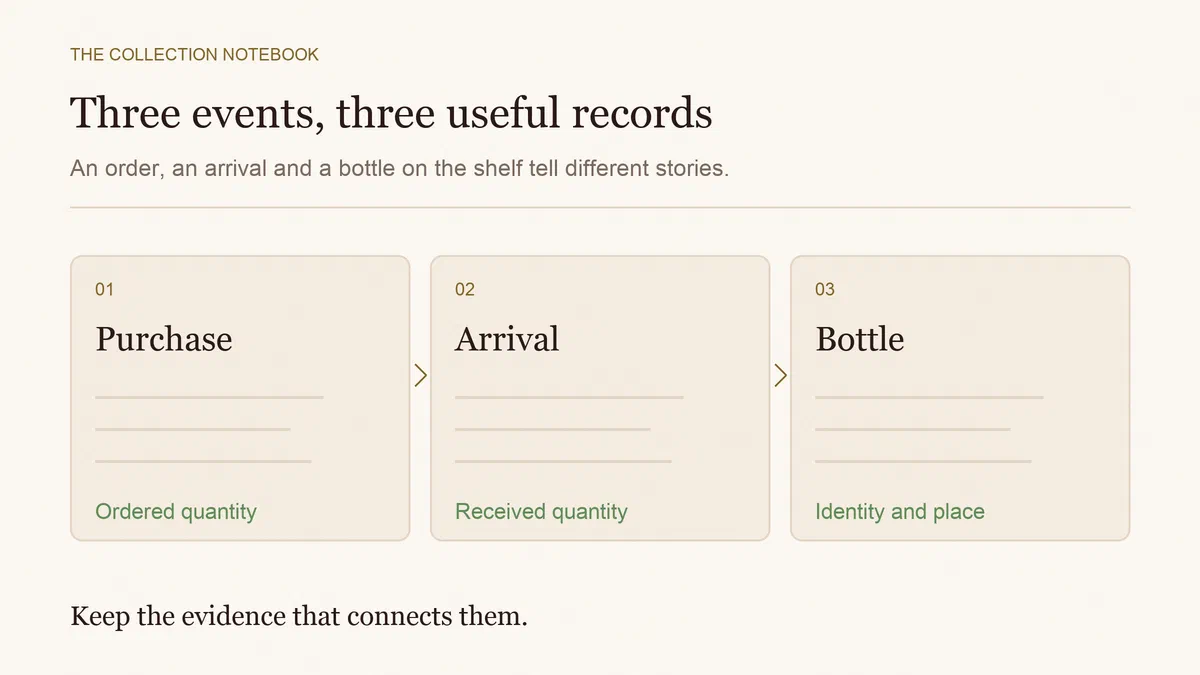
Your working list can distinguish “offered”, “accepted for collection” and “received”. Update ownership and stock when the agreed transaction actually takes effect. Do not create a tasting entry for a bottle sold unopened.
If you keep the remaining collection in Sommo Premium, reconcile its quantities and notes after the sale. Keep quotations, invoices and handover documents in your own sale folder. Sommo helps maintain the retained collection; valuation and sale execution belong with the appropriate specialists.