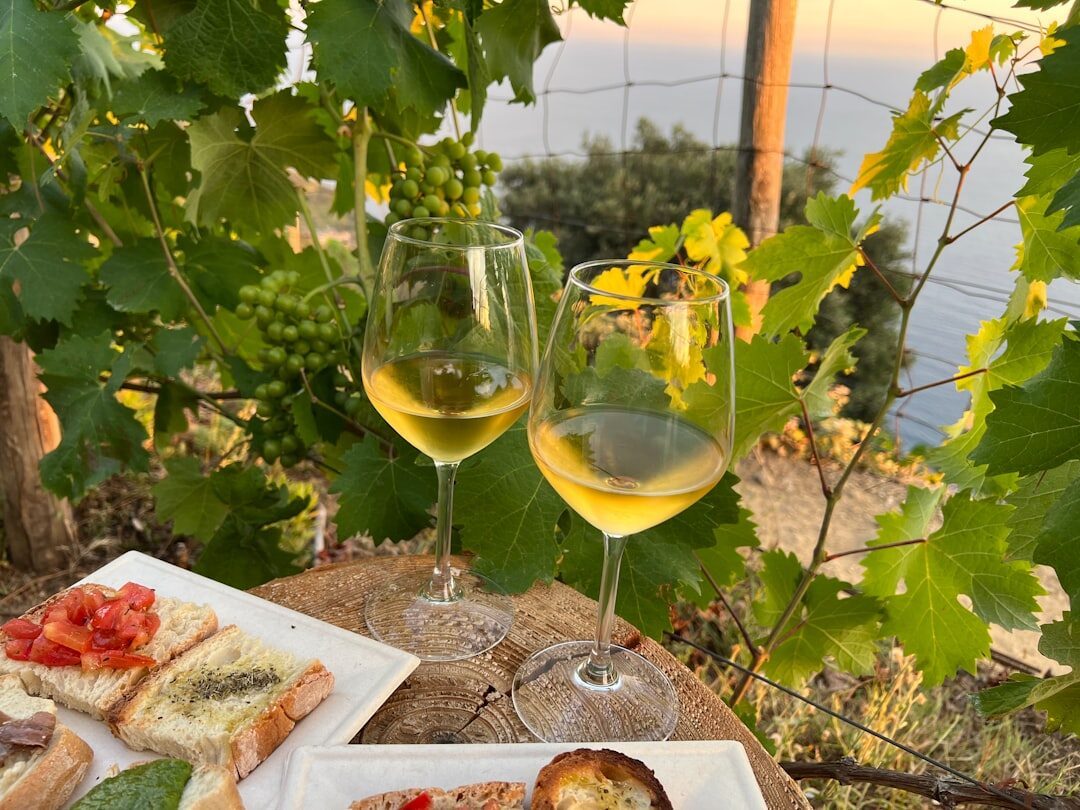
Pinot Grigio is one of the most-bought, least-respected white wines in the world. Mention it at a wine bar and you will see the trained sommelier wince. The grape’s reputation, built on decades of cheap, mass-market Italian bottlings, is that of a neutral, inoffensive, slightly bland house white: a wine that lubricates lunch but never demands attention.
That reputation is mostly the result of how Pinot Grigio is grown in one specific region of Italy, not what the grape is capable of. The same grape, planted in different soils and farmed with intent, produces some of the most distinctive white wines in Europe. Pinot Grigio from Friuli or Alto Adige is a serious wine. Pinot Gris from Alsace is occasionally extraordinary. The supermarket version is to real Pinot Grigio what supermarket lager is to a vintage Trappist beer: the same category in name only.
This guide walks through what the grape actually is, where it produces its best wines, the difference between Pinot Grigio and Pinot Gris (same grape, different style), and how to buy a bottle that will reset your expectations. If you have written off Pinot Grigio after a few bland glasses, this is the chapter that brings it back.
What Pinot Grigio Actually Is
Pinot Grigio is a mutation of Pinot Noir. The grape’s name (literally “grey Pinot” in Italian) refers to the colour of its skin, which is a dusty pinkish-grey rather than the green of most white grapes or the black of red grapes. The mutation arose centuries ago in Burgundy and spread through Europe, taking on different names and styles in each region.
In Italy, it became Pinot Grigio. In France, particularly Alsace, it became Pinot Gris. In Germany, it became Grauburgunder. In Hungary, Szürkebarát. All four are the same grape, but the wines made from it vary dramatically by region and producer intent.
The grape itself is naturally aromatic, with stone fruit (pear, apricot), citrus, and sometimes a slightly spicy character. It has moderate acidity and, when handled carefully, can develop real complexity. The bland version of Pinot Grigio comes not from the grape, but from how it is treated: mass production, early harvest for maximum acidity, no skin contact, no oak, no fermentation complexity. The result is liquid neutrality.
The Three Styles That Define the Grape
Pinot Grigio appears in three distinct styles, each with its own logic.
1. Light, Crisp, Italian (the Mass-Market Style)
The Pinot Grigio most drinkers know. Light-bodied, pale, high-acidity, almost no flavour beyond a faint hint of green apple or pear. Produced primarily in the Delle Venezie DOC (a sprawling appellation across northeastern Italy, including parts of Veneto, Friuli, and Trentino).
Why it tastes like this: Early harvest for high acidity. Stainless steel fermentation at cold temperatures. No skin contact. Filtration removes texture. Designed for high-volume sales at low price points.
What to expect: A safe, refreshing, almost characterless white. Pairs with most light foods because it has no strong flavour to clash. Drinks well very cold.
The reputation: This is the version that gives Pinot Grigio its bland name. It is not bad wine, it is just minimal wine. Producers like Cavit, Bolla, and Santa Margherita dominate this category at the supermarket price tier.
2. Structured, Mineral, Italian (the Serious Style)
The Pinot Grigio that wine professionals respect. Produced in the cooler, mountainous regions of Friuli-Venezia Giulia, Alto Adige, and parts of Trentino, where the grape grows on limestone, slate, and volcanic soils at higher elevations.
Why it tastes different: Lower yields, later harvest, longer skin contact (sometimes a few hours, sometimes longer), occasional oak ageing, longer lees ageing. The result is a wine with body, mineral character, and genuine complexity.
What to expect: Pear and stone fruit with mineral undertones, slightly creamy texture, and length on the finish. The best examples have ten or more years of aging potential. The wines pair with serious food (grilled fish, white meats, mushroom dishes) rather than just lubricating salads.
Producers to know:
- Jermann (Friuli): The producer that arguably proved serious Pinot Grigio could exist. The Vintage Tunina is a blend, but the Pinot Grigio is excellent.
- Vie di Romans (Friuli): One of the most precise producers in Italy.
- Cantina Terlano (Alto Adige): The cooperative that has redefined what Italian whites can do at high altitudes.
- Hofstätter, Tramin, Elena Walch (Alto Adige): All make Pinot Grigio that deserves comparison to top Alsatian wines.
Expect to pay $20 to $40 for serious bottlings. The price difference from supermarket Pinot Grigio is real and noticeable.
3. Rich, Aromatic, Alsatian (the Pinot Gris Style)
The same grape, made with completely different intent. In Alsace, Pinot Gris (the French spelling) is treated as a serious wine grape worthy of late harvest, extended skin contact, and significant ageing.
Why it tastes different: Riper grapes, sometimes harvested at near-dessert sugar levels. Skin contact can extend for days, producing wines with deep golden colour. Some bottlings are explicitly off-dry or sweet, particularly the Vendange Tardive and Sélection de Grains Nobles levels.
What to expect: Rich texture, often with detectable residual sugar. Apricot, honey, smoke, and a distinctive savoury, almost mushroomy character at age. These wines pair beautifully with Alsatian cuisine (rich pork dishes, foie gras, choucroute) and with Asian food.
Producers to know:
- Trimbach: Consistently excellent across the entire range.
- Domaine Weinbach: One of the great producers of the region.
- Zind-Humbrecht: Biodynamic, expressive, age-worthy.
- Marcel Deiss: Idiosyncratic, terroir-focused, sometimes blended with other grapes.
Expect to pay $25 to $60 for serious Alsatian Pinot Gris. The wines age remarkably: ten to twenty years for the best examples.
For more on the grape variety itself, see our Pinot Grigio guide and the grape-variety profile.
Pinot Grigio vs Pinot Gris: The Same Grape, Different Wines
The names mean exactly the same thing, but they signal very different wines.
“Pinot Grigio” on a label usually signals: Italian style. Crisper, drier, lower in body. The mass-market style is at the cheap end; the serious northeastern Italian wines are at the higher end. Almost always dry.
“Pinot Gris” on a label usually signals: Alsatian or French style. Richer, more aromatic, sometimes off-dry or sweet. The Alsatian wines lead this category; American Pinot Gris (especially from Oregon) sits between Alsatian and Italian styles.
One trick that works in shops: If you want crisp and dry, buy “Pinot Grigio.” If you want rich and aromatic, buy “Pinot Gris.” The label name is shorthand for the style.
This grape is one of the cleanest examples of how regional winemaking culture shapes the final wine more than the grape itself does.
How to Compare Pinot Grigio to Other White Wines
The grape’s identity becomes clearer in context with similar whites.
Pinot Grigio vs Sauvignon Blanc
Sauvignon Blanc is more aromatic and more obviously fruity. Pinot Grigio is more restrained. Both are typically dry, both have good acidity, but Sauvignon Blanc has the bright herbaceous and citrus character that makes it instantly recognisable. Pinot Grigio is the quieter, more food-friendly option. For an in-depth comparison, see our Pinot Grigio vs Sauvignon Blanc page.
Pinot Grigio vs Chardonnay
Chardonnay is fuller-bodied and more textured, especially when oaked. Pinot Grigio is leaner and crisper. Unoaked Chardonnay (from Chablis, for example) is closer to Pinot Grigio in style than oaked Chardonnay is. The serious Italian Pinot Grigios sit in roughly the same complexity range as basic Chablis. For more, see Chardonnay vs Pinot Grigio.
Pinot Grigio vs Riesling
Riesling has more aromatic intensity and almost always more visible fruit (peach, lime, sometimes petrol with age). Pinot Grigio is more restrained. Riesling spans a wider range of sweetness levels; Pinot Grigio is usually dry. Riesling has more aging potential overall, though serious Pinot Grigio and Pinot Gris can age impressively.
Is Pinot Grigio Sweet?
The most common question about the grape. The honest answer: Italian Pinot Grigio is almost always dry. Alsatian Pinot Gris is sometimes off-dry or sweet, depending on the producer’s choice and the harvest level (Vendange Tardive and Sélection de Grains Nobles are dessert wines).
If you find a “Pinot Grigio” or “Pinot Gris” that tastes sweet, check the label. The producer has either added a touch of sugar to balance acidity (common in cheap mass-market bottlings) or it is a deliberately off-dry style. Most serious dry Pinot Grigio has under 4 grams per litre of residual sugar, which reads as bone-dry to almost any palate.
What Pinot Grigio Costs
A practical price guide for buying.
- $8 to $12 (supermarket tier): Mass-market Italian. Inoffensive, drinkable, forgettable.
- $13 to $20 (better Italian, basic Alsace): Better Italian producers, basic Alsatian Pinot Gris. The first tier where the grape starts to show personality.
- $20 to $40 (serious Italian and Alsatian): Single-vineyard or producer-led Italian, serious Alsatian. This is where the grape becomes interesting.
- $40+ (collector tier): Vendange Tardive Pinot Gris, top single-vineyard Italian. Genuinely age-worthy.
For most casual drinkers, the $13 to $20 tier is the sweet spot. The leap from supermarket to mid-tier is dramatic. The leap from mid-tier to high-end is more refined and only worth it for serious occasions.
Pinot Grigio With Food
The food-friendliness of Pinot Grigio is one of its real strengths. The grape pairs especially well with:
- Italian seafood: Linguine vongole, fritto misto, grilled branzino.
- Risotto: Mushroom, asparagus, or pea risotto especially.
- Charcuterie and antipasti: Prosciutto, cured meats, olives.
- Light Asian dishes: Sushi (skip with raw oily fish), Vietnamese summer rolls, lighter Thai dishes.
- Goat cheese: A surprising classic, particularly with serious Alsatian Pinot Gris.
Avoid pairing with very rich, oaky, or sweet foods. Pinot Grigio is a precise wine; it does not have the weight to handle dramatic flavour profiles.
For more pairing detail, see how to pair wine with food and our Asian food pairing guide.
The Pinot Grigio Cellar
If you want to explore the grape seriously, a working six-bottle introduction:
- A serious Italian Pinot Grigio (Vie di Romans or Jermann from Friuli): the reference for what good Italian-style looks like.
- An Alto Adige Pinot Grigio (Cantina Terlano or Tramin): the alpine, mineral expression.
- A basic Alsatian Pinot Gris (Trimbach Réserve): the entry point to the French style.
- A serious Alsatian Pinot Gris (Trimbach Cuvée Frédéric Émile or Weinbach): the rich, aged-potential expression.
- A Sélection de Grains Nobles Pinot Gris (any top Alsatian producer): the dessert-wine expression, drunk in tiny pours.
- An Oregon Pinot Gris (Eyrie or King Estate): the New World style, sitting between Italian and French.
Drinking these six bottles back-to-back will tell you everything you need to know about Pinot Grigio in one evening. To check how well the styles have stuck, the WSET Level 2 grape varieties quiz tests Pinot Grigio alongside its white-grape peers.
Explore with Sommo
The fastest way to develop a sophisticated palate for Pinot Grigio is to log every bottle you try with proper notes. After ten bottles, you will start to see which producers and regions match your preferences, and the wider grape’s diversity will stop being abstract. Sommo gives you the tools: AI label scanning, structured tasting notes, regional cross-references, and a personal record that compounds over months.
Download Sommo free and start mapping a grape that deserves more respect than it gets.