Pinot Grigio: What Does It Taste Like, and Why Do People Love It?
Light, crisp, and impossible to dislike — here's everything you need to know about Pinot Grigio: taste, regions, food pairings, and the best bottles to try.
If someone asks you to recommend the easiest white wine to drink, there’s a good chance you’ll say Pinot Grigio before you’ve even finished thinking about it. It’s light. It’s crisp. It doesn’t challenge you. And that’s precisely why millions of people reach for it every week.
But Pinot Grigio also has a reputation problem. It’s so associated with cheap, mass-produced supermarket bottles that serious wine drinkers tend to dismiss it entirely. That’s a mistake. A good Pinot Grigio — one from the right region, made with actual care — is a genuinely lovely wine. The trick is knowing what to look for.
What Is Pinot Grigio?
Pinot Grigio is a white wine made from the Pinot Grigio grape, a mutation of Pinot Noir with greyish-pink skins (grigio means “grey” in Italian). Despite the coloured skins, it’s almost always vinified as a white wine — pressed quickly to avoid extracting colour or tannins.
The grape originated in Burgundy but found its spiritual home in northeastern Italy, where it became one of the world’s most popular white wines. It’s also grown extensively in Alsace (as Pinot Gris), Oregon, New Zealand, and Australia, though each region puts its own stamp on the style.
Pinot Grigio Flavour Profile and Tasting Notes
So what does Pinot Grigio actually taste like? In the classic Italian style, the flavour profile is clean and understated:
- Green apple and pear — the dominant fruit notes
- Lemon and lime zest — bright citrus acidity
- A subtle almond or mineral finish — adds a touch of interest
- Light body — closer to water than cream in weight
- Bone dry — no residual sugar, clean finish
There’s nothing aggressive or challenging here. No oak, no tannins, no funky flavours. It’s the kind of crisp dry white wine that works equally well as an aperitif or alongside a meal. That simplicity is exactly what makes it such a good white wine for beginners — you don’t need any wine knowledge to enjoy it.
The Pinot Grigio wine taste can vary significantly by region, though. An Alsatian Pinot Gris (same grape, different name) is a completely different experience: richer body, stone fruit instead of citrus, sometimes a touch of honey, and an almost oily texture. If Italian Pinot Grigio is a glass of sparkling water, Alsatian Pinot Gris is fresh-squeezed juice.
Where the Best Pinot Grigio Comes From
Northern Italy — The Benchmark
The classic Pinot Grigio characteristics come from three regions in northeastern Italy: Alto Adige, Friuli Venezia Giulia, and Trentino. Alto Adige, tucked against the Austrian border with high-altitude vineyards and cool nights, produces the most precise and elegant examples. Friuli is a close second. These wines are lean, mineral, and refreshing — everything the grape does best.
The Veneto produces the bulk of Italy’s Pinot Grigio, and this is where quality drops off. Most of the cheap, anonymous bottles filling supermarket shelves come from high-yield Veneto vineyards. They’re drinkable but unremarkable. The price difference between a Veneto Pinot Grigio and an Alto Adige one is often just a few pounds — the quality difference is enormous.
Alsace — The Richer Side
In Alsace, the grape goes by Pinot Gris and takes on a completely different personality. Expect ripe peach, apricot, honey, and baking spice, with a fuller body and lower acidity. Grand Cru examples can age for years and develop real complexity. If you think Pinot Grigio is boring, Alsatian Pinot Gris might change your mind.
Oregon and New Zealand
Oregon has made Pinot Gris one of its signature whites, producing a style that sits between Italian and Alsatian — more fruit than Italy, more acidity than Alsace. New Zealand’s versions are similarly balanced, with bright pear and citrus notes and good freshness.
How to Read the Label: Grigio vs Gris
This is the single most useful thing to know when buying this grape. The name on the bottle tells you what style to expect:
- Pinot Grigio = Italian style. Light, crisp, neutral, dry. Think aperitif.
- Pinot Gris = Alsatian or New World style. Richer, more aromatic, sometimes off-dry. Think dinner wine.
Same grape. Different winemaking philosophy. If you want lean and refreshing, look for Grigio. If you want rounder and more flavourful, look for Gris.
Food Pairings
Pinot Grigio’s light body means it pairs best with equally delicate food. Overpower it with a heavy steak and the wine disappears.
Great pairings:
- Grilled or baked white fish
- Prosciutto and melon
- Light pasta dishes — think pesto or lemon butter, not bolognese
- Risotto (especially seafood or vegetable)
- Mild soft cheeses — fresh mozzarella, burrata
- Simple green salads with a citrus dressing
What to avoid: Heavily spiced food, rich red meat, anything with bold, competing flavours. The wine is too delicate and will get lost.
How to Choose a Good Bottle (and Avoid the Junk)
Most bad Pinot Grigio isn’t bad because of the grape — it’s bad because of where it was grown and how it was made. Here’s how to find the good stuff:
Look for a specific region on the label. Alto Adige, Friuli, or Trentino indicate quality. If the label just says “Pinot Grigio, Italy” with no region specified, it’s almost certainly mass-produced Veneto wine. Walk past it.
Spend more than the absolute minimum. The $7 bottle and the $14 bottle are not the same wine. In the $12 to $18 range, you’ll find genuinely good Pinot Grigio that actually has character.
Try a producer, not just a brand. Names like Alois Lageder, Jermann, Livio Felluga, Peter Zemmer, and Elena Walch consistently produce excellent Pinot Grigio. Supermarket own-brand labels are a gamble.
Drink it young. Pinot Grigio is not a wine for ageing. Buy the most recent vintage available and drink it within a year or two. Freshness is the entire point.
Frequently Asked Questions
What does Pinot Grigio taste like?
Pinot Grigio tastes light, crisp, and refreshing — think green apple, pear, lemon, and a subtle almond finish. It has good acidity and a clean, dry finish with no bitterness or tannins. Italian versions are the leanest and most delicate; Alsatian Pinot Gris (same grape) is richer with more stone fruit and a slightly oily texture.
Is Pinot Grigio sweet or dry?
Pinot Grigio is almost always dry — it has little to no residual sugar. The impression of fruit (apple, pear) can make it seem slightly sweeter than it is, but it finishes clean and dry. Alsatian Pinot Gris can occasionally be off-dry or semi-sweet, especially in vendange tardive (late harvest) styles.
Is Pinot Grigio a good wine for beginners?
Yes — Pinot Grigio is one of the most beginner-friendly white wines. It’s light, inoffensive, and easy to enjoy without overthinking it. No tannins, no oak, no challenging flavours. It’s the wine you can drink while deciding what you actually like. See our full guide to the best white wines for beginners for more options.
What food goes with Pinot Grigio?
Pinot Grigio pairs well with light, delicate foods: grilled fish, prosciutto, light pasta dishes, risotto, mild soft cheeses, and simple salads. Avoid heavy, rich, or boldly spiced foods — the wine is too delicate to stand up to them.
What is the difference between Pinot Grigio and Pinot Gris?
They are the same grape but made in different styles. Pinot Grigio (Italian style) is lean, crisp, and neutral — light-bodied with citrus and green apple. Pinot Gris (Alsatian/French style) is richer, more aromatic, and sometimes off-dry, with stone fruit, honey, and a fuller body. The name on the bottle indicates the intended style.
Next Time You’re in the Wine Aisle
Skip the cheapest bottle on the shelf. Look for Alto Adige or Friuli on the label. And before you buy, scan it with Sommo — you’ll get the full tasting profile, region details, and food pairing suggestions instantly, so you know exactly what you’re getting before you open it.
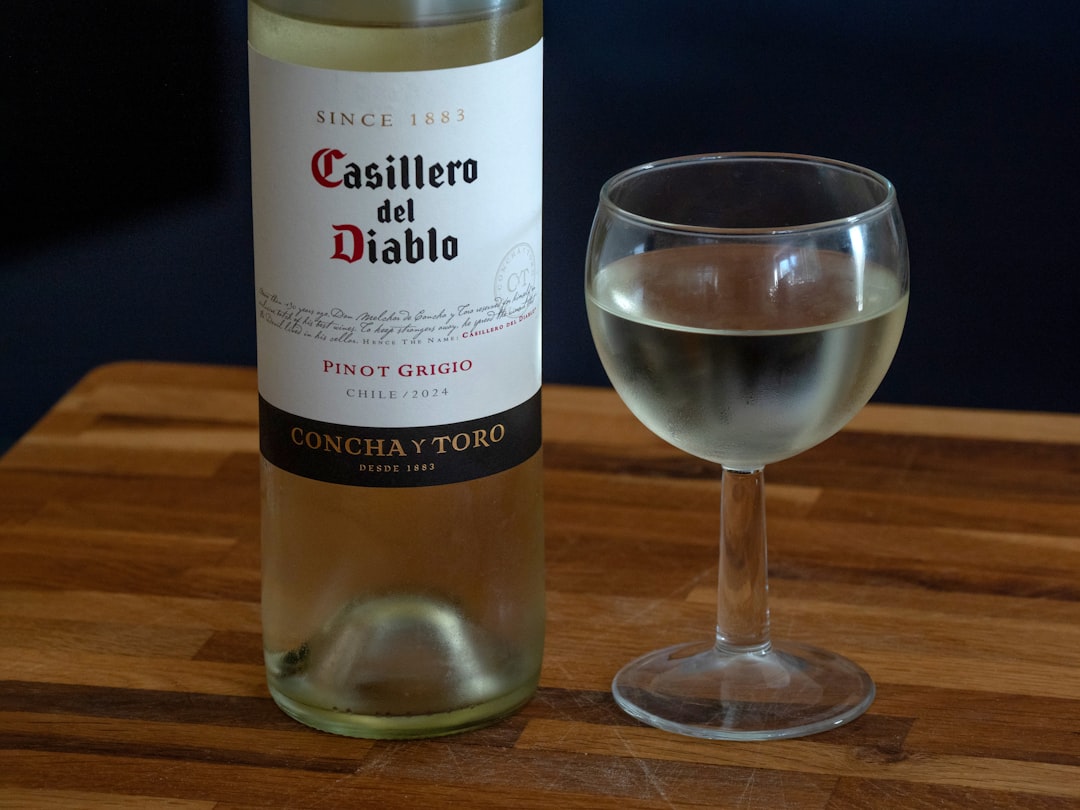
Photo by Brett Jordan on Unsplash