Every winter party I host has a pan on the hob, and every winter someone asks whether there is a version without the alcohol. For years my answer was a sad mug of hot juice. Then I started treating the alcohol-free version as a drink in its own right.
The short answer: the best non-alcoholic mulled wine starts with a dealcoholised or alcohol-free red, gets more spice and less sugar than the usual recipe, and is warmed gently. Grape juice works too, but it is sweeter, so add citrus and cut the sugar. Check the label: under UK guidance on low alcohol descriptors, “alcohol free” means no more than 0.05% ABV and “dealcoholised” means no more than 0.5% ABV.
Below I cover which base to use, my recipe, the label terms that matter and how to serve it so nobody feels they got the lesser drink.
Why does alcohol-free mulled wine often taste flat?
Alcohol does three jobs in mulled wine. It carries the aroma of the spice, it gives the drink weight in the mouth, and it brings a little warmth that balances the sugar. Take it out and you lose all three.
Hot grape juice is the usual stand-in, and it is too sweet and too simple. The fix is to rebuild what the alcohol was doing:
- Weight from a dealcoholised wine, or from a splash of strong black tea.
- Aroma from more spice, added in two stages.
- Balance from citrus and less sugar than you think.
Which base should I use?
Dealcoholised red wine. My first choice. It still tastes like wine, with some tannin and grip. Pick a fruity style such as Merlot, Tempranillo or Garnacha. My non-alcoholic wine guide covers how they are made and what to expect.
Red grape juice. Easy and cheap, and the best choice for children. It is sweet, so leave out most of the sugar and add more orange and lemon.
A half-and-half mix. Dealcoholised wine with a little grape juice and a cup of black tea. Rounded, not too sweet, and very close to the real thing.
My non-alcoholic mulled wine recipe
This makes about six small mugs.
Ingredients
- 1 bottle (750ml) of dealcoholised or alcohol-free red wine
- 250ml of red grape juice or cloudy apple juice
- 1 cup (about 200ml) of strong black tea, optional
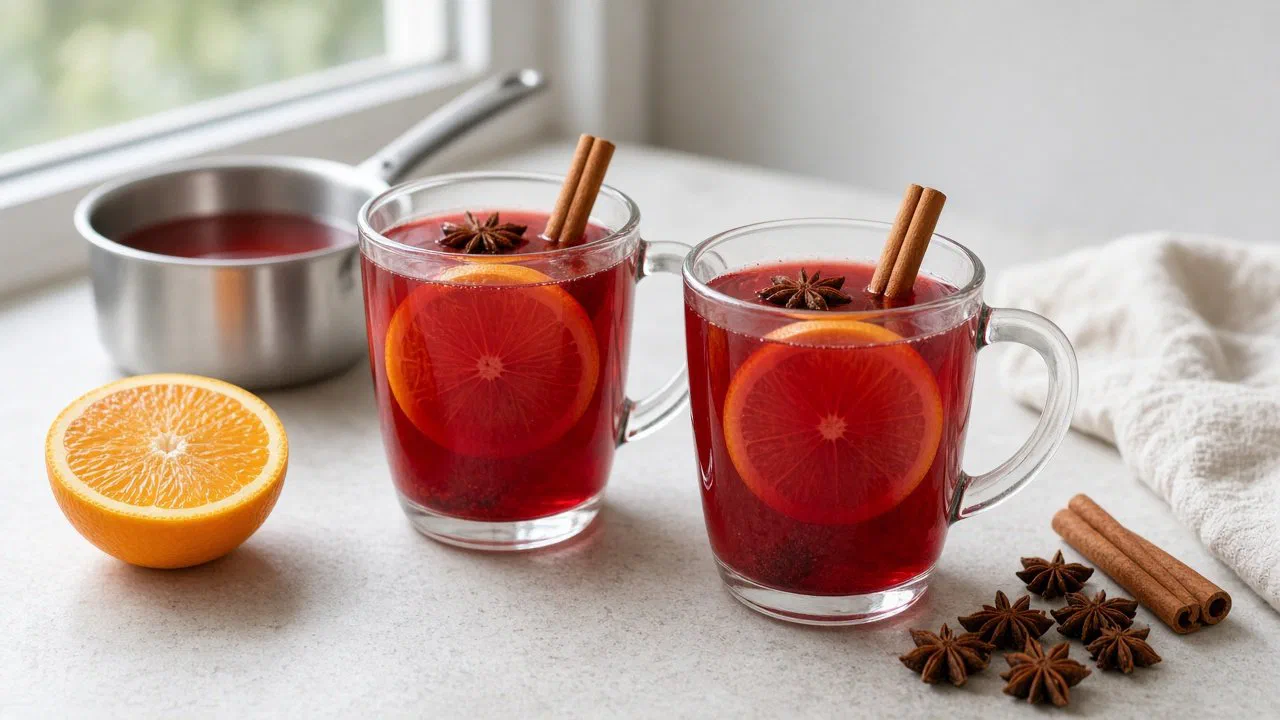
- 1 orange, sliced, plus the peel of a second in wide strips
- Juice of half a lemon
- 2 cinnamon sticks
- 6 cloves
- 2 star anise
- A thumb of fresh ginger, sliced
- 1 to 2 tablespoons of honey or brown sugar, to taste
Method
- Put the juice, tea, citrus, ginger and spices in a pan and warm gently for 10 minutes. This builds the spice base.
- Add the dealcoholised wine and warm until it steams. Do not let it boil.
- Taste, then add honey a spoon at a time. Stop before it tastes sweet enough; it will seem sweeter as it cools.
- Add the lemon juice at the end to lift it.
- Strain into warm mugs with a fresh orange slice.
If you prefer the classic version with alcohol, my mulled wine guide has the full recipe and ratios.
Does heating mulled wine get rid of the alcohol?
This is the myth I hear most. Gentle heating drives off some alcohol, but not all of it, and a pan kept warm through a party still contains alcohol. If a guest is pregnant, driving, in recovery or avoiding alcohol for any reason, do not rely on heat. Make a separate pan from grape juice, and label it.
What do the labels actually mean?
UK low alcohol descriptors guidance sets out the terms:
- Alcohol free: no more than 0.05% ABV, after the alcohol has been extracted.
- Dealcoholised: no more than 0.5% ABV, after the alcohol has been extracted.
- Low alcohol: 1.2% ABV or below.
So neither label means zero. In the UK, “alcohol free” means 0.05% ABV or less, and “dealcoholised” means up to 0.5%. For guests who need to avoid alcohol completely, make their pan from grape juice. For guests who simply want a lighter evening, any of them works. My guide to low calorie and low alcohol wines has more options.
How do I serve it at a party?
- Two pans, two ladles, two labels. Keep the alcohol-free pan clearly marked and away from the boozy one.
- Give it the same garnish. Orange slice, cinnamon stick, same mugs. Nobody should feel like the afterthought.
- Keep it warm, not hot. The lowest heat on the hob, or a slow cooker on warm.
- Make enough. In my experience the alcohol-free pan empties fastest, because drivers and drinkers both go back to it.
For more on looking after everyone at the same table, read my guide to hosting drinkers and non-drinkers.
How does Sommo help with alcohol-free wine?
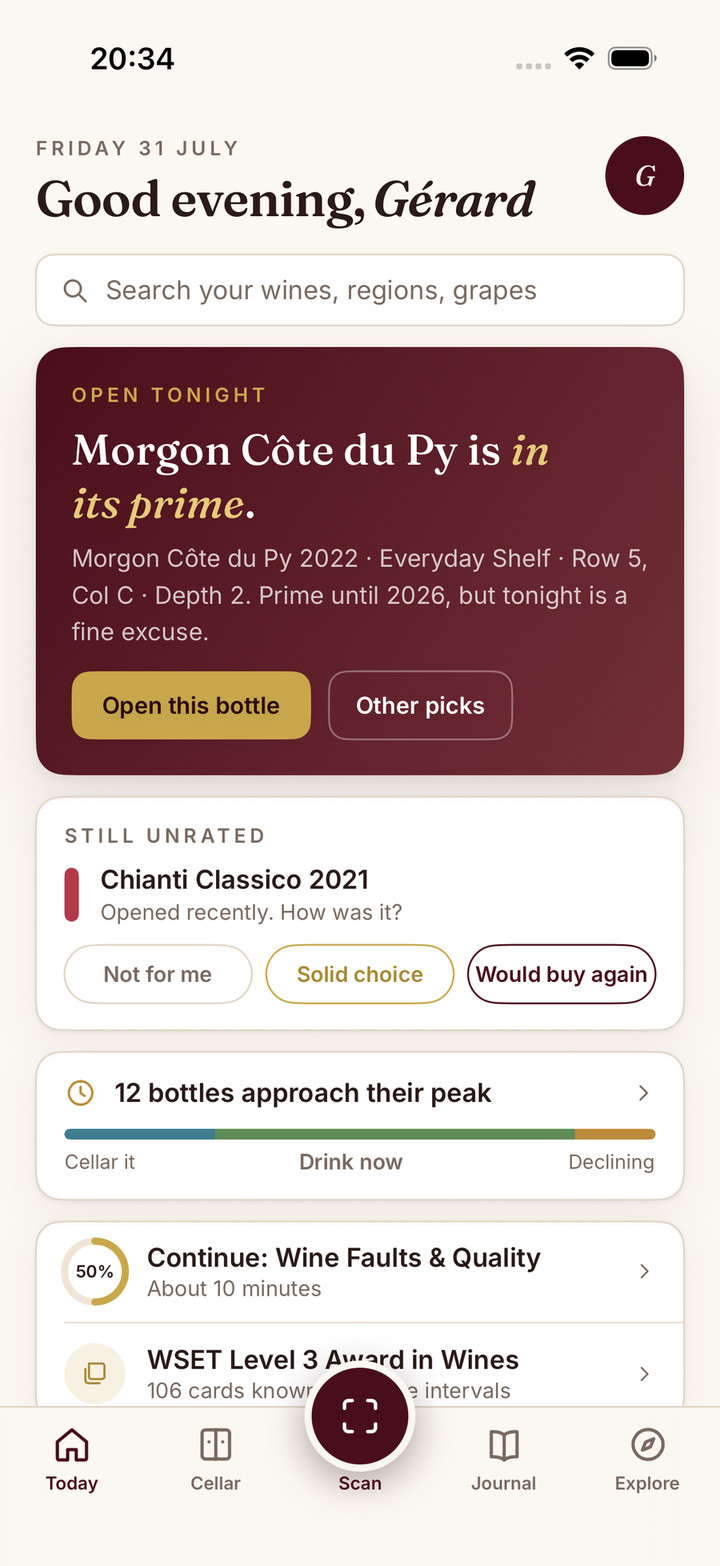
Dealcoholised wines vary enormously, and the label rarely tells you how it will taste. Sommo makes the choice quick.
Scan the label. Point Sommo at the bottle and it tells you the grape, style and what to expect. A label scan takes about 10 seconds.
Shelf scan. In the shop, scan the shelf and Sommo picks the best match from the bottles on the shelf, with two or three alternatives.
Picks that fit you. Menu and shelf picks use your 10 most recent ratings, so once you have rated a few alcohol-free bottles, Sommo knows whether you like them fruity or dry.
Keep a record. Rate the ones that worked for mulling in your journal so next winter you skip the duds.
It all runs on proprietary wine-tuned AI grounded in a hand-maintained wine library. The free tier gives you 5 lifetime AI scans per device, shared across label, menu and shelf scans, plus the journal and 30 days of journal history. Premium unlocks unlimited scans, lifetime history, Taste DNA, AI tasting feedback and Tasting Mode for $4.99 a month or $29.99 a year. Sommo runs on iPhone, iPad, Android, HarmonyOS and the web.
Download Sommo and find a good alcohol-free red.
The bottom line
Non-alcoholic mulled wine does not have to be hot juice. Start with a dealcoholised red, build the spice in juice and tea first, add less sugar than you think and finish with lemon. Use grape juice if anyone needs to avoid alcohol completely, keep the pans separate, and give both the same orange slice and the same welcome.