Mulled wine is the one recipe where the cheapest bottle on the shelf genuinely makes the best result. It is also the one most often ruined, in the same two ways every time: someone spends too much on the wine, then boils it. Here is what to buy, the ratios that work, and the temperature that matters.
What Wine to Use
Look for four things: ripe fruit, soft tannin, no oak, and moderate alcohol. Roughly 12 to 13.5 percent is ideal, since anything higher gets harsh once warmed.
That describes a lot of cheap wine. A fruity unoaked Merlot, a Spanish Garnacha, a Portuguese red from the Douro Valley, or an entry level Côtes du Rhône from the Rhône Valley all mull beautifully at $7 to $12. Zinfandel and Italian Primitivo work too: their brambly fruit takes to cinnamon and orange naturally.
Why an Expensive Bottle Is Wasted
Two reasons, and they compound. Heat destroys what you paid for: the aromatic compounds that make a fine wine interesting are volatile, so they leave the pot as steam within minutes, and whatever survives is buried under sugar, citrus and clove.
Worse, the structure of a serious wine works against you. Oak turns bitter and slightly ashy when heated with sugar, and firm tannin becomes drying and metallic when warm. A $30 oaked Rioja Reserva can genuinely mull worse than an $8 Garnacha. The same logic drives cooking with wine: heat spends aromatics no matter what you paid for them.
How Different Wines Mull
| Wine style | How well it mulls | Notes |
|---|---|---|
| Fruity unoaked Merlot, $7 to $11 | Excellent | The default. Soft, ripe, no sharp edges |
| Spanish Garnacha, $8 to $12 | Excellent | Warm red fruit and spice already built in |
| Portuguese Douro red, $9 to $14 | Excellent | Dark fruit and structure that survives heat |
| Côtes du Rhône, $10 to $15 | Very good | Garrigue herbs complement the spices |
| Zinfandel or Primitivo, $10 to $16 | Very good | Brambly and generous, needs less sugar |
| Chianti or other Sangiovese, $9 to $14 | Good | High acid keeps it fresh, add a little more sugar |
| Beaujolais or other Gamay | Good | Lovely but light, so go easy on the citrus |
| Oaked Rioja Reserva, $20 and up | Poor | Oak turns bitter and you waste the aging |
| Young Cabernet or Nebbiolo | Poor | Tannin becomes drying and metallic when warm |
| Sweet red blends | Poor | Cloying once you add sugar on top |
| Sparkling wine | Never | Heat kills the bubbles, which were the point |
| Unoaked white: Chenin Blanc, Riesling | Good, for white mulled wine | Use honey, ginger and cardamom instead |
The Temperature That Actually Matters
Do not let it boil. This is the whole technique.
Alcohol boils at about 173F (78C), well below water at 212F, so a pot at a rolling boil is evaporating the wine you bought. It also stews the fruit flat and pulls harsh bitterness out of clove and citrus pith.
Hold the pot at 160 to 170F (70 to 77C) for 20 to 30 minutes: steam rising, never bubbles breaking the surface. No thermometer? The moment it looks like it might simmer, turn the heat down. Serve at around 140 to 150F.
The Spice Ratio
Per 750 ml bottle, start with:
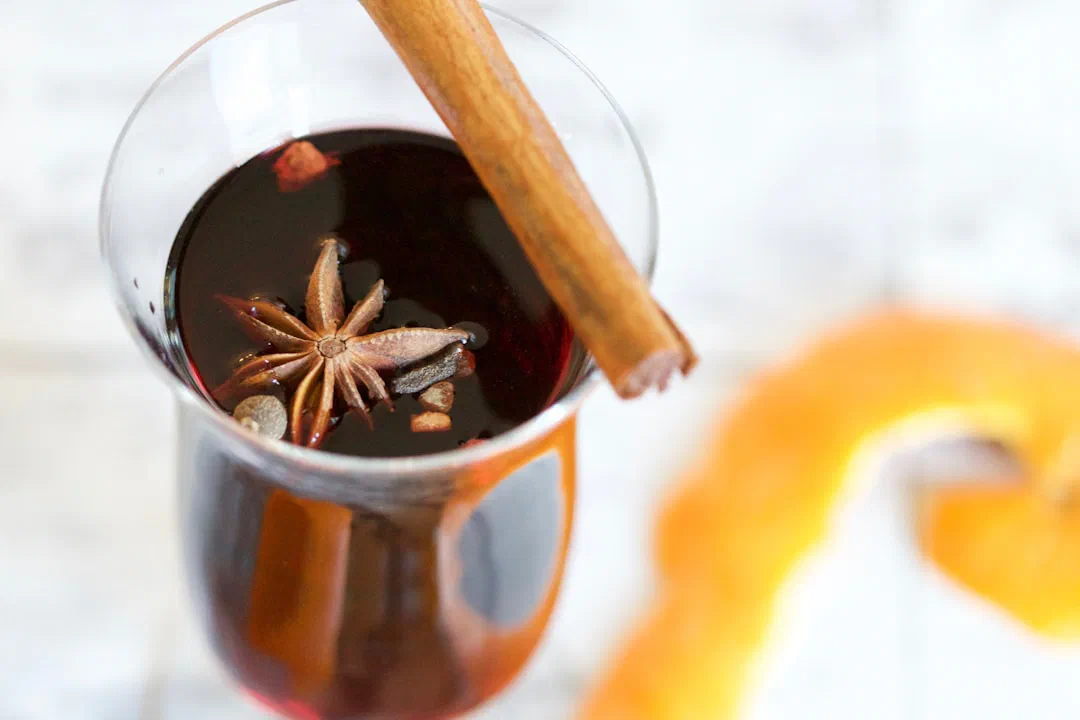
- 1 cinnamon stick
- 3 whole cloves
- 1 star anise
- 2 green cardamom pods, lightly crushed
- The pared zest of half an orange, with as little white pith as possible
- 1 to 2 tablespoons sugar, or 1 tablespoon honey
Use whole spices, never ground. Ground spice makes the wine cloudy and leaves grit in the mug, and it keeps releasing flavor long after you wanted it to stop.
Scale linearly up to four bottles, then ease off: cut the clove and star anise by about a third, since both keep extracting the whole time the pot is warm and they are the two spices that most often take over.
The Base Recipe, for Six People
Makes six generous mugs.
- 2 bottles (1.5 liters) dry, fruity red wine
- 1 orange, thinly sliced, plus the pared zest of a second
- 1/3 cup (70 g) sugar, or 1/4 cup (60 ml) honey
- 2 cinnamon sticks
- 6 whole cloves
- 2 star anise
- 4 green cardamom pods, lightly crushed
- 1 thumb of fresh ginger, sliced (optional)
- 1/2 cup (120 ml) brandy or ruby Port (optional, off the heat)
Method:
- Put the sugar, citrus zest, spices and about one cup of the wine in a wide pan. Warm gently and stir until the sugar dissolves.
- Hold it at a bare warmth for 5 minutes so the spices infuse a concentrated base.
- Add the rest of the wine and the orange slices. Bring it up to 160 to 170F, no bubbles.
- Hold it there for 20 to 30 minutes, tasting after 20. Add sugar a teaspoon at a time if it needs it.
- Take it off the heat, stir in the brandy or Port if you are using it, and ladle it out through a strainer.
Adding the spirit off the heat matters: any earlier and most of it evaporates.
Three Variations
White mulled wine. Known in Germany and Austria as Weisser Glühwein, and lighter than the red version. Use a dry unoaked white, swap clove and star anise for ginger, cardamom and a split vanilla pod, and use honey and lemon in place of sugar and orange.
Alcohol free. Do not just heat grape juice, which comes out flat and sugary. Cut unsweetened red grape juice with strong black tea, roughly four parts to one, which restores the tannin the wine was providing, and add pomegranate juice for acidity. Skip the sugar entirely.
Fortified. A splash of ruby Port, brandy or dark rum, added off the heat, gives back the alcohol and body that gentle heating removes. Use about 1/2 cup per two bottles.
Making It for a Party
The pot on the stove does not scale, because it needs attention and the spices keep extracting. Two better options. Make the whole batch up to three days ahead, cool it, refrigerate it, and reheat gently on the day, since the flavor improves overnight. Or make a spiced sugar syrup (sugar, spices and citrus zest simmered in a little water) which keeps two weeks refrigerated and freezes well, then add it to warmed wine as guests arrive. The free wine party calculator works out how many bottles the guest list needs before you shop, and how much wine for a party covers the fuller math.
A slow cooker on its warm setting holds temperature for hours with no risk of boiling. Strain the spices out first, or by hour three it tastes like a candle. Set it next to a cheese board and it does most of the hosting for you.
Frequently Asked Questions
What is the best wine for mulled wine?
A dry, fruity, unoaked red at $7 to $12: Merlot, Spanish Garnacha, Portuguese Douro red, or a basic Côtes du Rhône. You want ripe fruit, soft tannin and no oak, because the sugar and spice supply everything else.
Should you use expensive wine for mulled wine?
No. Heat drives off the aromatics you paid for, and sugar, citrus and clove cover whatever survives. Worse, oak and firm tannin turn bitter when heated with sugar, so an expensive bottle often mulls worse than a cheap juicy one.
Can you boil mulled wine?
Never. Alcohol boils at about 173F (78C), far below water, so a bubbling pot strips the wine out fast, stews the fruit, and pulls bitterness from clove and citrus pith. Hold it at 160 to 170F, where steam rises but nothing bubbles.
How far in advance can you make mulled wine?
Mull it up to three days ahead, cool it, refrigerate it, then reheat gently without boiling. The flavor improves overnight. For a party, make a spiced sugar syrup two weeks ahead and add wine to it as you go.
How much mulled wine do you need per person?
Plan about two mugs per guest for a two hour party, roughly one 750 ml bottle for every three people. It is poured in smaller measures than table wine but drunk faster, so the two effects cancel out.
Explore with Sommo
Mulled wine is the easy part of December. For the meals around it, wine for Christmas covers the table, wine with turkey handles the bird, wine for Thanksgiving is the November version, and wine for New Year’s Eve takes it to midnight. If you are less sure what to pour once the pot is empty, the two-minute wine quiz finds a style worth chasing. Scan the cheap red you are about to mull and Sommo will tell you whether it is fruity and unoaked enough for the pot, or too good to boil with cloves.
Download Sommo free and pour with better intel.