Moving a wine collection is less about a clever packing trick than knowing exactly what you own before the first bottle leaves its rack. Make a quick inventory, separate fragile or valuable bottles, use divided cartons, and move the wine directly to a cool, stable room at the other end. The goal is to protect the glass, avoid prolonged heat and still know where everything went.
This is a moving-day plan, not a guide to designing storage from scratch. If the new home has no suitable place ready, decide that first using our wine storage guide. Packing carefully only to leave cases beside a sunny window solves the wrong problem.
A week before: make a bottle map
Count bottles by location and mark the ones you would be upset to lose. For each wine, note at least the producer, name, vintage, quantity and current position. Photograph any label you cannot easily read, plus any visible signs of seepage or a pushed cork. A spreadsheet or your cellar record works; consistency matters more than the tool. If you are new to tracking a collection, the first wine collection guide has a simple approach.
Give every carton a number and plan to record its contents. “Kitchen wine” is not an inventory. “Carton 4: six bottles from lower rack, left side” is. Keep the list on your phone as well as on paper so it does not disappear into the same lorry.
This is also a useful moment to sort bottles by drinking priority. A wine already near the end of its drinking window may be a better farewell dinner than another thing to pack. Do not assume every old bottle is valuable or needs years more storage.
On moving day: limit knocks and heat
Use robust bottle cartons with individual cells or dividers. Wrap especially delicate bottles so they cannot knock against glass, but keep labels readable in your inventory. Do not overfill a box or stack heavy furniture on top. Mark cartons as fragile and tell the people carrying them what is inside. For a large or valuable collection, ask a specialist wine mover about temperature control and cover before committing.
Plan the transport window around conditions, not just the removal van’s timetable. Avoid leaving the wine in a parked vehicle, direct sun or a warm loading area. A short drive in ordinary conditions is different from hours in an uncontrolled van. If the trip is long or weather is extreme, a specialist service is worth discussing rather than assuming household removals are suitable.
At the new home: reconcile before shelving
Put cartons in the prepared cool space first. Check each carton number against the inventory, then inspect bottles for broken glass, leaks, loose closures or staining around the neck. Photograph problems before cleaning up if you may need to raise them with the mover or insurer. A bottle that smells or tastes wrong later needs a separate check; our guide to spoiled wine explains the signs.
When you shelve the bottles, update the new location while the box is open. Do not leave this until the following weekend. An old wine with sediment may need time standing undisturbed before you pour it carefully, but no fixed resting period makes a heat-damaged bottle sound again.
Keep the collection usable
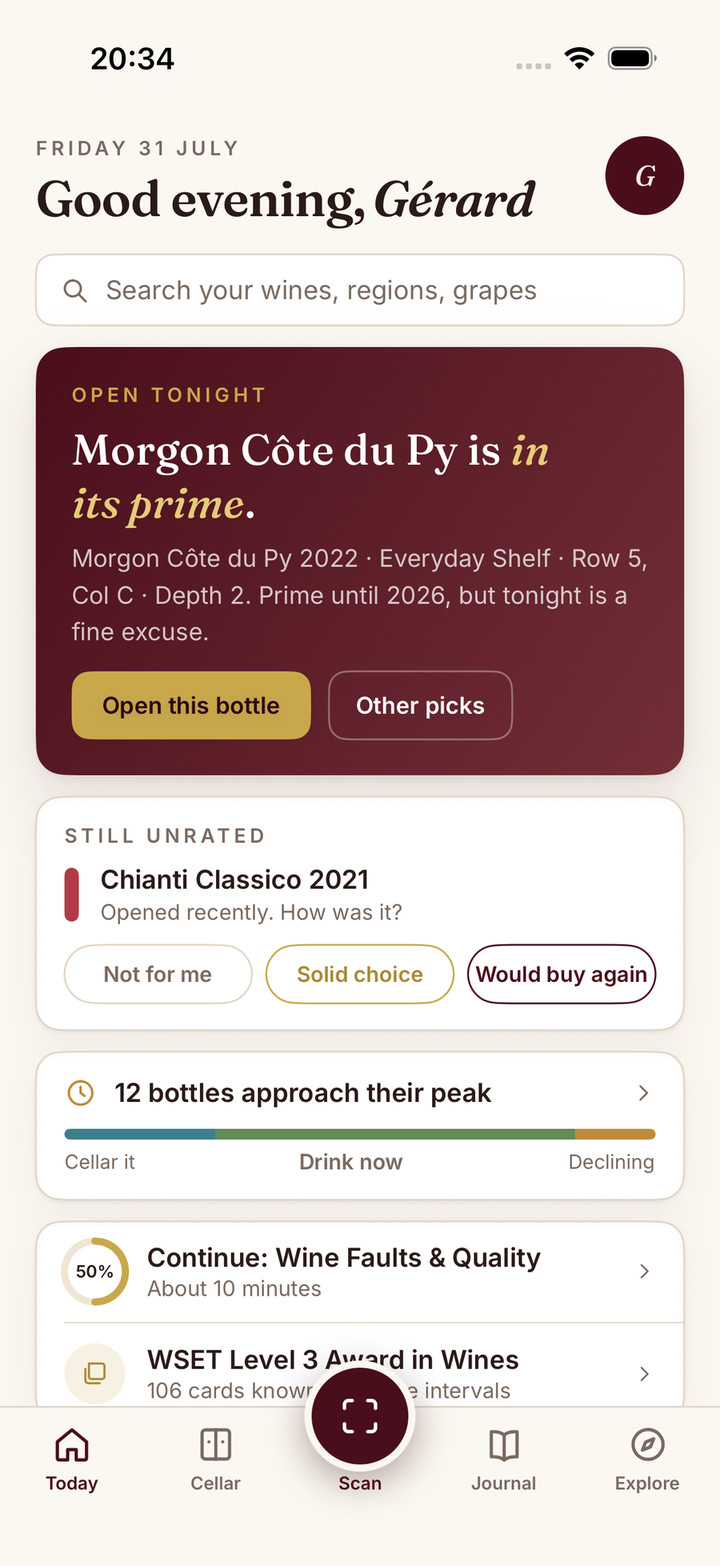
Sommo’s cellar can keep the bottle record and new positions together, while the journal helps you remember why particular wines were worth moving. Even a small collection is easier to enjoy when the next bottle is findable, rather than hidden in “Box 7” for months.
Download Sommo to keep your collection in view before and after the move.