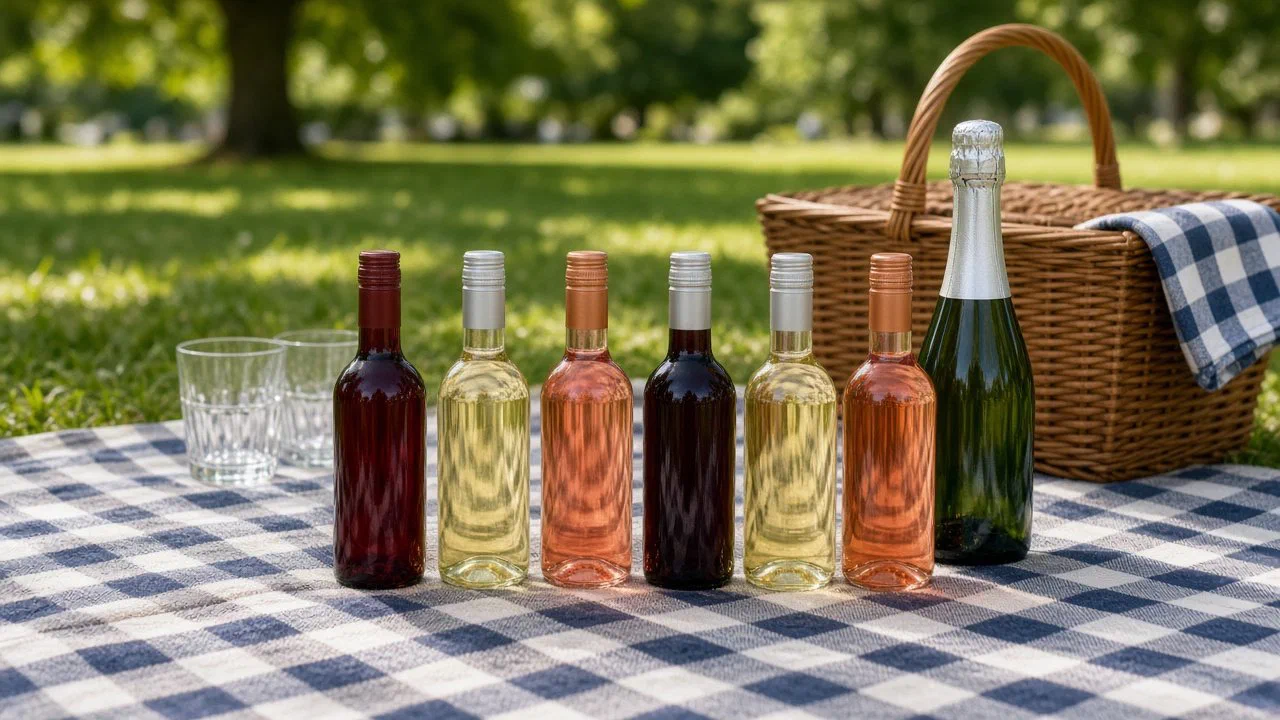
I keep a few small bottles in the fridge door for one reason: on a Tuesday when I want one glass with dinner, I do not want to open a full bottle and feel I have to finish it. Mini bottles solve that. They also come with catches most people miss.
The short answer: mini wine bottles usually hold 187ml for still wine and 200ml for sparkling wine and Champagne, roughly one generous glass each. EU packaging rules, set out in Directive 2007/45/EC, allow still wine in 100, 187, 250, 375 and 500ml sizes below the standard 750ml, and sparkling wine in 125, 200 and 375ml. Minis are perfect for one glass, cooking, picnics and favours, but they cost more per litre and do not age well.
Below I cover the common sizes, when a mini makes sense, how to judge value, and the quality catches to watch for.
What sizes do mini wine bottles come in?
| Size | Usual name | Roughly |
|---|---|---|
| 187ml | Split or piccolo | One generous glass, a quarter bottle |
| 200ml | Quarter (Champagne and sparkling) | One and a half small glasses |
| 250ml | Small bottle or can | One large glass, a third of a bottle |
| 375ml | Half bottle or demi | Two and a half glasses |
| 500ml | 50cl | Common for sweet wines and some Italian whites |
The EU nominal sizes list for still wine is 100, 187, 250, 375, 500, 750, 1,000 and 1,500ml; for sparkling wine it is 125, 200, 375, 750 and 1,500ml. That is why mini fizz is usually 200ml while mini still wine is 187ml. My bottle sizes guide covers everything from the split upwards, and half bottles have their own post: are half bottles of wine worth it.
When do mini wine bottles make sense?
- One glass on a weeknight. No pressure to finish a bottle.
- Cooking. A 187ml bottle is often exactly what a risotto or pan sauce needs.
- Picnics, trains and hotel rooms. Light, unbreakable cans and screwcap minis travel well.
- Favours and toasts. A row of mini sparkling bottles at a wedding or birthday looks generous and cuts waste.
- Trying a style. A mini is a cheap way to find out whether you like Prosecco, rosé or a new grape before buying a full bottle.
- Gift baskets. Small bottles fill a hamper without taking it over. For bigger ideas, see my gifts for wine lovers.
Are mini wine bottles good value?
By the litre, almost never. Four 187ml bottles hold the same as one 750ml bottle, but you pay for four bottles, four closures and four labels. Do the maths on the shelf price before you buy a multipack.
They become good value when the alternative is pouring half a bottle away. If you regularly open a bottle and lose the second half, a mini or a good stopper may save you money. My guide to how long wine lasts after opening shows how long you really have.
What should I watch for with mini bottles?
Freshness. Small bottles have more air relative to the wine, so they age faster. Most are made to drink young. Look for a recent vintage and do not keep them for years.
Heat. Minis sold in kiosks, trains and petrol stations often sit in warm places. Avoid bottles from a sunny display.
Style. Many mini still wines are simple, mass-market styles. Mini sparkling wine is usually the stronger category, with real Champagne and good Prosecco widely available in 200ml.
Opening mini fizz. The pressure is the same as in a full bottle, so hold the cork, point it away from people and twist the bottle, not the cork.
How many units are in a mini bottle of wine?
The formula is volume in ml times ABV, divided by 1,000:
- 187ml at 12%: about 2.2 units.
- 200ml at 12%: about 2.4 units.
- 250ml at 13%: about 3.3 units.
The NHS advises not regularly drinking more than 14 units a week, spread over three or more days. Minis make it easier to keep track, because each one is a clear, measured serving. My guide to units in a bottle of wine has the full table.
How does Sommo help with small bottles?
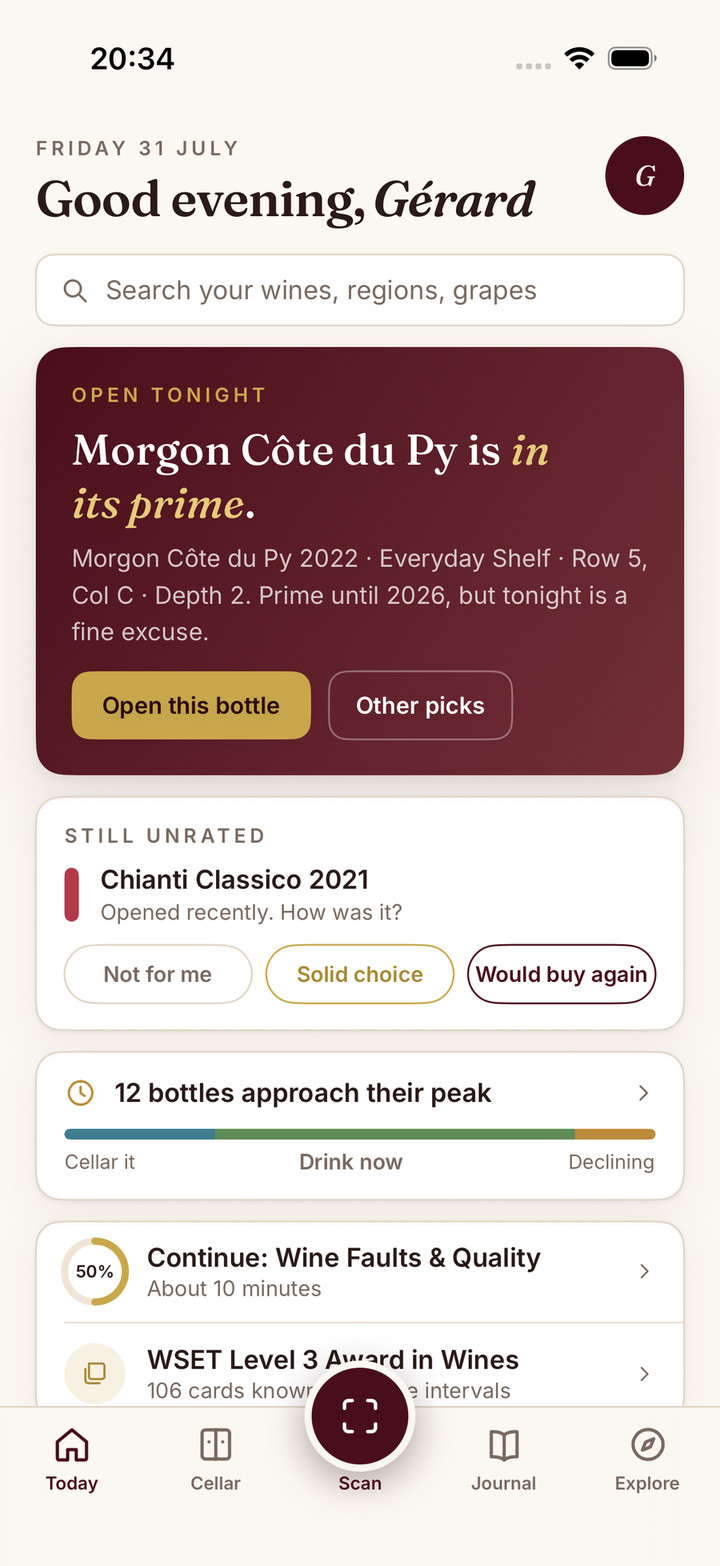
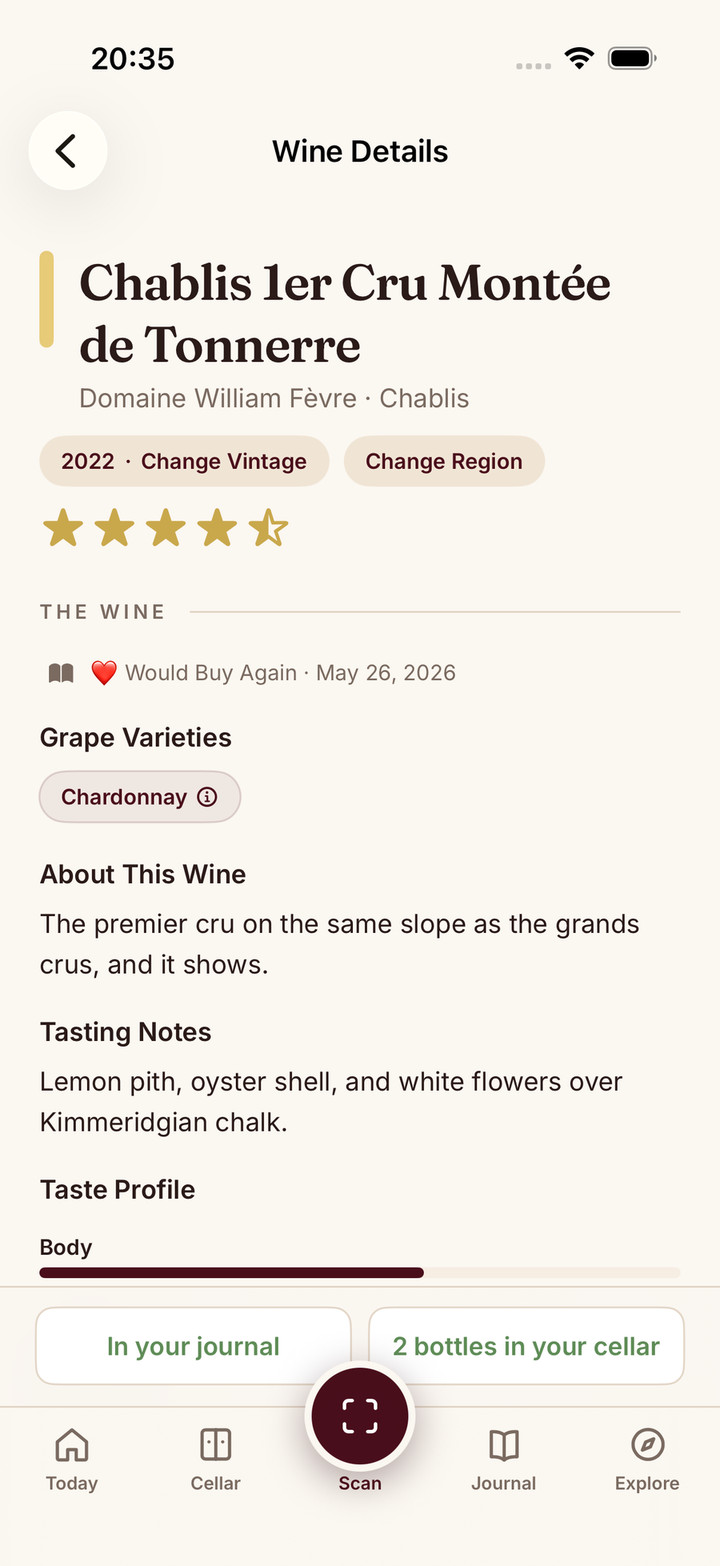
Know what you are buying. Scan the label and Sommo tells you the grape, style and drinking window in about 10 seconds, which matters most with minis, where the vintage is the main quality clue.
Pick from the shelf, fast. Sommo picks the best match from the bottles on the shelf, with two or three alternatives, using your 10 most recent ratings.
Make the tasting count. The scan saves the wine. Rate it after your glass and it goes into your journal, so a mini you liked becomes a full bottle you can find again.
It all runs on proprietary wine-tuned AI grounded in a hand-maintained wine library. The free tier gives you 5 lifetime AI scans per device, shared across label, menu and shelf scans, plus the journal and 30 days of journal history. Premium unlocks unlimited scans, lifetime history, Taste DNA, AI tasting feedback and Tasting Mode for $4.99 a month or $29.99 a year. Sommo runs on iPhone, iPad, Android, HarmonyOS and the web.
Download Sommo and make every small bottle count.
The bottom line
Mini wine bottles are usually 187ml for still wine and 200ml for sparkling. They cost more per litre, age faster and are best drunk young, but for one glass, cooking, travel or a try-before-you-buy, they are hard to beat. Pick a recent vintage, keep them cool, and rate the ones you like so the next purchase is a full bottle.