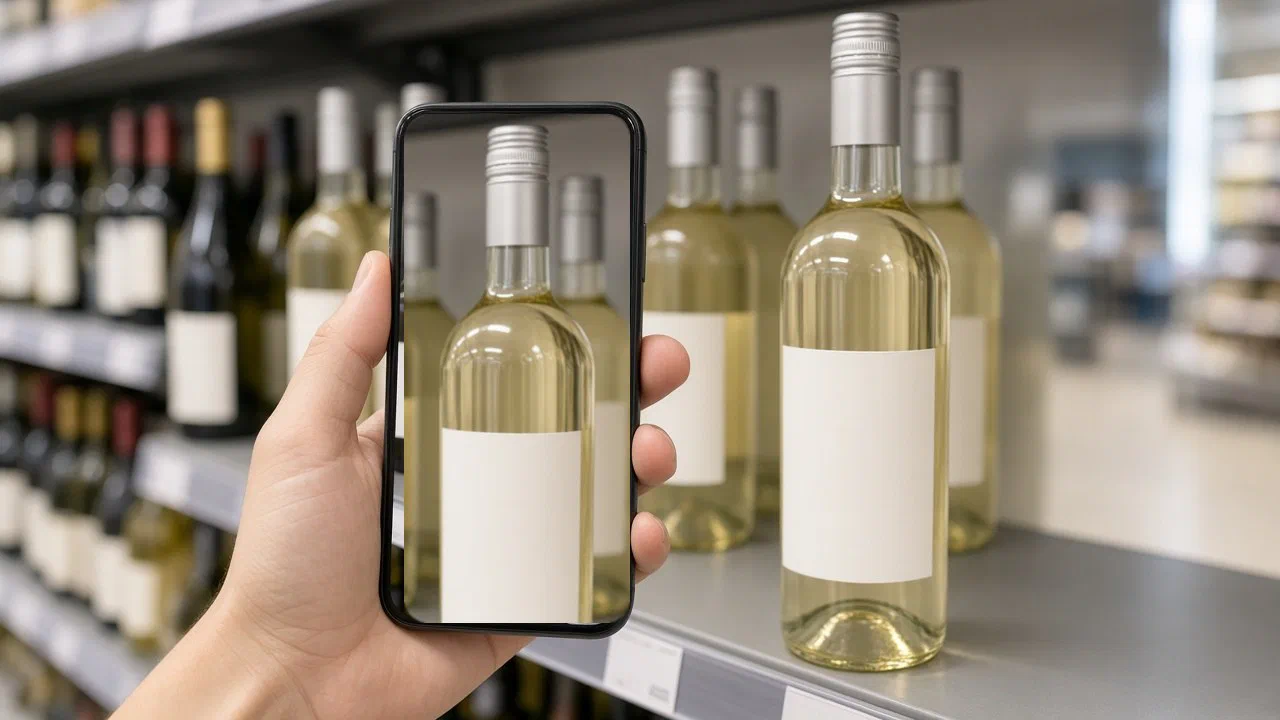
This page is about judging a sealed bottle before buying, while you are standing in a shop or supermarket. If you mean “has my open bottle gone off?”, use the open wine checker and the guide to how to tell if wine is bad.
When I ask “is this wine good?”, I am usually asking three things: is it a sensible buy, will I enjoy it, and does it suit the person or meal I have in mind? Those questions overlap, but a high score does not answer all three.
Is this wine good? Your 60-second check before buying
You can make a useful buying decision from the label, visible condition, price and intended occasion. You cannot prove how a sealed bottle tastes without opening it. I use this short checklist to decide whether it deserves a place in the basket:
- Identify it. Read the producer or brand, stated region and grape or style. Check the back label when the front is vague.
- Read the vintage. Consider the year alongside the style and when you want to drink it.
- Inspect the bottle. Look for leakage, a damaged closure and signs that the shop’s storage deserves a question.
- Compare the actual price. Look at similar wines, then check the source and vintage of any advertised score.
- Check the fit. Think about sweetness, body, food and the drinker’s preferences. Scan the label if you want help interpreting it.
If something does not add up, ask the shop rather than explaining it away because the discount looks tempting. My grocery-store wine guide covers choosing from a whole aisle; here I am checking the particular bottle already in your hand.
What the label tells you about the producer, region and style
I start with identity, because a beautiful label is a poor substitute for knowing what I am buying. Read the wine name and the named businesses carefully. A brand, producer, bottler and importer can have different roles; an address on the back does not necessarily identify the vineyard.
A producer you have enjoyed before is a useful starting point. A reputation you recognise can also help you decide what to investigate, but neither settles whether this particular wine suits you. Check the actual bottling rather than transferring your opinion of one wine to everything bearing the same name.
Region and grape help frame expectations. Use them alongside the stated style and tasting description, rather than treating a famous origin as a guarantee. If the label needs decoding, my guide to how to read a wine label explains where to look.
Give supermarket own-label bottles the same check. Record the retailer’s range, wine name, origin and vintage rather than judging the retailer’s name alone. The supermarket own-label wine guide takes that process further. An unfamiliar producer is a reason to ask a question, not an automatic rejection.
Does the vintage matter on a supermarket wine?
The useful question is not “is this an old bottle?” but “does this age make sense for this style and my opening date?” Older is not automatically better. A wine bought for freshness and a wine bought for development need different expectations.
Read the actual harvest year where shown. Do not substitute the purchase year when you cannot find it, and do not assume that a non-vintage wine is defective or inferior. If there are two vintages on the shelf, check which one the price ticket and any review describe.
The wine vintage checker gives context for a year and region. Treat that as background rather than an inspection of this bottle. The drinking-window explainer helps with the separate question of when to open it. Neither removes the need to consider storage, especially for an older bottle whose history you do not know.
What the closure and storage clues can tell you
Before buying, I look around the neck, capsule and closure for visible leakage or damage. If the cork appears displaced, the closure looks compromised or the bottle is sticky, I ask the shop to explain or choose another bottle. I would rather resolve the uncertainty in the aisle than carry it home.
A screwcap is not a mark of poor wine. Judge the condition of the closure, not its prestige. Equally, an intact capsule and tidy label do not prove that everything inside is sound.
Look at where the bottle has been displayed. Direct sun or an obviously warm position gives you a sensible question to ask about storage. With an older or expensive bottle, ask what the seller knows about its history and what happens if it proves faulty.
Keep the limits clear: this is an outward inspection. It can identify reasons for caution, but a scan, clean label or unbroken seal cannot confirm the contents. Fault diagnosis belongs after opening, using the linked guide above.
Is the price right for this style of wine?
I compare like with like: similar style, stated origin, bottle size and intended use. Comparing an everyday white with a special-occasion red tells me little about whether either price is reasonable. Start with the amount you are willing to spend, then compare the bottles that meet the job.
Read the price you will actually pay. A promotion may depend on membership, buying several bottles or meeting another condition. Ask whether you would want the wine at today’s price without the crossed-out number beside it.
A higher price alone does not establish a better buy. Nor does a large discount establish value if the style is wrong for you. My cheap versus expensive wine explainer separates the price question from enjoyment, while the Black Friday wine guide helps you assess a seasonal offer. For a gift, I would choose within budget before considering whether the packaging looks impressive.
What do wine scores actually mean?
First ask who gave the score. A critic’s assessment, a collection of drinkers’ ratings and a shop’s recommendation are different sources. Then check the scale and whether the assessment belongs to the same producer, wine and vintage you are holding.
A number on a 100-point scale needs that source’s explanation. A 5-star rating needs its own explanation too. There is no universal conversion that makes the two interchangeable, and a score copied onto a shelf ticket may need closer checking against the bottle.
I use a score as supporting information, after checking the identity and style. It does not inspect storage, establish authenticity or tell me whether the recipient likes that kind of wine. The wine scores guide explains how to read the numbers without letting them replace the buying decision.
General assessment and personal fit should stay separate. A well-regarded wine can still be too sweet, too full-bodied or simply wrong for the meal you planned.
What scanning a bottle adds to your check
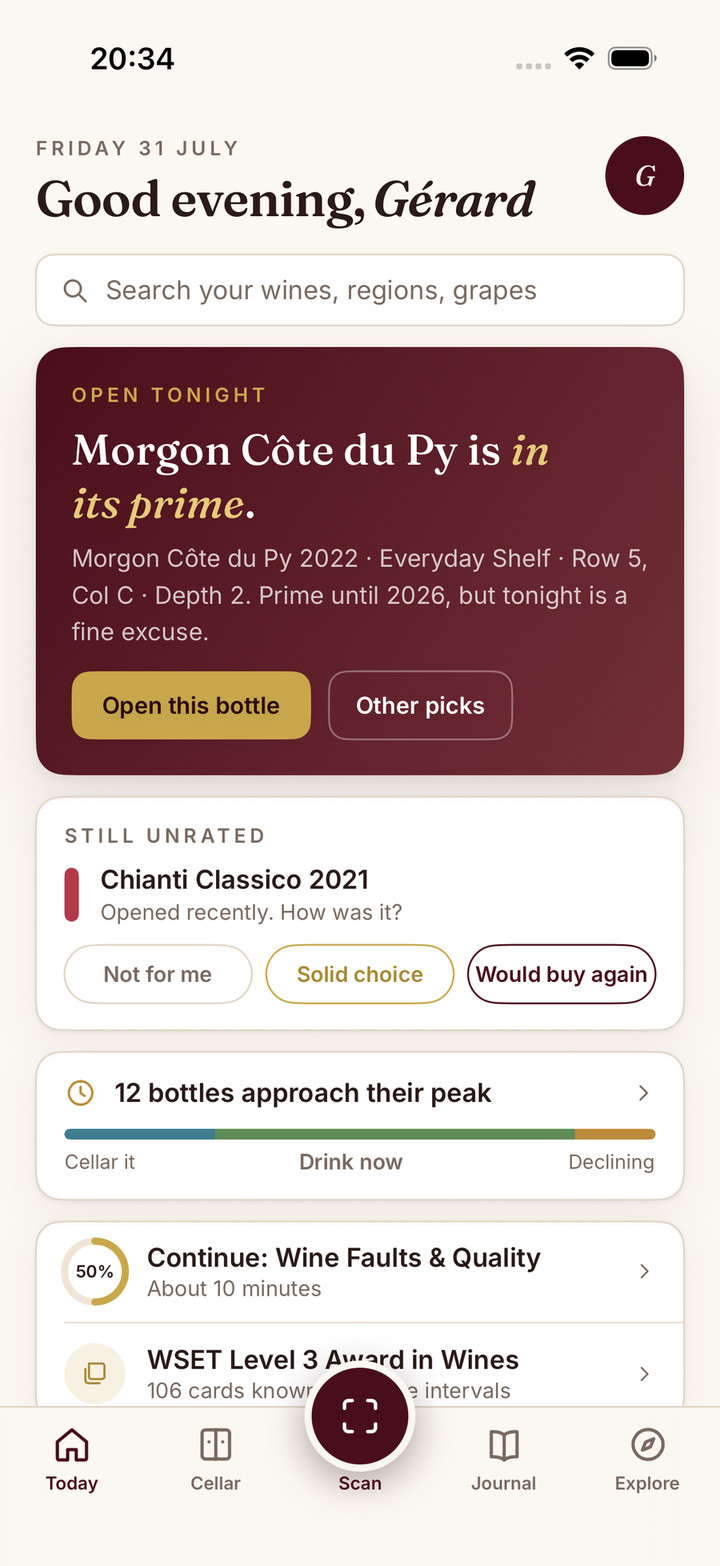
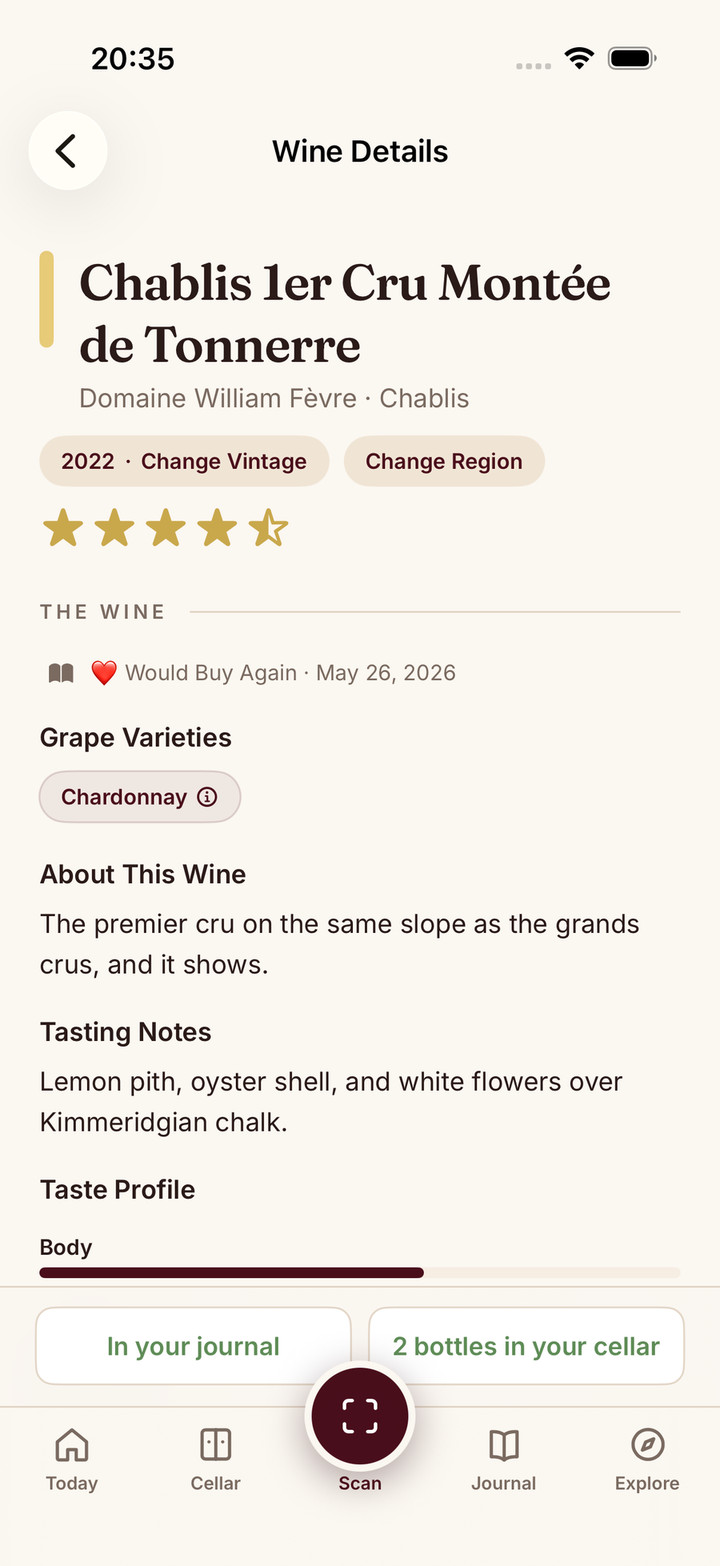
Scan a label and Sommo builds the wine’s page: name, producer, vintage, region, grapes, tasting notes, a drinking window, serving and decanting guidance, and food pairing ideas. You get two star ratings out of 5: Sommo’s score, and a personal ‘for you’ score once you’ve rated a few wines in your journal. Identity details such as producer, vintage, region and grapes say where they came from: read from the label, provisional (Sommo’s inference), or confirmed by you. Dish-specific pairing, cellar and Wine Lists are part of Premium.
Sommo scores every wine, and once you’ve rated a few wines in your journal, label scans add a second score just for you.
Both label-scan scores are free. I would read the provenance labels before relying on a detail, then compare the identified wine and vintage with the physical bottle. A provisional drinking window is guidance, not evidence of how that bottle has been stored.
If Sommo can’t read a wine from your photo, whether it’s a label, a menu or a shelf, the scan doesn’t count against your 5 free scans.
For the practical steps, see wine label scanning and the scanning guide. The scanner-app comparison covers choosing a tool, and how Sommo learns your taste explains the personal side. Use the result to inform your check, with the bottle still in front of you.
Choosing a gift from a shelf of unfamiliar wines
Start with the recipient, not the highest score. What do they already enjoy? Will they open it soon, serve it with dinner or want something to keep? If you do not know, ask for an example of a bottle they like and give the shop your budget. My wine gift guide helps with that decision.
Snap a shop shelf, tell Sommo the occasion, and it picks up to three bottles it can read: a top pick, a best-value bottle and a splurge.
Occasions you can choose from: Gift, Celebration, Everyday, Date Night, BBQ, Business, Exploring.
Menu and shelf picks take your 10 most recent journal ratings into account alongside what you’re eating, and tell you when a pick matches what you’ve liked.
Your preferences may differ from the recipient’s. Keep that distinction in mind when considering a personal match for a present.
On the web, menu and shelf scanning is called Menu and shelf picks and works by photo upload: choose menu or shelf, upload a photo of the list or the shelf, and optionally add what you’re eating or the occasion. Sommo names up to 3 bottles from it: the best match, the best value and a splurge, each with the price as printed. It uses one of your free scans, and Premium makes it unlimited.
Free accounts get 5 lifetime AI scans per device, shared across label, menu and shelf scans.
Premium is $4.99 a month or $29.99 a year in the US; prices vary by country and store. See pricing for plan details and limits.
Sommo runs on iPhone and iPad (iOS 17.6 or later), Android phones and tablets (8.0 or later), Huawei phones with HarmonyOS 6.1.1 or later, and in any browser at web.sommo.app.
Download Sommo for your next bottle check.