Almost everyone passes the Introductory Sommelier exam. The people who do not are almost always the ones who booked it, showed up, and assumed two days in a lecture room would be enough. The exam is sat at the end of those two days, when you are tired, and it covers more than wine.
Here is what the course and exam actually involve in 2026, what they cost, and how much preparation is realistic.
What the Introductory course and exam are
The Introductory Sommelier Course and Examination is the first rung of the Court of Master Sommeliers ladder. Two things to understand about it.
First, it is a course with an exam attached, not a standalone test. You cannot sit it independently, and the fee buys both.
Second, its main practical value is as a gate. Passing gives you the Introductory Sommelier Certificate and, more importantly, makes you eligible for the Certified Sommelier exam. On its own it is a credible starting signal for a first restaurant wine role, but it is not a qualification that will move an experienced professional’s salary.
Note that the Court runs as separate regional bodies: the Americas organization and the original UK-based Court price and schedule independently. Check dates and fees with the one you will sit with. Our sommelier certification hub covers both.
The two-day course format
Two full days, usually classroom-style with a Master Sommelier or senior instructor leading, tasting samples poured throughout, and the exam at the end of day two.
Day one generally moves through grape growing and winemaking, wine law and labeling, and the major European regions. Day two covers the New World, sparkling, fortified and sweet wines, spirits, beer and sake, food pairing, and service standards, plus a demonstration of the deductive tasting grid and, in most chapters, a demonstration of correct service.
The pace is fast. It is a review of material you were expected to arrive knowing, not a from-scratch teaching program.
The exam itself
A multiple-choice paper of around 70 questions with a 60% pass mark, sat at the end of the course. The time allowance is deliberately tight (candidates are typically given somewhere near 45 minutes), so this is a test of recall speed rather than reasoning. Formats do get adjusted, so treat the candidate handbook your chapter sends as the authority.
You must also be of legal drinking age where you sit.
What the theory covers, and in what proportion
The Court does not publish an official question blueprint. The table below shows how our 162-question Introductory practice exam distributes across the published course outline, which is a fair guide to where the weight sits.
| Topic | Questions of 162 | Approximate share |
|---|---|---|
| France | 26 | 16% |
| Spirits, beer and sake | 21 | 13% |
| Viticulture and vinification | 16 | 10% |
| Italy | 16 | 10% |
| Sparkling and fortified | 15 | 9% |
| USA and the Americas | 14 | 9% |
| Spain and Portugal | 13 | 8% |
| Service and hospitality | 13 | 8% |
| Southern hemisphere | 12 | 7% |
| Germany and Austria | 10 | 6% |
| Deductive tasting | 6 | 4% |
The lesson in that table is the bottom half. France matters, but France plus Italy is a quarter of the paper. Roughly one question in five is about something other than wine, and candidates who spend all their prep on French appellations are the ones who lose marks on sake, beer, spirit categories, and pouring etiquette.
Is tasting examined?
No. You will taste during the course and you will be walked through the deductive grid, but the examination is theory only. Service is the same: taught and demonstrated, never graded at this level. Both are first examined at Certified, which is exactly why Certified is such a step up for people who breezed through Introductory.
That said, start the tasting habit now. Working the grid properly takes months to become fluent, and beginning during the Introductory course gives you a head start that costs nothing. The free blind tasting trainer is a low-stakes way to build that fluency between real bottles.
What it costs
Course and exam are bundled into one fee, which in recent years has run from the high hundreds of dollars into the low four figures depending on region, and has risen more than once. Add travel and a hotel night if your chapter is not local, which is common since sessions run in a limited set of cities. Add $100 to $200 for a reference book or two.
Take the current number from the Court’s own site. Any fee quoted in an article, this one included, will drift.
How much prep is realistic
Twenty to forty hours across four to six weeks is enough for most people, assuming you already drink wine attentively. Coming in cold from no wine background, budget more like sixty hours. Little and often beats a panicked weekend, because this is a recall exam and recall responds to spacing.
| Week | Focus | Weekly drill |
|---|---|---|
| 1 | Grape growing, winemaking, wine law and labeling | 25 practice questions, review every miss |
| 2 | France region by region, plus the map | 25 questions, France only |
| 3 | Italy, Spain, Portugal | 25 questions across the three |
| 4 | Germany, Austria, USA, and the southern hemisphere | 25 questions, timed |
| 5 | Sparkling, fortified, sweet, spirits, beer, sake | 25 questions, timed |
| 6 | Service, etiquette, food pairing, plus revision | Full mock exam twice, under exam time |
Three to four hours a week does it. Keep a one-page reference to hand: our Introductory cheatsheet is built for exactly that kind of review.
Why people fail
They treat attendance as the qualification. The exam comes at the end of two intense days. Arriving with the material already half learned is the single biggest predictor of a comfortable pass.
They skip the pre-course reading. Chapters send material in advance for a reason.
They study only wine. Spirits, beer, sake, and service are a meaningful slice of the paper and the easiest marks to bank, because the content is finite.
They never practice under time. Misreading a “which of the following is NOT” question is a pure speed error, and it is worth exactly as many marks as a knowledge gap.
They chase obscure detail. This exam rewards broad coverage. Knowing every Grand Cru of the Côte de Nuits will not help if you cannot place Rías Baixas or name a Prosecco grape.
Introductory or WSET Level 2?
The two entry credentials cost similar money and answer different questions.
| CMS Introductory | WSET Level 2 | |
|---|---|---|
| Format | Two-day taught course, exam at the end | Around 28 guided learning hours, classroom or online across several weeks |
| Exam | Around 70 multiple-choice questions | 50 multiple-choice questions |
| Pass mark | 60% | 55% |
| Tasting examined | No | No |
| Scope | Wine plus spirits, beer, sake, and service | Wine only, in more depth, with the SAT tasting method |
| Recognition | Strongest in restaurants, especially in the Americas | Global and portable across the trade |
| Leads to | CMS Certified Sommelier | WSET Level 3 |
| Best for | People working a floor now | Enthusiasts, retail, distribution, writers |
Short version: if you work in hospitality and intend to sit Certified, Introductory is not a choice, it is the gate. If you want the most wine knowledge per dollar, or you work outside restaurants, WSET Level 2 gives you more depth and a credential that travels further. Many people eventually do both. Our WSET vs CMS comparison goes deeper on the choice, and the WSET hub has free tools for that path. For the longer view of the whole career ladder, see how to become a sommelier.
Explore with Sommo
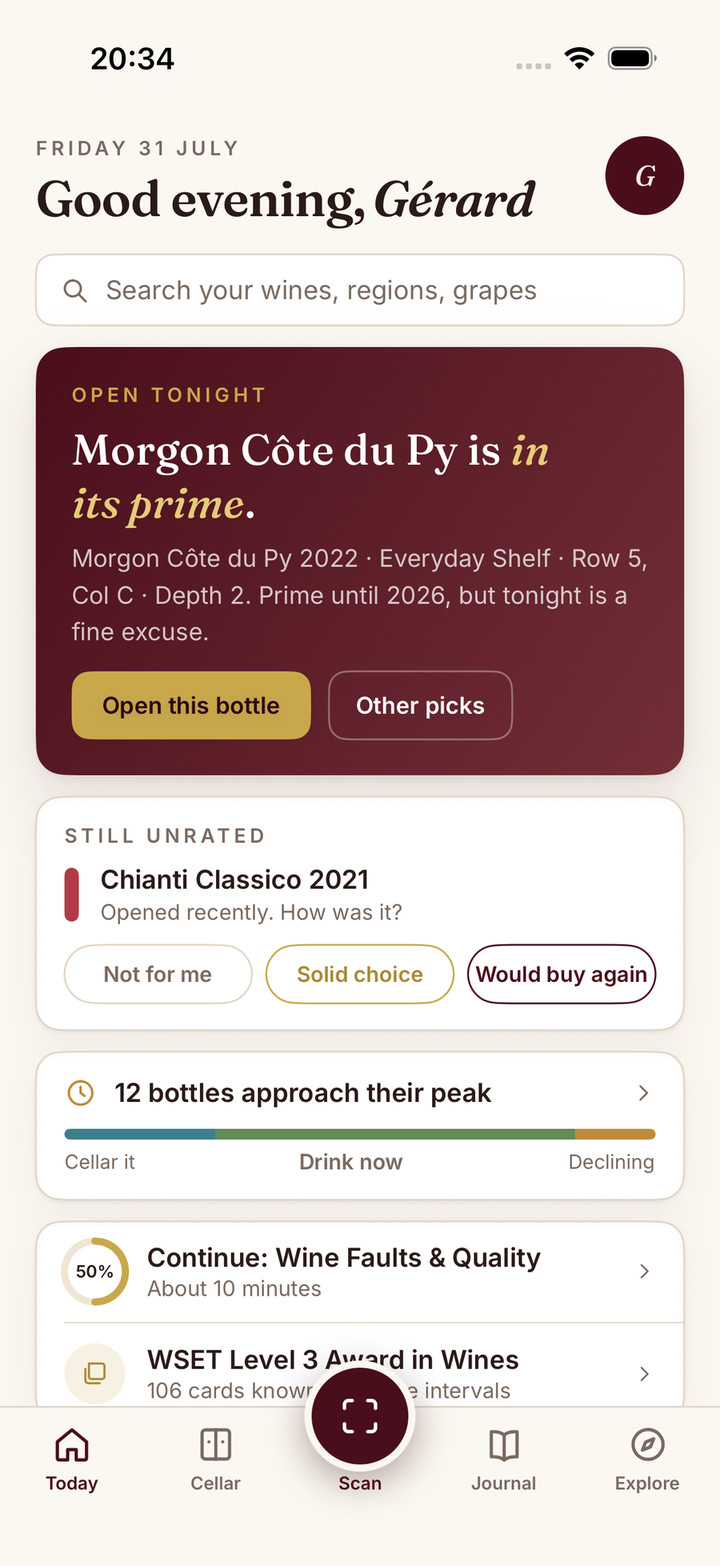
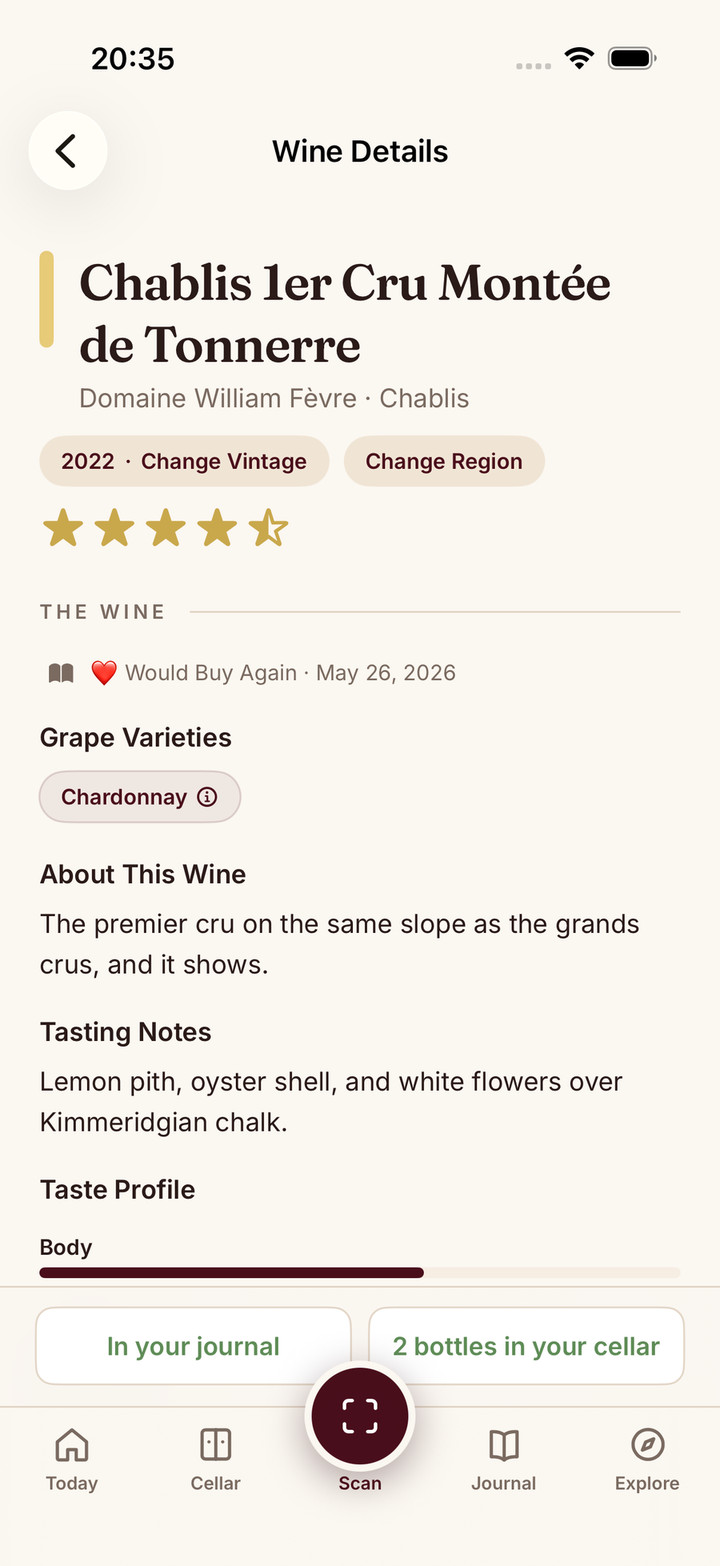
Introductory rewards frequent, short review sessions far more than long ones, which is precisely the study pattern people are worst at sustaining alone. Sommo handles it: adaptive spaced-repetition flashcards that resurface what you keep missing, AI-graded typed answers, a tasting journal for the grid habit you will need at Certified, and a study plan that fits your exam date. Download Sommo free and walk into day two already knowing the answers.