The first time I tasted a proper icewine, I thought it was the most concentrated thing I had ever drunk. Then the acidity arrived and I understood why people chase it.
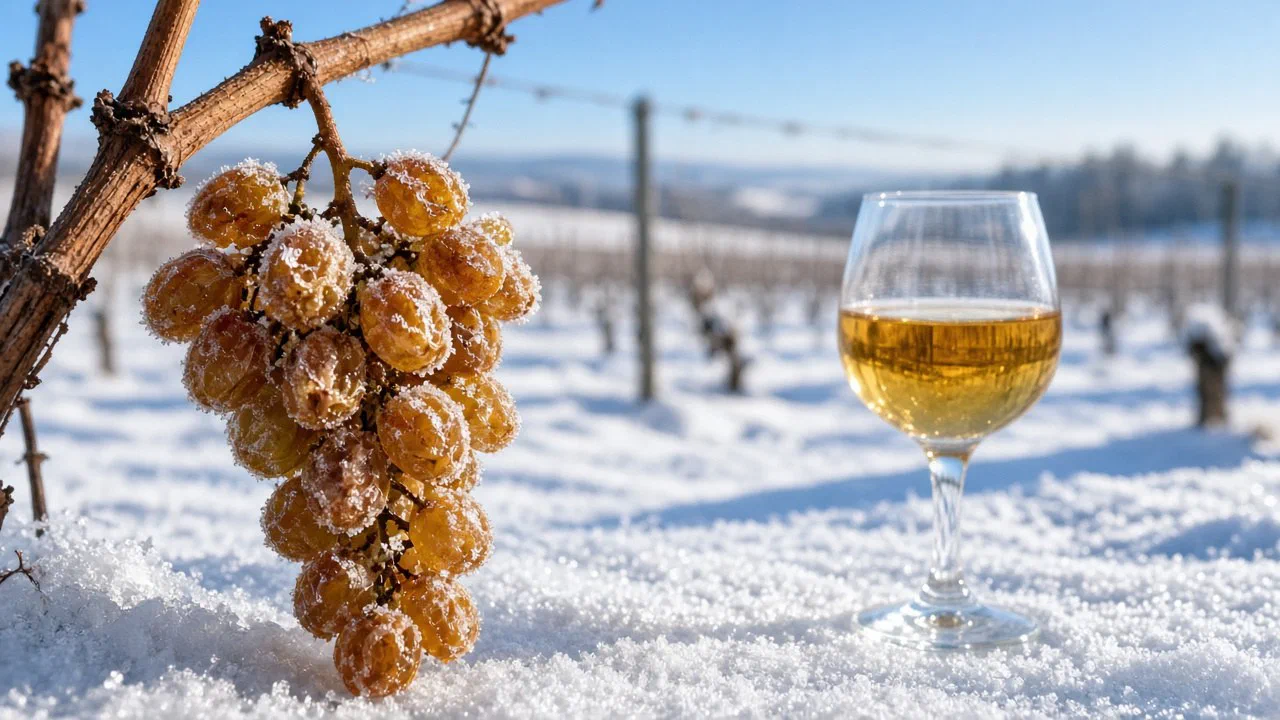
The short answer: icewine is a sweet wine made from grapes left on the vine until they freeze naturally, then picked and pressed while still frozen. The water stays behind as ice, so only a small amount of very sweet, concentrated juice runs from the press. In Ontario, the rules require grapes to be picked at minus 8°C or colder. In Germany, Eiswein grapes must be frozen at harvest and at pressing.
Below I cover how icewine is made, the rules in Canada and Germany, why it is so rare, how it tastes and what to eat with it.
How is icewine made?
The process is simple to describe and hard to do:
- Leave the grapes hanging. The grapes stay on the vine long after the normal harvest, protected from birds and rot.
- Wait for a hard freeze. The water in the berries freezes, while the sugars, acids and flavours stay concentrated in a small amount of liquid.
- Pick at night or at dawn. Harvesters work while it is coldest, so the grapes stay frozen.
- Press frozen. The frozen grapes are pressed immediately. Most of the water stays behind as ice, and a thick, sugary juice trickles out.
- Ferment slowly. All that sugar makes fermentation slow, and it stops long before the wine is dry.
The result is a wine with intense sweetness, bright acidity and, in Ontario’s case, a legally defined alcohol range. If you want the story of the freeze itself, read my cellar tale on ice wine.
What are the legal rules for icewine in Canada?
Ontario’s regulation under the VQA Act sets strict standards for wine labelled icewine:
- Temperature. Grapes must be harvested at minus 8°C or colder.
- Sugar at harvest. The juice must average at least 35 degrees Brix.
- Alcohol. The finished wine must be between 7% and 14.9% alcohol.
- Residual sugar. At least 100 grams per litre.
- Grapes. Vidal or vinifera varieties, such as Riesling or Cabernet Franc.
These rules mean an Ontario icewine is never made by putting grapes in a freezer. The freeze has to happen naturally on the vine. To go deeper, explore Ontario’s Niagara Peninsula and Vidal, the hardy, thick skinned grape behind many Canadian icewines.
What are the rules for Eiswein in Germany?
German law is short and strict. Section 20 of the German Wine Act says Eiswein must be made from grapes that are frozen when they are harvested and when they are pressed. Eiswein is one of the Prädikat categories alongside Spätlese, Auslese, Beerenauslese and Trockenbeerenauslese, and it needs an official test number before it can be labelled as such.
Germany’s Eiswein is often made from Riesling, which keeps its acidity beautifully. In 2023, the German Wine Institute reported that a cold spell with temperatures partly below minus 7°C let producers in Rheinhessen, Württemberg and Franken bring in an Eiswein harvest, and that Riesling and Silvaner, followed by Gewürztraminer, were the main varieties registered for picking in Rheinland-Pfalz.
Why is icewine so rare?
Three reasons:
- Tiny yields. Most of the grape’s water is left behind as ice, so each vine gives very little juice.
- Risk. If the freeze never comes, or birds and rot get there first, the crop is lost.
- Warmer winters. The German Wine Institute reports that the area registered for Eiswein harvest in Rheinland-Pfalz fell from more than 500 hectares in 2018 to 107 in 2021 and just 24 in 2022, before recovering slightly to about 32 hectares in 2023. In Franken, about 40 producers picked Eiswein in 2012, but only seven in 2022, together harvesting about 600 to 700 litres.
That scarcity is why a small bottle of icewine feels special. It is.
What does icewine taste like?
Expect intense sweetness balanced by vivid acidity. That balance is what separates a great icewine from a cloying one.
- Vidal icewine: tropical fruit, peach, apricot, honey and candied citrus.
- Riesling icewine or Eiswein: lime, green apple, apricot and honey, with sharper acidity and great potential to age.
- Red icewine, often Cabernet Franc: strawberry, rhubarb, cherry and spice.
Because freezing concentrates the grape rather than changing it, icewine usually tastes purer and fresher than sweet wines made from botrytised grapes.
How is icewine different from Sauternes?
Both are celebrated sweet wines, but they get their sugar in different ways. Icewine concentrates the grape by freezing. Sauternes concentrates it through noble rot, a beneficial fungus that shrivels the berries and adds honey, saffron and dried apricot notes. Icewine tends to taste brighter and more fruit driven; Sauternes richer and more layered. For a wider view of the category, see my beginner’s guide to sweet wines.
What food goes with icewine?
Pair icewine with something less sweet than the wine, or the wine will taste flat. My favourites:
- Fruit tarts and fruit desserts. Apple, pear, peach and apricot tarts suit Vidal; citrus tarts suit Riesling.
- Cheese. Blue cheese and aged hard cheese. The salt makes the sweetness sing.
- Cheesecake and crème brûlée. Creamy textures meet the acidity well.
- On its own. A small glass after dinner is a dessert in itself.
For more ideas, browse wine with dessert or the wider dessert wine guide.
How does Sommo help you choose icewine?
Icewine is expensive enough that you want to get it right, and labels are full of terms like Vidal, Riesling, VQA and Eiswein. Sommo makes that easy.
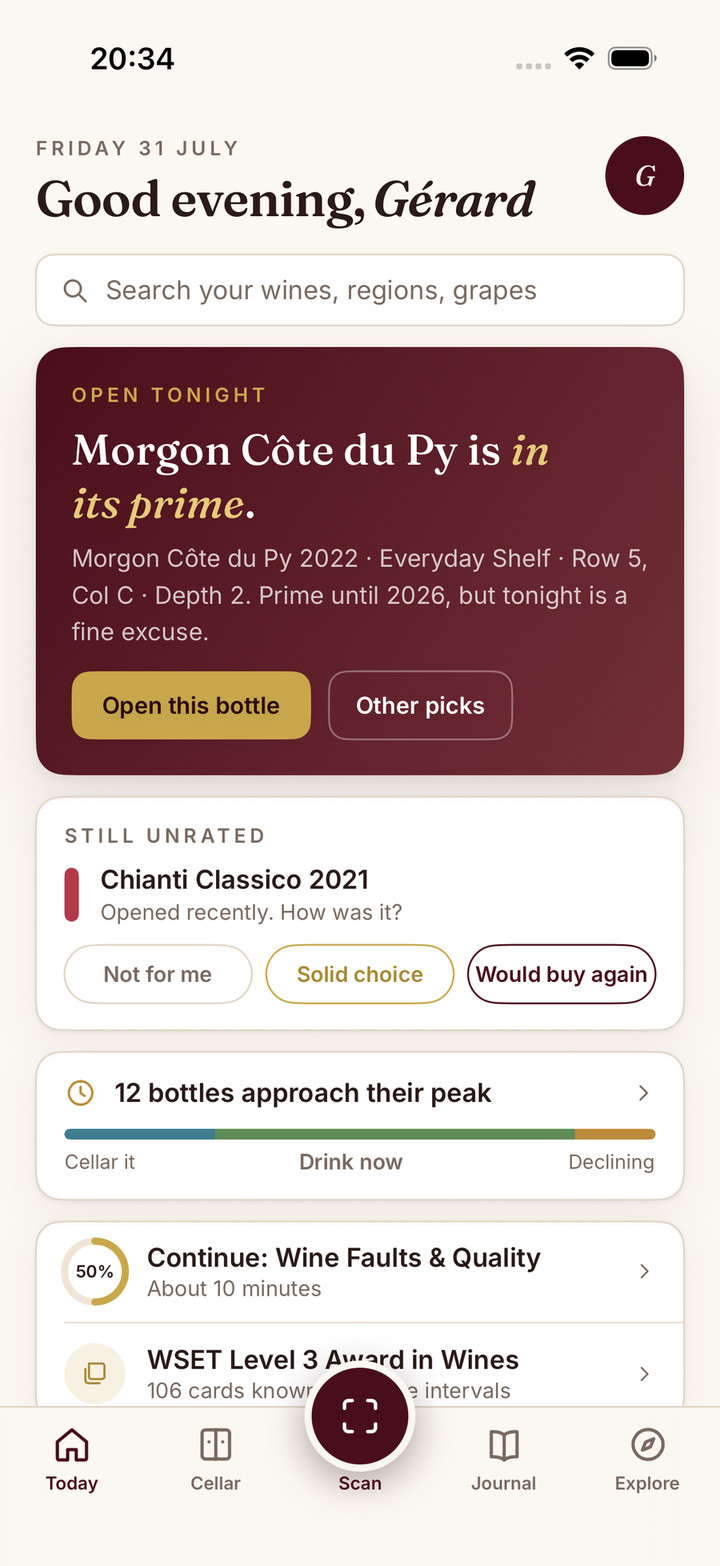
Scan the label. Point your camera at the bottle and Sommo tells you the grape, region, style, food pairings and serving temperature. A label scan takes about 10 seconds, so you can decide in the shop.
Picks that fit you. You get picks shaped by the wines you’ve rated. If you love high acid Riesling, Sommo leans towards the brighter icewines; if you prefer rich and tropical, it will steer you towards Vidal. Each scan suggests food pairings, so you know what to serve with it.
Remember the bottle. Save it to your journal with a rating, so a rare bottle becomes a memory you can find again.
All of this runs on proprietary wine-tuned AI grounded in a hand-maintained wine library. The free tier gives you 5 lifetime AI scans per device, shared across label, menu and shelf scans, plus the journal and 30 days of journal history. Premium unlocks unlimited scans, lifetime history, Taste DNA, AI tasting feedback and Tasting Mode for $4.99 a month or $29.99 a year in the US; prices vary by country and store. Sommo runs on iPhone, iPad, Android, HarmonyOS and the web.
Download Sommo and scan your next sweet wine.
The bottom line
Icewine is made from grapes frozen on the vine and pressed frozen, which gives a small amount of intensely sweet, bright juice. Ontario sets precise rules, including picking at minus 8°C or colder, and Germany requires grapes to be frozen at harvest and pressing. It is rare, it is risky to make, and a good one is unforgettable. Serve a small glass with a fruit tart or blue cheese and savour it.