There is a moment in every wine drinker’s life when the question changes from “do I like this?” to “why do I like this?” Answering the second one is the entire job of a sommelier, and it depends on a sequence rather than a gifted palate: the same five steps, run the same way, until noticing becomes automatic.
The sequence is see, swirl, sniff, sip, savor, and it takes about a minute. Below: all five steps in the order a professional runs them, how those observations get recorded on a formal tasting sheet, the mistakes that cost beginners the most, and how to practice.
The Five Steps at a Glance
| Step | What you do | What it reveals |
|---|---|---|
| 1. See | Tilt the glass over a white background and look at the core and the rim | Age, grape and skin thickness, likely oak treatment, faults such as haze |
| 2. Swirl | Rest the base on the table and rotate in small circles for 5 to 10 seconds | Alcohol and sugar level (the legs), and it prepares the aromas for step 3 |
| 3. Sniff | Nose inside the bowl, short sniffs, then pause and repeat | Primary aromas from the grape, secondary from fermentation, tertiary from aging |
| 4. Sip | A small sip, coat the whole mouth, draw a little air across it | Sweetness, acidity, tannin, alcohol, body, and whether flavor matches the nose |
| 5. Savor | Swallow or spit, then count the seconds until the flavor fades | Length, complexity, balance, and your quality verdict |
The Five Steps in Detail
1. See
What to do: pour about a third of a glass, tilt it to roughly 45 degrees over something white, and look at two places: the deep center of the liquid (the core) and the thin edge where it meets the glass (the rim).
What you are looking for: color depth first. A pale, almost translucent red suggests a thin-skinned grape such as Gamay or Pinot Noir. An opaque purple core suggests thick skins, a warm climate, or both. Then hue. Young reds carry purple or ruby tints, older reds fade toward garnet and go brick at the rim. Whites travel the opposite way, from near colorless in youth toward gold and amber with age or oak.
Finally check clarity. Bright and clear is the norm, a light haze in an unfiltered natural wine is deliberate, and cloudiness in a polished commercial wine is a warning sign.
2. Swirl
What to do: keep the base of the glass on the table and rotate it in tight circles for 5 to 10 seconds. Airborne swirling looks elegant and ruins shirts. Learn it on the table first.
What you are looking for: swirling increases the surface area of the wine so volatile aroma compounds evaporate into the bowl, where your nose can reach them. Its second job is the legs, the slow drips on the glass wall. Prominent, slow-moving legs point to higher alcohol or residual sugar. They say nothing about quality, so note them and move on.
3. Sniff
What to do: put your nose into the bowl and take two or three short sniffs rather than one long inhale. Pause, then sniff again. Your nose adapts to a smell within seconds, so the pause genuinely restores sensitivity.
What you are looking for: sort what you smell into three families, which is how professionals structure a note.
- Primary aromas come from the grape: citrus, orchard fruit, stone fruit, berries, tropical fruit, flowers, herbs, black pepper.
- Secondary aromas come from winemaking: bread and brioche from lees contact, butter and cream from malolactic fermentation, vanilla, toast, coconut, and smoke from oak.
- Tertiary aromas come from time: dried fruit, fig, leather, tobacco, forest floor, mushroom, caramel, nuts.
If you can only manage “red fruit” at first, that is a legitimate note. Precision arrives with repetition.
4. Sip
What to do: take a sip large enough to coat your whole mouth, hold it for two or three seconds, and draw a thin stream of air across it through pursed lips. It sounds ridiculous and it amplifies flavor.
What you are looking for: five structural readings, in order.
- Sweetness registers first, at the tip of the tongue. Bone dry, off dry, medium, or sweet.
- Acidity makes your mouth water. High acid wines feel bright and keep calling you back. Low acid wines feel broad and flat.
- Tannin is the drying grip on your gums and cheeks, like strong tea. It comes from skins, seeds, stems, and oak, and it matters only in reds and orange wines. If it is the sensation that puts you off red wine, start with low tannin wines.
- Alcohol shows up as warmth at the back of the throat. Well balanced alcohol vanishes into the wine.
- Body is the overall weight, from skim milk through whole milk to cream.
Then ask whether the flavor confirms the nose or contradicts it. Wines that smell better than they taste are common, and noticing the gap is a genuinely advanced observation.
5. Savor
What to do: swallow (or spit, if there are many wines to get through), then stop and count. Do not reach for the next sip until the flavor has gone.
What you are looking for: three things. Length is how long the flavor persists, and it is the most reliable single indicator of quality. A few seconds is short, half a minute is long. Complexity is whether the finish changes as it fades or holds one flat note. Balance is the verdict: do sweetness, acid, tannin, alcohol, and fruit hold together, or does one stick out?
Then answer the question that actually matters. Would you buy it again?
How Professionals Record It
The five steps are how you taste. A structured tasting note is how you keep what you tasted. Sommeliers and students use fixed grids for one reason: identical structure across hundreds of wines makes them comparable months later, which free-form prose never is.
- The WSET Level 2 tasting sheet is the shortest useful version: appearance, nose, palate, and conclusion with set vocabulary for each.
- The WSET Level 3 tasting sheet adds intensity scales, aroma cluster categories, quality assessment, and readiness for drinking.
- The deductive tasting grid used in sommelier exams turns the same observations into an argument, moving from evidence toward a conclusion about grape, region, and vintage.
For the short version of the method, the 5S method walkthrough covers it in 60 seconds and the 5 S’s of wine tasting works through a full example on a red Burgundy. Sommo’s structured tasting notes follow the same appearance, nose, palate, conclusions shape.
Six Mistakes That Cost You the Most
Serving at the wrong temperature. This wrecks more tastings than any other error. Reds served in a warm kitchen taste alcoholic and blurry, and whites straight from the back of the fridge are mute. Reds at 60 to 65°F, whites at 45 to 55°F. Fifteen minutes in the fridge fixes most reds.
Filling the glass. A third full. You need headspace for the aromas to collect and room to swirl without redecorating.
Skipping the first sniff. Sniff once before you swirl. The unaerated wine shows a different, often more delicate profile that disappears the moment oxygen hits it.
Tasting too many wines. Palate fatigue arrives faster than people think. Four wines is the practical ceiling for genuine attention at home.
Letting the label do the tasting. Price and reputation shape perception more powerfully than most people accept. The antidote is covering the bottle.
Quitting at the swallow. The finish carries the quality information. Beginners taste the attack, form an opinion, and move on, which throws away the most useful third of the wine.
How to Practice Deliberately
Drinking more wine does not train a palate. Comparing wine does.
Run comparative flights. Two glasses, one variable. The same grape from two regions, the same region from two producers, or the same wine at two temperatures. Describing the difference between two wines is far easier than describing one in isolation, and the vocabulary sticks.
Cover the labels. Have someone else pour, or bag the bottles and shuffle them. Work the five steps, commit to a guess on grape and climate, then reveal. Being wrong is the point: the useful information is which piece of evidence misled you. The free blind tasting trainer runs the same drill when there is no one around to pour.
Taste the same wine twice. Pour a glass, note it, recork the bottle, and taste it again 24 hours later. Watching a wine open up or fall apart overnight teaches more about structure than a shelf of books.
Write it down every time. Memory for smell is vivid and unreliable. A tasting journal turns scattered impressions into a map of what you actually like, and after 30 entries the pattern becomes impossible to miss.
Frequently Asked Questions
What are the 5 steps of tasting wine?
See, swirl, sniff, sip, and savor. Looking at the wine hints at age and style, swirling releases the aromatics, sniffing carries most of what you will call flavor, sipping measures sweetness, acidity, tannin, alcohol, and body, and savoring judges the length and balance of the finish.
How long should a proper wine tasting take?
About 60 seconds per glass once the steps become habit. Give roughly 10 seconds to appearance, 10 to swirling, 20 to two rounds of sniffing, 15 to the sip, and the rest to the finish. Rushing the finish is the single most common way beginners lose information.
Do sommeliers really swirl and sniff, or is it theater?
It is functional. Swirling increases the surface area of the wine so volatile aroma compounds evaporate into the glass, and most of what people describe as flavor is actually smell. A wine sniffed before and after a swirl can present two noticeably different aroma profiles.
Is the 5 S method the same as the WSET tasting approach?
No. The 5 S method is an informal teaching sequence. WSET teaches the Systematic Approach to Tasting, which records appearance, nose, palate, and conclusions using fixed vocabulary and set scales. The 5 S steps map onto it neatly, so they are a good on ramp rather than a replacement.
How do I get better at identifying flavors in wine?
Taste comparatively. Open two wines from the same grape but different regions, cover both labels, and describe the difference between them rather than each one alone. Contrast makes characteristics obvious that a single glass hides, and writing the note down forces the vocabulary to stick.
Taste With Intention
The five steps are not a performance. They work on a $12 bottle exactly as well as on a $200 one.
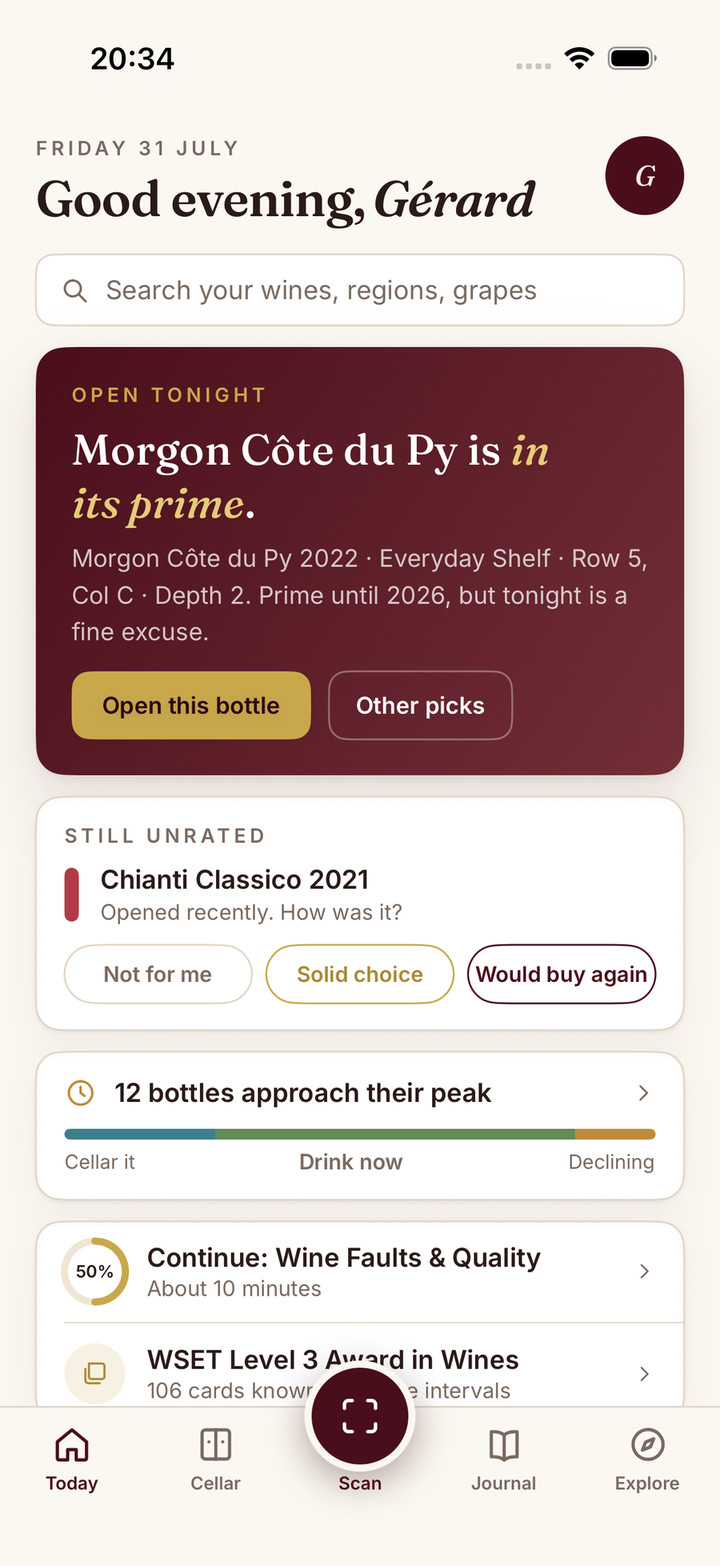
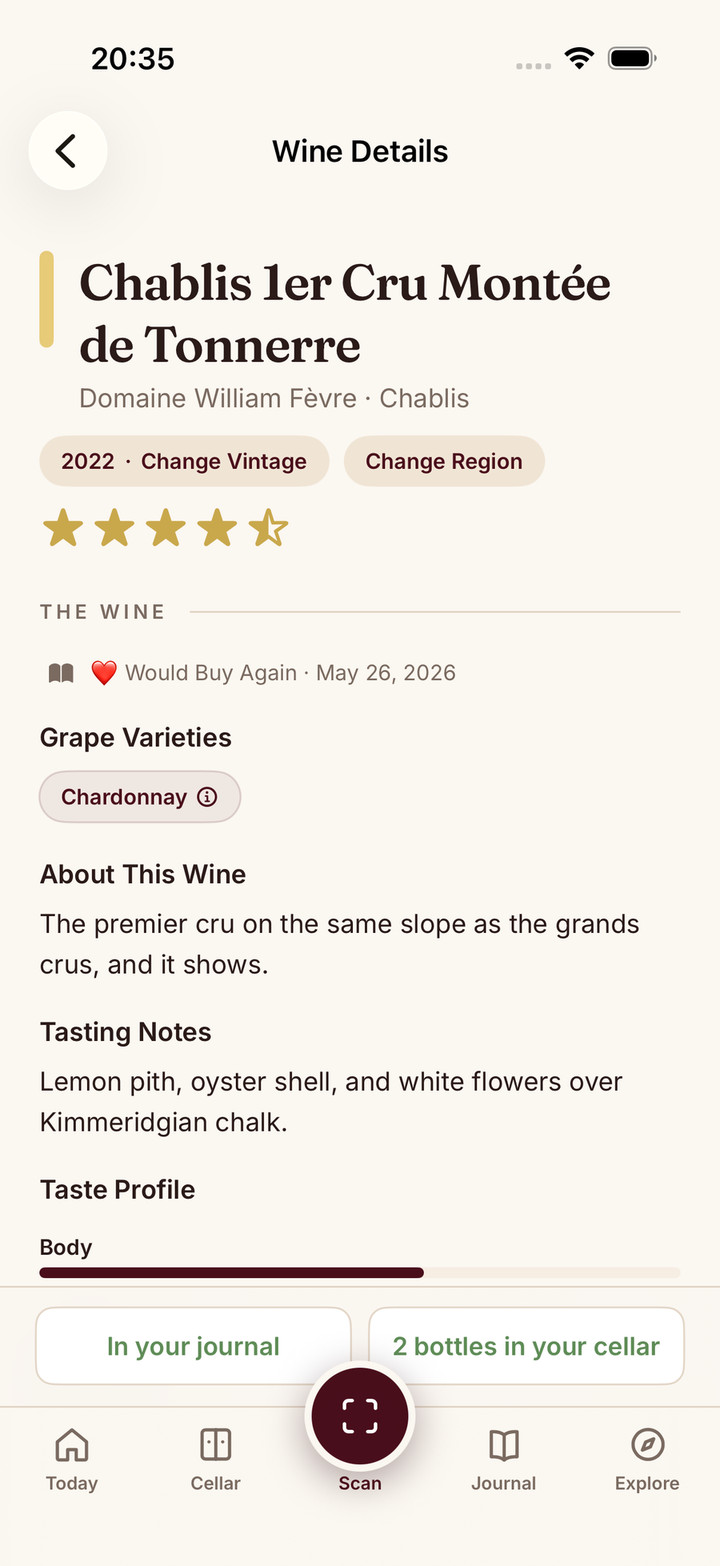
Sommo runs you through the same structure professionals use: prompted tasting notes, WSET aligned lessons when you want the formal framework, and AI label scanning so you know the grape and region before the first sniff.
Download Sommo and start keeping notes worth rereading.