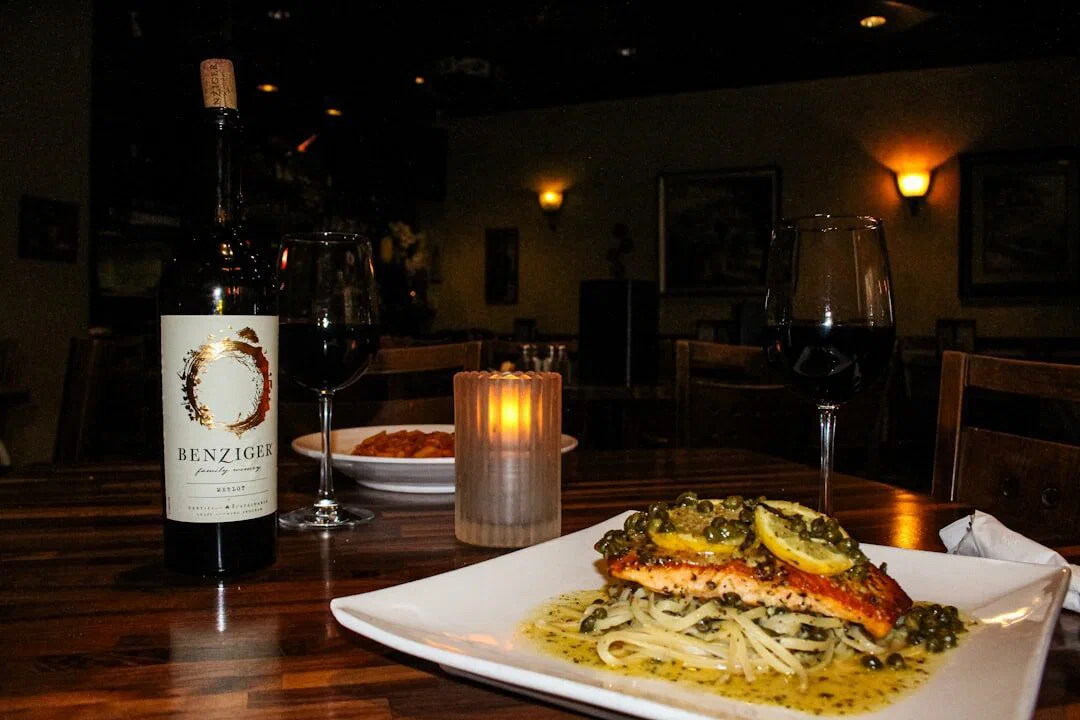
Wine pairing has a reputation for being complicated and pretentious. It doesn’t have to be. The core principles are intuitive, the “rules” are more like guidelines, and the only pairing that truly matters is the one you enjoy.
That said, the right wine can genuinely transform a meal, and the wrong one can clash badly enough to ruin both the food and the wine. Understanding a few fundamentals will make you better at this than 90% of people, and it takes about five minutes.
The Core Principles
1. Match Weight with Weight
This is the single most important rule. A heavy dish needs a heavy wine. A light dish needs a light wine.
- Grilled steak (heavy) → Cabernet Sauvignon (heavy). Both are bold enough to stand up to each other
- Steamed fish (light) → Sauvignon Blanc (light). The wine doesn’t overpower the delicate food
- Grilled steak → Pinot Grigio = the wine disappears. The food is too heavy
- Steamed fish → Cabernet Sauvignon = the wine overwhelms. The food is too delicate
Think of it like volume. You want the wine and food at roughly the same level.
2. Acidity Cuts Richness
Wines with high acidity (think: crisp, mouth-watering) are excellent with rich, fatty, or creamy dishes. The acid cuts through the richness and refreshes your palate between bites.
- Creamy pasta → Chablis or Vermentino (high acid whites)
- Fried chicken → Champagne or sparkling wine (bubbles + acid = perfect)
- Fatty pork → Riesling (acid and a touch of sweetness balance the fat)
3. Tannins Love Protein and Fat
Tannins (the drying sensation in red wine) interact with proteins and fats in a way that softens the wine and enhances the food. This is why red wine and steak is a classic – the fat in the beef neutralises the astringent tannins, and the wine’s structure complements the meat’s richness.
- Aged cheddar → Cabernet Sauvignon (protein + fat tame the tannins)
- Lamb chops → Syrah (fat and protein balance the wine’s grip)
- Vegetable salad → Tannic red wine = the tannins feel harsh with no fat to soften them
4. Sweet Wine Must Be Sweeter Than the Food
If you’re pairing wine with dessert, the wine needs to be at least as sweet as the food. Otherwise, the wine tastes thin and bitter by comparison.
- Crème brûlée → Sauternes or Tokaji (sweet enough to match)
- Chocolate cake → Banyuls or Tawny Port (sweet and rich enough to complement)
- Chocolate cake → Dry Cabernet = the wine tastes sour and the pairing is unpleasant
5. Regional Pairings Usually Work
If a wine and a food come from the same place, they’ve probably been enjoyed together for centuries. Trust that history.
- Chianti with pasta and tomato sauce (both from Tuscany)
- Muscadet with oysters (both from the Loire Atlantic coast)
- Malbec with grilled beef (both from Argentina)
- Albariño with seafood (both from Galicia, Spain)
This isn’t a guarantee, but it’s a reliable shortcut when you’re unsure.
6. Complement or Contrast
You can pair by matching flavours (complement) or by opposing flavours (contrast). Both work:
- Complement: Oak-aged Chardonnay with buttered lobster. Rich + rich = harmonious
- Contrast: Off-dry Riesling with spicy Thai curry. Sweet + spicy = balanced
Neither approach is better. Complementary pairings feel harmonious. Contrasting pairings feel dynamic and exciting.
The Practical Pairing Chart
Red Meat
| Dish | Best Pairing | Why |
|---|---|---|
| Grilled steak | Cabernet Sauvignon, Malbec | Tannins + fat = perfect |
| Lamb rack | Syrah, Bordeaux blend | Herbal notes complement lamb |
| Beef stew | Côtes du Rhône, Zinfandel | Rustic wine for rustic food |
| Burger | Malbec, Tempranillo | Fruity, medium tannins work with casual beef |
Poultry
| Dish | Best Pairing | Why |
|---|---|---|
| Roast chicken | Chardonnay (oaked), Pinot Noir | Versatile dish, versatile wines |
| Grilled chicken | Rosé, Grenache | Light and complementary |
| Turkey (Thanksgiving) | Pinot Noir, Beaujolais | Acidity and light body match the bird |
| Duck | Pinot Noir, Barolo | Rich meat needs structured wine |
Seafood
| Dish | Best Pairing | Why |
|---|---|---|
| Oysters | Champagne, Muscadet, Chablis | Crisp acid + mineral + brine |
| Grilled salmon | Pinot Noir, Chardonnay | Salmon’s richness handles both red and white |
| White fish (baked) | Sauvignon Blanc, Vermentino | Light wine for light fish |
| Shrimp/Prawns | Albariño, Vermentino, dry Rosé | Clean, crisp, seafood-friendly |
| Sushi | Champagne, dry Riesling | Precision, acid, and delicacy |
| Fish and chips | Sparkling wine, Chablis | Bubbles/acid cut through the fried coating |
Pasta and Rice
| Dish | Best Pairing | Why |
|---|---|---|
| Tomato-based pasta | Chianti, Sangiovese, Barbera | Italian wine for Italian food; acid matches acid |
| Cream-based pasta | Chardonnay, Soave | Rich wine for rich sauce |
| Pesto pasta | Vermentino, Gavi | Herbal wine for herbal sauce |
| Mushroom risotto | Pinot Noir, Nebbiolo | Earthy wine for earthy food |
Cheese
| Cheese | Best Pairing | Why |
|---|---|---|
| Brie / Camembert | Champagne, Chardonnay | Bubbles/acid cut through the cream |
| Aged cheddar | Cabernet Sauvignon, Tempranillo | Firm cheese tames tannins |
| Blue cheese (Stilton, Roquefort) | Sauternes, Port | Sweet wine + salty cheese = magic |
| Goat cheese | Sauvignon Blanc, Sancerre | Classic Loire pairing |
| Parmesan | Chianti, Barolo | Umami + tannins = deeply satisfying |
Spicy Food
| Cuisine | Best Pairing | Why |
|---|---|---|
| Thai | Off-dry Riesling, Gewürztraminer | Sweetness balances heat |
| Indian | Off-dry Riesling, Grüner Veltliner | Same principle; acid also helps |
| Mexican | Malbec, Tempranillo, Rosé | Fruit-forward reds with moderate tannins |
| Sichuan | Off-dry sparkling, Albariño | Bubbles and acid refresh the palate |
The key rule with spicy food: Avoid high-alcohol, tannic reds. Alcohol amplifies the burn, and tannins clash with chilli heat. Opt for off-dry whites, rosé, or fruity, low-tannin reds.
Dessert
| Dessert | Best Pairing | Why |
|---|---|---|
| Chocolate | Port, Banyuls, Recioto | Rich, sweet, and dark enough to match |
| Fruit tarts | Moscato d’Asti, Late Harvest Riesling | Fruity wine for fruity dessert |
| Crème brûlée | Sauternes, Tokaji | Caramel notes complement each other |
| Vanilla ice cream | Muscat de Beaumes-de-Venise | Light, sweet, aromatic |
What to Do When You’re Stuck
If you’re at a restaurant or hosting dinner and can’t decide, these three wines pair with almost anything:
- Champagne / quality sparkling wine: Works with virtually every appetiser, fish, poultry, fried food, and light dish
- Pinot Noir: The most versatile red. Light enough for fish, structured enough for meat
- Dry Riesling: Works with spicy food, Asian cuisine, seafood, poultry, pork, and most cheeses
When in doubt, pick one of these three and you’ll rarely go wrong. Or type the dish into the free wine pairing finder and get a specific match in seconds.
The Only Rule That Really Matters
Drink what you enjoy. Pairing guidelines exist to help you discover combinations that enhance both the food and the wine, but they’re not commandments. If you love Cabernet Sauvignon with fish, that’s your call. The best pairing is one that makes your meal more enjoyable.
That said, try the classic pairings at least once. There’s a reason they became classics, and the combinations often reveal dimensions of both the food and the wine that you wouldn’t experience separately. If you want to test how well the principles have stuck, the WSET Level 2 food pairing quiz covers exactly this ground.
Explore wine pairings with the Sommo app – scan any bottle, get food pairing suggestions, and keep a journal of what worked (and what didn’t).