Wine delivery in 2026 is no longer a single product. It is a category with at least four meaningfully different models: same-day apps, monthly subscription clubs, traditional online retailers, and direct-from-producer. Each is built for a different use case, and using the wrong service for your situation guarantees you either pay too much or wait too long. The good news is that picking the right one for your specific moment takes about 30 seconds once you know how the services differ.
This guide is the practical decision tree. We will walk through the three questions to ask before you order, the four delivery models with their best and worst use cases, and the specific traps to avoid (delivery fees, shop markups, shipping windows, alcohol licensing). By the end you will know exactly which app to open for any given wine-buying moment in 2026.
The Three Questions to Ask First
Before opening any app, answer these.
When do you need the wine? Same day? This week? This month? Six months from now (for cellaring)? The answer dictates which model you use, and it matters more than any other variable.
What is the budget per bottle? Under $15? $15 to $40? $40+? Different services dominate different price tiers.
What kind of wine? Mass-market label, specific producer, obscure region, age-worthy bottle? On-demand apps cover the first; serious retailers cover the rest.
That is the entire framework. Once you know the answers, the service picks itself.
The Four Delivery Models in 2026
Model 1: Same-Day On-Demand (Drizly, Saucey, Minibar)
How it works: order through an app, a driver brings wine from a local liquor store within 30 to 90 minutes.
Best for: Emergencies. You forgot to buy wine for dinner. Guests arrive in an hour. You ran out mid-evening. The same-day model is the only wine delivery option that solves these problems.
Worst for: Quality drinking. The wines in the store are mass-market. Markups run 15 to 30 percent over shelf prices, plus delivery fees. The wine that arrives has often been sitting in a hot store and was selected by speed, not by you.
Cost structure: Bottle price + 10 to 25% delivery fee + tip. A $20 bottle delivered same-day usually costs $26 to $32 by the time it arrives.
The honest verdict: Use for emergencies. Do not build a wine habit around this model.
Model 2: Online Retailers (Wine.com, K&L, Total Wine, Berry Bros & Rudd)
How it works: order from a serious wine retailer’s website, the wine ships from their warehouse, arrives in 2 to 7 days depending on shipping speed.
Best for: Most of your wine buying. Better selection than any local shop. Fair pricing. Often free shipping with a membership ($59/year at Wine.com gets you StewardShip with free shipping; K&L runs frequent promotions).
Worst for: Same-day needs (obvious). Customers in states with restrictive alcohol shipping laws (Pennsylvania, Utah, Mississippi can be tricky).
Cost structure: Bottle price (often equal to or below local retail) + shipping ($10 to $20 per case, free with membership).
The honest verdict: This is the default for serious wine drinkers. Build a primary relationship with Wine.com or K&L and use them for 70 percent of your wine buying. See our best wine delivery services 2026 guide for the full comparison.
Model 3: Curated Subscriptions (Naked Wines, Winc, Firstleaf, Vinebox)
How it works: take a taste quiz, the service selects wines for you, monthly shipments arrive on a schedule.
Best for: Variety and discovery. People who want to try wines they would not pick on their own. Beginners building a palate. (The free wine quiz does the same taste-profiling in your browser, no subscription attached.)
Worst for: Specific bottle hunting. If you want a particular Burgundy or Champagne, subscriptions cannot get it for you.
Cost structure: Monthly fee or per-shipment cost. Most subscriptions run $60 to $100 per month for 4 to 6 bottles.
The honest verdict: Add one subscription on top of your primary retailer for variety. Two or three subscriptions is overkill.
Model 4: Direct From Producer (Winery Mailing Lists)
How it works: join a winery’s email list or wine club. Receive twice-yearly allocations of wines, often before public release.
Best for: Building access to specific producers you love. The best California producers (Williams Selyem, Bedrock, Failla, Littorai) often sell most or all of their wine through direct-to-consumer channels.
Worst for: Casual or one-off buying. You commit to what the winery decides to send.
Cost structure: Variable. Allocations often range from $300 to $1,500 per shipment depending on the producer’s price tier.
The honest verdict: Worth pursuing once you have identified specific producers whose wine you genuinely want to follow. Not worth the effort if you are still exploring.
The Decision Tree
Walk through this in order.
Step 1: Do you need wine within 2 hours?
- Yes → On-demand app (Drizly, Saucey).
- No → Go to step 2.
Step 2: Are you looking for a specific producer, region, or bottle?
- Yes → Online retailer (Wine.com, K&L, Berry Bros & Rudd).
- No → Go to step 3.
Step 3: Do you want variety and discovery?
- Yes → Curated subscription (Naked Wines, Winc).
- No → Go to step 4.
Step 4: Do you follow specific producers?
- Yes → Direct from producer (mailing lists).
- No → Default to online retailer for general buying.
That is the entire decision tree. It covers 95% of wine delivery situations.
The Hidden Costs to Watch
Three traps that quietly inflate the cost of wine delivery.
Delivery Fees and Tips
On-demand apps charge a service fee (3 to 8% of order value) and a delivery fee ($5 to $10) on top of the bottle price. Add tip and you are at 15 to 30 percent over shelf price.
Workaround: Order larger quantities. The fixed delivery fee gets amortised across the bottles. Six bottles delivered for a $10 delivery fee is $1.67 per bottle; two bottles for the same fee is $5 per bottle.
Shop Markups on On-Demand Apps
The liquor store fulfilling your Drizly order often charges a higher in-store price than they would walk-in. This is partly to cover the app’s cut and partly because they can.
Workaround: Cross-reference prices. If you have time, compare Drizly’s price to the same shop’s direct delivery (if offered) or the bottle’s price on Wine.com. The difference is often $5 to $15 per bottle.
Shipping in Extreme Weather
Reputable online retailers pause shipping during heat waves and cold snaps. Generic services often do not. A bottle of wine that ships in 35-degree (Celsius) summer heat can arrive cooked, with flavour permanently damaged.
Workaround: Use retailers that publish a temperature policy. Wine.com, K&L, and Berry Bros & Rudd all pause shipping for weather. They will hold your order until conditions allow safe shipping, or refund if you prefer.
State Alcohol Shipping Laws
US wine shipping is regulated state by state. Some states have strict limits. Pennsylvania has restrictions that vary by retailer. Utah requires all alcohol to come through state-run stores. Mississippi essentially prohibits direct shipping.
Workaround: Confirm shipping availability before placing an order on a new retailer’s site. Most reputable retailers tell you upfront whether they can ship to your state.
The Best Wine Delivery Strategy by Drinker Type
For the Casual Drinker
- Primary: A trusted local shop with delivery (often a better experience than a national chain).
- Backup: Drizly for emergencies.
- Skip: Subscriptions and producer mailing lists.
For the Enthusiast
- Primary: Wine.com or K&L with a membership (free shipping pays for itself after 3 to 4 case orders).
- Secondary: One curated subscription (Naked Wines is the most consistently interesting).
- Backup: Drizly for emergencies.
- Optional: Producer mailing lists for 2 to 3 favourite estates.
For the Collector
- Primary: K&L Wine Merchants or Berry Bros & Rudd (depth of selection, en primeur, futures).
- Secondary: Direct from producer mailing lists.
- Auction option: WineBid for rare and aged bottles.
- Skip: Same-day apps.
For more on building a cellar, see our first real wine cellar guide.
What to Look For in an Online Retailer
Five quality signals when picking a primary online retailer.
Warehouse storage conditions. Look for explicit mention of climate control, humidity management, and dark storage. Wine.com, K&L, and Berry Bros & Rudd all publish this. Generic apps do not.
Return policy. A serious retailer accepts returns of corked, oxidised, or damaged bottles. Generic apps usually do not.
Shipping season management. They pause shipping during weather risk.
Customer service responsiveness. Test by emailing a question before you place a large order. Response time and quality of the response tells you everything.
Wine selection depth. The retailer should offer wines you have heard of (the famous bottles) and wines you have not (the small producers). A retailer with only the famous names is buying based on labels, not on quality.
The Subscription Trap to Avoid
Most curated wine subscriptions are designed to be sticky. The cancellation flow is intentionally slow. Many charge a “credit accumulating monthly” model that makes it psychologically harder to cancel because you have unused credit.
Practical advice:
- Read the cancellation terms before you subscribe.
- Set a calendar reminder to evaluate the subscription after 3 months. If you have not loved at least half the bottles, cancel.
- Avoid stacking multiple wine subscriptions. One is plenty.
Tipping and Etiquette
A few notes on delivery etiquette.
Same-day app deliveries: Tip 15 to 25%, like a restaurant. The drivers are paid mostly through tips. The bottles are heavy.
Online retailer deliveries: No tip required (the shipping carrier is FedEx, UPS, or a wine specialist; tipping is not customary).
Signature on delivery: Wine in most US states requires an adult signature. Plan to be home or use a delivery address (work, doorman building) where someone over 21 can sign.
Explore with Sommo
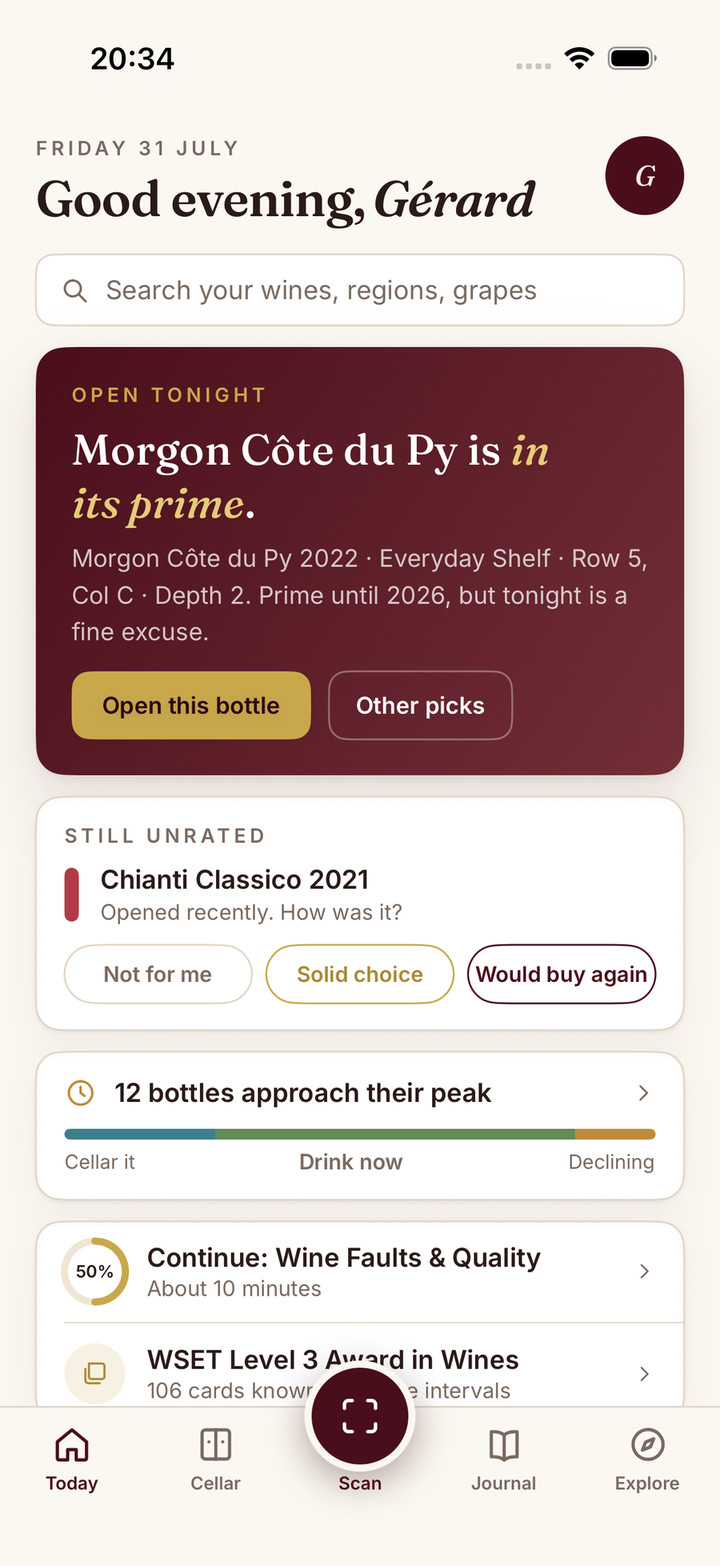
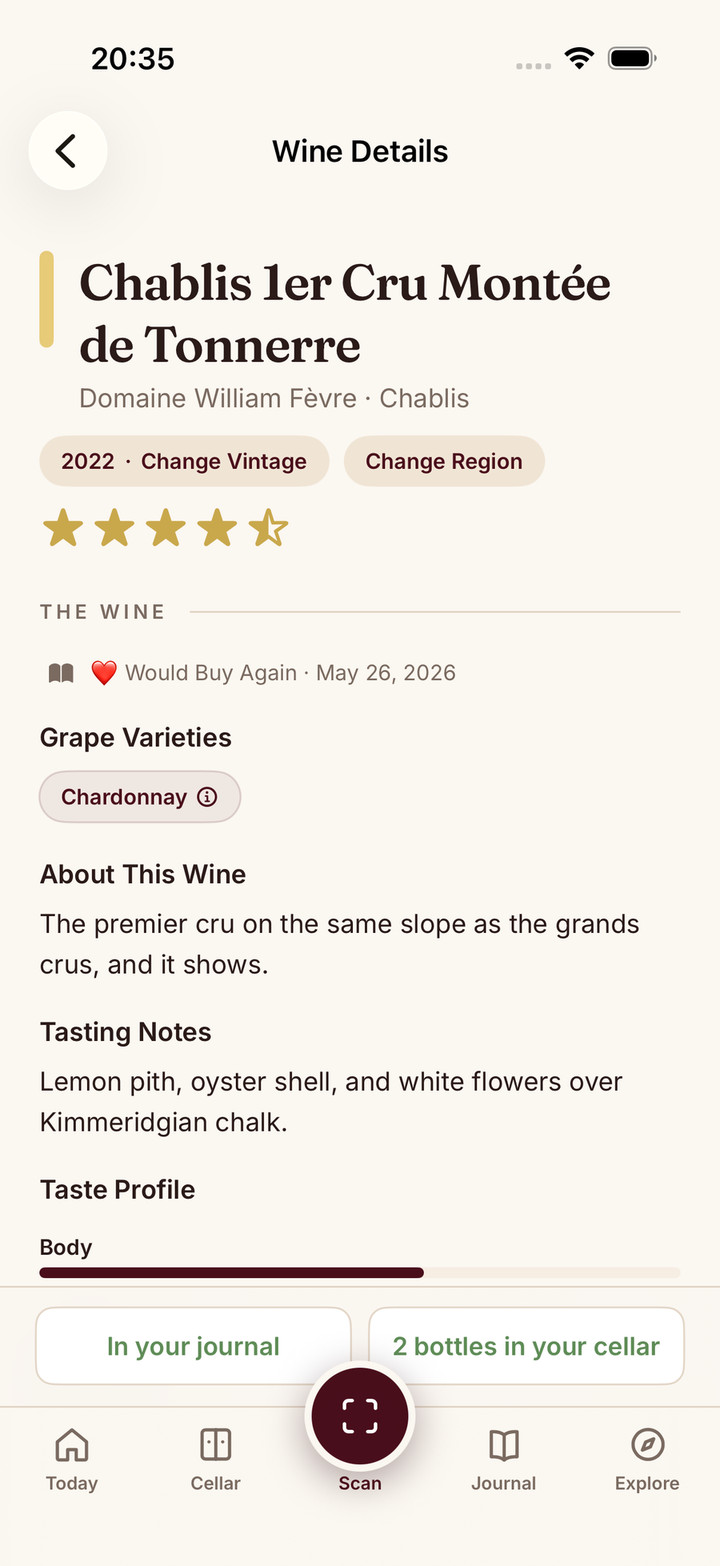
Every bottle delivered to your door is a chance to log a wine and build your personal record. Sommo lets you scan each bottle on arrival, save it to your cellar with full inventory tracking, and get drinking-window notifications when wines are ready. Over a year of online wine shopping, this builds a personal map of which delivery services consistently bring you bottles you love and which ones disappoint. The data sharpens your buying over months and years.
Download Sommo free and start tracking every bottle that arrives at your door.