You found the bottle. A grower Champagne from a cellar door visit, a Chianti from the estate itself, something you will never see on a shelf at home. Now you have to get it onto a plane. Flying with wine is easier than most people fear, but the rules sit in three different places: airport security, airline policy and customs. Here is how to clear all three with the glass intact.
Security First: Checked Bags Only
The 100ml carry-on liquid rule kills any hope of a bottle in your hand luggage. Wine flies in the hold, with one exception: bottles bought airside in duty free, sealed in the tamper-evident bag with the receipt inside. Even then, be careful with connections. If you change planes and pass through security again, that duty-free bottle can be confiscated, so on multi-leg trips it is usually safer in the checked bag from the start.
Airline dangerous-goods rules are friendlier than people expect. Alcohol under 24% ABV, which covers every still and sparkling wine, has no quantity limit in checked luggage. Your true ceiling is weight: a packed bottle weighs about 1.3kg, so six bottles eat 8kg of a 23kg allowance before you add a single sock.
Customs: Know Your Allowance
Customs is where quantity matters, and it depends on where you land, not where you bought the wine.
- Into Great Britain: the personal allowance is generous, 18 litres of still wine (24 standard bottles) plus 4 litres of spirits or 9 litres of sparkling wine, as long as it is for your own use.
- Into the US: only 1 litre is duty free federally, but you can bring more for personal use and simply declare it. The duty on wine is usually so small that officers often wave modest amounts through.
- Within the EU: moving between member states there is effectively no limit for personal use, with 90 litres of wine given as the guideline threshold.
Whatever the destination, declare what you carry. The duty on a few bottles is pennies compared with the penalty for hiding them.
Packing So Nothing Breaks
Baggage handlers are not gentle, so pack for the worst throw:
- Centre of the case. Bottles go in the middle, surrounded by soft clothing on every side, never touching the shell.
- Wrap each bottle separately. A jumper and two zip-seal freezer bags per bottle is the free method. Inflatable wine sleeves and padded bottle protectors are cheap insurance for anything special.
- Keep glass off glass. Two bottles clinking through turbulence will lose. Separate them with a layer of clothing.
- Hard-sided luggage wins. For six bottles or more, consider a dedicated wine suitcase or ask the winery about shipping; for a serious haul it is often cheaper than excess baggage.
Pressure is not a problem, by the way. The hold is pressurised, and a properly sealed bottle arrives exactly as it left.
After You Land
A flown bottle deserves a short rest. Travel shakes wine up, a state sometimes called bottle shock, so give anything precious a week or two lying quietly before you open it. If you are unsure whether it should rest even longer, the free drinking window checker will tell you where it sits. Our wine storage guide covers where to keep it in the meantime.
Frequently Asked Questions
Can you take wine in hand luggage?
Not through security, because a wine bottle is far over the 100ml liquid limit. Buy it airside in duty free, or pack it in checked luggage. Some airports let you collect airside purchases on departure only, so check connection rules if you have a layover.
How many bottles of wine can you fly with?
Airline safety rules place no quantity limit on alcohol under 24% ABV in checked bags, which covers all wine. The real limits are your baggage weight allowance, roughly 1.3kg per packed bottle, and the customs allowance of the country you are entering.
What is the best way to pack wine in a suitcase?
Centre of the case, never against the shell, each bottle wrapped in clothing or a padded wine sleeve, standing bottles apart so glass never touches glass. Inflatable wine protectors and hard-sided luggage are the safest combination for more than two bottles.
Explore with Sommo
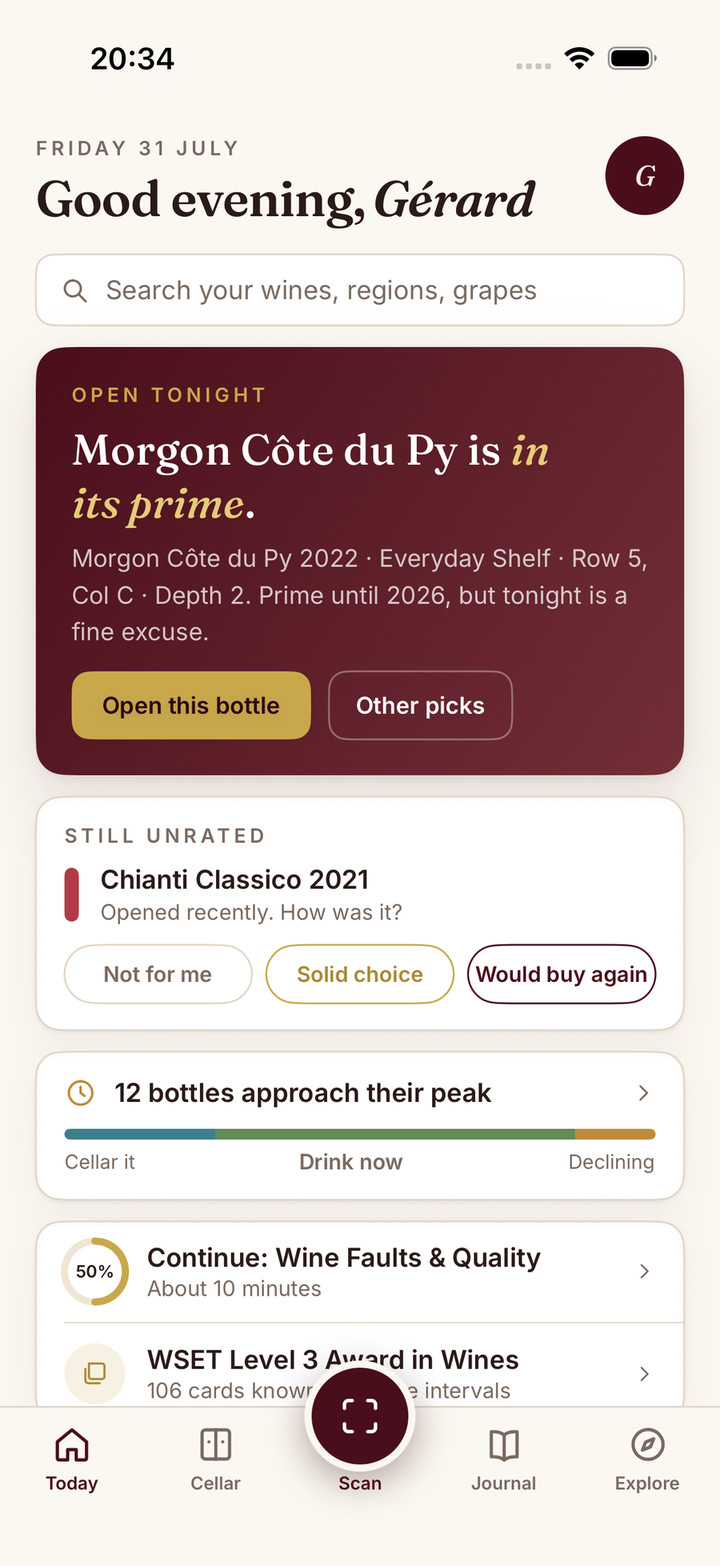
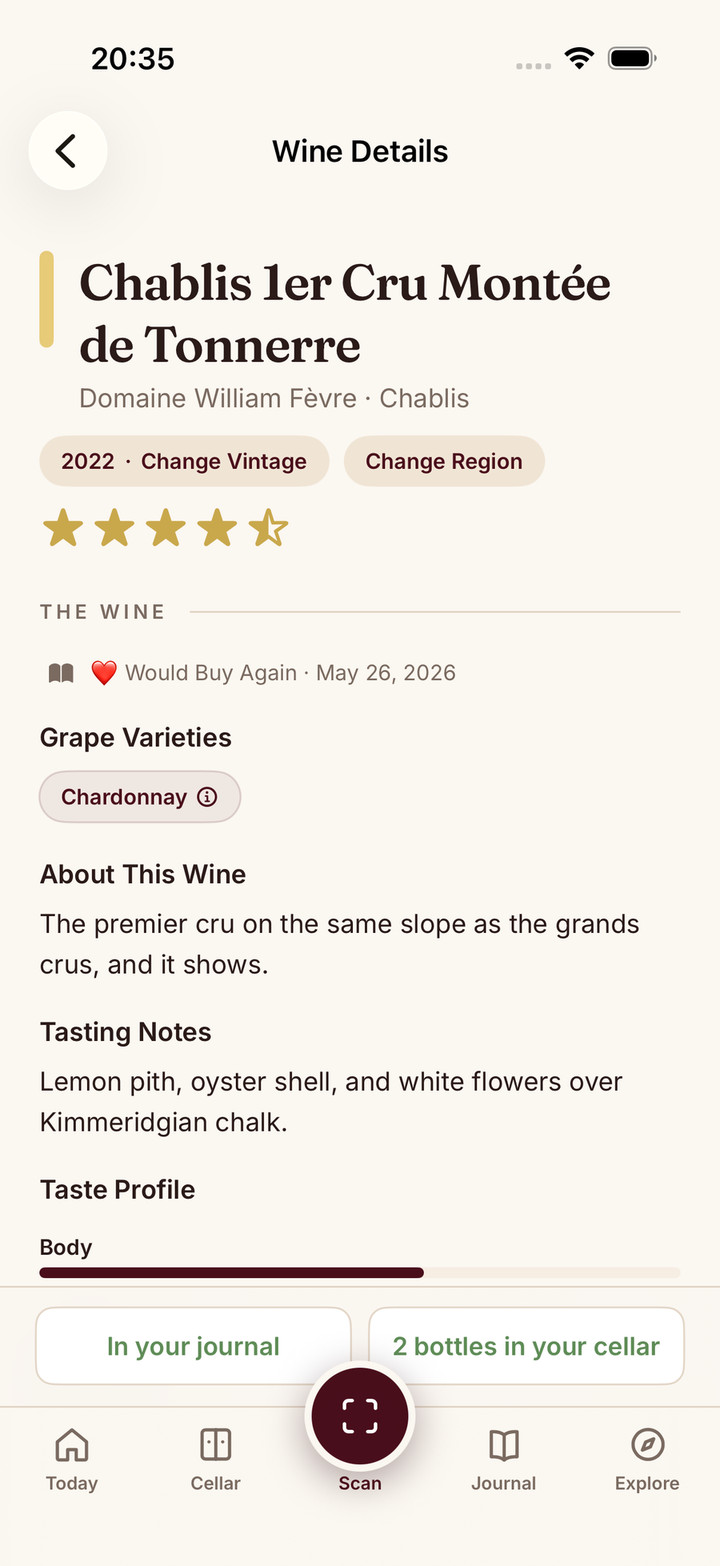
The saddest travel story is forgetting which bottle you loved. Before the trip home, scan every label with Sommo so the wine, its region and your notes are saved in your journal, then add the survivors to your cellar so you know exactly when to open them. Planning the trip itself? Start with our guides to a first wine trip in Europe, a week in European wine country, or the estates of Tuscany and Bordeaux, and let the free wine quiz work out which styles deserve your suitcase space.
Download Sommo free and bring every bottle home twice, once in your case and once in your journal.