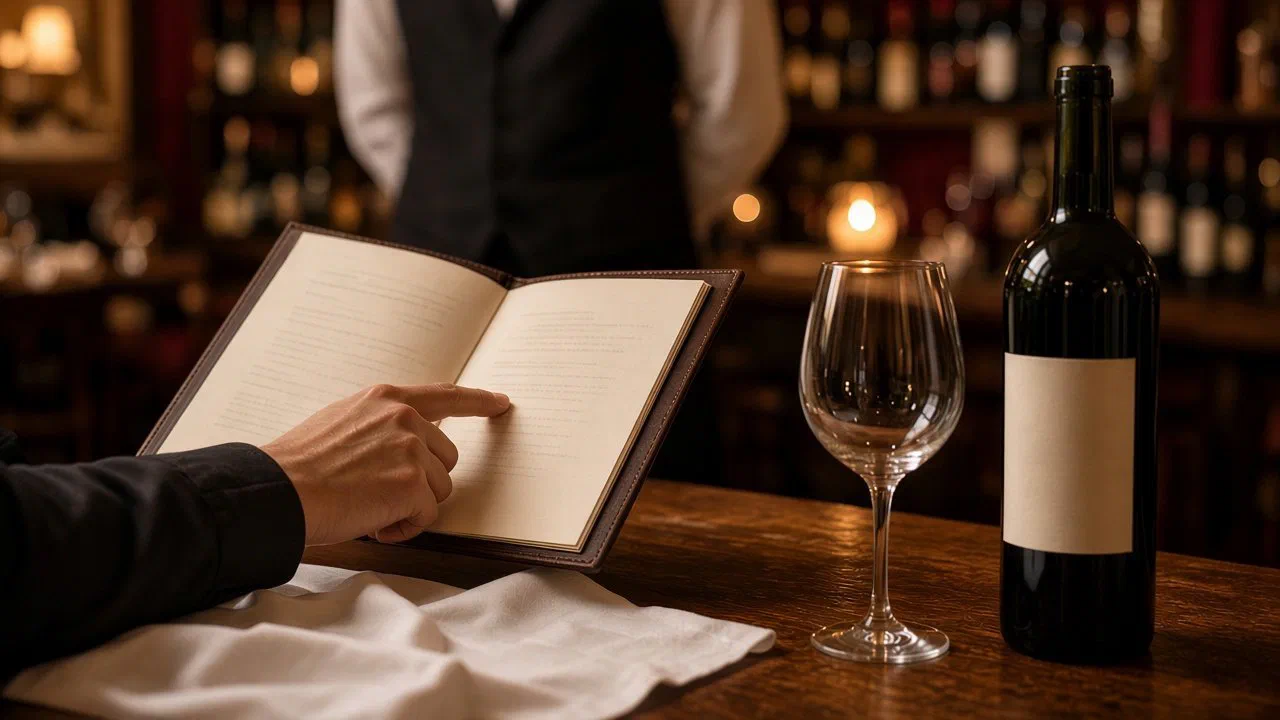
Set a budget, choose for the food, then compare two or three bottles you would actually enjoy. A restaurant wine list is easier when you give it a job. You do not need to recognise every producer or find the most impressive label.
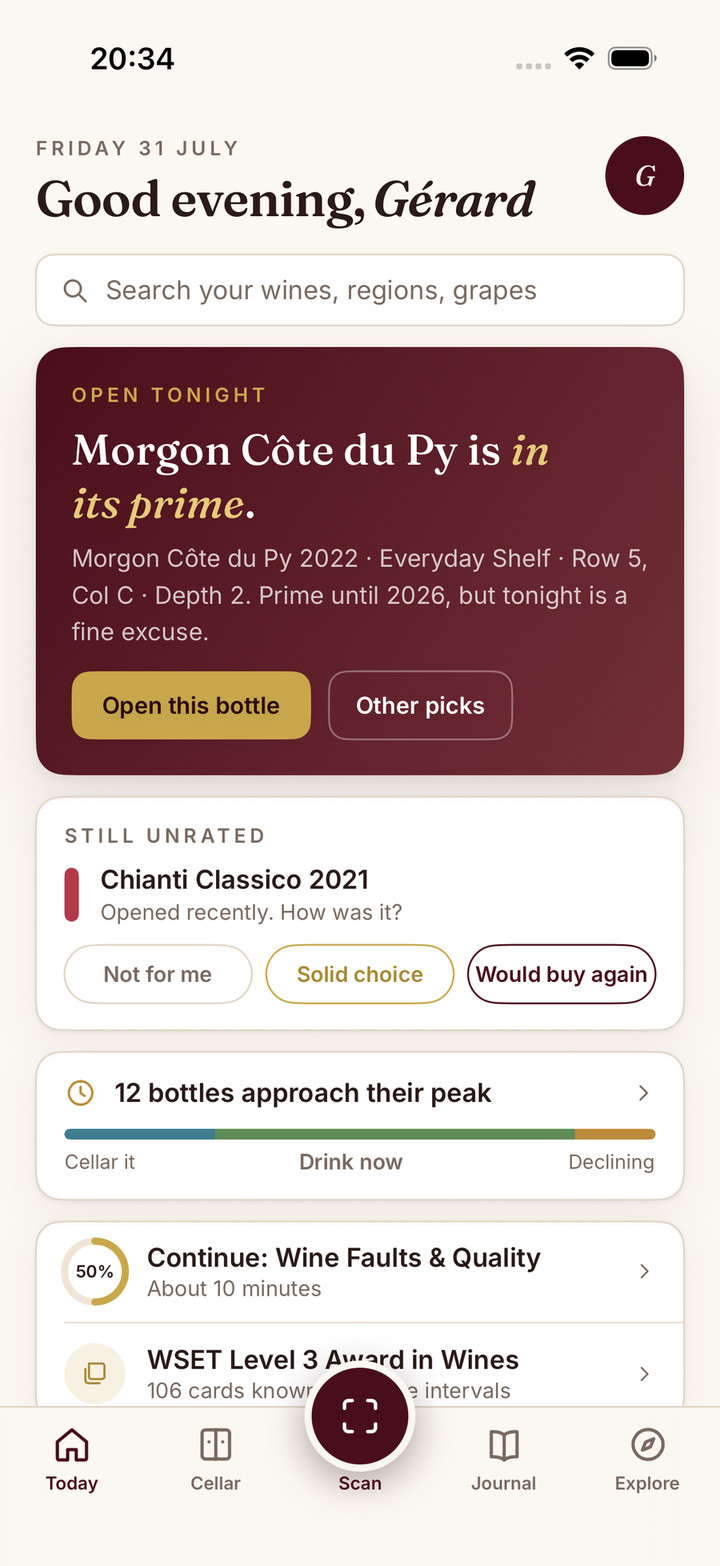
Sommo can help with the list in front of you. Photograph it, add what you are eating and get a small set of menu picks with reasons. If you want to compare more of the list: with Premium, Score Menu gives every wine it reads on the list a quality score. Try Sommo with tonight’s list.
A useful order starts with three details
Tell the server your main dish, the style you like and the most you want to spend. “A fresh white, not too much oak, up to this price, with the fish” is a useful brief. Pointing to a price keeps the conversation discreet.
Check whether prices mean a glass, a carafe, a half bottle or a full bottle before comparing them. Ordering extra wine you do not want is not a saving. The glass versus bottle guide helps with that decision.
WSET’s guide to reading a wine list encourages clear preferences and a budget when asking for help. The useful skill is describing the dinner you want, rather than performing wine knowledge.
Narrow the list without guessing
| What you know | Your next move | What to ask |
|---|---|---|
| You enjoyed a particular bottle | Find the same grape or a similar style within budget | “Which is closest in weight and freshness?” |
| You know the main dish | Include its sauce and cooking method | “Which of these two suits the sauce?” |
| The table has different meals | Compare a flexible bottle with separate glasses | “Would one bottle work for both dishes?” |
| The list is unfamiliar | Ask for two bottles within a firm ceiling | “What is the difference, and which would you choose?” |
A familiar region is a starting point. Producer, wine name and vintage still matter. A different bottling from the same estate can be a different wine entirely. If a word such as “reserve” attracts you, ask what it means for that bottle instead of treating it as a universal quality grade.
Use Sommo for the decision in front of you
Take a clear photograph that includes the wine names and prices. For a long list, use readable sections instead of trying to squeeze tiny text into one image. Add the meal so a recommendation has a purpose.
Menu picks make a shortlist. The pairing, value and splurge options offer different starting points, with reasons. Recent journal ratings can inform the choice. Free menu picks use the shared allowance of five lifetime free scans per device; they are not five new scans every month.
Score Menu compares the list. With Premium, Score Menu gives every wine it reads on the list a quality score. Hard-to-read entries can be estimated, so check the recognised wine and vintage before relying on the result. The method and limitations explain what goes into the answer.
Choose the result that fits the evening. A high score is not an instruction to stretch your budget, and a splurge is an option, not the default. Ask the server whether the bottle is available and whether the listed vintage is the one they will bring.
Value means more than the lowest price
A wine you enjoy with the meal can be better value to you than a famous label you ordered for its name. An unfamiliar grape may be worth exploring, but unfamiliarity alone does not make a bargain.
Restaurant prices also pay for storage, glassware and service. A photo does not reveal those conditions. Sommo’s value-oriented menu picks help you consider the visible choices; do not treat them as a verified retail-price lookup or a calculation of the restaurant’s markup.
Keep the comparison practical: same serving size, prices you are comfortable with, and flavours you want. The second cheapest bottle has no special claim to being good or bad value.
Check the bottle, then keep the discovery
Before the bottle is opened, check that the producer, wine and vintage match what you agreed. If offered a taste, describe anything that seems wrong and ask the server to check; you do not need to diagnose a fault yourself. The corked versus oxidised guide explains common differences.
When the wine is one you want again, save a label and a short journal note: what you ordered, what you liked and whether you would buy it again. That makes tonight’s recommendation useful the next time you open a list. The wine-memory guide gives you a simple record to keep.
Download Sommo before your next dinner. Start with one list, one choice and a note worth finding again.