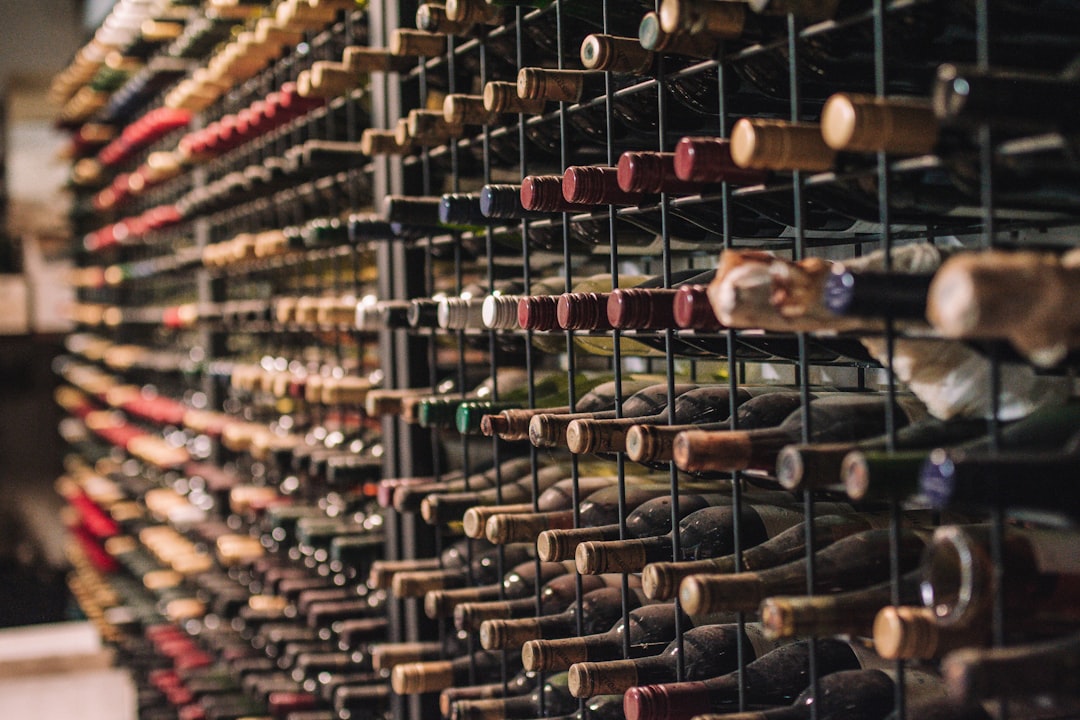
I build Sommo on my own, in London, and the wine cellar is the part I think about most. Not because cataloguing bottles is hard. Plenty of apps do that. The hard part is the question every collector actually asks, standing in front of the rack on a Friday night: which one of these is ready, and which one will I regret opening too soon?
This week I rebuilt the way Sommo answers that question. This is what changed, and why I think it is now the most honest drinking-window engine in any wine app you can put on your phone.
The problem with a single date
Most “when to drink” advice gives you one number. Drink by 2030. The trouble is that no honest person can print a date on a bottle, because a drinking window is not a deadline. A wine has a few years where it starts becoming interesting, a stretch where it sings, and a long slow decline after that. Squashing all of that into one date throws away the most useful information you have. (The free drinking window checker on this site gives you the quick, no-signup version of the same idea.)
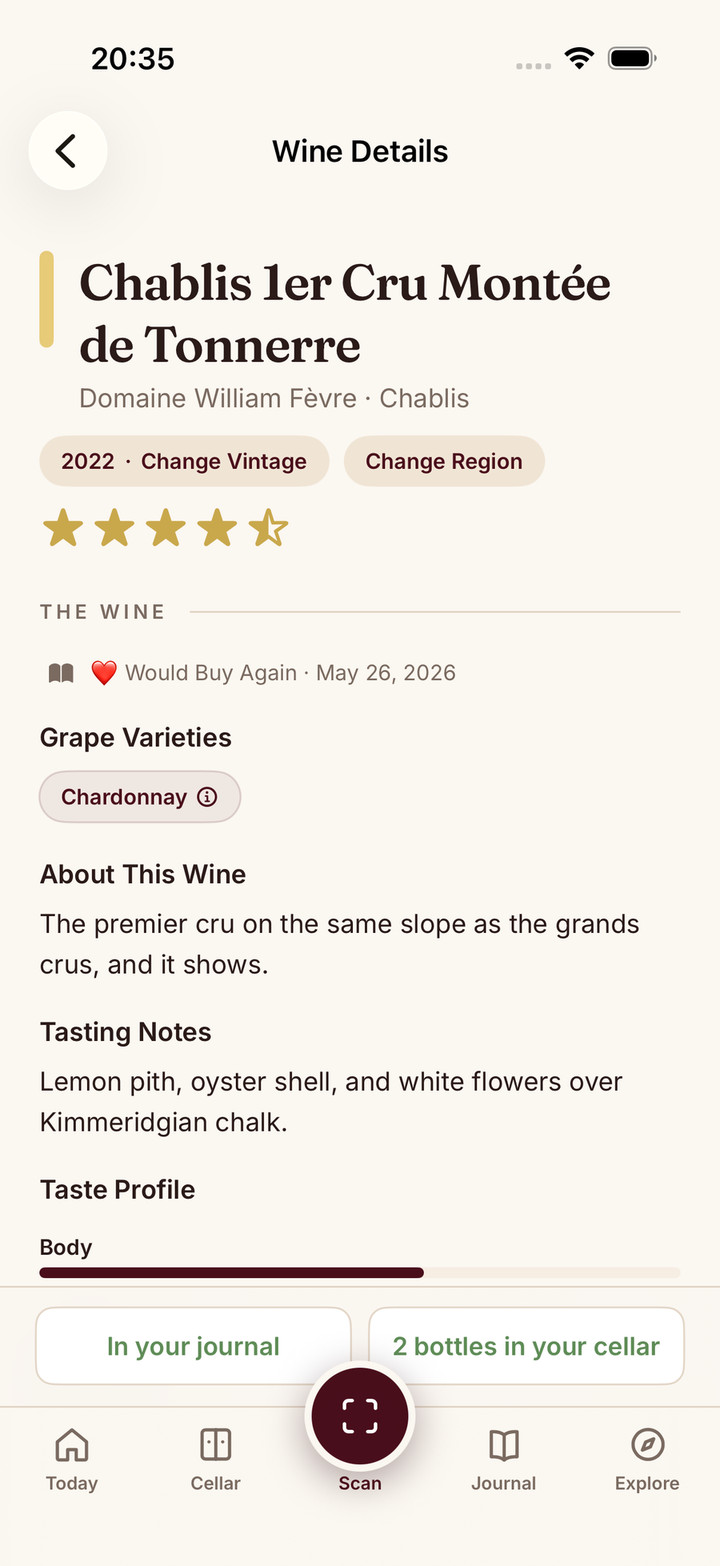
So Sommo does not give you a date. It gives you a lifecycle. Every bottle gets four reference points: when it starts drinking well, when it enters its peak, when that peak fades, and when it slips past its best. On the bottle’s page you see that as a timeline with a marker on today, so you can read at a glance whether a wine is too young, almost ready, at its peak, or one you should drink soon.
That much is table stakes. The interesting part is everything that bends the window away from the textbook.
Layer one: an estimate, grounded
The starting point is Sommo’s own analysis of the wine. Sommo runs on proprietary wine-tuned AI built and owned by us, checked against a maintained wine library so the producers and regions it talks about are real. You can read the longer version of that system on the about page.
For a drinking window, the model reasons about the things that actually drive ageing: grape structure, tannin and acidity, region, the vintage conditions, producer style, and winemaking. It returns the four-point window plus a confidence level, and on each bottle’s page it adds vintage intelligence: how strong the growing year was, what character to expect from it, and any notable conditions. A confident wine gets a tighter window. A wine the model is unsure about gets a wider band and says so, rather than pretending.
Layer two: how the bottle was actually stored
Here is the thing the textbooks ignore. The same wine ages completely differently in a steady cellar at twelve degrees than it does in a kitchen cupboard that swings with the seasons. A perfect estimate for ideal storage is the wrong estimate for your bottle if your bottle has been baking on a shelf since August.
So you can now tell Sommo how each bottle has been kept. Standard, verified ideal, warm, fluctuating, unknown, or compromised. Warm and fluctuating storage pull the window earlier, because heat ages wine faster. An unknown history widens the band and lowers confidence. A bottle you mark as compromised is flagged to drink now, full stop. The window you see is the window for your bottle, not for a fantasy bottle in a perfect cellar.
Layer three: your palate, not mine
The last layer is the one I am most pleased with, because it is genuinely personal and it does not involve any guessing by an AI at all.
People do not all like wine at the same point. Some of us love the bright, primary, slightly tense version of a young red. Others want it soft, resolved, and tertiary. The “correct” peak in a textbook is an average, and you are not an average. (Never mapped your own preferences? The free wine quiz is a two minute start.)
So Sommo watches what you actually enjoy. Every time you rate a bottle you have opened, that feedback feeds a quiet, deterministic calculation: bottles you would buy again count fully, bottles that were a solid choice count a little, bottles you disliked are left out. Once it has enough signal for a grape or a style, it nudges your future windows up to a couple of years earlier or later to match how wine really tastes to you. The bottle page shows both: the standard window, and your taste, side by side, so you can see exactly how much your own history has moved the dial. Nothing is hidden, and the shift is bounded so it can never run away with itself.
Bringing it together: Open Tonight
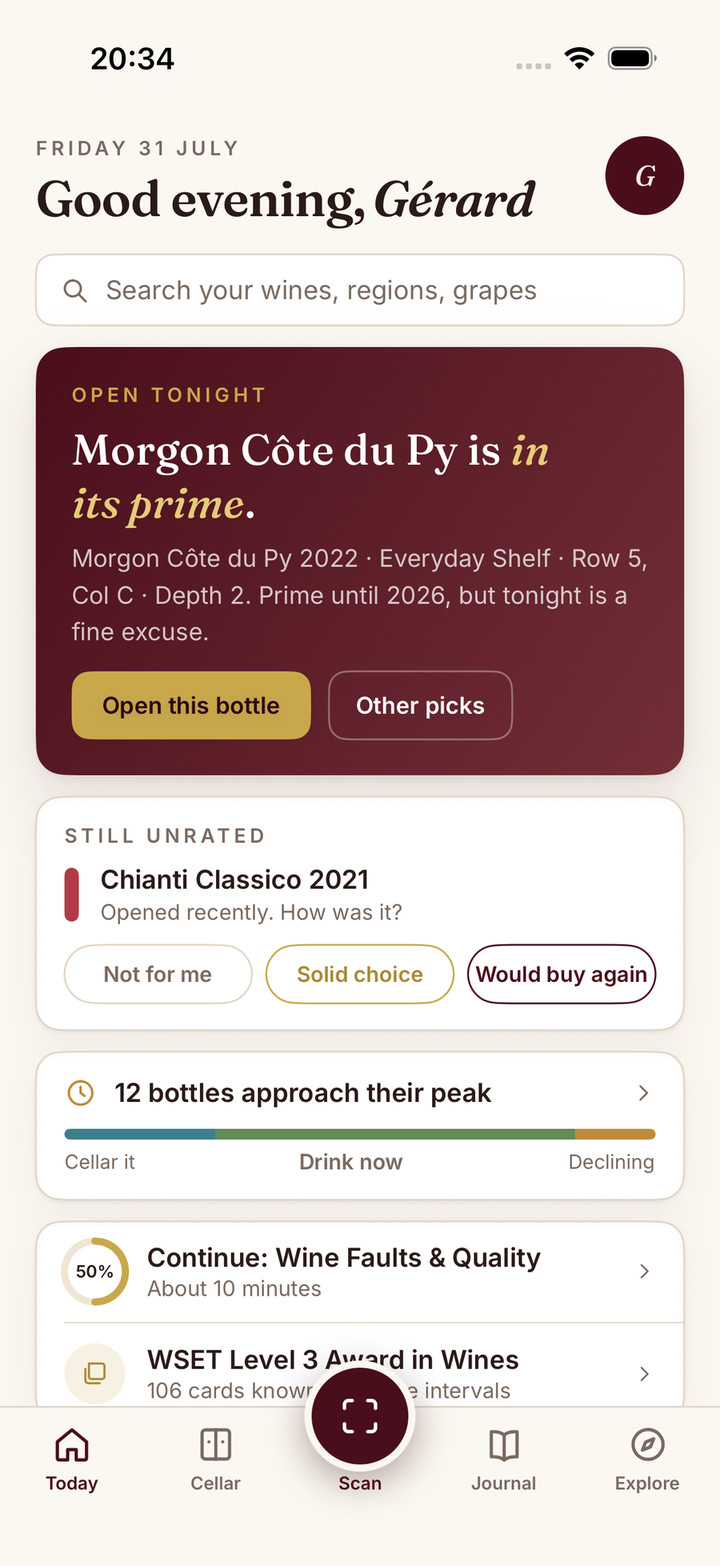
All of that lives behind one decision. To make it concrete, the cellar now has Open Tonight: describe nothing, cook nothing, just ask what is most worth opening right now. Sommo looks at your collection, filters to the bottles that are ready or nearly there, and ranks them by urgency, so the wine you should not let slip past its peak floats to the top. There is a separate flow for “I am cooking this, what pairs”, but Open Tonight is purely about timing. It even respects notes like “do not open, gift for Dad”, because the app should never tell you to drink the one bottle you are saving.
Why I keep rebuilding it
I improve this part of the app constantly, and I test the model’s windows against a fixed set of cases every time I touch the prompt, so it does not quietly get worse. I do this because Sommo is, honestly, the app I wished existed before I started building it. I wanted one place that scans a label, files the bottle, learns my palate, and tells me when to drink, without renting my attention to advertisers or charging a fortune.
It costs less than a single wasted bottle: $5 a month or $29.99 for the year, with a three-day free trial and no card up front. If you have ever stood in front of your rack guessing, that is the whole pitch.
Keep reading
- What is a wine drinking window? the plain-language version of the idea above
- When is Barolo ready to drink? one of the trickiest windows in wine
- How long does Burgundy age? reds, whites, and the awkward truth about both
- How to build your first real wine cellar and the best wine cellar apps in 2026
Want the cellar that actually tells you when to drink? Download Sommo and add your first bottle today.