The wine world has a peculiar relationship with money. On one end, there are critics arguing you need to spend £50 for a “serious” bottle. On the other, there are online guides insisting everything under £20 is a scam. The reality is more nuanced and considerably more useful.
What You Actually Get at Each Price Level
Under £10
This is the toughest territory and the one most people navigate daily. There are genuinely decent wines here, particularly from Portugal, Spain, southern France and South Africa, but you are paying for bulk production and brand recognition more than for craft winemaking. The best wines under £10 guide identifies the ones worth your money.
Best bets at this level: Portuguese Vinho Verde, Spanish Garnacha, South African Chenin Blanc, Languedoc blends.
£10-15
The first significant quality jump. At this price point you start getting wines with genuine character, a sense of place and some winemaking intention behind them. This is where smart shopping genuinely pays off. A £12 Chablis or a £14 Rioja Crianza will outperform a £20 bottle from a more fashionable region.
Best bets: Chablis, Rioja Crianza, Picpoul de Pinet, New Zealand Sauvignon Blanc, Argentinian Malbec.
£15-25
This is the sweet spot for most wine enthusiasts. The quality improvement from £10 to £20 is far more noticeable than from £20 to £40. You will find serious wines from top appellations at this level: village Burgundy, quality Barolo, aged Rioja Reserva, premium New World Pinot Noir.
For a comprehensive list of outstanding bottles at this price, the best wines for the money guide is the starting point.
£25-50
Above £25, quality improvements become less dramatic relative to the price. You are partly paying for prestige, scarcity and brand. A £30 Burgundy village wine might not taste twice as good as the £15 village wine from the same appellation. The law of diminishing returns is real.
£50 and Above
Beyond £50, you are in fine wine territory where price is driven by scarcity, critical scores and collector demand. There are extraordinary wines here, but the link between price and drinking pleasure is at its most tenuous. A £100 bottle drunk too young in the wrong glass can be less enjoyable than a £15 bottle treated properly.
The Diminishing Returns Principle
The quality improvement per pound spent is highest between £8 and £20. Above £30, each additional pound delivers less measurable improvement in pleasure. Expensive wines can absolutely be worth it for the right occasion. But spending £50 every week is not the most efficient path to better wine drinking.
Regions That Over-Deliver
Some wine regions consistently produce exceptional quality relative to their prices:
- Portugal: Alentejo reds, Vinho Verde, Dão and Bairrada are all underpriced relative to quality
- Spain: Rioja, Ribera del Duero and Priorat all have wines at every price point that punch above their weight
- Southern France: Languedoc and Roussillon deliver superb value in both red and white
- South Africa: Chenin Blanc, Pinotage and Syrah from Swartland and Stellenbosch are among the world’s best bargains
- Greece: As noted in the Greek wine guide, Assyrtiko and Xinomavro are priced below their quality level
The Restaurant Rule
Never order the second-cheapest bottle on a restaurant wine list. Restaurants know most customers avoid the cheapest option, so the second-cheapest carries the highest markup. Jump to the third or fourth-cheapest instead: the price-to-quality ratio improves considerably.
When to Splurge
Some occasions justify spending more: a significant birthday, a dinner you want to remember, a wine you have always wanted to try. The emotional context is part of the experience. Splurging randomly on a Tuesday evening rarely delivers the same return.
How Tracking Helps
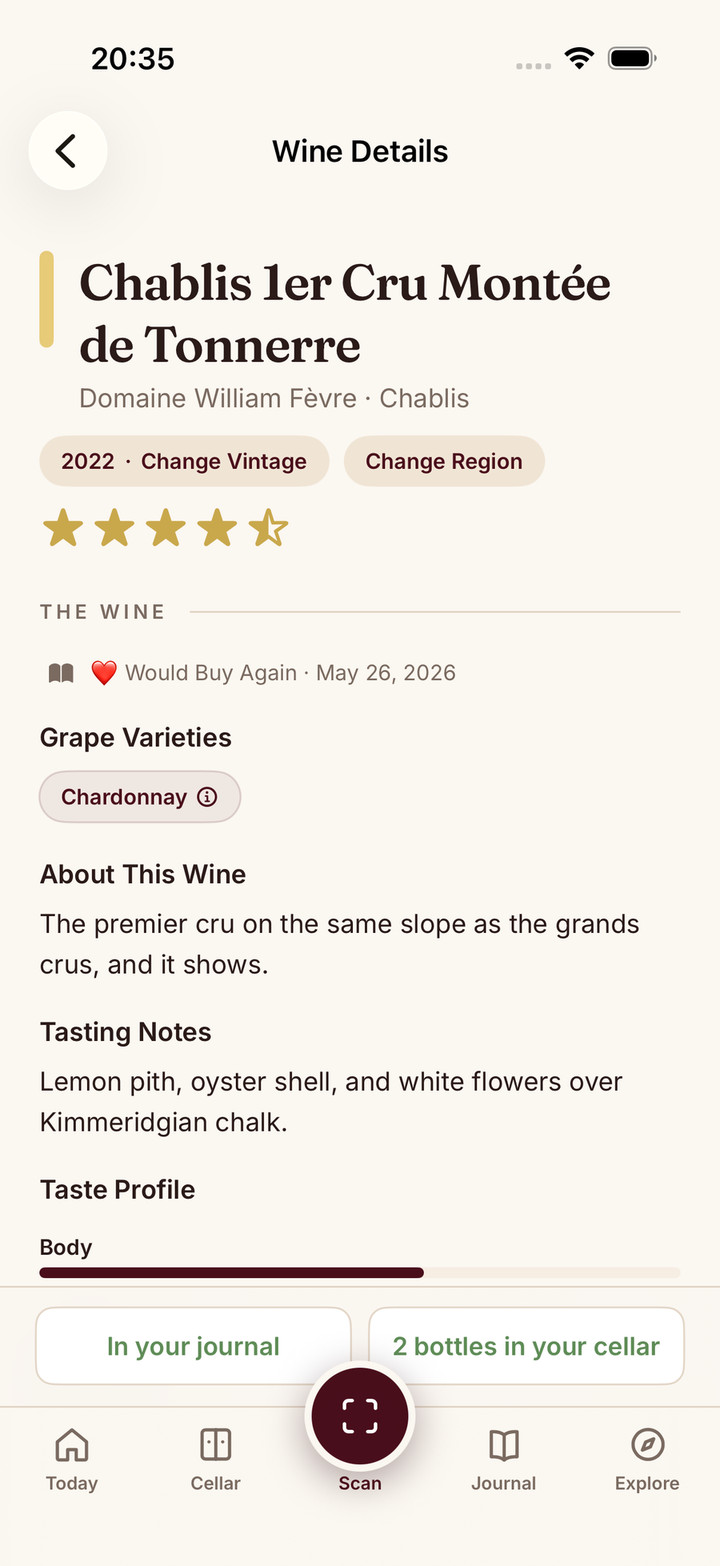
The best way to find your personal value sweet spots is to track what you drink: the price, producer, region and how much you enjoyed it. Over time, patterns emerge. Certain regions and grapes will consistently over-deliver for your palate (the free wine quiz gives you a first sketch of that palate in two minutes). That personal data is more useful than any generic price guide.
Explore with Sommo
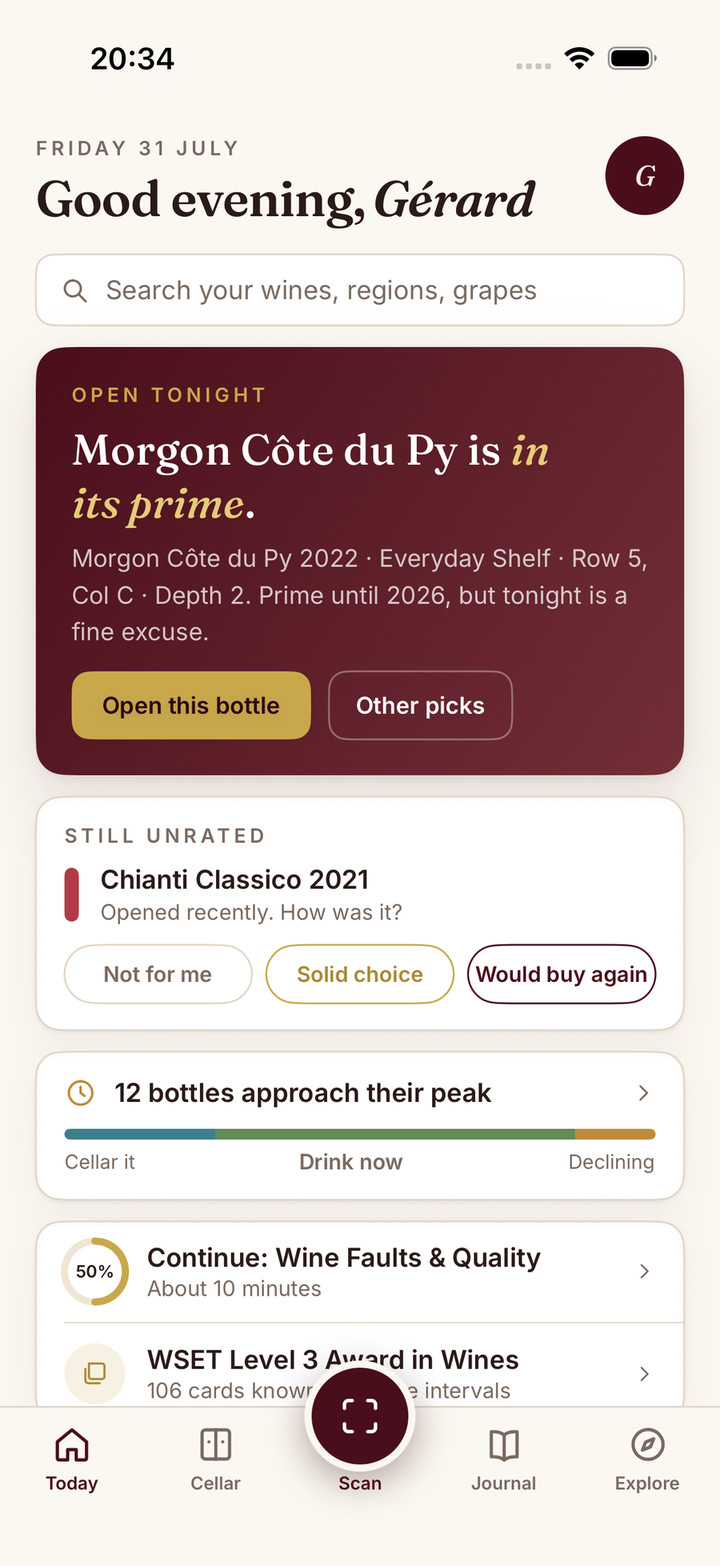
Sommo is designed for exactly this. Log every wine you drink, rate it, note the price and build a picture of where your money is best spent. The cellar feature helps you plan purchases and avoid buying the same wine twice when something better is available at the same price.
Download Sommo and start spending smarter on wine.