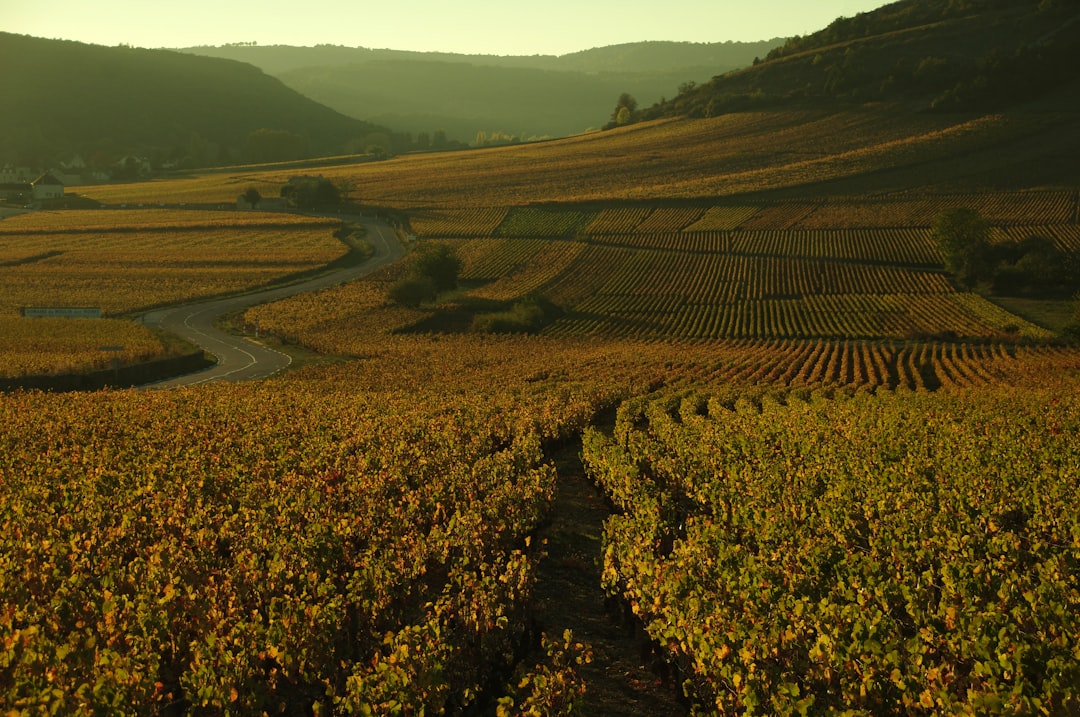
Burgundy is the region people most often get wrong on timing, in both directions. They cellar a humble village wine for fifteen years until the fruit is gone, or they crack open a Grand Cru a decade too soon and taste tannin and oak instead of magic. So how long does Burgundy actually age? It depends on three things: whether it is red or white, where it sits in the hierarchy, and what kind of year it came from.
If you want the framework behind the region first, our Burgundy wine guide for beginners covers the villages and classifications. This piece is purely about when to open the bottle.
Two grapes, two very different windows
Burgundy is essentially a two-grape region: Pinot Noir for reds and Chardonnay for whites. They age on different clocks, so it helps to treat them separately.
Red Burgundy
Pinot Noir is lighter in tannin than a Barolo or a Bordeaux, but Burgundy’s reds carry real acidity, and acidity is what carries a wine through the years. Good red Burgundy also goes through a closed, sullen phase in its youth, often somewhere around years three to six, where it can taste muted before it reopens with age. If a young red Burgundy seems shut down, it may simply be in that phase.
White Burgundy
White Burgundy can be astonishing with age, gaining nutty, honeyed, mineral depth. It is also the riskier wine to cellar, and it is worth being honest about why. A wave of premature oxidation troubled white Burgundy from the late 1990s onwards, where bottles browned and tired far earlier than they should have. Producers have made real progress on closures and handling since, but the lesson stands: cellar white Burgundy with a little more caution than red, and do not assume every bottle will go the distance.
The tier sets the length
The four-tier hierarchy is not just about price. It is a rough guide to how long a wine will age, because the better sites give wines more concentration and structure.
| Tier | Red Burgundy, roughly | White Burgundy, roughly |
|---|---|---|
| Regional (Bourgogne) | 1 to 4 years | 1 to 3 years |
| Village | 3 to 8 years | 2 to 6 years |
| Premier Cru | 5 to 15 years | 4 to 10 years |
| Grand Cru | 10 to 25+ years | 8 to 20 years |
Treat these as starting points. A modest regional Chablis is built to drink young and fresh; a Grand Cru from a great year can outlive the person who cellared it.
Vintage matters more here than almost anywhere
Burgundy sits at a cool, marginal latitude, so the difference between years is large. A cool, structured vintage builds wines with the acidity and grip to age for a long time. A warm, ripe vintage gives rounder, more generous wines that are lovely earlier but may not hold as long. Because the swing is so wide, the same wine from two different years can have windows that barely overlap. Knowing the character of the year is more than half the battle.
How to tell if your Burgundy is ready
- Separate red from white. Whites generally move faster, and you should err on the side of drinking them sooner.
- Place it in the hierarchy. Regional and village wines are mostly drink-soon; Premier and Grand Cru are the ones that reward patience.
- Check the year. Structured year means longer; ripe, warm year means sooner.
- Mind the closed phase in reds. A muted young red may need more time, not less.
- Buy a few if you can. Open one, learn where it is on the curve, hold the rest.
For how Burgundy’s whole approach compares to the other classic French benchmark, see Bordeaux vs Burgundy. And when you can place Chablis, Beaune and Nuits without thinking, the free WSET Level 2 French wine regions quiz makes a satisfying test.
Let your cellar do the timing
Burgundy is exactly the kind of wine that gets lost in a rack. The windows are varied, the vintage swings are wide, and the whites in particular punish you for waiting too long. Trying to hold all of that in your head across a collection is how good bottles slip past their peak. For a one-off bottle, the free drinking window checker gives you an answer in seconds.
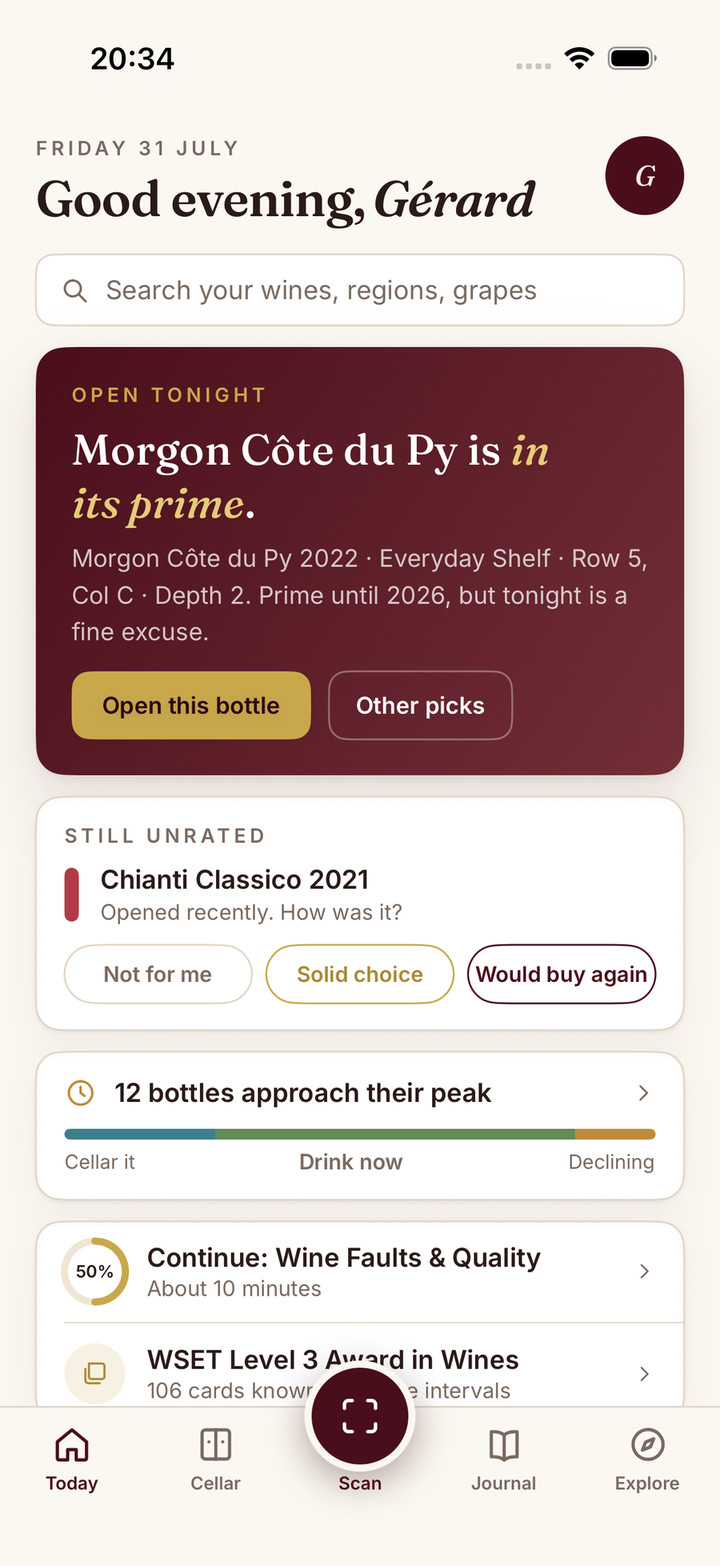
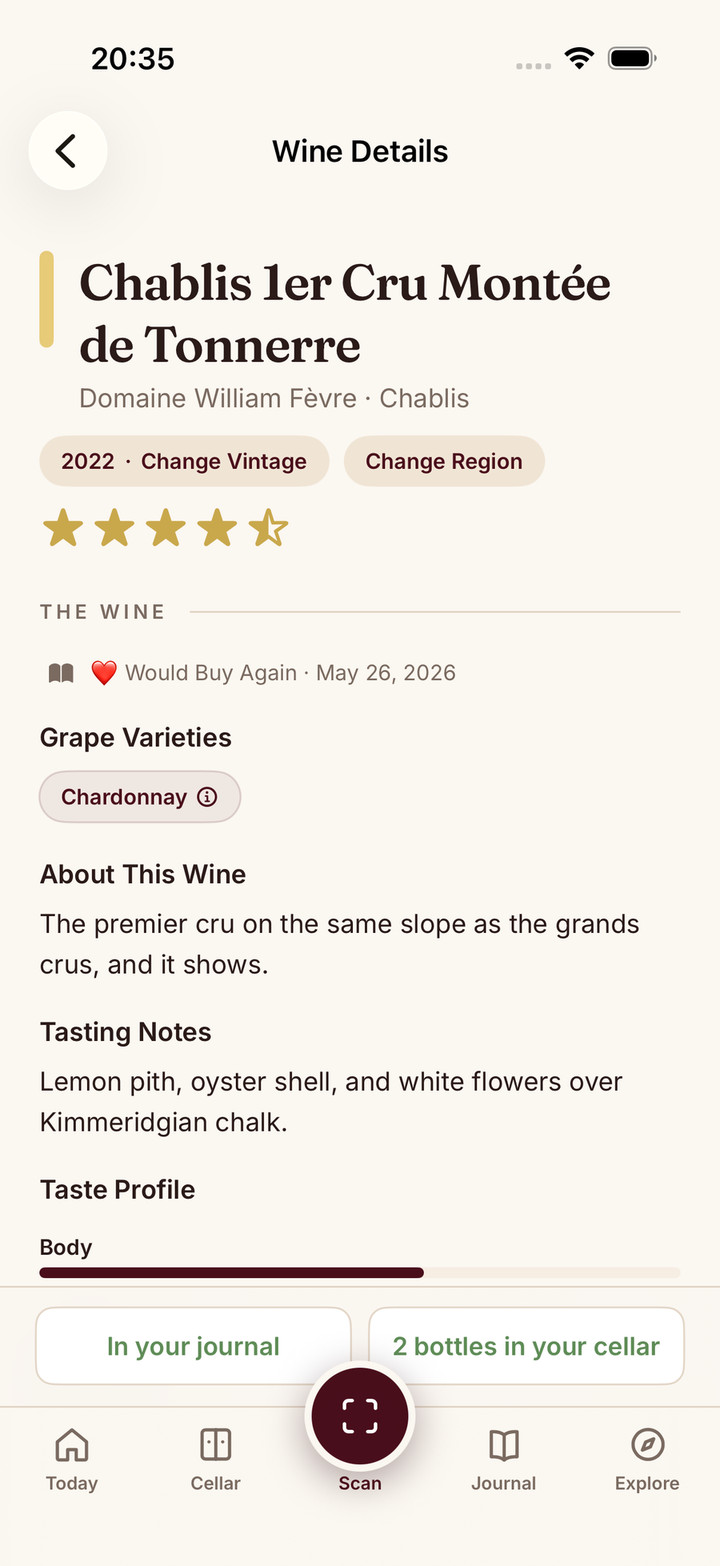
Sommo’s wine cellar is built to carry that load. Scan each bottle and Sommo estimates its drinking window, with the strength of the vintage folded in, and shows you where it sits on the curve today. Tell it how the bottle is stored and the window tightens to match, which is especially useful for whites you would rather not risk. When a wine enters its peak, the app surfaces it so you open it in time. The full breakdown of how that estimate works is in how Sommo estimates drinking windows.
Keep reading
- What is a wine drinking window?
- When is Barolo ready to drink?
- How to build your first real wine cellar
Holding Burgundy you are not sure about? Download Sommo and let your cellar tell you when each bottle is ready.