Every wine country claims history; Georgia has receipts. Residue on clay vessels from the South Caucasus puts winemaking here at roughly 8,000 years, which makes this small country between the Black Sea and the Caucasus mountains the oldest wine culture we know of. And the remarkable part is that its signature method never went away: it is now the hottest ticket in wine bars from London to Tokyo.
The Qvevri: Winemaking, Buried
The heart of Georgian tradition is the qvevri, a huge egg-shaped clay vessel, beeswax-lined, buried to its neck in the earth. Grapes go in, often with skins, stems and all, ferment on their wild yeasts, and stay there for months while the earth holds the temperature steady. No tanks, no barrels, no thermostats: the technique is so distinct that UNESCO added it to its intangible cultural heritage list. If how wine is made is the modern textbook, the qvevri is the original manuscript.
White grapes fermented this way keep long contact with their skins and emerge deep gold to burnt orange: amber wine, Georgia’s gift to the wine world and the ancestor of everything now sold as orange wine. Expect dried apricot, walnut, black tea and a grip of tannin that no ordinary white possesses; our skin-contact wine guide explains the technique in full.
The Grapes: A 500-Variety Bank
Georgia grows more than 500 native varieties, and the two to know are:
- Saperavi, the flagship red: inky, dark-fruited and structured, one of the few grapes with coloured juice as well as skins. Think brambly fruit, liquorice and serious ageing potential.
- Rkatsiteli, the leading white: crisp and appley in a modern style, and transformed into layered, tannic amber wine in a qvevri.
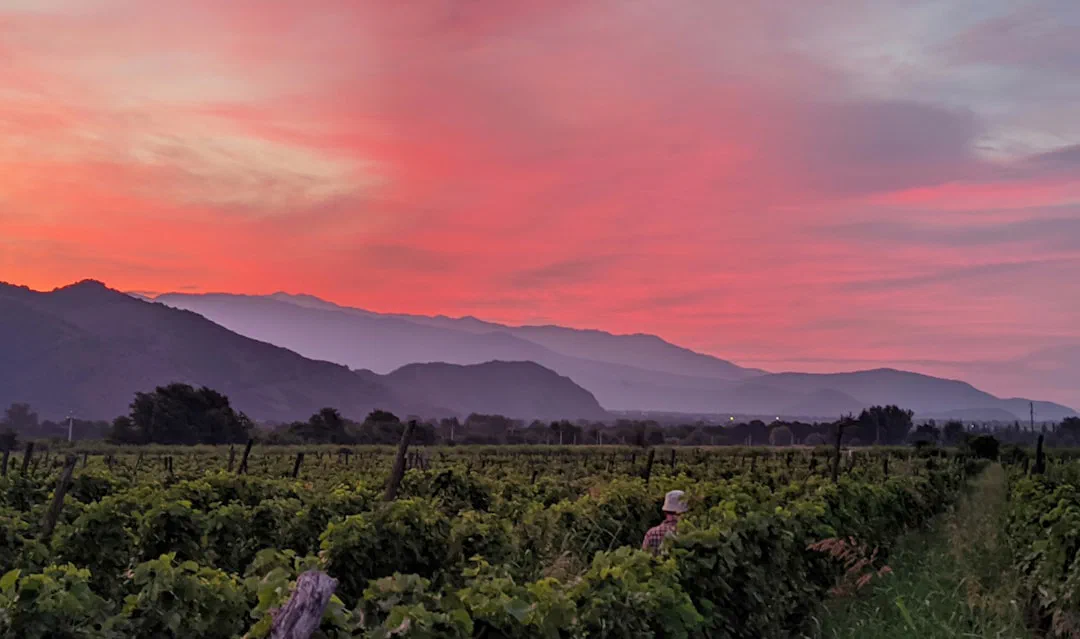
The engine room is Kakheti in the east, home to the majority of Georgia’s vineyards and most of the qvevri tradition. If you enjoy hunting beyond the classics, file Georgia with our other underrated wine regions.
Old World, Older World
In the Old World vs New World divide, Georgia sits in a category of its own: older than old. Its wild-fermented, skin-driven wines also made it a spiritual home for the natural wine movement, which found in Georgia an unbroken 8,000-year precedent for everything it preaches. A warning with your enthusiasm: qvevri wines are distinctive, and a first amber wine can startle a palate raised on Pinot Grigio. Taste it as its own thing, not a failed white. The free tannin, acidity and body chart helps place amber wine’s unusual structure next to the styles you already know.
One more word: supra. It is the traditional Georgian feast, steered by a toastmaster called the tamada, where wine is drunk to friendship, ancestors and peace in a strict poetic order. Wine as culture, not commodity, and the reason Georgians will tell you their wine cannot be understood from a shelf.
Frequently Asked Questions
What is qvevri wine?
Qvevri wine is made in large egg-shaped clay vessels buried in the earth, where grapes ferment and age, often with skins and stems included. The method is at least 8,000 years old, is still central to Georgian winemaking, and is recognised by UNESCO as intangible cultural heritage.
What are the main Georgian grape varieties?
Saperavi is the flagship red, deeply coloured, dark fruited and capable of ageing. Rkatsiteli is the leading white, and in qvevri it becomes classic amber wine. Georgia grows over 500 native varieties, one of the deepest grape banks on the planet.
Is Georgian wine the same as orange wine?
Not exactly. Amber wine, Georgia’s traditional skin-fermented white, is the ancestor of what the world now calls orange wine, but Georgia also makes conventional whites and serious reds. Orange wine is one Georgian tradition, not the whole story.
Explore with Sommo
Georgian labels can be gloriously unfamiliar, sometimes literally in a different alphabet, which is exactly what Sommo’s scanner is for: point it at a bottle of Saperavi and get the grape, the region and the style in seconds. Log your first amber wine in the journal, and mark the world’s oldest wine country as explored on your wine map. If structured study appeals after all this history, WSET Level 2 is where grape-by-grape knowledge starts.
Download Sommo free and add 8,000 years of history to your palate.
Clay vessels are used well beyond Georgia, and the vessel alone does not tell you the wine’s colour or flavour. Our amphora wine guide compares qvevri, talha and other producer choices through the details worth checking on a label.