The Future of Wine: Will AI Replace the Sommelier?
Exploring how artificial intelligence is transforming wine discovery and education, and why the future is about democratization, not replacement.
It’s the question I get asked most often: “Are you trying to replace sommeliers with AI?” The short answer is no. The longer answer reveals something more interesting about where wine culture is heading.
The $500 Question
Here’s a reality check: a personal consultation with a master sommelier can cost $300 to $500 per hour. A dinner at a Michelin-starred restaurant with expert wine pairings? Easily $200 or more just for the wine service. These experiences are wonderful, but they’re not accessible to most people learning about wine.
Meanwhile, you’re standing in a grocery store aisle, staring at 200 bottles, trying to remember if you liked that wine your friend brought to dinner last month. No sommelier in sight. No one to ask. Just you and a wall of labels that might as well be written in ancient Greek.
This is where AI changes everything.
What AI Actually Does Well
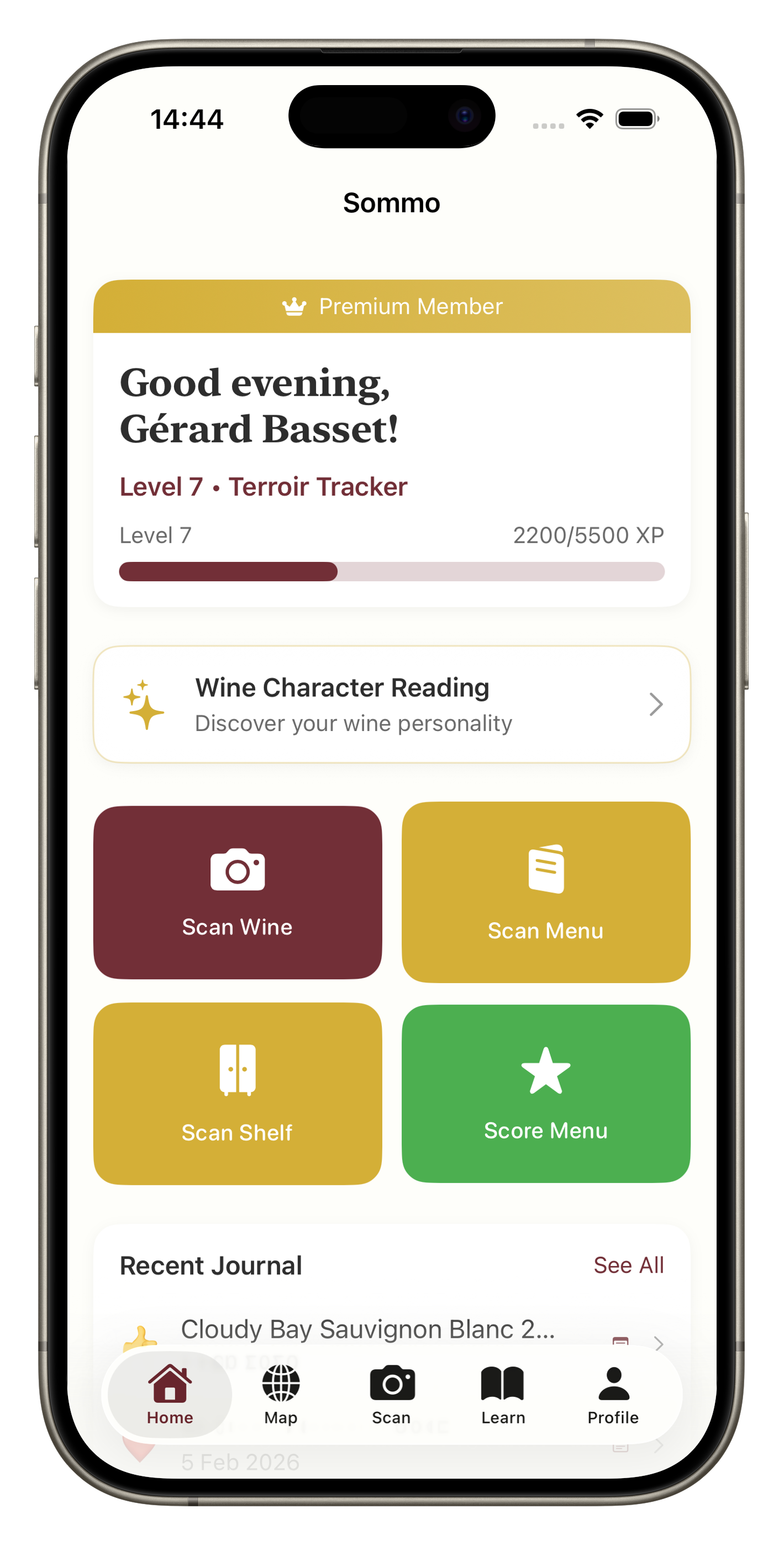
When I built Sommo, I wasn’t trying to replicate a sommelier’s decades of experience into an app. That would be both arrogant and impossible. Instead, I focused on what AI genuinely excels at:
Instant recognition and context. Point your phone at any wine label, and within seconds you know what you’re looking at: the grape varieties, the region’s characteristics, what flavors to expect. No more pretending you know what “Côtes du Rhône” means while nodding confidently. Whether you’re exploring Burgundy or Napa Valley, the context is right there.
Learning your palate. A sommelier you meet once can make educated guesses about your preferences. An AI that tracks every wine you’ve tried, rated, and noted? It actually knows you prefer fruit-forward red wines and that you found that high-tannin Barolo too aggressive.
Democratized expertise. The knowledge that used to be locked behind certification programs and years of tasting experience is now available to anyone curious enough to scan a bottle.
What Stays Beautifully Human
But here’s what AI will never replace, and honestly, shouldn’t try to.
The theater of service. A great sommelier doesn’t just recommend wine; they create an experience. The way they present a bottle, the story they tell about the producer, the perfect moment they choose to suggest something unexpected. That’s performance art, not data processing.
Reading the room. Is this a celebration? A difficult business dinner? A first date that’s going well? A human sommelier picks up on these cues instinctively and adjusts their recommendations accordingly. AI sees a table; a sommelier sees a story.
The serendipity factor. Some of the best wine experiences come from a sommelier saying, “Trust me on this one,” and pouring something you’d never have chosen yourself. That intuition, that willingness to take a risk on your behalf, is irreplaceable.
Relationship and trust. Regular customers at wine bars develop relationships with their sommeliers. There’s a shorthand that develops, a mutual understanding. Your favorite sommelier remembers that you loved that obscure Grüner Veltliner three years ago.
The Real Future: Democratization, Not Replacement
Here’s what I believe is actually happening: AI isn’t replacing sommeliers. It’s democratizing access to wine knowledge.
Think about it like this. GPS didn’t replace the need for local guides who know hidden spots and secret restaurants. But it did mean you no longer need a guide just to get from point A to point B. You can explore confidently on your own, and when you want that deeper local expertise, you seek it out intentionally.
Similarly, AI wine tools mean you no longer need an expert just to make an informed purchase at the grocery store. You can build your knowledge independently, explore confidently, and develop your own palate. And when you want that elevated experience (the storytelling, the theater, the human connection) you seek out a great sommelier knowing exactly what you’re paying for.
Why I Built Sommo
I built Sommo not to replace sommeliers, but because I couldn’t afford one for every bottle I bought. I wanted to learn about wine without feeling intimidated. I wanted to remember what I’d tried and why I liked it. I wanted expertise in my pocket for those moments when no expert was available.
The future of wine isn’t AI versus humans. It’s AI empowering more people to appreciate wine, creating more informed enthusiasts who eventually seek out those special human-led experiences. It’s raising the floor of wine knowledge while keeping the ceiling as high as ever.
Every person who uses AI to decode their first wine label is a potential future customer at that Michelin-starred restaurant, finally confident enough to engage with the sommelier rather than just nodding along nervously.
That’s not replacement. That’s growth. And that’s a future worth building toward.