Earlier this week I covered dry red wine, and the answer there was simple: nearly every red is dry. Whites are different. The same grape can be bone dry in one bottle and properly sweet in the next, which is why “a dry white, please” actually means something.
The short answer: most everyday whites are dry, including Sauvignon Blanc, Pinot Grigio, Albariño, Chablis and most Chardonnay. The ones to check are Riesling, Chenin Blanc, Gewürztraminer and Moscato, which come in every level of sweetness. Under the EU labelling rules, a still wine labelled dry has up to 4 grams of sugar per litre, or up to 9 grams if its total acidity is no more than 2 grams per litre below the sugar level. For cooking, choose a crisp, unoaked white you would drink.
Below I cover ten dry whites from crisp to rich, the best dry white for cooking, how to spot hidden sweetness and what to use when a recipe calls for one you do not have.
What makes a white wine dry?
The same thing as a red: the yeast has turned nearly all the grape sugar into alcohol. I explain this fully in what is dry wine.
The confusion with whites comes from two things that taste sweet without being sweet:
- Ripe fruit, such as peach, pineapple or mango, in warm-climate wines.
- Oak, which adds vanilla and a creamy, buttery feel.
High acidity works the other way. A crisp white can carry a few grams of sugar and still taste dry, which is why the EU rule allows more sugar when acidity is high. The wine sweetness chart maps where styles usually sit.
What are the main types of dry white wine?
Here are ten reliably dry whites, roughly from crisp and light to full and rich.
Crisp and light
- Muscadet. Bone dry, salty and lemony, from the Loire’s Atlantic end. Made for oysters.
- Pinot Grigio. Light, neutral, apple and pear. My Pinot Grigio guide separates the good from the bland.
- Albariño. Peach, citrus and a sea-breeze freshness from Rías Baixas in Spain.
Aromatic and zesty
- Sauvignon Blanc. Grassy and citrusy in Sancerre, tropical and punchy in Marlborough.
- Grüner Veltliner. Austria’s white, with green apple and a twist of white pepper.
- Riesling, dry styles. Lime, green apple, laser acidity. Look for trocken, dry or a high ABV.
Medium to full
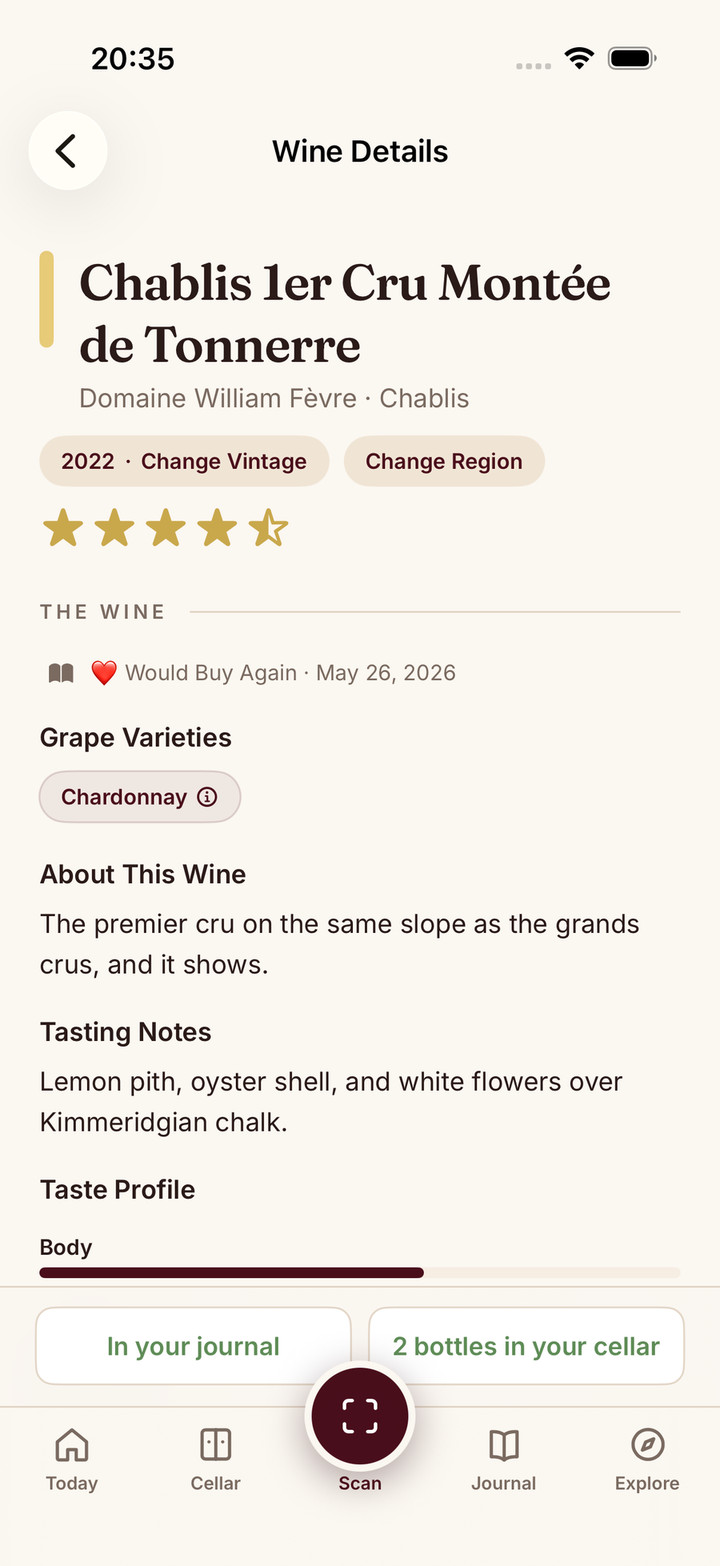
- Chablis. Unoaked Chardonnay with flinty, mineral precision.
- Chenin Blanc, sec. Apple, quince and honey. Vouvray and South Africa.
- Viognier. Apricot and blossom, low acidity, rich texture.
- Oaked Chardonnay. Burgundy, California, Australia. Creamy and toasty, but still dry.
For an overview of all white styles, see the white wine page.
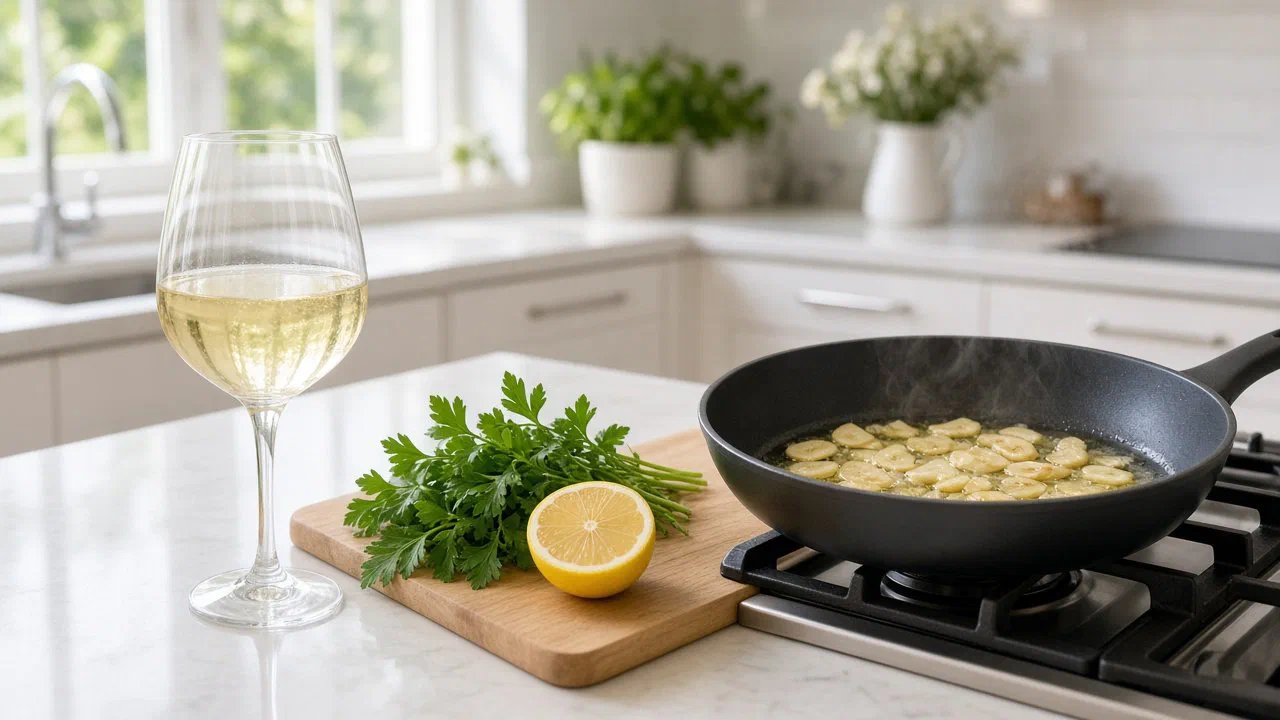
What is the best dry white wine for cooking?
Recipes that ask for “dry white wine” want acidity and clean fruit, not oak or sugar. My picks:
- Sauvignon Blanc for seafood, risotto and pan sauces.
- Pinot Grigio for anything delicate where you want the wine in the background.
- Unoaked Chardonnay or Chablis for creamy sauces and chicken.
- Muscadet for mussels.
Skip heavily oaked Chardonnay (the oak turns bitter as it reduces) and anything labelled medium or sweet. Skip “cooking wine” with added salt too. Cook with something you would drink, and drink the rest with dinner.
How do I tell if a white wine is dry?
Look for these words on the label:
- Dry, sec, secco, trocken, seco: dry.
- Medium dry, demi-sec, halbtrocken, feinherb, amabile: some sweetness.
- Sweet, doux, dolce, moelleux, late harvest: sweet.
Two more clues:
- Alcohol. On a Riesling or Chenin Blanc, 12.5% ABV or higher usually points to a dry wine; around 8 to 10% usually means sugar was left behind.
- The back label. Some producers print a sweetness scale. Use it.
What can I use instead of dry white wine?
- Dry vermouth. The best swap. Use the same amount; it keeps for weeks in the fridge once opened.
- Stock with lemon. For an alcohol-free version, replace the wine with stock and add a squeeze of lemon or a splash of white wine vinegar at the end.
- Dry sherry. A splash works in mushroom and chicken dishes, but use less, as it is stronger and nuttier.
How does Sommo help you pick a dry white?
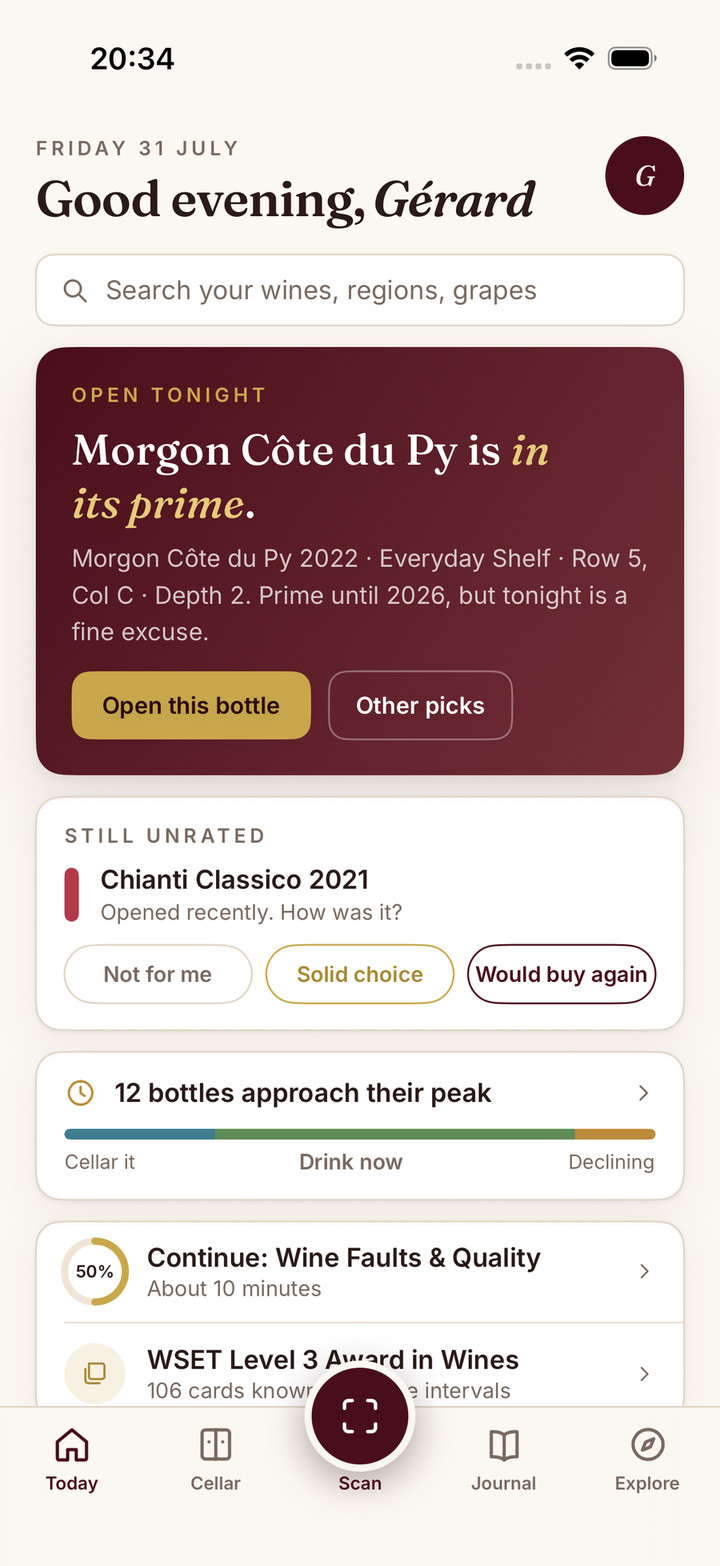
The label does not always tell you how dry a white is. Sommo does, quickly.
Read the label in seconds. Scan it and Sommo tells you the grape, region, style and how it is likely to taste in about 10 seconds. The scan saves the wine; rate it after a glass and it goes into your journal.
Pick the best match. In a shop, Sommo picks the best match from the bottles on the shelf, with two or three alternatives. In a restaurant, with Premium, Score Menu gives every wine it reads on the list a quality score. Menu and shelf picks use your 10 most recent ratings, so if you keep rating crisp, mineral whites highly, that is where Sommo points you.
It gets more personal over time. With Premium, Taste DNA uses every entry in your journal to show body, tannin, acidity, sweetness, intensity and how adventurous you are, and Your palate suggests a wine or region to try next.
It all runs on proprietary wine-tuned AI grounded in a hand-maintained wine library. The free tier gives you 5 lifetime AI scans per device, shared across label, menu and shelf scans, plus the journal and 30 days of journal history. Premium unlocks unlimited scans, lifetime history, Taste DNA, AI tasting feedback and Tasting Mode for $4.99 a month or $29.99 a year. Sommo runs on iPhone, iPad, Android, HarmonyOS and the web.
Download Sommo and find your dry white.
The bottom line
Most popular whites are dry: Sauvignon Blanc, Pinot Grigio, Albariño, Chablis and nearly all Chardonnay. Riesling, Chenin Blanc and Gewürztraminer need a closer look at the label for words like trocken, sec or demi-sec, and the ABV is a useful clue. For cooking, pick a crisp, unoaked white you would happily drink, or reach for dry vermouth.