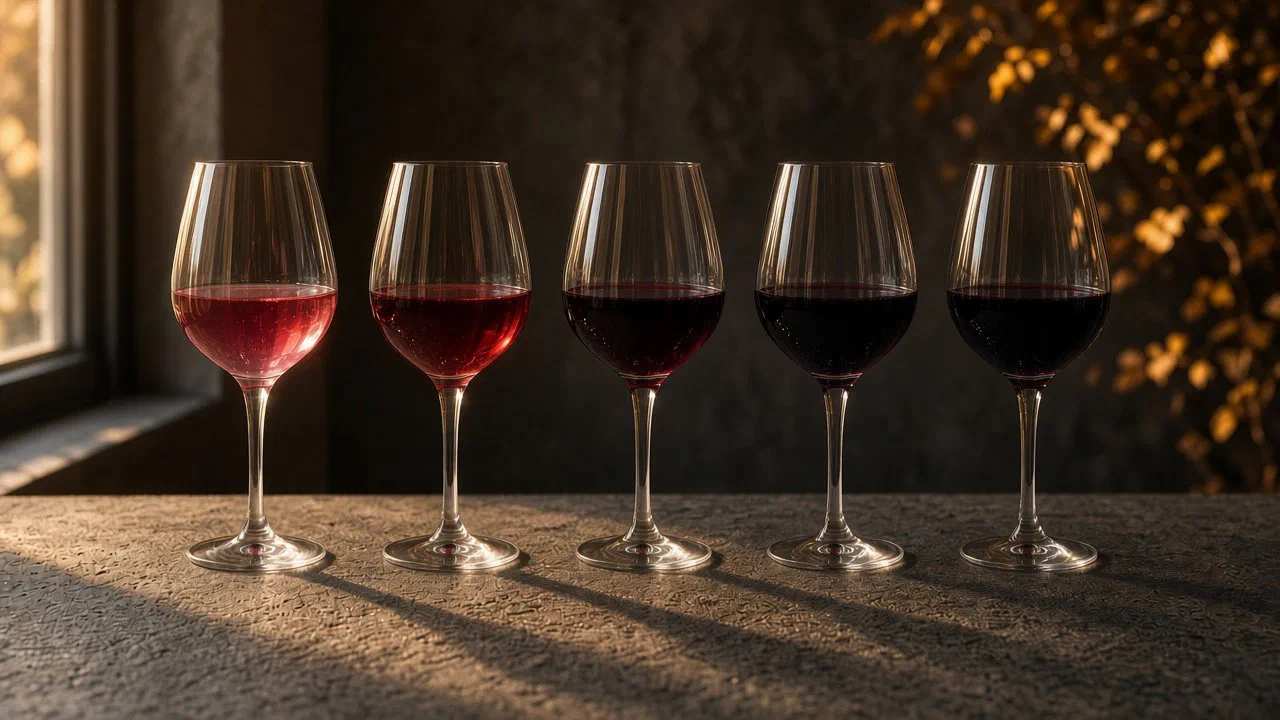
“Can I get a dry red, please?” is one of the most common orders in any wine bar. It is also one of the least useful, because almost every red wine on the list is already dry. What people usually mean is: not sweet, not too heavy, not too harsh.
The short answer: nearly all red wine is dry, meaning little or no residual sugar. Under the EU labelling rules, a still wine labelled dry has up to 4 grams of sugar per litre, or up to 9 grams if the acidity balances it. So the real decision is body and tannin. Light dry reds include Pinot Noir and Gamay; medium include Merlot, Grenache and Sangiovese; full include Syrah, Cabernet Sauvignon and Nebbiolo.
Below I cover what dry really means for reds, ten dry reds from lightest to fullest, the best dry red for cooking and the reds that taste sweeter than they are.
What makes a red wine dry?
Dry is about sugar, nothing else. During fermentation, yeast turns grape sugar into alcohol. When it finishes the job, the wine is dry. I covered this in depth in what is dry wine.
Two things often get confused with dryness:
- Tannin, the grippy, mouth-drying feel from grape skins and seeds. A tannic wine feels dry, but that is texture, not sugar.
- Fruitiness. A ripe Shiraz can smell of jam and taste sweet-ish, yet carry almost no sugar.
If you want to see where wines sit, the wine sweetness chart maps styles from bone dry to lusciously sweet.
What are the main types of dry red wine?
Here are ten dry reds, roughly from lightest to fullest body.
Light-bodied dry reds
- Pinot Noir. Red cherry, raspberry, earthy notes, silky and low in tannin. Burgundy, New Zealand, Oregon and Germany (as Spätburgunder).
- Gamay. The grape of Beaujolais. Juicy, bright, best served cool.
Medium-bodied dry reds
- Grenache. Strawberry, spice, generous alcohol, soft tannin. Southern Rhône, Spain (as Garnacha), Australia.
- Merlot. Plum and chocolate, rounded and smooth. Bordeaux’s Right Bank and almost everywhere else.
- Sangiovese. Sour cherry, tomato leaf, high acidity. The grape of Chianti and Brunello di Montalcino.
- Tempranillo. Red fruit, leather and, with oak age, vanilla and dill. Rioja and Ribera del Duero.
Full-bodied dry reds
- Malbec. Blackberry, violet, plush texture. Argentina and Cahors.
- Syrah or Shiraz. Peppery and savoury in the northern Rhône, rich and dark in Australia.
- Cabernet Sauvignon. Blackcurrant, cedar, firm tannin. Bordeaux’s Left Bank, Napa, Coonawarra, Chile.
- Nebbiolo. Pale in colour but huge in tannin and acidity. Barolo and Barbaresco.
If tannin is the thing you dislike, start at the top of the list. My guide to low tannin red wines goes deeper.
Which dry red wine should I choose?
Match the wine to what you want from the evening:
- Something easy for sipping: Merlot, Grenache or Gamay.
- With roast chicken, salmon or mushrooms: Pinot Noir.
- With pasta and tomato sauces: Sangiovese.
- With steak or lamb: Cabernet Sauvignon, Malbec or Syrah.
- For a special bottle to age: Nebbiolo, top Cabernet blends or Rioja Reserva.
Browse all the grapes in the grape varieties index or read the overview of red wine.
What is the best dry red wine for cooking?
A recipe that calls for “dry red wine” wants something with fruit and moderate tannin. Good choices:
- Merlot for stews and sauces.
- Côtes du Rhône or Grenache for beef casseroles.
- Young Tempranillo for slow-cooked lamb.
- Pinot Noir for coq au vin and lighter dishes.
Avoid heavily oaked or very tannic reds, which can turn bitter as they reduce, and avoid “cooking wine” sold with added salt. The rule I follow: cook with a wine you would drink, then drink the rest with dinner.
Which red wines are not dry?
A few red styles are made sweet or off-dry on purpose:
- Port and other fortified reds.
- Lambrusco labelled amabile or dolce, and Brachetto d’Acqui.
- Some mass-market red blends, especially those sold as smooth or sweet red, which keep a little residual sugar.
- Late harvest and dessert reds, such as Recioto della Valpolicella.
If a label says dry, secco, sec or trocken, it is dry.
How does Sommo help you find the right dry red?
“Dry red” does not tell a waiter what you like. Sommo does.
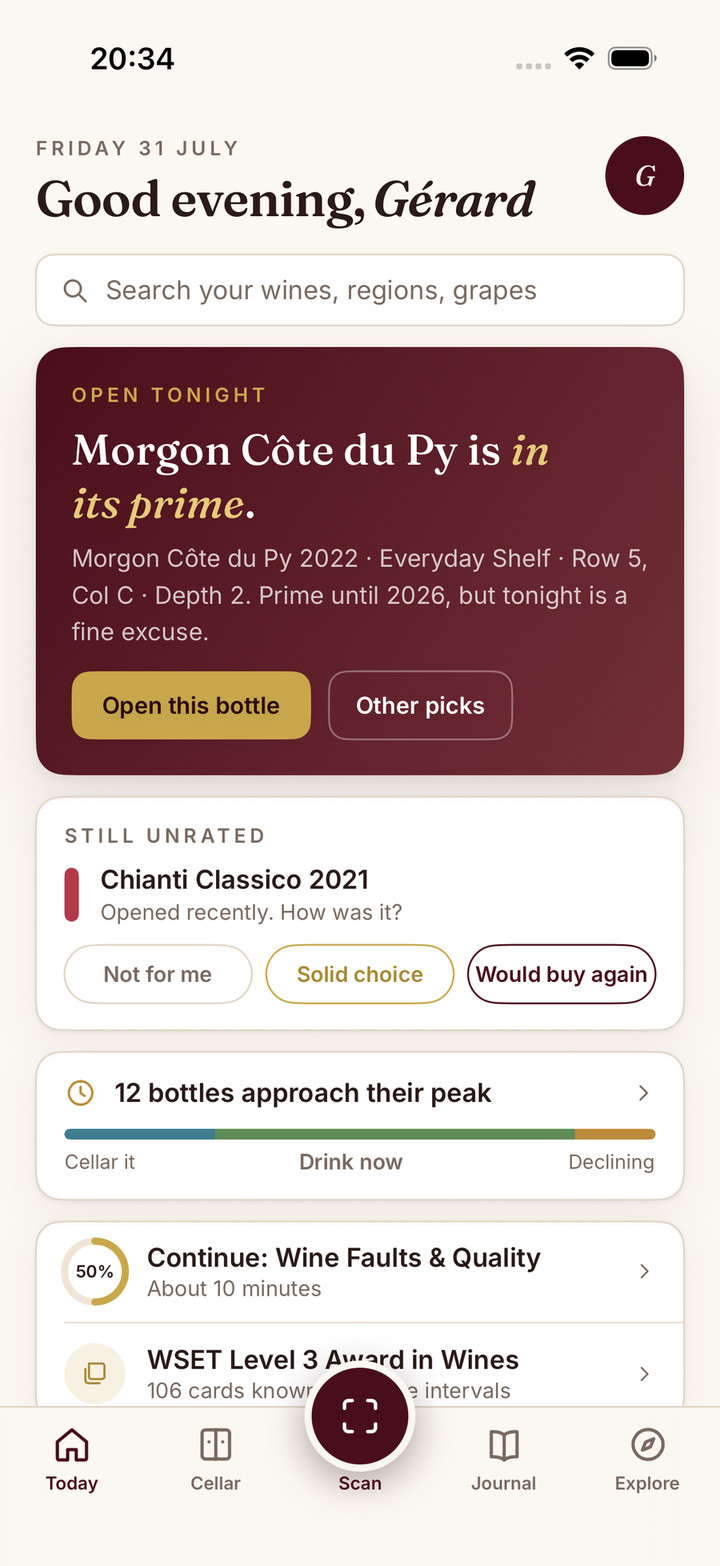
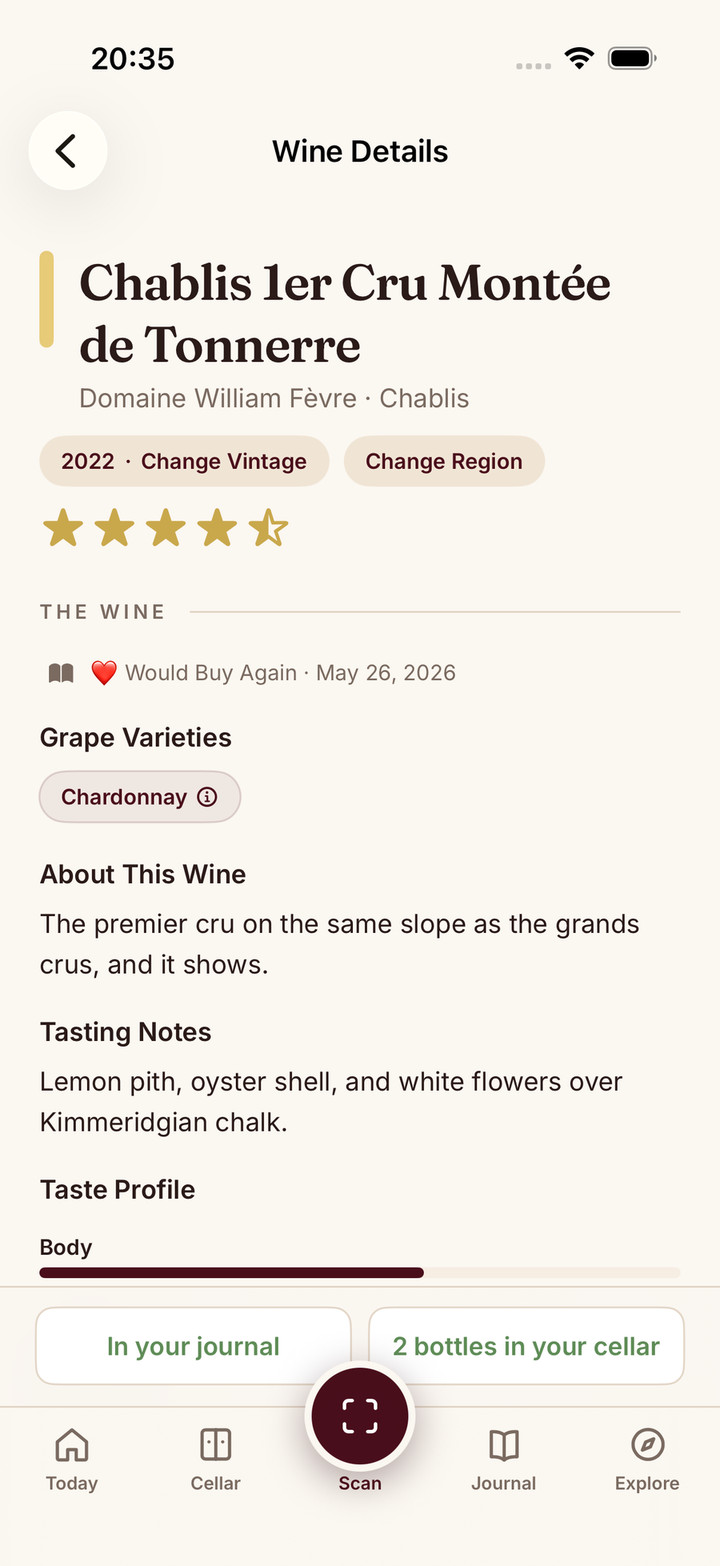
It understands your taste. Menu and shelf picks use your 10 most recent ratings, so if you rated a Merlot “Would buy again” and a Barolo “Not for me”, your next pick reflects that.
Fast at the shelf or the table. Scan a shelf and Sommo picks the best match from the bottles on the shelf, with two or three alternatives. With Premium, Score Menu gives every wine it reads on the list a quality score.
It customises to you over time. With Premium, Taste DNA uses every entry in your journal to show body, tannin, acidity, sweetness, intensity and how adventurous you are, and Your palate suggests a wine or region to try next.
It all runs on proprietary wine-tuned AI grounded in a hand-maintained wine library. The free tier gives you 5 lifetime AI scans per device, shared across label, menu and shelf scans, plus the journal and 30 days of journal history. Premium unlocks unlimited scans, lifetime history, Taste DNA, AI tasting feedback and Tasting Mode for $4.99 a month or $29.99 a year. Sommo runs on iPhone, iPad, Android, HarmonyOS and the web.
Download Sommo and find your dry red.
The bottom line
Nearly every red is dry, so asking for a dry red narrows nothing. Ask for body instead: light (Pinot Noir, Gamay), medium (Merlot, Grenache, Sangiovese, Tempranillo) or full (Malbec, Syrah, Cabernet, Nebbiolo). Cook with a medium, unoaked red you would drink, and watch out for smooth red blends and Lambrusco amabile if you really want no sweetness at all.