Tomorrow is Beaujolais Nouveau day, and every year it makes people think of Beaujolais as a light party wine. Then someone pours them a five-year-old Morgon and they cannot believe it is the same grape. That surprise is what the crus are about.
The short answer: cru Beaujolais is the top tier of Beaujolais, ten villages in the north of the region whose Gamay reds carry their own name on the label. According to Inter Beaujolais, cru production is entirely red. Light, floral crus include Chiroubles and Fleurie. Structured, age-worthy crus include Morgon and Moulin-à-Vent. They are some of the best value red wines in France.
Below I cover what makes a cru, all ten from north to south, which to drink young and which to keep, and how to serve and pair them.
What makes a Beaujolais cru?
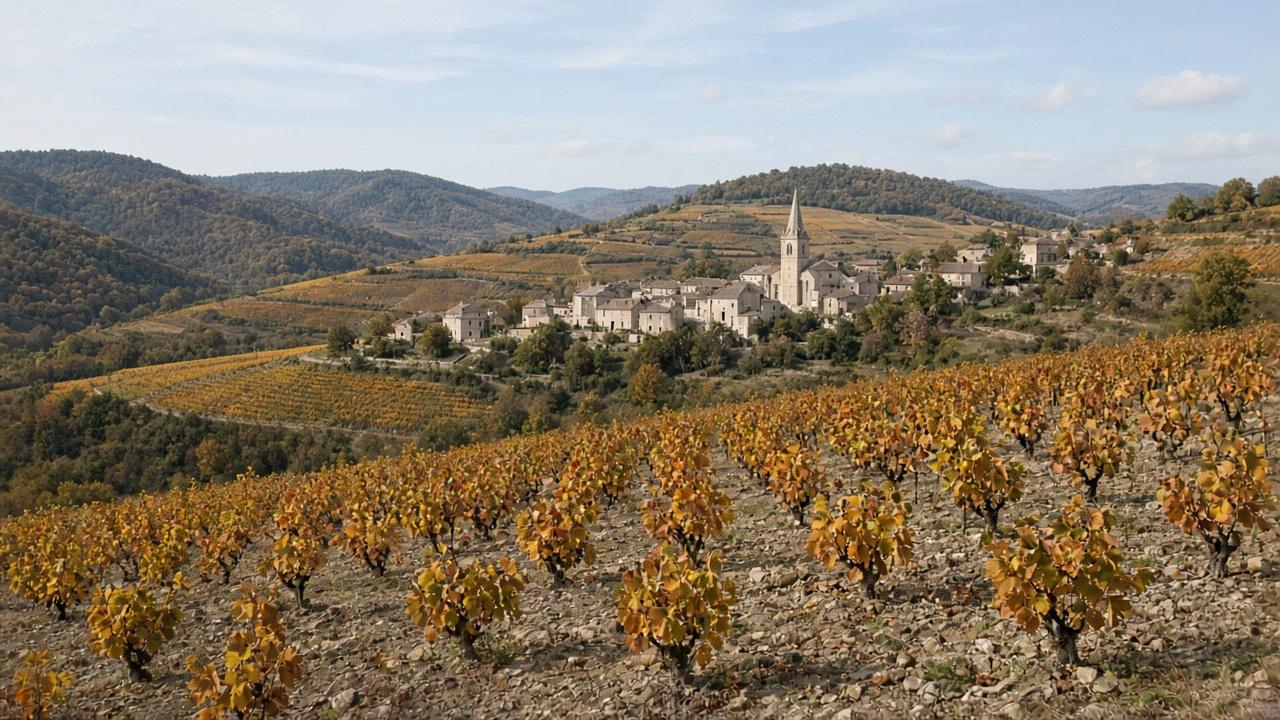
Beaujolais has twelve appellations: two regional ones, Beaujolais and Beaujolais-Villages, and ten crus, as Inter Beaujolais lists them. The crus sit on the hills of the north, mostly on granite soils that give Gamay more depth, perfume and grip than the flatter clay and limestone of the south.
You will rarely see “Beaujolais” in large letters on a cru bottle. The label leads with the village name: Morgon, Fleurie, Juliénas. That is the first thing to know when you are scanning a shelf. My overview of the Beaujolais region, my Beaujolais wine guide and the Gamay grape page give the wider picture.
What are the 10 crus of Beaujolais?
From north to south:
- Saint-Amour. The northernmost cru, on the border with the Mâconnais. Fruity, floral and supple. Popular around Valentine’s Day for obvious reasons.
- Juliénas. Spicy and structured, with dark berry fruit. Rewards a couple of years.
- Chénas. The smallest cru by area and the rarest. Generous, with black fruit, peony and spice.
- Moulin-à-Vent. Named after its old windmill. The most powerful and longest-lived cru, often with some oak. Can taste like a Burgundy after a decade.
- Fleurie. The best known. Pink granite gives floral, silky, aromatic wines.
- Chiroubles. The highest vineyards in Beaujolais, so the freshest, lightest style. Delicious young.
- Morgon. Second only to Moulin-à-Vent in weight. Cherry, kirsch and a savoury edge with age, especially from the Côte du Py hill.
- Régnié. The youngest cru, recognised in 1988. Bright and fruity with a little spice.
- Brouilly. The largest and most southerly cru. Fruit-driven, easy and good value.
- Côte de Brouilly. On the slopes of Mont Brouilly, a hill of hard volcanic blue stone. Riper and more concentrated than Brouilly.
Which crus should I drink young and which can I keep?
A rough guide:
- Drink within 2 to 4 years: Chiroubles, Régnié, Brouilly, Saint-Amour.
- Good from 2 to 6 years: Fleurie, Juliénas, Chénas, Côte de Brouilly.
- Can age 10 years or more in good vintages: Morgon and Moulin-à-Vent.
Producer matters more than any rule. A top Fleurie can outlast a simple Morgon. Use the free drinking window checker for a specific bottle.
How is cru Beaujolais different from Nouveau?
Nouveau is made fast, often by carbonic maceration, released on the third Thursday of November and meant to be drunk within months. My Beaujolais Nouveau guide covers this year’s release and the tradition behind it.
The crus are the opposite: from the best slopes, fermented longer, and made to show where they come from. Many growers still use whole bunches, which gives that trademark juicy, bright fruit, but with far more depth.
How should I serve cru Beaujolais?
- Temperature: slightly cool. Around 13 to 14°C for light crus, 15 to 16°C for Morgon and Moulin-à-Vent. Twenty minutes in the fridge does it. The serving temperature tool has the details.
- Glass: a wide, Burgundy-style glass shows off the perfume.
- Decanting: only for young Moulin-à-Vent or Morgon, and only briefly.
What food goes with cru Beaujolais?
Gamay’s high acidity and low tannin make the crus some of the most food-friendly reds there are:
- Fleurie and Chiroubles: charcuterie, roast chicken, salmon, mushroom dishes.
- Morgon and Moulin-à-Vent: duck, pork, game birds, coq au vin.
- Brouilly and Régnié: burgers, pizza, a Tuesday night.
They also make a smart choice for a big family roast with mixed dishes, because they will not overpower poultry or fight with sides. If tannin is not your thing, read my guide to low tannin red wines.
How does Sommo help with Beaujolais?
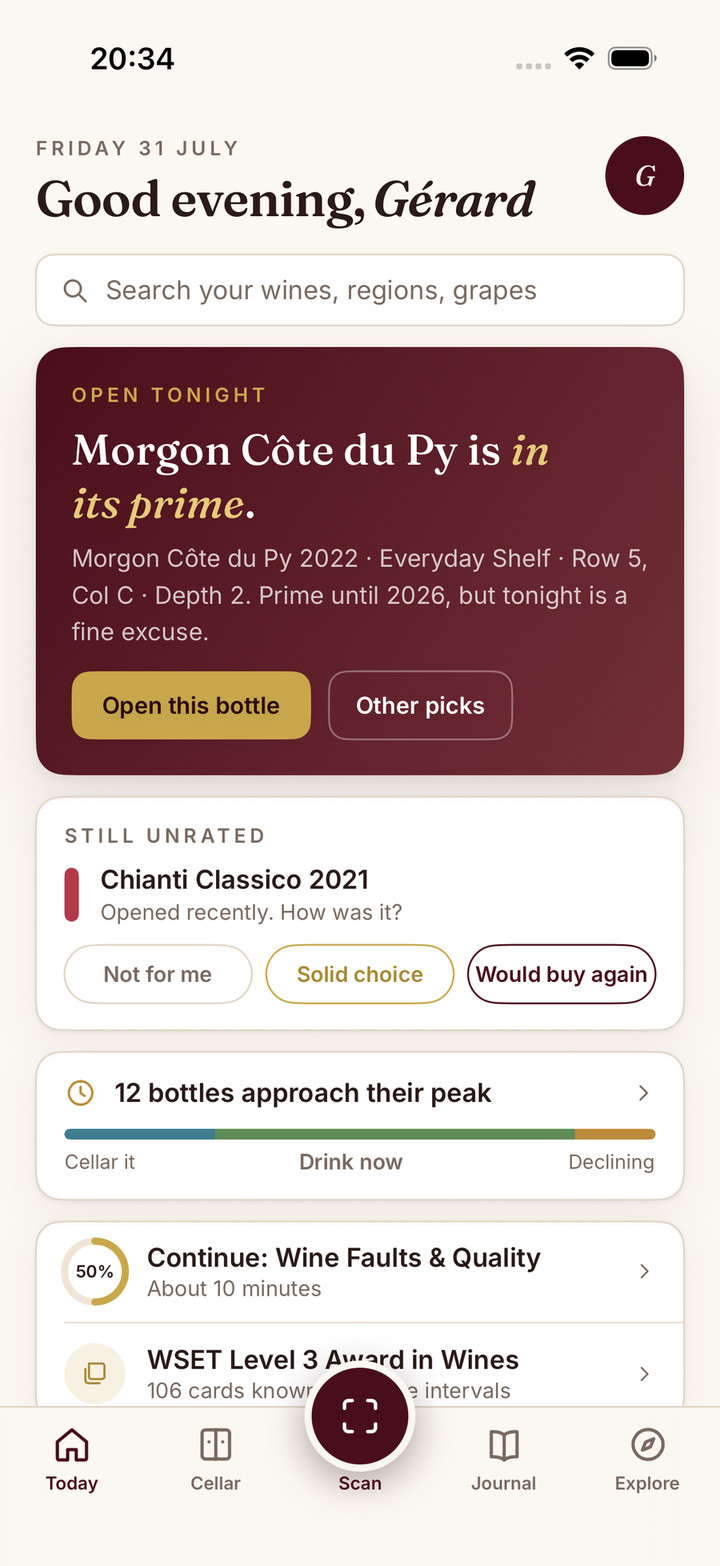
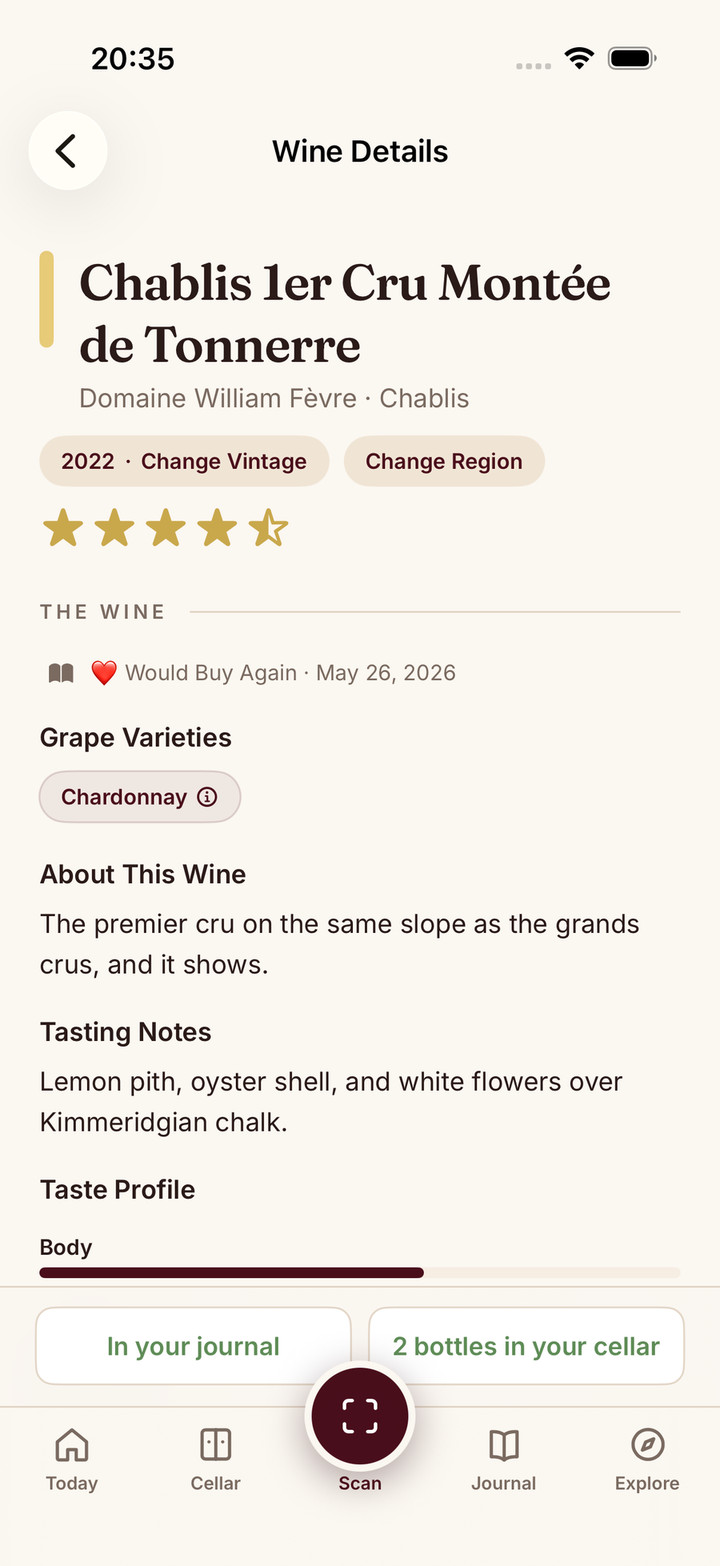
Read the label in seconds. Cru labels lead with village names that many shoppers do not recognise as Beaujolais. Scan one and Sommo tells you the cru, grape, style and drinking window in about 10 seconds.
The best match at the shelf. Sommo picks the best match from the bottles on the shelf, with two or three alternatives. Menu and shelf picks use your 10 most recent ratings, so if you loved a Fleurie, Sommo knows.
It learns you. Log each cru you try and, with Premium, Taste DNA builds a picture of your palate from every entry. Your palate suggests a wine or region to try next, so the next cru on your list comes to you.
It all runs on proprietary wine-tuned AI grounded in a hand-maintained wine library. The free tier gives you 5 lifetime AI scans per device, shared across label, menu and shelf scans, plus the journal and 30 days of journal history. Premium unlocks unlimited scans, lifetime history, Taste DNA, AI tasting feedback and Tasting Mode for $4.99 a month or $29.99 a year. Sommo runs on iPhone, iPad, Android, HarmonyOS and the web.
Download Sommo and find your favourite cru.
The bottom line
Cru Beaujolais is where Gamay gets serious: ten villages, all red, from the light, floral Chiroubles to the age-worthy Moulin-à-Vent. Look for the village name on the label, serve it slightly cool and pair it with almost anything. Enjoy the Nouveau tomorrow, then buy a Morgon to see what the grape can really do.