A beautifully polished glass can still smell of yesterday’s washing-up cloth. A decanter can look clean from across the room while hiding a dried ring inside. Start with the maker’s instructions for the exact item, then choose a compatible wash, thorough rinse and complete drying method. More heat, stronger cleaner or harder scrubbing is rarely a sensible first response.
This guide is about caring for the glassware you already own. The wine glass guide covers shape and selection. Here, the useful question is what is causing the mark or smell, and what the particular vessel can safely tolerate.
Identify the item before treating it
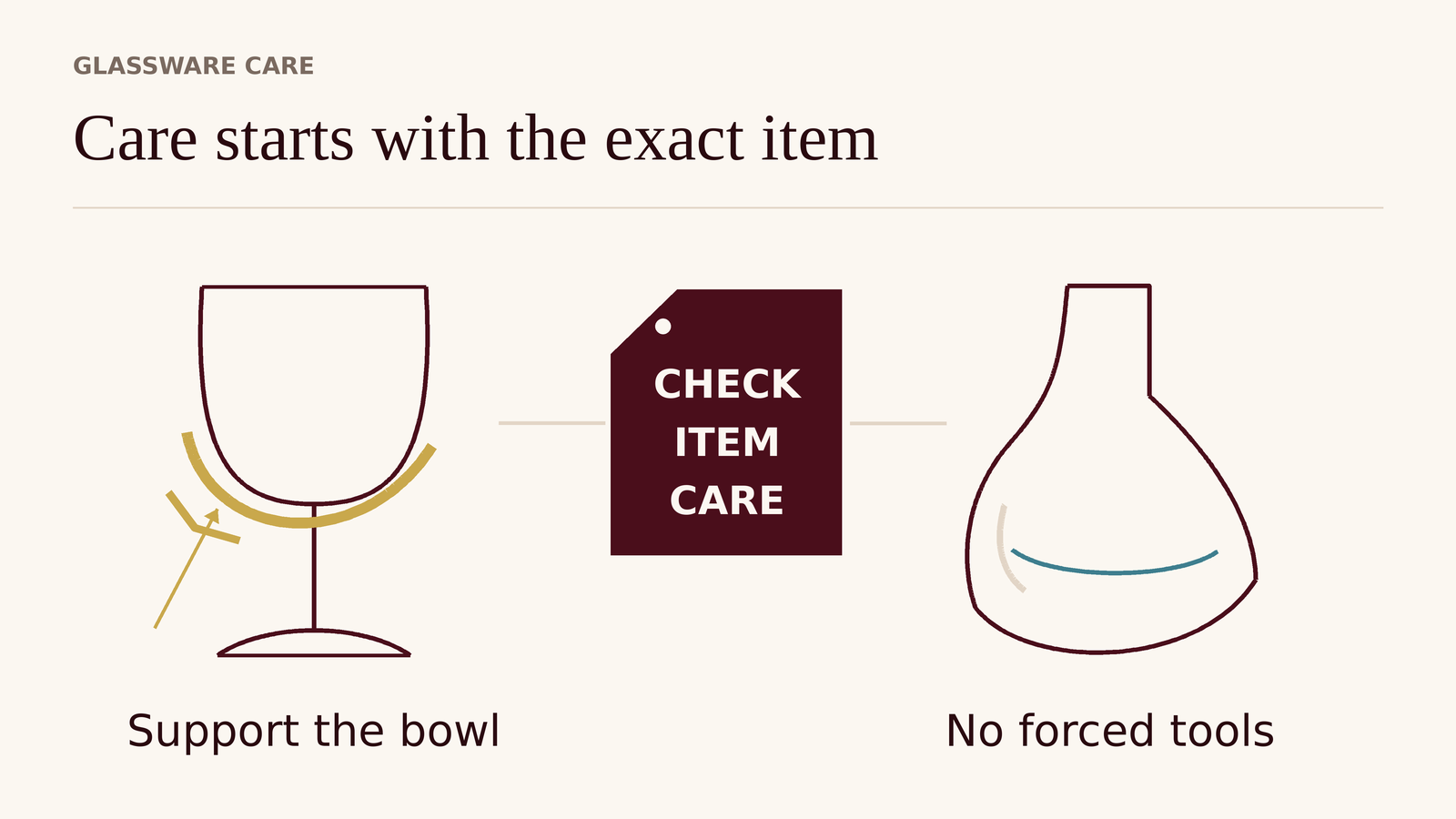
Find the maker, range and product number on the box, receipt or product page. An instruction for another glass in the same brand’s range is not enough. Decorative finishes, unusual curves and older pieces deserve particular care. If identification or instructions remain uncertain, ask the maker before using a machine, chemical treatment or cleaning accessory.
Riedel illustrates why this matters. Its detailed Glass Care & Use guide, checked on 16 October 2026, distinguishes dishwasher-compatible glasses from exceptions and says most decanters require handwashing unless their product instructions specify otherwise. It also excludes named decanter shapes from cleaning beads.
There is a real inconsistency to resolve: Riedel’s US FAQ gives a short decanter answer allowing liquid soap, while the detailed guide advises avoiding it because residue is difficult to remove. Do not combine these into a universal recipe. Identify your item, read its specific care information and ask Riedel to clarify if the applicable advice conflicts. Until then, follow the compatible water-rinse approach rather than adding soap on the strength of the short FAQ.
A cleaning decision tree
Use this sequence before putting anything in the sink. It is an original desk-based decision aid, not a photographed cleaning demonstration.
| Check | Next decision |
|---|---|
| Chip, crack or damaged rim visible? | Stop using the vessel. Cleaning cannot repair it. |
| Exact item and care instructions known? | Follow them; otherwise seek identification first. |
| Smell, coloured residue or white clouding? | Record which problem you are treating. |
| Approved first treatment removes it? | Rinse and dry fully; reassess before serving. |
| Mark or smell persists? | Stop escalating and ask the maker about the next treatment. |
Look in good light without running a finger around a suspect rim. Keep the spout clear of the tap and give yourself space to turn the vessel. Avoid sudden changes between hot and cold water, boiling water, and pushing a hand or brush through an opening that does not comfortably admit it. If the vessel is too awkward to hold securely, pause and arrange a safer washing space.
Choose the wash, rinse and dry as one process
For a compatible handwashed glass, Riedel permits washing-up liquid in warm water followed by a thorough clear-water rinse. Dry with clean microfibre cloths, supporting the part being polished. Never twist the bowl against a hand holding the base. Its decanter guidance instead starts with prompt rinsing, a warm-water soak and a distilled-water rinse before drying. These are Riedel instructions, not a care standard for every brand. Read the detailed care sequence.
If your exact glass permits a dishwasher, check both its instructions and the machine manual. The glass must fit securely without contacting another item or a moving part. Use compatible settings and correctly dosed products. A tall stem squeezed into an unsuitable rack is a reason to choose another permitted method, even when the glass itself is labelled dishwasher safe.
Plan drying before washing a decanter. You need a stable, maker-compatible position that allows water to drain and air to circulate. Do not improvise a precarious upside-down balance on the rim. A narrow neck also makes retrieval important: never add beads, a brush or a cloth unless the maker permits it and you can remove it safely. Riedel specifically excludes Amadeo and several other curved designs from beads; the absence of an unfamiliar older model from the list is not permission. Its FAQ explains the exclusions.
Smell and clouding need different questions
A smell prompts a sequence check: did wine dry inside, did detergent rinse away, was the cloth clean, and did the vessel dry before storage? Smell the empty, dry vessel before pouring. If you cannot get it neutral with the approved method, use another clean vessel and investigate later. Pouring wine in to mask the smell makes the problem harder to diagnose.
White clouding may be removable deposits or permanent glass corrosion. Riedel distinguishes the two in its care guide: an approved deposit treatment cannot reverse corrosion. Do not assume every white mark is limescale or keep increasing treatment strength when it persists. Use only a maker-approved product and dilution; never mix cleaners.
Fill in a care card
Keep the care page with the item record so next month’s cleaning starts from evidence.
| Field | Your vessel |
|---|---|
| Maker, model, product number | ______ |
| Care source and date checked | ______ |
| Problem observed | ______ |
| Permitted wash and rinse | ______ |
| Drying position; excluded accessories | ______ |
| Result and question for maker | ______ |
Synthetic desk walk-through: an owner identifies a Riedel Amadeo with a dried wine ring. The bead exclusion changes the plan: no beads and no forced brush. They record the applicable rinse/soak instructions and arrange a stable drying position. The result field stays blank because no cleaning has been performed for this article. The useful outcome is a compatible plan, not an invented claim that a stain disappeared.
Once the vessel is clean and neutral, use the decanting guide to decide whether the wine needs it. A smell that persists in the wine after changing to clean glassware belongs with the wine faults guide. You can keep observations about the wine in Sommo’s journal without treating them as a glassware diagnosis.
If you are replacing an awkward vessel, the decanter versus carafe guide includes cleaning access among the buying decisions.