ChatGPT is an impressive tool. Ask it to explain the difference between Barolo and Barbaresco, suggest a wine for lamb shanks, or summarise the 1855 Bordeaux classification, and it will give you a competent, well-structured answer in seconds. For quick wine facts and general education, it is genuinely useful.
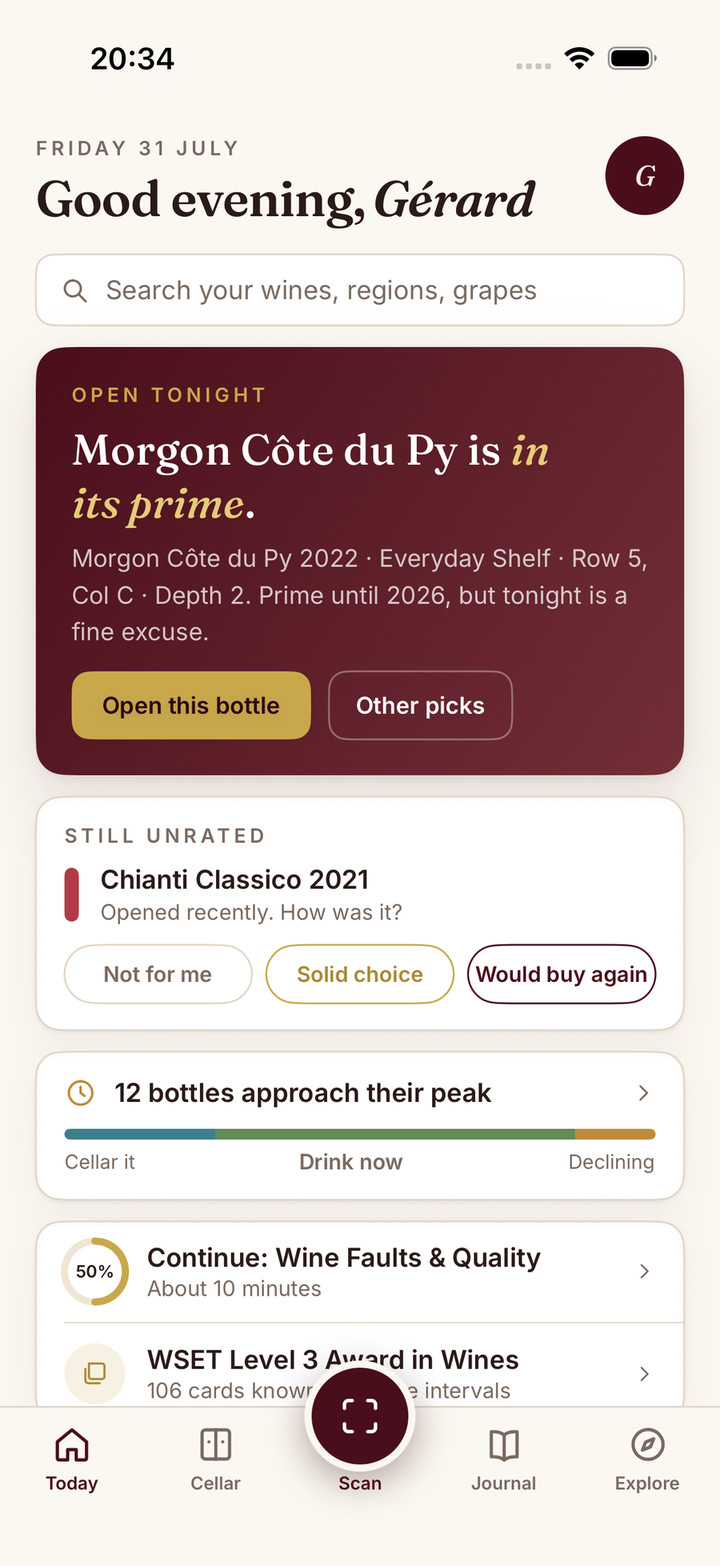
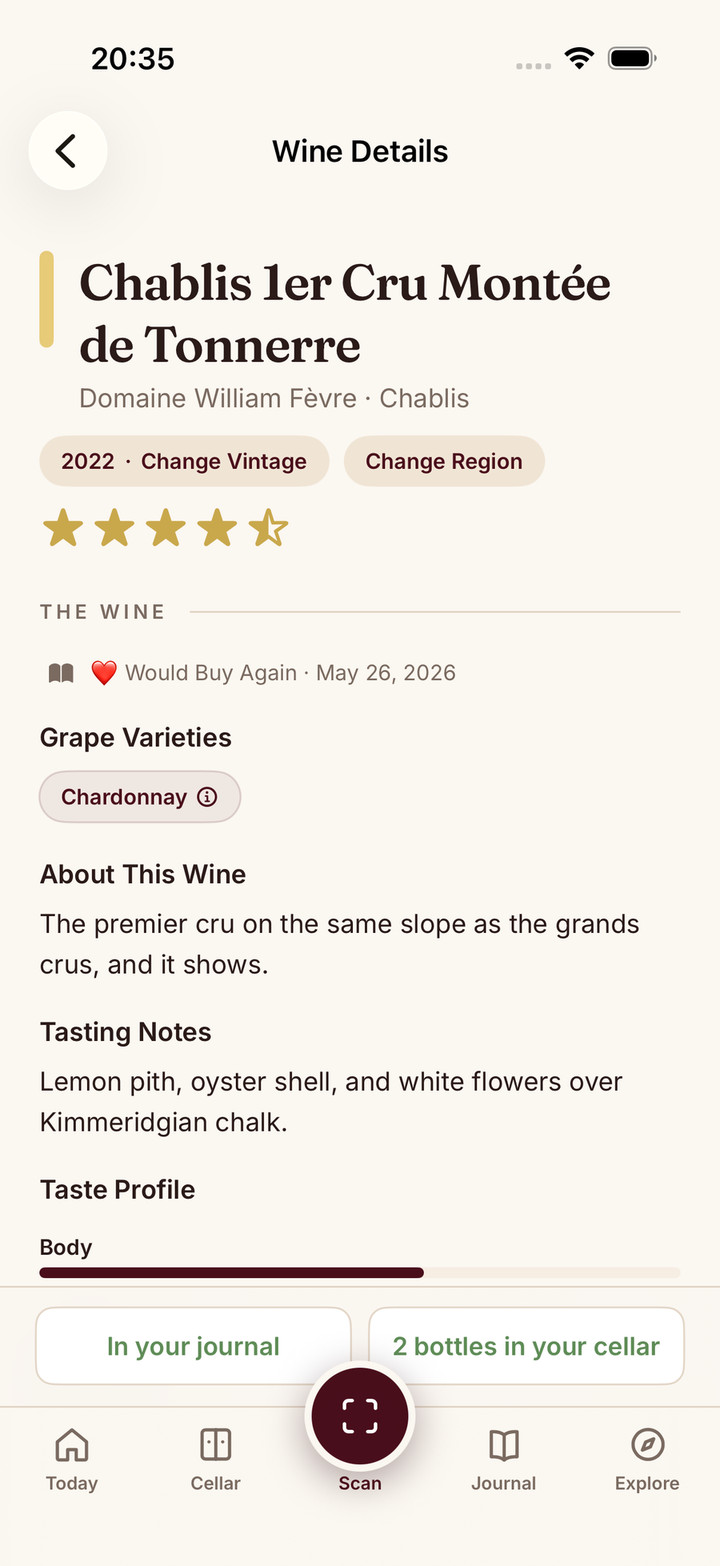
ChatGPT can remember useful preferences when its memory features are enabled. But a remembered preference is not a structured wine record. A general chat does not automatically know which bottles are in which rack, what you opened last Friday, how you rated it, which friends shared the tasting or whether another bottle is entering its drinking window.
That distinction matters more than most people realise.
What ChatGPT Does Well
Credit where it is due. ChatGPT excels at:
- General wine knowledge: Grape varieties, regional characteristics, winemaking processes, classification systems
- Quick answers: “What temperature should I serve Pinot Noir?” gets a fast, accurate response
- Explaining concepts: It can break down tannin structure, malolactic fermentation, or the difference between Old World and New World styles clearly
- Brainstorming: “Give me five wines to try if I like Malbec” returns reasonable suggestions
If you need a wine encyclopaedia in your pocket, ChatGPT works. The problem begins when you need something more personal.
Where Generic AI Falls Short
It Does Not Know Your Palate
Ask ChatGPT for a wine recommendation and it can use whatever preferences and examples are available in the conversation or memory. What it does not automatically have is a complete, structured tasting history. Unless you repeatedly supply that record, it may not know that you tried six Marlborough Sauvignon Blancs, found them too aggressive, and preferred the rounder style of a Pouilly-Fume.
Sommo builds a palate profile from every wine you scan and every tasting note you record. Over time, it learns whether you lean toward high-acidity whites or soft, fruit-forward reds, whether you prefer cool-climate elegance or warm-climate richness. Recommendations become genuinely personal because they are based on what you have actually tasted and enjoyed.
It Cannot Track Your Cellar
“What should I open tonight with grilled salmon?” is a question with a very different answer depending on what is actually in your wine rack. ChatGPT will suggest generic options. Sommo’s cellar feature knows exactly what bottles you own and provides AI-powered food pairing suggestions based on your actual collection, not hypothetical wines you might need to go and buy. For a taste of dish-specific matching without an account, the free wine pairing finder runs in any browser.
Memory Is Not a Wine Journal
ChatGPT memory can carry selected preferences between conversations when it is available and enabled. That is useful, but it is not the same as a cellar ledger or tasting journal you can browse, edit, export and act on. Sommo keeps every journal entry, cellar position, tasting group, Taste DNA signal and optional study record in the product built for them.
It Lacks Structured Study Tools
If you are preparing for a WSET exam, ChatGPT can quiz you informally. But it cannot offer spaced repetition flashcards that target your weak areas, mock exams that simulate real exam conditions, adaptive practice that adjusts difficulty based on your performance, or progress tracking that shows which topics you have mastered and which need work. These are structured learning tools that require purpose-built software, not a general-purpose chatbot.
Side-by-Side Comparison
| Feature | ChatGPT | Sommo |
|---|---|---|
| General wine knowledge | Strong | Strong (via AI + curated content) |
| Personalised recommendations | Uses the context and memories available to the chat | Learns from a structured tasting history |
| Wine label scanning | No | Yes (AI-powered instant identification) |
| Tasting journal | No | Yes (structured notes with SAT format) |
| Cellar tracking | No | Yes (add, remove, open bottles) |
| Food pairing (your cellar) | No (suggests generic wines) | Yes (pairs with wines you own) |
| Palate profile | No | Yes (built from your journal entries) |
| WSET flashcards | No | Yes (spaced repetition, all levels) |
| WSET mock exams | No | Yes (timed, scored, with review) |
| Adaptive practice | No | Yes (targets weak areas automatically) |
| Progress tracking | No | Yes (XP, levels, badges, study stats) |
| Wine region map | No | Yes (interactive, tracks exploration) |
| Shared tastings and racks | No wine-specific workflow | Yes (opt-in groups and live rack sharing) |
The Real Question: Generic vs Personal
This is not about which tool is “better” in the abstract. ChatGPT is a general-purpose AI assistant that happens to know a lot about wine. Sommo is a purpose-built wine companion that uses AI specifically to understand your relationship with wine.
The difference is the same as asking a knowledgeable stranger for restaurant advice versus asking a friend who knows exactly what you like. The stranger gives solid general recommendations. The friend gives your recommendations.
Consider the difference in practice:
You ask: “What wine should I try next?”
ChatGPT says: “If you enjoy Cabernet Sauvignon, try a Malbec from Mendoza or a Syrah from the Northern Rhone.”
Sommo says: Based on your journal entries (which show a preference for medium-bodied reds with earthy notes and moderate tannin), your recent exploration of Burgundy, and the fact that you rated three Pinot Noirs as “would buy again” this month, here are wines that match your evolving palate.
One answer is useful. The other is personal.
The Cost Difference Is Striking
ChatGPT Plus costs $20 per month. Sommo Premium is $5 per month. That is a 75% difference in price, and Sommo is purpose-built for wine where ChatGPT is a general tool that happens to know about it.
Put another way: for the price of one month of ChatGPT Plus, you could use Sommo Premium for four months. And unlike a general chat subscription, Sommo keeps your scans, journal, cellar, pairings, sharing, palate and optional study tools together.
When to Use Each Tool
Use ChatGPT when you need a quick factual answer about wine, want to understand a concept, or need general suggestions without personal context.
Use Sommo when you want one home for the bottles you scan, buy, store, open, remember and share: a cellar, journal, palate profile, pairing assistant, tasting groups and wine knowledge that all use the same record.
They are not competitors in the traditional sense. ChatGPT is the broader tool. Sommo is the focused one you can live with bottle after bottle, without rebuilding the context in each prompt. For how AI in general compares with human experts, see AI vs sommelier.
Start Your Free Trial and See the Difference
The best way to understand the difference is to use the whole loop. Download Sommo, scan a bottle, place it in your cellar, open it with dinner and keep the note. The next answer starts from a wine life you have already recorded, not a prompt you need to reconstruct.