There is a famous phrase in wine circles that came to define an era: ABC, or “Anything But Chardonnay.” It emerged in the early 2000s as a backlash against the heavily oaked, buttery California Chardonnay style that had dominated the 1990s. The phrase stuck. Chardonnay became fashionable to dismiss. A generation of younger drinkers came up assuming the grape was, by default, the wine equivalent of beige.
That dismissal was always silly. Chardonnay is one of the most versatile, expressive, and consequential white grapes on earth. It produces the greatest white wines in Burgundy, some of the most refreshing in Chablis, the backbone of most quality Champagne, and yes, the buttery Napa style that started the backlash. The grape is not the problem; the homogeneity of one specific style was. Today, Chardonnay is back in form, and the producers making it are more careful, more diverse, and more interesting than at any point in the last forty years.
This guide walks through what Chardonnay actually is, the full spectrum of styles from mineral to buttery, the regions that define each style, and how to choose a bottle that will match what you actually want to drink. If you have written off Chardonnay, this is the chapter that brings it back.
What Chardonnay Actually Is
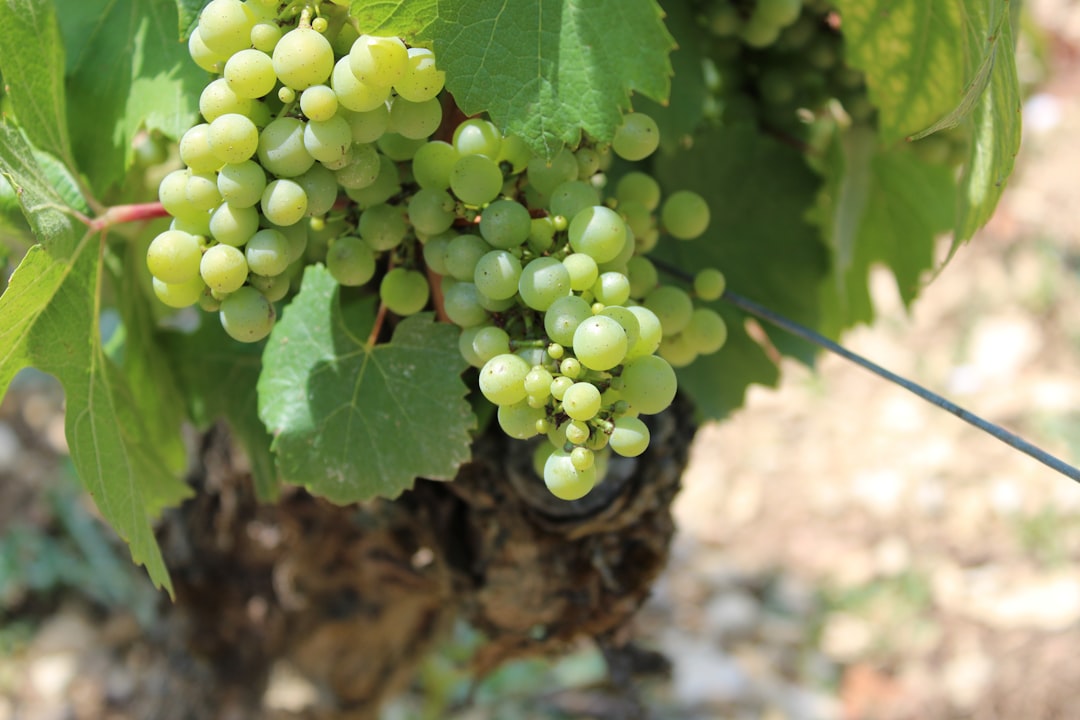
Chardonnay is a green-skinned grape originally from Burgundy in eastern France. The grape is famously neutral, which is both a strength and a weakness. The flavours that show up in a Chardonnay come less from the grape itself and more from where it is grown, how it is fermented, what it is aged in, and the choices the winemaker makes. The grape is a vehicle for terroir and technique.
This neutrality is why Chardonnay has been planted in every wine-producing country on earth. It is also why it can taste like five different wines depending on where it comes from. The same grape produces flinty Chablis, generous Mâcon, butter-rich Napa, and crisp English sparkling base wine, all unmistakably itself but presenting completely differently.
The grape ripens early, handles a range of climates, and translates faithfully whatever the producer does with it. This is the heart of why Chardonnay is everywhere, and why the dismissive “all Chardonnay tastes the same” reaction was always wrong.
The Five Major Styles
Chardonnay produces wines along a clear spectrum, from the leanest, most mineral expressions to the richest, most opulent. Five styles capture the full range.
Style 1: Mineral and Lean (Chablis, France)
The northernmost serious Chardonnay region in France. Chablis sits in northern Burgundy on Kimmeridgian limestone (the same soil that defines top Sancerre and Sauvignon Blanc territory). The climate is cool, the soils are chalky, and the wines have no oak in their standard form.
What it tastes like: Citrus (lemon, lime, grapefruit), green apple, wet stone, sea salt, sometimes a flinty, gunpowder smokiness. Bone-dry, high acidity, light body. The mineral character dominates; the fruit is restrained.
The Chablis hierarchy:
- Petit Chablis: Basic level, simple, good as everyday white. $15 to $22.
- Chablis (the basic Village level): The standard. Crisp, mineral, refreshing. $20 to $35.
- Chablis Premier Cru: From specific named vineyards. More concentration and depth. $35 to $70.
- Chablis Grand Cru: Seven vineyards on a single slope above the village. The most age-worthy and structured. $75 to $200+.
Producers to know: Domaine Raveneau, Vincent Dauvissat (the two reference points). William Fèvre, Domaine Long-Depaquit, La Chablisienne (excellent value).
What to pair with: Oysters, raw scallops, sole, lemon-driven seafood, goat cheese.
For more on the region, see our Chablis wine region guide.
Style 2: Refined and Balanced (White Burgundy, Côte de Beaune)
The Chardonnay heartland and the pinnacle of the grape’s expression. The villages of the Côte de Beaune produce the world’s most age-worthy and complex Chardonnays. Subtle oak influence, lees ageing, and minerality combine to produce wines that genuinely improve with 10 to 30 years of cellar age.
Where: Meursault, Puligny-Montrachet, Chassagne-Montrachet, Corton-Charlemagne. Mâcon-Villages, Saint-Véran, and Pouilly-Fuissé at the lower end of the spectrum and price.
What it tastes like: Stone fruit (peach, apricot), citrus, hazelnut, butter, brioche, mineral undertones, and a slight oak character that supports rather than dominates. Medium to full body. Long, layered finish.
The hierarchy:
- Mâcon-Villages: Entry-level white Burgundy. Crisp, unoaked or lightly oaked. $18 to $30.
- Saint-Véran, Pouilly-Fuissé: The southern Burgundy step up. $25 to $50.
- Village-level Côte de Beaune (Meursault, Puligny, Chassagne village): The serious tier. $50 to $100.
- Premier Cru and Grand Cru: The top of the pyramid. $100 to $1,000+.
Producers to know: Domaine Leflaive, Comte Lafon, Coche-Dury, Jean-François Coche, Roulot (top end). Joseph Drouhin, Olivier Leflaive, Bouchard Père & Fils (accessible quality).
What to pair with: Roast chicken, lobster, white truffle dishes, scallops, mushroom risotto, soft cheeses.
For more, see our Burgundy wine region guide.
Style 3: Generous and Tropical (California, Australia, Chile)
The New World Chardonnay style at its better end. Riper fruit, more sun-warmed character, often more oak than Burgundy. The wines are immediately approachable and reward casual drinking.
What it tastes like: Ripe tropical fruit (pineapple, mango, melon), stone fruit, vanilla and toast from oak, sometimes a creamy butterscotch character from malolactic fermentation. Medium to full body. Lower acidity than Old World Chardonnay.
Where: Russian River Valley (California), Sonoma Coast (California), Carneros (California), Yarra Valley (Australia), Margaret River (Australia), Limari (Chile).
Producers to know:
- California: Kistler, Aubert, Peter Michael (top end). Hartford Court, Failla, Patz & Hall, Sonoma-Cutrer (excellent value).
- Australia: Leeuwin Estate Art Series, Cullen, Vasse Felix (Margaret River). Yabby Lake, Yarra Yering (Yarra Valley).
- Chile: Casa Marin, Tabalí (cool-climate Chile).
Price range: $20 to $80 for serious bottlings, with cult California wines reaching $100 to $200.
What to pair with: Roast chicken with herb butter, cream-based pasta, grilled fish with rich sauces, lobster, foie gras.
Style 4: Bold and Buttery (The 1990s Napa Style)
The style that triggered the “Anything But Chardonnay” backlash. Heavily oaked, fully malolactic-fermented (which produces the buttery diacetyl character), often high in alcohol (14 percent or more), and built for immediate drinking.
What it tastes like: Vanilla, butter, caramel, toasted oak, ripe tropical fruit, sometimes a slightly sweet popcorn character. Full body. Moderate to low acidity. Polished and round.
The producers that defined it: Rombauer, Cakebread, Kendall-Jackson, Sonoma-Cutrer, Sterling. Many of these wines are still made in similar styles today, particularly the Rombauer Carneros Chardonnay, which has a devoted following.
Why it backlashed: When this style took over US wine lists, the diversity of Chardonnay collapsed. Every restaurant served roughly the same buttery, oak-driven wine. Diners who wanted something different felt they had no Chardonnay options at all.
Where it sits today: The pendulum has swung. Most serious California producers now make more restrained Chardonnays. The Rombauer-style bottles still exist (and have an audience), but they are no longer the default. A typical 2026 California Chardonnay is closer to Style 3 than to Style 4.
Should you drink it? If you enjoy the rich, buttery character, this style is a legitimate pleasure. The problem was never the style itself but its monoculture dominance. As one option among many, it has its place.
Style 5: Sparkling Chardonnay (Champagne, Franciacorta, Crémant)
The hidden Chardonnay use case. Most quality sparkling wine uses Chardonnay as a primary blending grape, with two distinct subcategories.
Blanc de Blancs Champagne: 100 percent Chardonnay Champagne, almost always from the Côte des Blancs in Champagne. Elegant, mineral, with notes of brioche, apple, and citrus. The most age-worthy Champagne style.
Producers to know: Pierre Péters, Salon, Krug Clos du Mesnil, Charles Heidsieck Blanc des Millénaires.
Standard Champagne blends: Many top Champagnes are Chardonnay-led, with smaller amounts of Pinot Noir and Pinot Meunier.
Outside Champagne: Franciacorta in Italy makes serious traditional-method sparkling, often Chardonnay-dominant. English sparkling wine producers in Sussex and Kent are increasingly led by Chardonnay. Cap Classique in South Africa often features it. Crémant de Bourgogne uses Chardonnay heavily.
For more on Champagne, see our Champagne for beginners guide and sparkling wine guide.
How to Read a Chardonnay Label
Three questions will tell you the style.
Where is it from? Region tells you most of what you need. Chablis or Mâcon-Villages signals lean and mineral. Puligny-Montrachet signals refined and balanced. California signals richer. Australia signals fruity.
Is “Reserve” or “Barrel Aged” on the label? This usually signals significant oak influence and a richer style. Skip if you want crispness.
What is the alcohol level? Cool-climate Chardonnay (Chablis, basic Burgundy) sits around 12 to 13 percent. Warm-climate Chardonnay (Napa, Australia at its bigger end) often hits 13.5 to 14.5 percent. The number is a reliable signal of how the wine will read.
Comparing Chardonnay to Other White Wines
The grape’s range is wide enough that it overlaps with multiple other whites depending on the style.
Chardonnay vs Sauvignon Blanc
Unoaked Chardonnay (Chablis style) is closer to Sauvignon Blanc than oaked Chardonnay is. Both have high acidity, lean body, and citrus character. Sauvignon Blanc adds aromatic intensity (grass, gooseberry, passion fruit) that Chardonnay lacks. Chardonnay adds mineral depth that Sauvignon Blanc lacks. For the full breakdown, see Chardonnay vs Sauvignon Blanc.
Chardonnay vs Pinot Grigio
Both can be made in lean or rich styles, but the typical examples are different. Standard Pinot Grigio is leaner, less aromatic, and more neutral than even basic Chardonnay. Serious Italian Pinot Grigio (from Friuli or Alto Adige) sits in a similar complexity zone as basic Chablis. For more, see Pinot Grigio vs Chardonnay.
Chardonnay vs Riesling
Riesling is more aromatic, more obviously fruity, and spans a wider sweetness range (from bone-dry to lusciously sweet). Chardonnay is more textural and oak-influenced in most expressions. Riesling tends to be lower in alcohol; Chardonnay tends to be higher. The two grapes occupy different roles in the wine world: Riesling is the aromatic, expressive choice; Chardonnay is the textural, food-pairing choice. For the comparison, see Riesling vs Chardonnay.
Pairing Chardonnay With Food
The food range varies dramatically by style.
Mineral / lean Chardonnay (Chablis, basic Burgundy): Oysters, raw fish, sole, lemon-driven seafood, lighter pasta, goat cheese.
Balanced Chardonnay (Côte de Beaune): Roast chicken, lobster, mushroom risotto, scallops, soft cheeses, white truffle dishes.
Rich New World Chardonnay: Roast chicken with cream sauces, grilled fish with butter, lobster bisque, cream-based pasta, mild cheeses.
Buttery California style: Heavier dishes that match the wine’s weight. Roast turkey, lobster mac and cheese, butter-fried chicken.
Sparkling Chardonnay (Blanc de Blancs): Aperitif, oysters, sushi, fried foods, lighter fish.
For broader pairing principles, see how to pair wine with food.
A Chardonnay Mini-Cellar
If you want to explore the grape seriously, six bottles cover most of the territory:
- A basic Chablis from La Chablisienne or William Fèvre: The lean, mineral reference.
- A Premier Cru Chablis: The serious version of the mineral style.
- A Mâcon-Villages from Joseph Drouhin or similar: The accessible Burgundy.
- A village Meursault or Puligny-Montrachet: The serious Burgundy.
- A serious California Chardonnay: Failla Sonoma Coast or Aubert Lauren Vineyard for the New World expression at its more refined end.
- A Blanc de Blancs Champagne: Pierre Péters or Salon for the sparkling expression.
Tasting these back to back is an education in how dramatically one grape can change based on place and technique. The free WSET Level 2 grape varieties quiz will tell you how much of it stuck.
A Note on Aging Chardonnay
Many drinkers assume white wine does not age. Chardonnay does, sometimes spectacularly.
- Basic unoaked Chardonnay (Chablis village, Mâcon): 3 to 8 years.
- Premier Cru Chablis: 8 to 15 years.
- Village Côte de Beaune (Meursault, Puligny): 8 to 20 years.
- Premier Cru and Grand Cru Côte de Beaune: 15 to 30+ years.
- Grand Cru Chablis: 15 to 25 years.
- Top California Chardonnay: 10 to 20 years.
- Vintage Blanc de Blancs Champagne: 15 to 30+ years.
For more on aging windows generally, see our wine aging cheat sheet, or check a specific bottle with the free drinking window tool.
Explore with Sommo
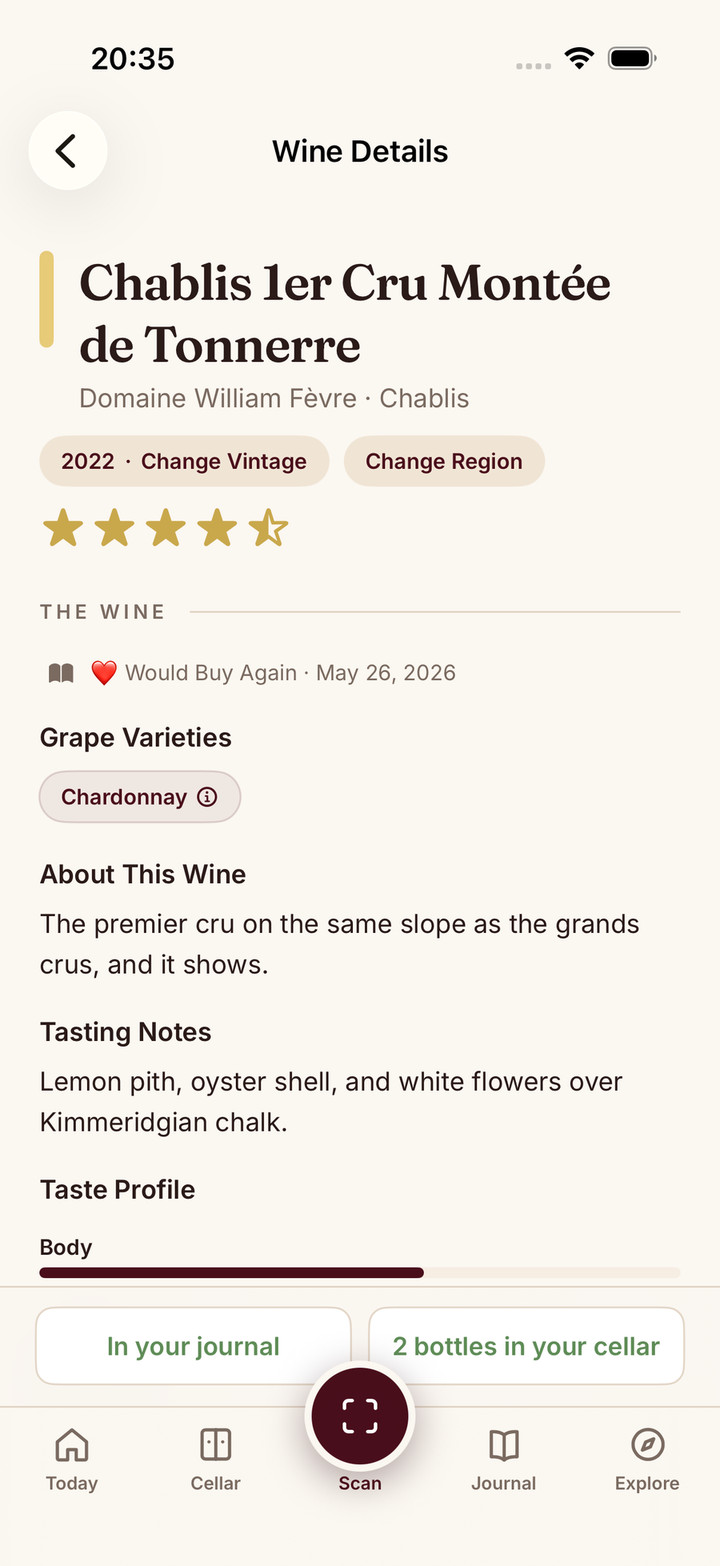
Chardonnay’s range is wide enough that mapping your personal preferences takes time and structured tasting. Sommo lets you log every Chardonnay you try, save tasting notes through the WSET-aligned framework, and track which regions and styles you consistently rate highest. After 15 or 20 wines, your Wine Character Analysis will tell you whether you lean mineral or buttery, oaked or unoaked, Old World or New World. The recommendations you get from your own data will outperform any generic Chardonnay guide.
Download Sommo free and rediscover a grape that deserves more than dismissal.