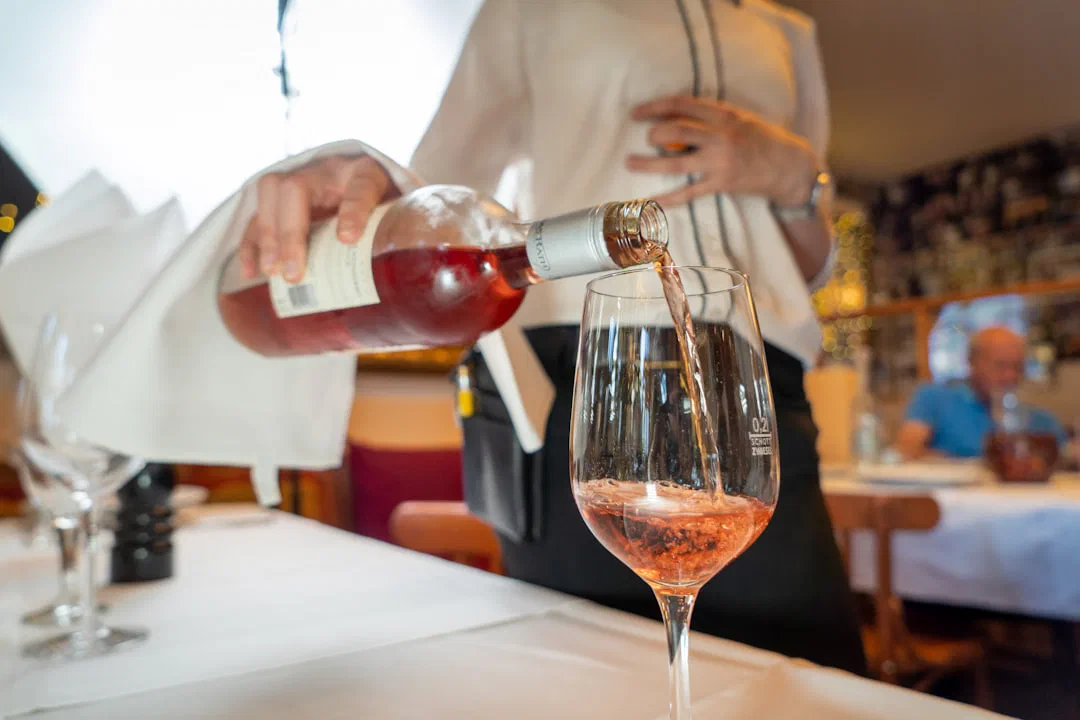
Three sections in one day, and no credit carried between them. You can finish the Certified Sommelier theory paper at 90% and still fail the day because two glasses of blind wine came apart in the last five minutes. That structure, more than the syllabus, is what makes this exam feel harder than the hours you put into it.
Here is what it involves, what it really costs, and how to spend the twelve weeks before it.
What the exam is and who runs it
The Certified Sommelier Examination is the second rung of the Court of Master Sommeliers ladder: above the Introductory course, below Advanced. It is the first credential restaurants read as a real professional signal, because it is the first that tests you on your feet rather than on paper.
Settle one thing before booking: the Court operates as separate regional bodies. The Americas organization runs the exam across North and South America, and the original UK-based Court runs it elsewhere. Fees, dates, dress codes, and some policies differ, so take your numbers from the body you will sit with. Our sommelier certification hub covers both paths.
The prerequisite
You cannot walk in off the street. You must first pass the Introductory Sommelier course and exam, and be of legal drinking age where you sit. The Court has also historically capped how long an Introductory pass stays valid as a prerequisite (three years is the usual figure), so confirm the current rule before planning a long gap.
The three parts
| Section | What happens | Time | Grading |
|---|---|---|---|
| Theory | Short written paper, mostly multiple choice with some short answer: wine, spirits, beer, sake, service standards | Under an hour | Minimum 60%, scored on its own |
| Blind tasting | Two wines described in writing on the deductive grid, ending in a call on grape, country, and vintage | Around 20 minutes for both | Minimum 60%, most marks in the description |
| Service | Practical exam in a mock dining room with an examiner playing your guest | One short slot per candidate | Minimum 60%, hospitality graded alongside technique |
The weighting question has a blunt answer: there is no weighting. Each section is scored on its own and each needs 60%. Nothing averages, and a strong theory score cannot rescue a weak tasting. Historically Certified has been a single sitting, meaning a fail in one section sends you back for all three rather than the part you missed. That policy has moved before, so verify it with your chapter, not with forum posts.
What the blind tasting actually asks for
Twenty minutes, two glasses, typically one white and one red. You work the deductive tasting grid in writing: appearance, nose, palate, initial conclusion, final conclusion.
The mistake is treating it as a naming contest. Most of the marks sit in the description, not the final call: an accurate, internally consistent grid with the wrong grape at the end usually outscores three vague lines and a lucky guess. The grid also has to agree with itself. High acid, low alcohol, green fruit, then a conclusion of warm-climate Grenache is a contradiction examiners catch instantly.
So you need a timed routine, not just a good palate: roughly eight minutes of writing per wine, two minutes to commit to conclusions, and a standing rule that you never leave a box blank.
What service day looks like
You arrive in business dress with your own kit: corkscrew, side towel, and whatever else your chapter’s candidate handbook lists. You are shown to a dining room and an examiner sits down as your guest.
The tasks vary, but the shape is consistent: greet, recommend, take an order, open and serve, and answer whatever the guest asks while your hands are busy. Sparkling service comes up often, so does decanting, and so do spirits, beer, sake, and cocktails, because you are graded as the person responsible for the whole beverage program.
Grading covers visible technique (presenting the bottle, correct glassware, temperature, pour size, order of service, no drips, no reaching across a guest) and hospitality: whether the person at your table felt looked after. Technically flawless and cold does lose marks.
What it really costs
| Line item | Realistic budget |
|---|---|
| Exam fee, per attempt | High hundreds of dollars, recently $700 to $900 in the Americas |
| Travel and hotel | Nothing if the calendar is kind, $300 to $800 if you fly |
| Reference books | $100 to $300: an atlas, a general reference, a spirits text |
| Study wine, 12 weeks | $250 to $600 sharing bottles in a group, roughly double alone |
| Service kit and dress | $50 to $200 |
| Retake, if needed | The full exam fee again |
Exams run in a limited number of cities on a limited number of dates, so travel is a real line item, not a rounding error. Study wine is what people underestimate: calibration comes from benchmark bottles, and benchmark bottles are not the cheap end of the shelf. A weekly group of six splitting six wines is the cheapest honest way to do it. Fees vary by region and move year to year, so take the current figure from the Court’s own site rather than any blog, this one included.
How long people actually study
Candidates already working a floor commonly give it three to four months. Candidates from outside hospitality generally need closer to six, because service does not improve by reading about it. Plan on 100 to 200 hours across the run-up, plus a weekly tasting session you treat as non-negotiable. Consistency matters more here than in any academic exam, because two of the three sections are motor skills.
Why candidates fail, part by part
Theory. Usually a coverage problem, not a depth problem. People study France and Italy past the level the exam asks for, then lose the paper on spirits, beer, sake, and service standards. The questions are broad and shallow, and your studying should match that shape. Our Certified practice exam is built to expose exactly these gaps.
Tasting. Time and calibration. Candidates burn the clock on the first wine and improvise the second. Others taste often but never blind and never against a reference, so their sense of “medium acidity” has drifted from the examiners’. The free blind tasting trainer is a cheap way to make blind reps a daily habit.
Service. Nerves plus unrehearsed basics. Opening sparkling wine cleanly while someone grades you is a different act from doing it on a busy Friday. The other frequent failure is answering the question you prepared for instead of the one the guest asked.
A realistic 12-week plan
Assume six to eight hours a week, one tasting session, and one service rehearsal.
| Week | Theory focus | Tasting drill | Service drill |
|---|---|---|---|
| 1 | Viticulture, vinification, wine law and labeling | 2 wines, full grid, untimed | Sparkling opening, ten reps |
| 2 | France: Burgundy, Beaujolais, Champagne | 2 wines, 10 minutes each | Still wine service, glassware, pours |
| 3 | France: Bordeaux, Loire, Rhône, Alsace, the south | 2 wines blind | Decanting |
| 4 | Italy, north to south | 4 wines, one flight | Table approach and order of service |
| 5 | Spain, Portugal, Germany, Austria | 2 wines, 8 minutes each | Guest questions, answered out loud |
| 6 | Mock theory paper, then repair the gaps | 4 wines blind | Full run-through, timed |
| 7 | USA and the rest of the Americas | 2 wines blind | Spirits and cocktails from your list |
| 8 | Australia, New Zealand, South Africa, Chile, Argentina | 4 wines blind | Beer and sake service |
| 9 | Sparkling, fortified, sweet wines | 2 wines under exam time | Full run-through, critical observer |
| 10 | Spirits, beer, sake, cocktails | 4 wines blind | Second full run-through |
| 11 | Service standards, etiquette, salesmanship | 2 wines, exam conditions | Dress rehearsal in exam clothes |
| 12 | Second mock paper, light review only | 2 wines, exam conditions | Two clean run-throughs, then stop |
Keep a one-page reference beside you throughout: our Certified cheatsheet is built for that. Print the deductive grid and use it at every tasting session, not once.
What comes after
Advanced is the next step and a genuine jump: a multi-day exam with a wider theory paper, six wines blind, and a service section that assumes real floor experience. Entry is competitive and far fewer candidates clear it than clear Certified.
Beyond that sits the Master Sommelier Diploma: all three parts must be passed within a limited window, and fewer than 300 people worldwide hold the title. Many candidates stop at Certified with no loss of career value. The full career ladder is mapped in how to become a sommelier.
If the academic side appeals more than the dining room, the WSET path covers similar ground with no service component. Plenty of professionals hold both, and our WSET vs CMS comparison lays out the trade.
Explore with Sommo
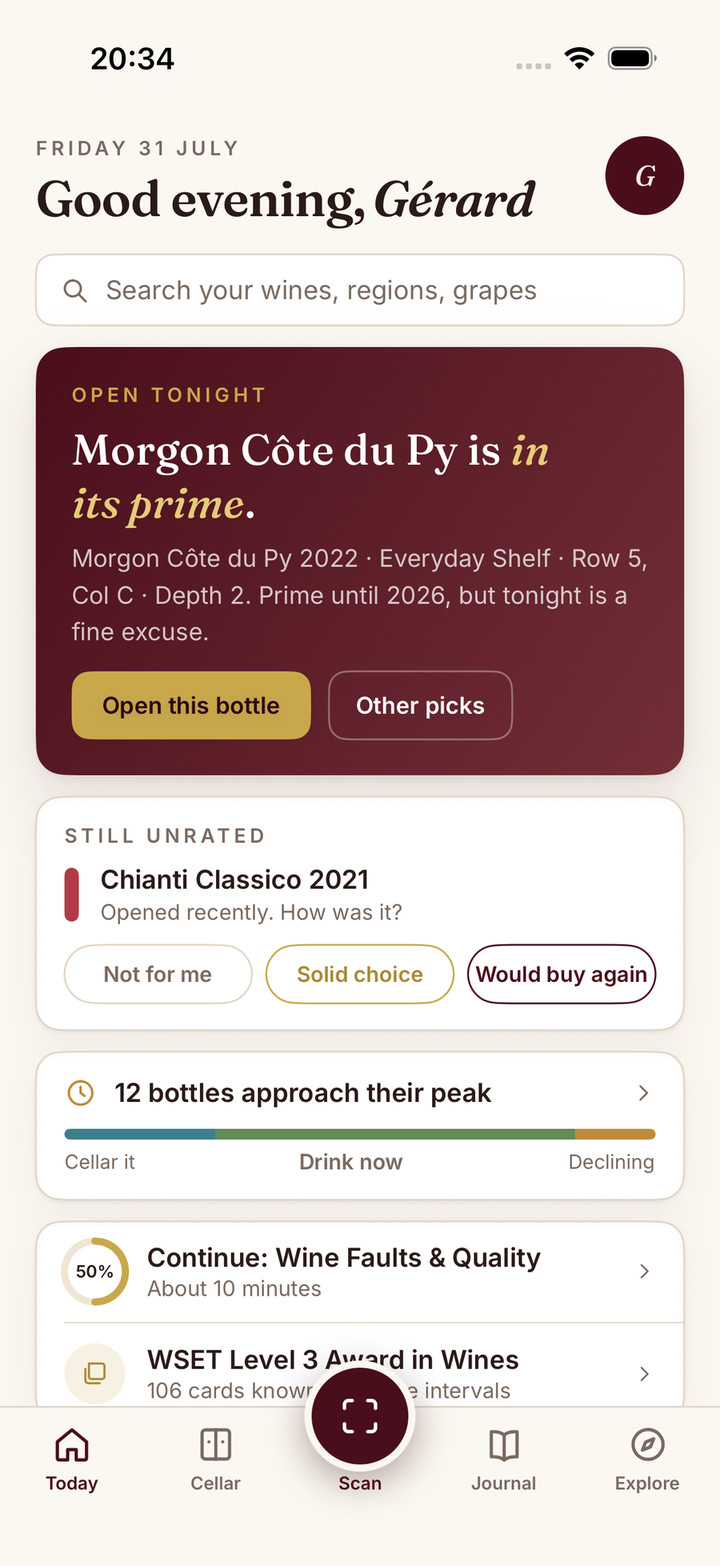
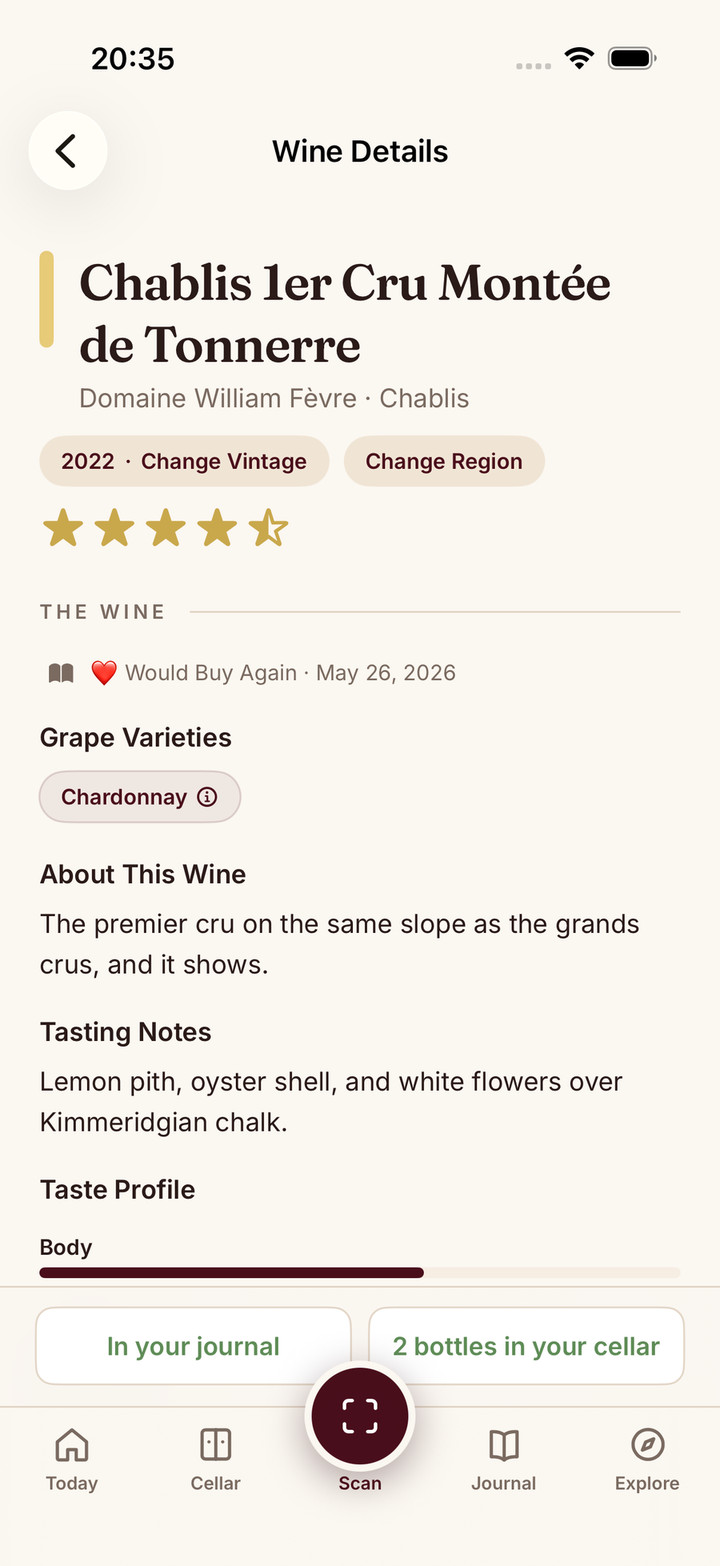
The part of this exam you control is daily study, and daily study is the first thing to collapse when you work service hours. Sommo handles it: adaptive spaced-repetition flashcards, AI-graded typed answers so written practice gets marked, structured tasting notes that build into a calibration record, and a study plan that adjusts to your exam date. Download Sommo free and turn twelve weeks of intention into twelve weeks of reps.