Can You Learn Wine Without WSET? (Yes — Here's How)
Yes, you can learn wine without WSET. Discover self-directed methods, apps, and resources that build real wine knowledge without the certification cost.
WSET is the gold standard of wine education. It is recognised in over 70 countries, respected by employers, and gives you a structured framework that takes years of casual drinking to build on your own. None of that is in question.
But here is something the wine industry rarely says out loud: you do not need a certificate to understand wine deeply, taste with confidence, or hold your own in any conversation about grapes and regions. WSET is one path. It is not the only one.
If you are curious about wine but not ready to spend hundreds on a formal course, this guide is for you.
What WSET Actually Gives You
Before we talk about alternatives, it is worth being honest about what WSET does well. The programme provides a systematic tasting method (SAT), a comprehensive curriculum covering grape varieties, regions, and winemaking, and a credential that carries weight in the industry. If you are considering the sommelier path or want to work in wine, WSET certification is genuinely valuable.
The structure also helps. Having a syllabus, a deadline, and an exam forces you to study topics you might otherwise skip. Not many people voluntarily read about German Prädikat classifications on a Saturday morning.
But structure and credentials are not the same thing as knowledge. And knowledge is what most wine lovers actually want.
How to Learn Wine Seriously Without WSET
Self-directed wine education works. It requires more initiative than following a syllabus, but it lets you go deeper into the areas that fascinate you. Here is how to build a real foundation.
Read the Right Books
Start with one good generalist book. Jancis Robinson’s The Oxford Companion to Wine is the reference standard. For something more approachable, Wine Folly: Magnum Edition covers major regions and grapes with excellent visuals. The key is active reading — when a book mentions a grape or region, try a bottle from that area within the week. Reading without tasting is theory without practice.
Taste With Purpose
This is the single most important thing you can do. Drinking wine is not the same as tasting wine. Tasting means slowing down, paying attention to colour, aroma, acidity, tannin, body, and finish.
You do not need expensive bottles. Buy two wines from the same grape but different regions — a Pinot Noir from Burgundy and one from New Zealand, for example — and taste them together. That single exercise teaches you more about terroir than any textbook paragraph. Our guide on getting started with wine walks you through building this habit from scratch.
Use a Wine Learning App
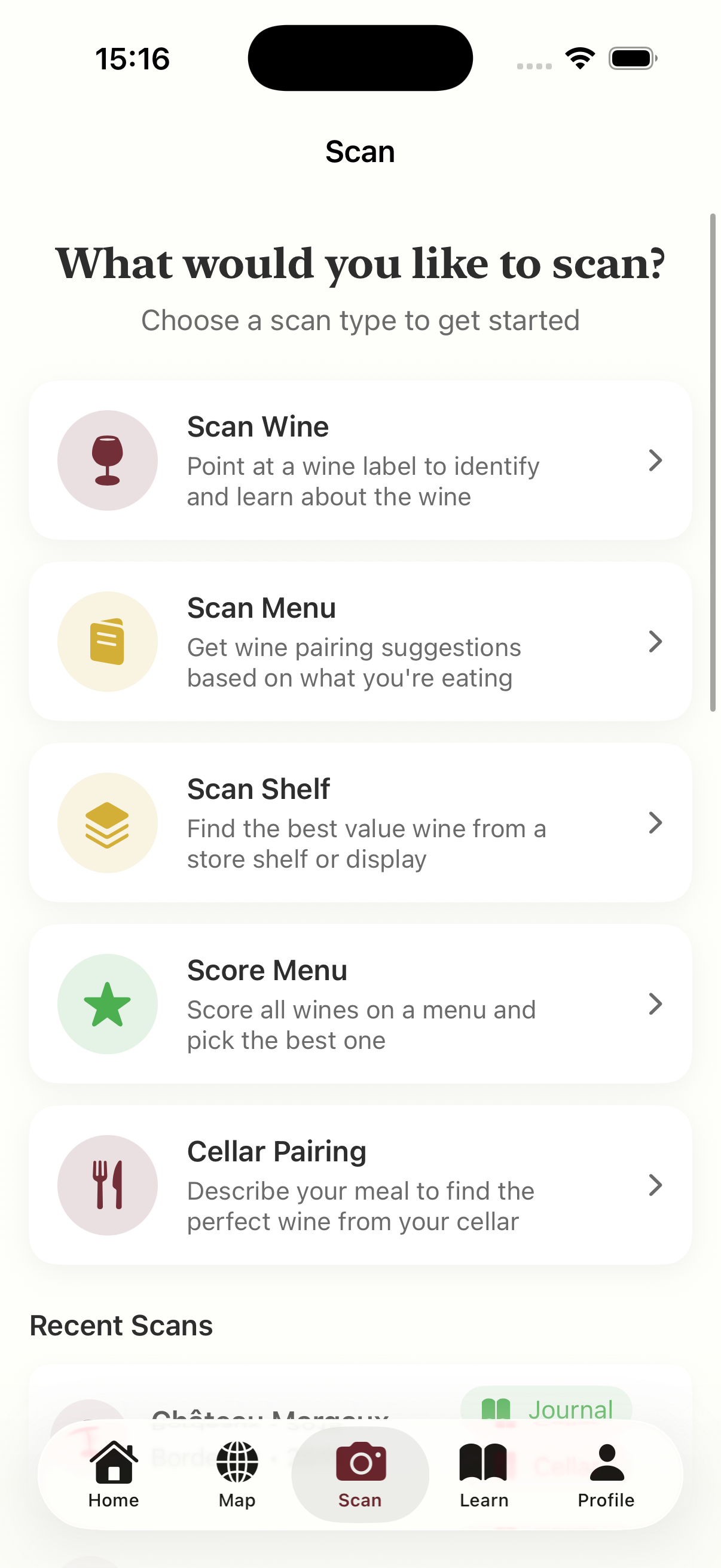
This is where technology has changed the game. A decade ago, self-study meant books and notebooks. Today, apps like Sommo give you structured learning modules, flashcards with spaced repetition, quizzes, and an AI-powered wine scanner — all in your pocket. You can scan a bottle at the shop, learn about its region and grape variety instantly, then log your tasting notes in a personal wine journal.
Sommo also includes full WSET exam prep materials if you ever decide to take the certification later. But even without sitting an exam, the learning modules cover the same core knowledge — grape varieties, winemaking, regions, food pairing — in a way that fits around your actual life.
Join a Local Wine Club or Tasting Group
Learning wine alone is fine. Learning wine with other people is better. Local wine clubs, tasting groups, and shop-led events give you access to bottles you would never buy on your own and perspectives you would never consider. Many independent wine shops run free or low-cost tastings weekly. The social element keeps you accountable and makes the whole process more enjoyable.
Take Online Courses
Platforms like Wine Scholar Guild, Coursera, and YouTube channels from certified educators offer structured content without the WSET price tag. These are especially useful for visual learners who want to see vineyard footage and watch someone walk through a tasting in real time.
When WSET Is Actually Worth It
Let us be fair. There are situations where WSET is the right choice:
- You want to work in wine. Sommelier roles, wine buying, importing, and hospitality management increasingly expect WSET Level 2 or 3 as a baseline.
- You want the credential. If you are writing about wine, consulting, or building authority in the space, WSET on your CV carries weight.
- You thrive with external structure. Some people genuinely learn better with a classroom, a teacher, and an exam date. There is nothing wrong with that.
If any of those describe you, the investment is worth considering. Our WSET Level 2 study guide covers everything you need to prepare.
The Bottom Line
WSET is excellent. It is also expensive, time-consuming, and entirely optional for most wine lovers. The knowledge it teaches is freely available to anyone willing to read, taste, and pay attention.
The real question is not whether you can learn wine without WSET. It is whether you will actually do the work. Sommo makes that easier than it has ever been, giving you structured learning, a personal tasting journal, and AI-powered wine identification without a classroom or a certificate fee.
Your palate does not care about your qualifications. It cares about what you pour into the glass and how carefully you pay attention.