The year on the label can turn a bottle into a personal gift. It can also make you overlook whether the recipient likes that style or whether the wine is still likely to be enjoyable. Buy for a named opening occasion, then decide how essential the exact year is. A sound bottle the person wants to drink is a better starting point than an impressive age alone.
There are three reasonable outcomes: buy the exact birth year, agree a meaningful alternative, or choose a different gift without an old bottle. Writing down those options before shopping makes it easier to stop when condition, price or timing does not fit.
Start with the date the cork will come out
Buying a mature bottle for dinner next month and buying a young wine for a future milestone are different jobs. The first requires a judgement about an existing bottle’s history and likely readiness now. The second adds a long storage commitment and uncertainty about future tastes and maturity.
Berry Bros. & Rudd’s gifting guide, checked on 16 October 2026, puts the opening horizon and recipient’s taste at the centre of the choice, and discusses the importance of storage. Use that framing rather than assuming that more years always improve the gift. The ageing cheat sheet offers broad context, but the style’s potential cannot certify an individual bottle.
Ask whether the person enjoys mature flavours, sweetness, fortified wine or the particular colour you are considering. An old Port is not a substitute for a dry white simply because both carry the right year. If the recipient does not drink alcohol, the date can be celebrated in another way.
Give the merchant a purchase brief
Fill this in before asking for stock. Include a delivery margin so a late replacement does not become the plan.
| Decision | Your brief |
|---|---|
| Person, occasion and opening date | ______ |
| Exact year essential? Why? | ______ |
| Styles enjoyed and avoided | ______ |
| Total budget including delivery | ______ |
| Guests; bottle size and quantity | ______ |
| Storage until opening | ______ |
| Acceptable alternative or no-bottle choice | ______ |
| Latest arrival; backup bottle | ______ |
The budget needs room for the complete purchase: delivery, any applicable tax or duty, storage and a backup if the occasion depends on having wine to serve. A bottle price at the top of your total budget leaves those decisions unresolved. Ask for a delivered quote to your address and confirm the currency.
Verify that this wine was made in that year
A regional vintage chart is not a producer’s release list. Search for the precise producer, wine and vintage in the producer’s own records, then check the merchant’s actual bottle. Some wines do not carry a vintage; others were not released in the year you want. A general category recommendation cannot fill that gap.
For example, Taylor’s English-language 1975 Vintage Port page, checked on 16 October 2026, confirms that particular producer and vintage in its archive. It supports putting Taylor’s 1975 on a research list for someone born in 1975. It does not establish current merchant stock, a fair asking price or the condition of a bottle offered today. We have not bought or tasted a bottle for this article.
Keep harvest year distinct from bottling year and any age statement. Ask the seller to explain the label if the wording is unfamiliar. A “50 year old” description does not by itself mean a wine from a particular person’s birth year. Make the exact requirement explicit before paying rather than relying on a product photograph.
Buy the bottle history as carefully as the label
Request current photographs of the actual bottle or lot, including the label, capsule and fill level. Ask when the seller acquired it, where it has been stored and what documentation supports the account. Find out whether the condition description is based on inspection or supplied information, and note any gaps.
Ask how it will travel and what happens if the bottle arrives damaged, differs from the description or appears faulty on opening. Read the seller’s current returns and notification terms; do not assume an old bottle comes with a promise that everyone will enjoy it. A pristine label is not proof of sound wine, and a tatty label does not alone establish a fault.
For a young birth-year wine intended for a distant opening date, check the actual release timetable with the producer or merchant. If it has not been released, record a future buying task rather than accepting a different year by accident. Decide who will own the wine, where it will be stored and who will pay any ongoing charges. A proposed drinking window is an estimate to revisit, not a guarantee for a birthday decades away.
Two worked buying decisions
These are synthetic scenarios, not customer stories, live offers or recommendations for particular bottles.
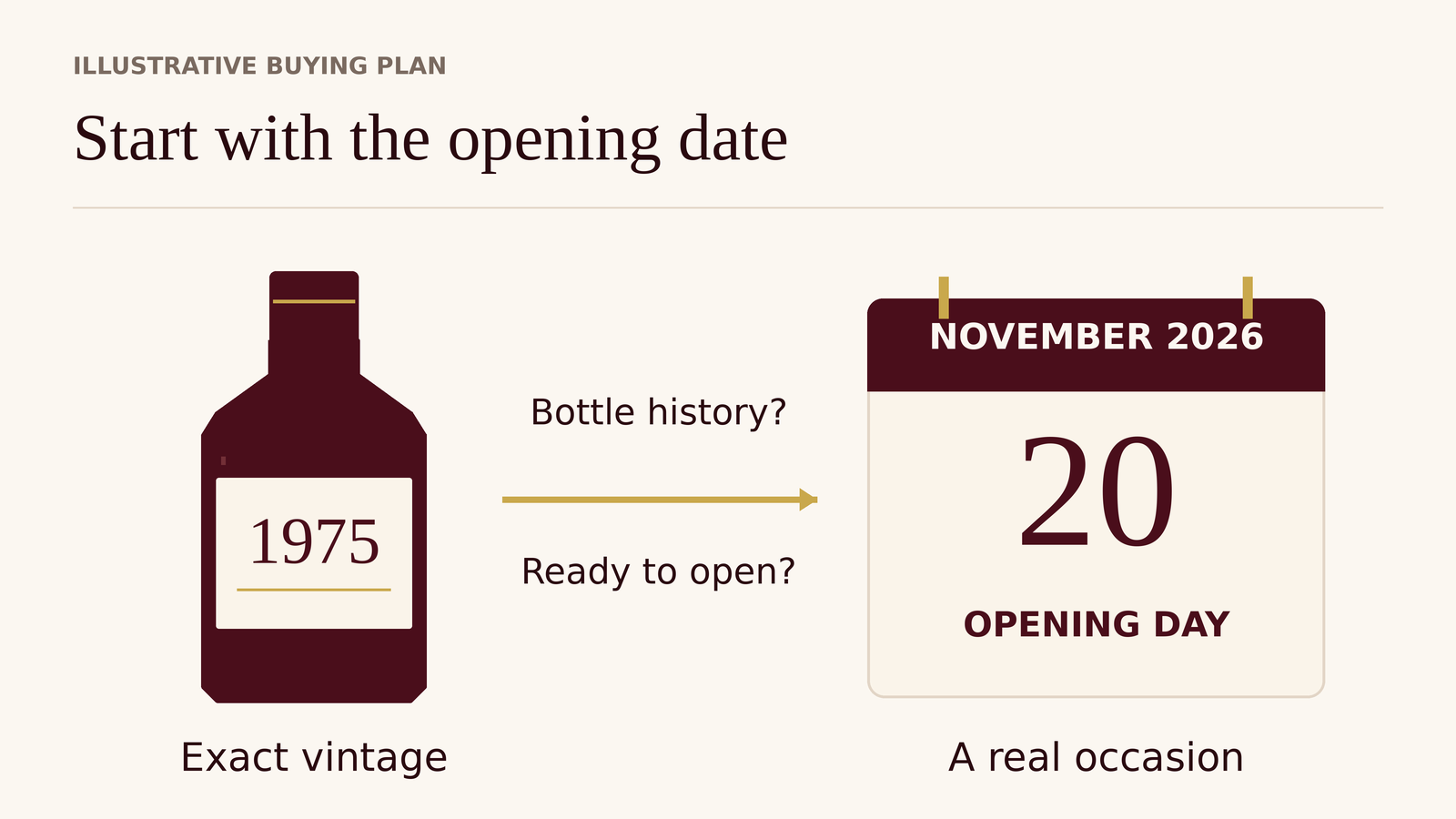
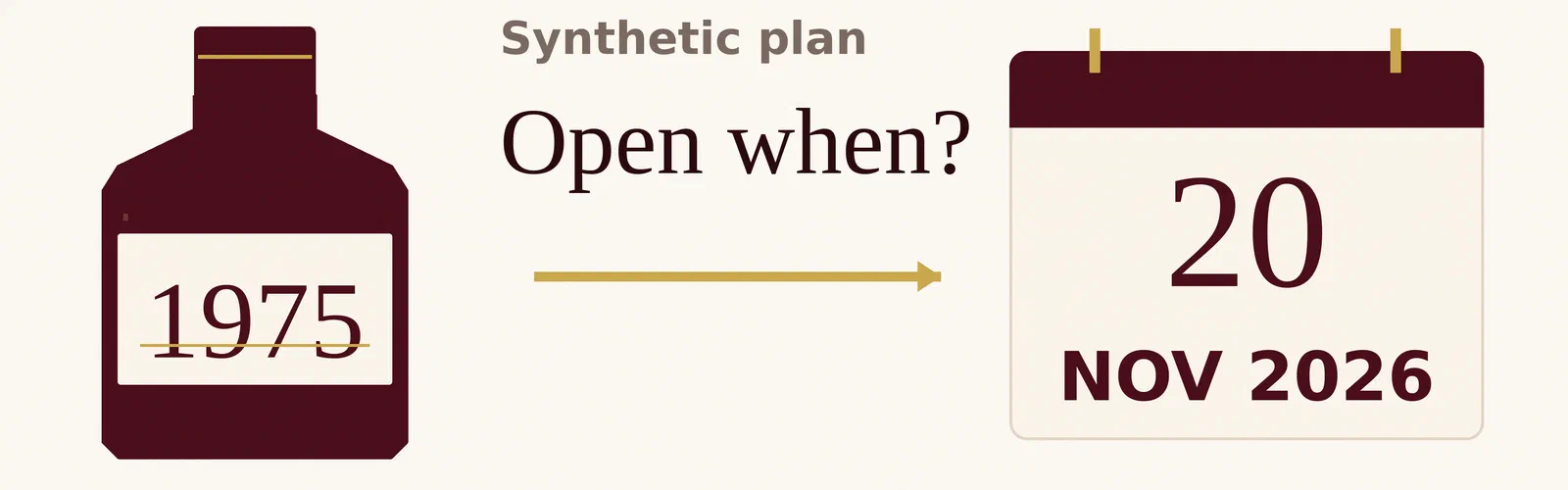
An exact year for a dinner soon. A person born in 1975 has a birthday dinner on 20 November 2026, likes Port and has a £250 total gift budget. The brief reserves an assumed £25 for delivery and £30 for a backup: £250 − £25 − £30 = £195 left for the bottle. Taylor’s producer archive verifies a possible 1975 release, so the buyer asks a specialist about actual stock, delivered cost and bottle history. No acceptable bottle under the cap means choosing the agreed alternative. Finding the archive page does not complete the purchase.
A new birth year for a future opening. A family wants a 2025 wine to consider opening in 2046, with £300 available now. They prefer dry wine but have no suitable long-term storage. The missing storage plan and unconfirmed releases come before a producer shortlist. They retain the money, ask about release timing and professional storage costs, and agree that a future celebration may use a different bottle. The arithmetic is simple: a £300 bottle would leave £0 of that budget for delivery or storage. The plan needs changing before buying.
Make the evening independent of the old cork
Confirm an opening and serving plan with the merchant in good time. Keep a suitable corkscrew and clean glassware ready, and ask whether sediment separation is appropriate for the particular wine. Taylor’s Vintage Port guidance specifically discusses sediment and decanting; it is not an instruction to give every old wine a long period in a decanter.
Have a second wine that suits the meal and guests. If the birthday bottle disappoints, you can acknowledge the history without making everyone drink it. The opened-wine guide helps plan leftovers; choose quantities for the occasion without making finishing the bottle a goal.
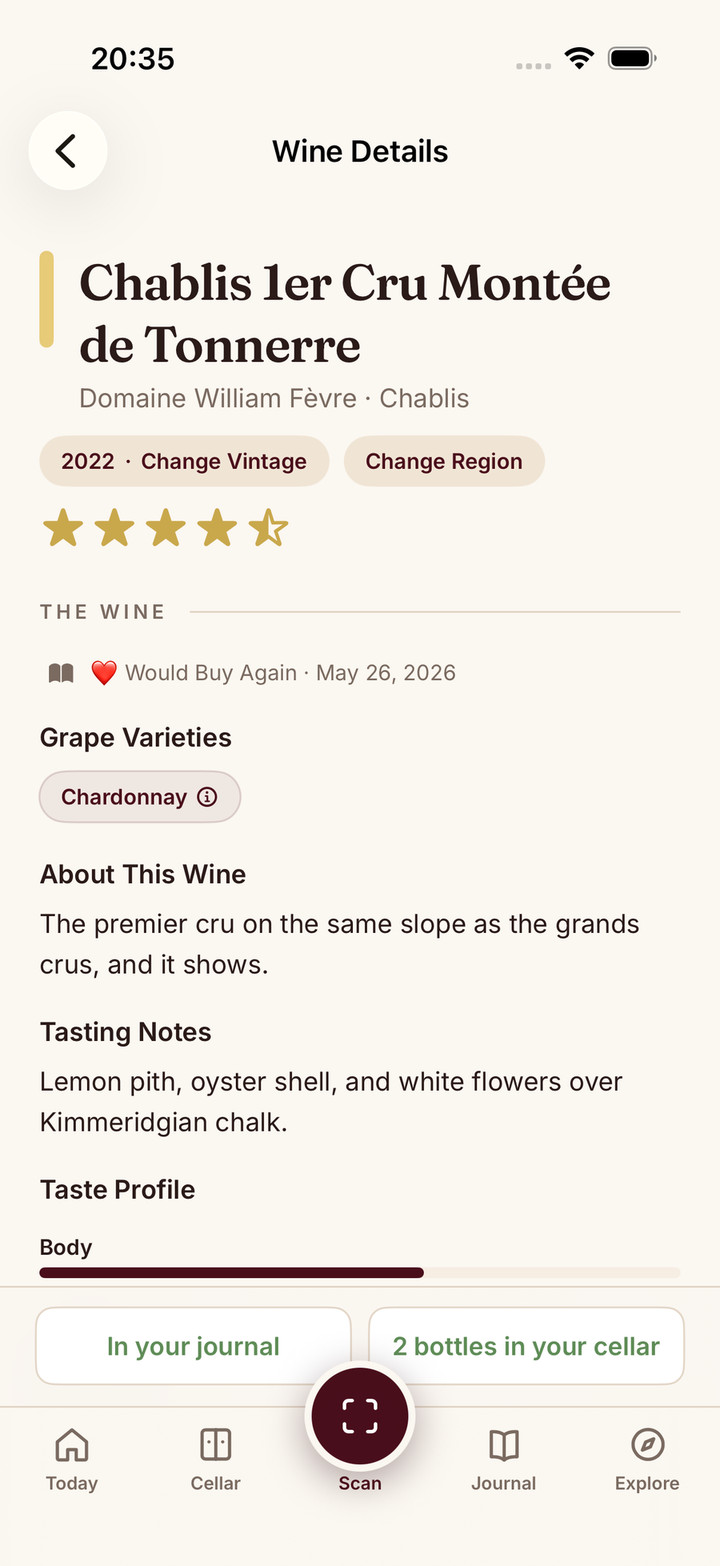
Once it arrives, record the actual wine, year, quantity and intended occasion in Sommo’s cellar. Keep seller correspondence and provenance documents separately. The app can help you remember what you own; it cannot guarantee how an old bottle will show on the chosen night.