How to Build a Personal Wine Tasting Journal (And Why It Changes Everything)
A wine journal transforms casual drinking into conscious learning. Here's how to start one, what to record, and how AI-powered journals accelerate your growth.
Here’s a scenario you’ve probably experienced: someone pours you an incredible wine at a dinner party. You love it. You ask what it is. You even repeat the name to yourself. And two days later, you can’t remember if it was from Spain or Italy, red or… no, definitely red. The name is gone.
A wine journal fixes this forever. But more than that, it transforms how you experience wine.
Why Keep a Wine Journal?
Memory Is Unreliable
The human brain is terrible at remembering specific wines. We remember feelings (“that was great”) but lose details. A journal captures those details when they’re fresh.
Patterns Emerge
After logging 20-30 wines, you start seeing patterns. Maybe you consistently rate Syrah higher than Merlot. Maybe wines from the Rhône Valley always impress you. Maybe you dislike high-tannin wines regardless of quality. These patterns are invisible without a record.
Your Palate Develops Faster
The act of writing tasting notes forces you to pay attention. Instead of passively drinking, you observe, color, aroma, flavor, texture, finish. This conscious attention accelerates palate development significantly.
You Buy Better
Flip through your journal before a wine shop visit and you’ll remember which styles you loved, which regions surprised you, and which bottles weren’t worth the price. Your purchasing becomes informed by experience rather than guesswork.
Starting Simple: The Quick Entry Method
Don’t let perfection prevent you from starting. A useful wine journal entry can be as simple as:
The Three Things:
- What is it?, Name, region, grape, vintage
- What do I think?, A few words about the flavor and your impression
- Would I buy it again?, Not for me / Solid choice / Would buy again
That’s it. Three pieces of information, 30 seconds of effort. And it’s infinitely more useful than trying to remember.
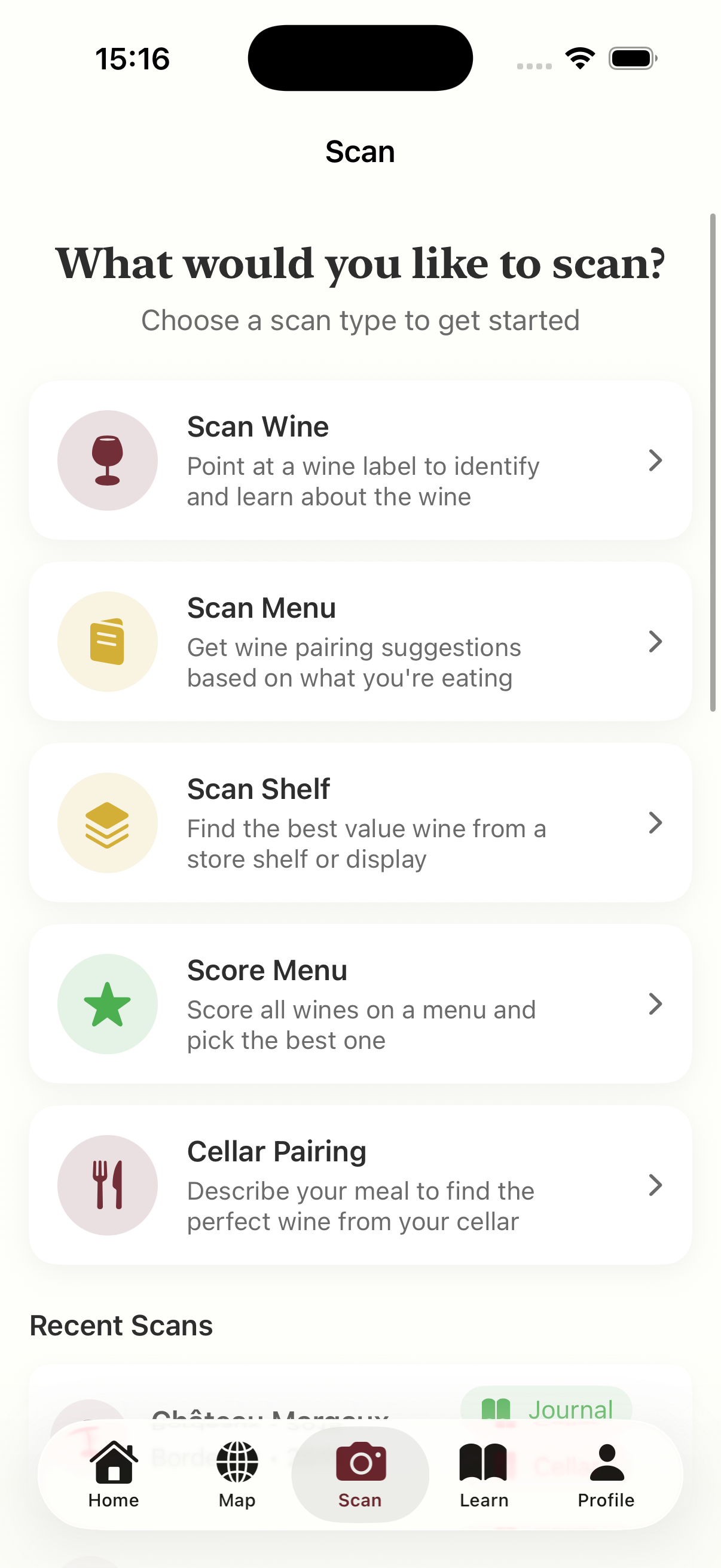
Sommo’s Quick Entry mode follows this exact approach, scan the label (or type the name), jot a quick impression, and give it a rating. Done.
Leveling Up: The Systematic Approach
When you’re ready for more depth, the Systematic Approach to Tasting (SAT) provides a professional framework used in WSET courses and by working sommeliers:
Appearance
- Clarity: Is the wine clear, hazy, or turbid?
- Intensity: Pale, medium, or deep color?
- Color: What specific hue? Red wines range from purple to garnet to tawny. Whites range from lemon to gold to amber.
- Other observations: Legs/tears, sediment, bubbles
Nose
- Condition: Is the wine clean or faulty?
- Intensity: Light, medium, or pronounced?
- Aroma characteristics: Primary (fruit, floral), secondary (yeast, malolactic), tertiary (oak, aging)
- Specific descriptors: Cherry, vanilla, pepper, leather, toast, etc.
Palate
- Sweetness: Dry, off-dry, medium, sweet?
- Acidity: Low, medium, high?
- Tannin: (Reds) Low, medium, high? Fine or coarse?
- Body: Light, medium, or full?
- Flavor intensity and characteristics: What do you taste?
- Finish: Short, medium, or long?
Conclusions
- Quality level: Your assessment of overall quality
- Readiness: Is it ready to drink, or should it age?
- Your verdict: Personal impression and rating
Sommo’s Tasting Note Wizard walks you through each of these steps with guided prompts, making it easy to write professional-quality notes even as a beginner.
The AI Advantage
Here’s where a digital journal with AI feedback changes the game:
Instant Feedback on Your Notes
After you write tasting notes in Sommo, the AI compares your observations against the wine’s known characteristics. It might tell you:
- “You identified the cherry notes, also look for the earthy undertones typical of this region”
- “Your acidity assessment aligns well with this wine’s profile”
- “This wine is known for its pronounced tannins, you rated them as medium, which suggests room for calibration”
This feedback is like having a sommelier review your homework. It accelerates your learning by correcting blind spots you didn’t know you had.
Wine Character Analysis
After logging enough wines, Sommo’s AI generates a personality profile of your wine preferences. It reveals:
- Your preferred flavor profiles and styles
- Regions and grapes you consistently enjoy
- Gaps in your exploration
- Personalized recommendations for new wines to try
Alignment Scoring
Each tasting note receives an alignment score, how closely your observations match the wine’s established profile. Watching this score improve over time is tangible proof that your palate is developing.
Practical Tips for Journaling Success
Lower the Barrier
Don’t feel pressured to write SAT notes for every glass. Quick entries for casual drinking, detailed notes for wines you want to study. The best journal is the one you actually use.
Include Photos
Scan the label or take a quick photo. Visual records are powerful memory triggers that text alone can’t match.
Note the Context
Where you drank it, who you were with, and what you ate all influence your perception. A wine that pairs perfectly with steak might seem ordinary with pasta. Context matters.
Review Periodically
Browse your old entries before wine shopping or planning a dinner party. Past you did the hard work of tasting and recording, future you benefits from that effort.
Don’t Chase “Correct” Answers
There are no wrong tasting notes. If you smell banana in a Cabernet, write banana. If you taste chocolate in a Sauvignon Blanc, write chocolate. Your honest observations are more valuable than “correct” textbook answers. The calibration comes with practice.
From Journal to Journey
A wine journal does something that no amount of reading, watching, or listening about wine can do: it makes you pay attention. And attention is the foundation of all learning.
Start simple. Scan a bottle tonight. Write three words about how it tastes. Rate it. You’ve just started a wine journal.
In six months, you’ll scroll back to that first entry and smile at how far you’ve come. That’s the power of a wine journal, it doesn’t just record your wine experiences. It transforms them.
Download Sommo and start your wine journal today. Every bottle has a story worth remembering.
Liked this read? Try the app.
Scan any wine label with AI, build your tasting journal, and learn wine your way.