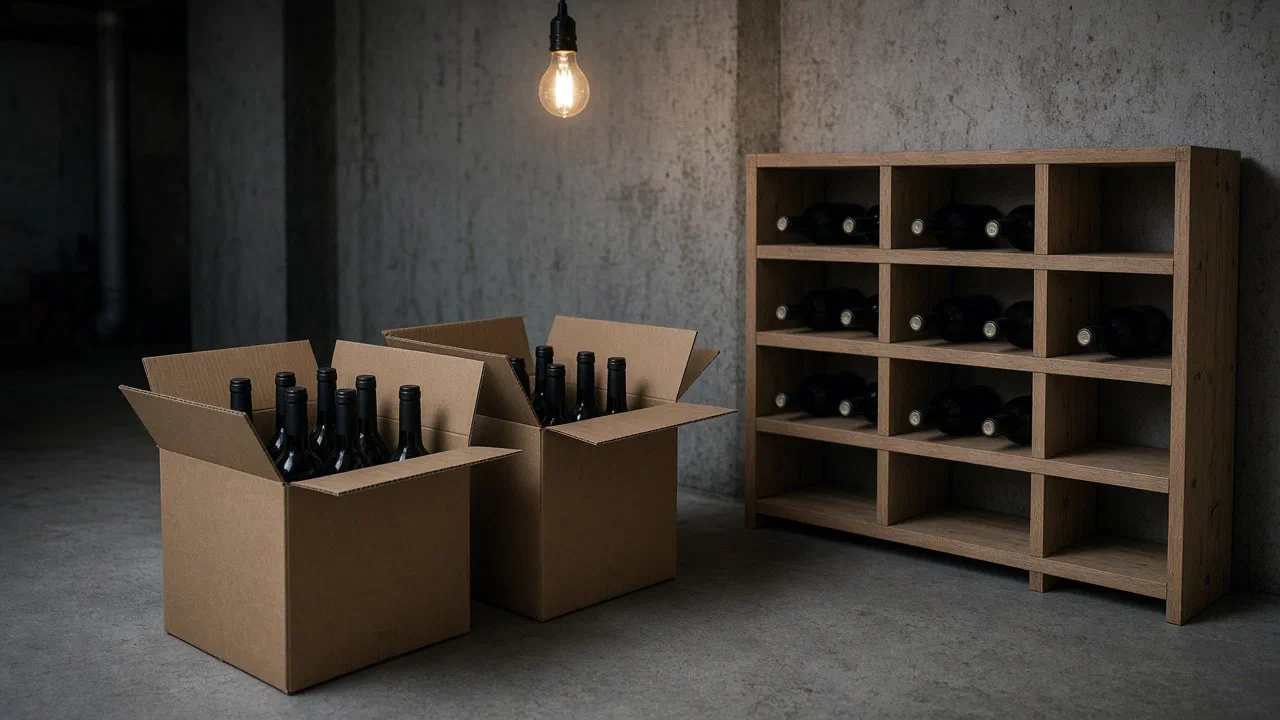
Black Friday is the most dangerous day of the year for my wine rack. Every email promises a case at a price I will never see again, and every year I have to remind myself that a cellar full of bargains I do not want to drink is not a cellar; it is a storage problem.
The short answer: buy to a plan, not to the discounts. Count what you already have, set a budget, decide how much is for drinking soon and how much is for keeping, check you have the space, then buy only the gaps. On Monday I covered how to spot a real Black Friday wine deal; today is what to do with that knowledge. Store everything somewhere cool and steady, as WSET’s storage guidance recommends.
Below I cover my five-step cellar buying plan, which wines are worth keeping, how to think about space and how to track it all once the boxes arrive.
Step 1: What do I already have?
Before you buy anything, count. Go through your rack, fridge and cupboards and note every bottle: what it is, how many, and roughly when it should be drunk.
You will almost certainly find:
- Bottles that need drinking soon.
- Styles you have too much of.
- Gaps, such as no sparkling or nothing for a weeknight.
Those gaps are your shopping list. My guide to how long unopened wine lasts helps you sort the “drink soon” pile, and the free drinking window tool gives a quick read on a single bottle.
Step 2: How much should I spend?
Set a number before you open a single email. A budget turns a sale from a temptation into an opportunity. Within it, decide:
- How many bottles you can realistically drink before your next big shop.
- What you will pay per bottle for everyday wine, and for special wine.
- Whether delivery is included at your chosen merchant, and what the minimum order is.
If you share the cellar with a partner, agree on it together. It saves a conversation later.
Step 3: How much is for drinking and how much for keeping?
Most wine is made to drink within a few years. Only a small part of most home cellars needs to be wine for ageing. I split my list into:
- Drink now: everyday reds and whites, sparkling for the next few weeks, a few bottles for guests.
- Drink in the next year or two: better bottles that will hold but do not need years.
- Keep: wines with the structure to improve, such as good Cabernet blends, Nebbiolo, northern Rhône Syrah, quality Riesling, vintage port and top Champagne.
How you split it depends on how you drink. If you mostly open a bottle on Friday night, your cellar should be mostly drink-now wine.
Step 4: Do I have space to store it well?
Wine needs somewhere cool, dark and steady, with corked bottles on their side. WSET suggests a constant temperature in the 10 to 15°C range for long-term storage.
- Measure your space before buying a rack or a fridge. The free wine rack planner helps.
- Check bottle sizes. Magnums and some Burgundy and Champagne bottles do not fit every rack. My magnum vs two bottles post covers when the big format is worth it.
- Consider a wine fridge if you have no cool cupboard. My wine fridge buying guide compares the options.
If you do not have room for it, do not buy it.
Step 5: How do I keep track of what I bought?
Log every bottle as it arrives. Note the wine, vintage, quantity, price, where it sits and when to drink it. Orders often arrive in pieces at this time of year; my guide to tracking pending wine deliveries explains how to keep ordered and received bottles separate.
A spreadsheet works, but it will not tell you when a bottle is ready. My comparison of a cellar app vs a spreadsheet covers the trade-offs.
How does Sommo help you plan a cellar?
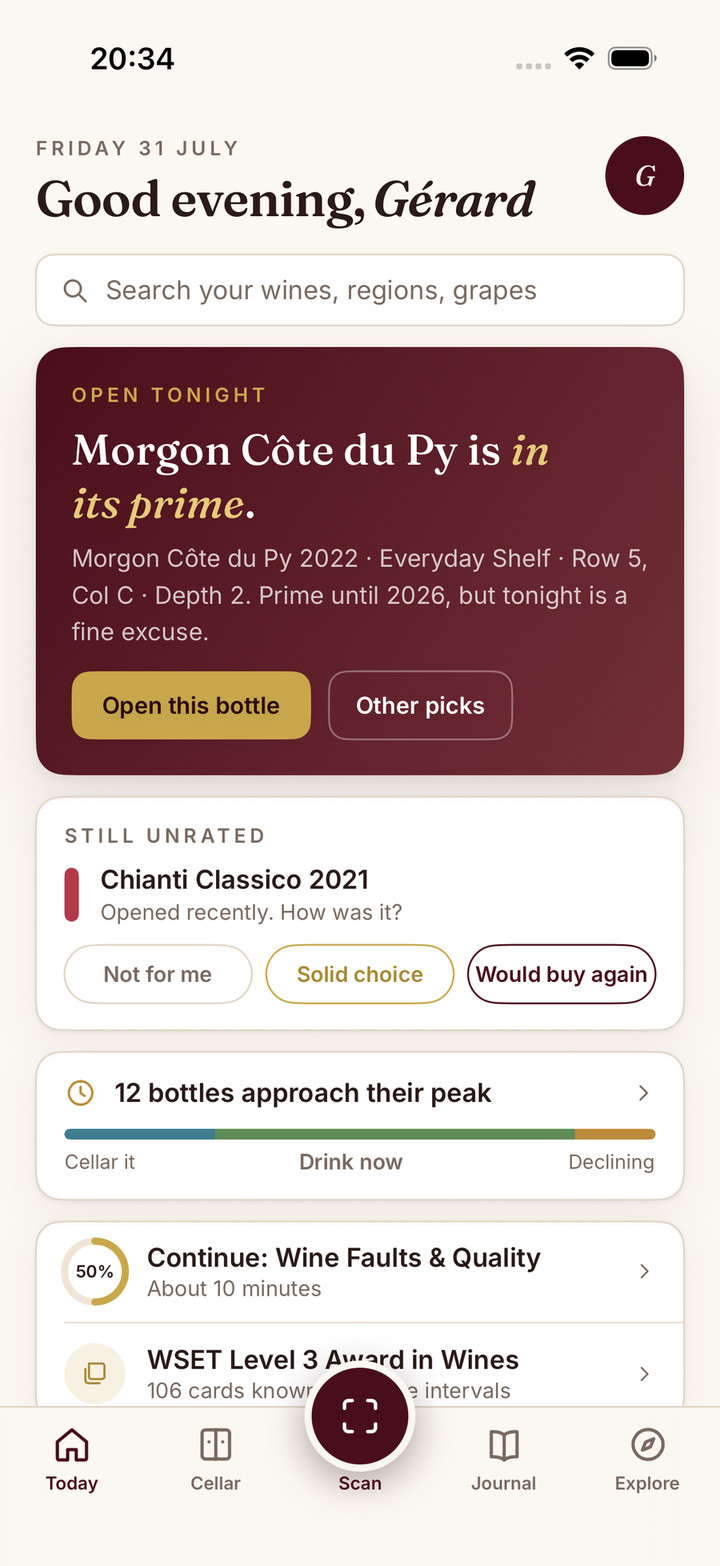
See what you have. With Premium, the Sommo cellar holds every bottle with its drinking window. You can set a storage setting per bottle, statuses run from Too Young to Ready Now to Past Prime, and on iPhone, iPad, Android and HarmonyOS you get push alerts as bottles move through their windows.
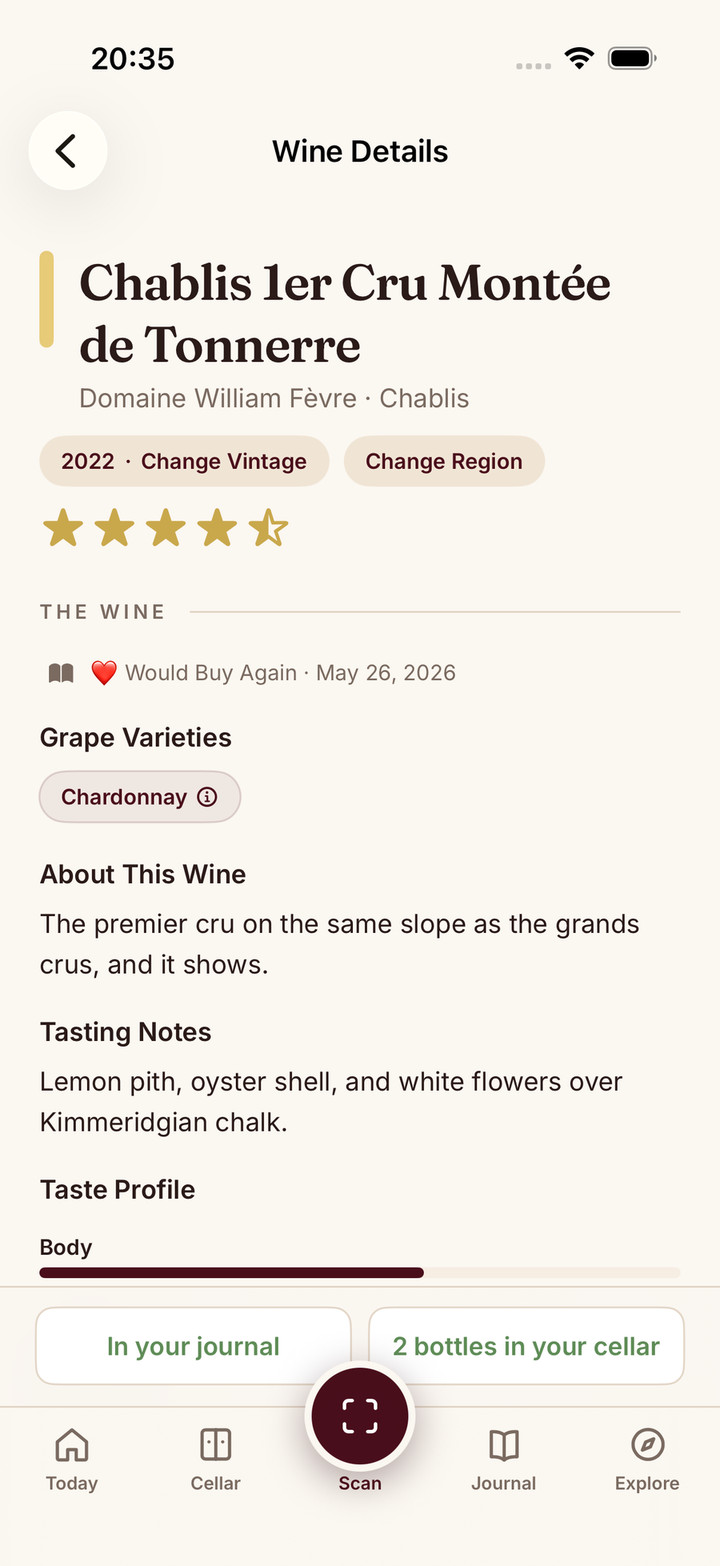
Add bottles quickly. A label scan takes about 10 seconds and gives you the producer, grape, region and drinking window. With Premium, on the web you can import a CellarTracker export or a CSV or XLSX spreadsheet. Export to CSV or XLSX is free.
Drink it, do not just store it. Ask Sommo picks the best bottle for tonight’s meal from the bottles you own, so the bargains actually get opened.
It all runs on proprietary wine-tuned AI grounded in a hand-maintained wine library. The free tier gives you 5 lifetime AI scans per device, shared across label, menu and shelf scans, plus the journal and 30 days of journal history. Premium unlocks unlimited scans, lifetime history, Taste DNA, AI tasting feedback and Tasting Mode for $4.99 a month or $29.99 a year. Sommo runs on iPhone, iPad, Android, HarmonyOS and the web.
Download Sommo and plan your cellar.
For someone who keeps a cellar, a year of Sommo Premium costs $26.99 at the regular US gift price.
The bottom line
A good Black Friday is one where you buy what your cellar is missing, for less, and have somewhere to put it. Count what you own, set a budget, split drink-now from keep, check your space, and log every bottle as it arrives. The best bargain is the bottle that gets opened at the right time.