The Best WSET Study Materials: An Honest Review
A personal review of every WSET study resource worth your time — from the official textbooks to Wine Folly, the World Atlas of Wine, Jancis Robinson, and beyond.
When I wrote our overview of WSET qualifications, I listed a handful of books worth picking up alongside the official study materials. Several people asked for more detail — which book for which level, what’s actually useful versus what just looks impressive on the shelf.
This is that article. I’ve gone through each resource properly and I’ll tell you what it’s genuinely good for, where it falls short, and how it fits into a realistic study plan. I’ll also cover the one tool I wish had existed when I was studying — which, yes, is Sommo, but I’ll make the case honestly rather than just saying “great app, download it.”
Let’s start where everyone should start.
1. The Official WSET Study Pack — The Non-Negotiable Foundation
Best for: Every level. No exceptions. Where to get it: Included with every registered WSET course.
The WSET study pack isn’t glamorous. It’s a textbook and a SAT (Systematic Approach to Tasting) guide, produced by WSET specifically for each level. It’s also the only resource that matters if passing the exam is your goal, because the exam is written from it.
Everything in the exam is in the study pack. Everything in the study pack can appear in the exam. This isn’t a guide you read once and set aside — it’s the document you work through multiple times, annotate, and return to when something doesn’t click.
What it does well: Complete syllabus coverage, clear structure, practice questions, the official SAT framework.
What it doesn’t do: Make geography visual. Explain why wines taste the way they do with any real depth. Provide the regional storytelling that makes facts stick long-term.
That’s where supplementary reading earns its place.
2. Wine Folly: The Master Guide — The Best Visual Companion
Best for: WSET Level 2, especially geography and grape varieties. Author: Madeline Puckette & Justin Hammack Publisher: Avery / Penguin (most recent edition, Master Guide) Website: winefolly.com
Wine Folly is the book that convinced a generation of enthusiasts that wine could be learnt visually. The maps, infographics, flavour diagrams, and colour-coded regional breakdowns do something the official study pack doesn’t: they give you a mental picture to anchor facts to.
For Level 2, this is the book I’d recommend buying alongside the official materials. When you’re trying to remember which grape varieties dominate which sub-regions of Burgundy, a good map is worth a hundred bullet points.
What it does well: Visual geography, grape variety profiles, approachable explanations of winemaking, beautiful production. The free articles on winefolly.com extend the book’s coverage and are genuinely useful for quick reference.
What it doesn’t do: Go deep enough for Level 3. The Master Guide covers breadth well; it doesn’t provide the analytical depth the Level 3 tasting exam demands. Think of it as the picture book to the study pack’s textbook — complementary, not a replacement.
Verdict: Buy it for Level 2. Keep it for Level 3 as a quick visual reference, but don’t rely on it as your primary source there.
3. The World Atlas of Wine — The Level 3 Essential
Best for: WSET Level 3 and above. Authors: Hugh Johnson & Jancis Robinson (most recent edition co-authored by Jancis Robinson & Julia Harding) Publisher: Mitchell Beazley Where to get it: Most bookshops, Amazon.
If Wine Folly is the picture book, the World Atlas is the serious geography text. This is the book that Level 3 students keep on their desks permanently, and for good reason: the regional coverage is extraordinary. Sub-appellations, climate variations, soil maps, producer distributions — the kind of detail that Level 3 demands and that no other single source provides as comprehensively.
The maps are the main event. When you’re studying why Côte de Nuits produces more structured Pinot Noir than Côte de Beaune, or why Mosel Rieslings from steep slate slopes taste different from those grown in flatter vineyards, seeing it on a detailed map makes the explanation concrete in a way that text alone doesn’t achieve.
What it does well: Unrivalled regional depth, beautiful cartography, authoritative text, updated with each edition to reflect the evolving wine landscape. Jancis Robinson’s site complements it with current vintage reports and producer notes.
What it doesn’t do: Cover winemaking processes or tasting methodology. It’s a geography and regional reference, not a complete study guide.
Verdict: Non-negotiable for Level 3. Buy the most recent edition — regional classifications change, and you want current information.
4. The Oxford Companion to Wine — The Reference Bible
Best for: WSET Level 3, Level 4 Diploma, and anyone who wants to go deep. Editor: Jancis Robinson & Julia Harding Publisher: Oxford University Press (4th edition) Website: jancisrobinson.com
Over 4,000 entries. Every grape variety, region, producer, winemaking term, and historical concept you’ll encounter in serious wine study is in here. This isn’t a book you read — it’s a reference you live in.
The practical use: when the study pack or Atlas mentions something and you want to understand it properly, the Companion is where you go. Level 3 questions often reward the kind of analytical depth that comes from genuinely understanding a concept rather than just memorising a definition. The Companion builds that understanding.
JancisRobinson.com, Jancis Robinson’s website, offers much of the same depth in digital format. The subscription is worth it for Level 3+ students — the articles, tasting notes, and producer assessments go far beyond what any static book can provide. Regular readers of the site develop an understanding of wine quality and style that shows up in tasting exam answers.
What it does well: Encyclopaedic depth, reliable accuracy (Jancis Robinson is among the most respected authorities in the wine world), cross-referenced entries, regularly updated editions.
What it doesn’t do: Function as a study guide or reading text. Dipping in for reference is the use case; trying to read it sequentially isn’t the point.
Verdict: Essential for Level 3 and Diploma. Level 2 students don’t need it but won’t regret having access.
5. Jancis Robinson’s Wine Course — The Readable Context-Builder
Best for: Level 2 preparation, background reading alongside the study pack. Author: Jancis Robinson Publisher: BBC Books / Abbeville Press
Where the Companion is a reference text, Wine Course is a narrative. Robinson takes you through the world of wine chronologically and geographically in accessible, engaging prose — the kind of reading that builds context around the facts you’re memorising rather than just adding more facts.
The value here is in the storytelling. Understanding why Bordeaux developed the blend it did, or how Burgundy’s classification system emerged from its history, makes those facts sticky in a way that bullet points don’t. Contextual knowledge is also what separates a mediocre Level 3 written answer from an excellent one.
What it does well: Accessible to any reading level, builds genuine enthusiasm for the subject, excellent at connecting regions and history, well-illustrated.
What it doesn’t do: Cover the syllabus systematically or go deep enough for Level 3 exam prep on its own.
Verdict: Read it before or during Level 2 study for context. It won’t replace the study pack but it’ll make the study pack easier and more enjoyable to work through.
6. Sommo — The Digital Study Companion
Best for: Flashcard-based memorisation, mock exam practice, and reinforcing study with real wines. Platform: iOS (iPhone and iPad) Download: App Store Free to start: Yes
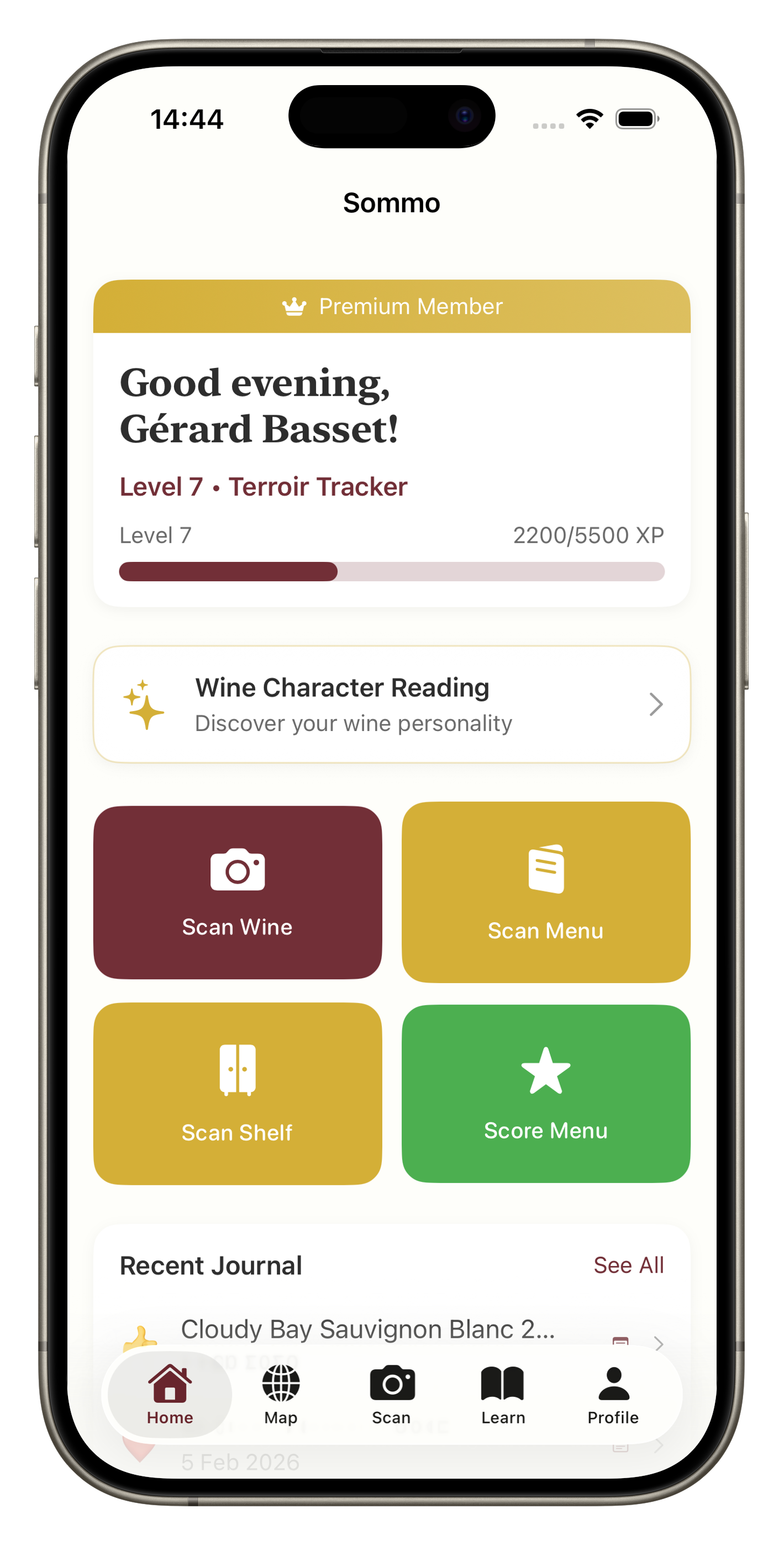
I’ll be direct about what Sommo is and what it isn’t. It’s not a replacement for the official study pack or the books above. It’s a purpose-built study tool that handles the parts of WSET preparation that books handle poorly: systematic memorisation of a large volume of discrete facts.
WSET Level 2 alone requires you to retain accurate information about dozens of grape varieties, major wine regions across multiple countries, winemaking processes, sparkling wine production methods, fortified wine styles, and service knowledge. Level 3 multiplies that considerably. This is exactly the kind of factual recall that spaced repetition handles best — and Sommo is built around the SM-2 spaced repetition algorithm, the same method used by medical students memorising pharmacology and language learners building vocabulary.
The WSET flashcard decks are organised by level and topic — grape varieties, wine regions, winemaking, classification systems — covering the complete syllabus. The app tracks what you know and what you don’t, schedules reviews automatically, and ensures that on exam day, every fact you need is fresh rather than half-remembered.
The mock tests replicate the format and timing of the real WSET exams. This matters more than it sounds: exam nerves are real, and the unfamiliarity of timed, formatted questions adds difficulty that pure knowledge doesn’t overcome. Taking several mock tests under realistic conditions removes that variable.
The wine scanner is a study tool that most people don’t think of that way. Scan a bottle in real life and you reinforce what you’ve studied — connecting the label, region, grape variety, and style to a physical wine rather than an abstract flashcard. It turns every trip to a wine shop or restaurant into a revision opportunity.
The WSET hub also has level-specific cheatsheets and resource guides that complement the flashcards.
What Sommo doesn’t do: Teach the SAT tasting methodology. That requires real wine, real practice, and structured feedback — something no app fully replicates. Use Sommo for the factual component; use real bottles for the tasting component.
Verdict: Start with the free flashcards before your course begins. Add mock tests in the final 4-6 weeks. Download here.
What to Actually Buy at Each Level
Level 1:
- Official study pack (included with course)
- Nothing else required
Level 2:
- Official study pack (included)
- Wine Folly: The Master Guide
- Sommo (free to start)
Level 3:
- Official study pack (included)
- The World Atlas of Wine (essential)
- The Oxford Companion to Wine (essential reference)
- Jancis Robinson’s Wine Course (optional but useful for context)
- JancisRobinson.com subscription (worthwhile)
- Sommo (flashcards and mock tests)
Level 4 Diploma:
- All of the above, plus deeper trade publications, producer research, and current vintage reports
- The Companion and Atlas become daily references rather than occasional ones
The honest version: the official study pack is where the exam lives. The books give you the depth and context to understand it properly rather than just memorise it. And Sommo handles the memorisation systematically so that by exam day, the facts are there when you need them.
If you’re still figuring out where to start with WSET, read What Is WSET? first — it covers all four levels, who they’re for, and how to find a provider.