Searching for “WSET books” usually means one of two questions: what am I required to buy, and what is worth buying on top. The answers differ sharply by level, and at Level 1 the honest answer to the second question is “nothing.”
Here is what WSET issues you, which third party books genuinely earn their place at each level, and where a book stops being optional.
What WSET Issues You When You Enroll
WSET does not sell its course materials as retail books. They come from an Approved Programme Provider, the school, wine shop or college running your course, as part of your registration fee. That is why current WSET textbooks are not on bookshop shelves, and why the copies that surface on secondhand sites are frequently one syllabus revision behind.
Contents vary by level and by which edition of the specification is in force when you enroll, but a pack generally contains:
- The level’s study guide or textbook, written by WSET and matched to the syllabus.
- The qualification specification, which lists the learning outcomes the exam is allowed to test. This is the most underused document in WSET study. If something is not in the specification, it is not on the paper.
- Sample assessment material, so the question style is familiar before exam day.
- A Systematic Approach to Tasting (SAT) card from Level 2 upward.
How optional the extras are also shifts by level. At Level 1 and Level 2, the pack is genuinely sufficient. At Level 3 it is sufficient for the multiple choice section and thin for the written answers. At Diploma, the reading list is the course.
Recommended Books by Level
| Level | Book | What it is for |
|---|---|---|
| Level 1 | Official WSET study guide (issued with the course) | The entire syllabus. Nothing else is required. |
| Level 1 | A general beginner wine book, for example The Wine Bible (Karen MacNeil) | Enjoyment and context after the exam, not exam content. |
| Level 2 | Official WSET study guide (issued) | The only source the 50 questions are drawn from. |
| Level 2 | Wine Folly: The Master Guide (Madeline Puckette and Justin Hammack) | Maps, grape profiles and flavor diagrams that make geography stick. |
| Level 2 | Jancis Robinson’s Wine Course (Jancis Robinson) | Narrative context around facts you are memorizing. |
| Level 3 | Official WSET study guide (issued) | The spine of the theory paper. |
| Level 3 | The World Atlas of Wine (Hugh Johnson and Jancis Robinson) | Regional depth and detailed maps for written answers. |
| Level 3 | The Oxford Companion to Wine (edited by Jancis Robinson and Julia Harding) | Lookups when the study guide states a fact without explaining it. |
| Level 3 | How to Taste (Jancis Robinson) | Tasting vocabulary and calibration reading for the SAT paper. |
| Diploma | Wine Grapes (Jancis Robinson, Julia Harding and José Vouillamoz) | Variety level detail: parentage, synonyms, where each grape actually works. |
| Diploma | Understanding Wine Technology (David Bird) | Production science written for people who are not scientists. |
| Diploma | Wine Science: Principles and Applications (Ronald S. Jackson) | Deeper reference for production topics. |
| Diploma | Regional monographs and current trade press | Unit specific depth and the market data essays need. |
Level 1: Buy Nothing Extra
Level 1 is a short course with roughly six hours of study behind it, a 30 question multiple choice exam and a 70 percent pass mark. The official study guide covers all of it, and the syllabus is small enough that a second textbook is not preparation, it is procrastination.
If you want a book anyway, buy one for pleasure rather than for the exam. A broad, readable, region by region reference such as The Wine Bible gives you somewhere to go once the certificate is done.
What to do with the time you just saved: practice questions. The free WSET Level 1 wine basics quiz covers styles, grapes, storage, service and food pairing, which is most of the paper, and the Level 1 study hub collects the rest of the free tools. If you prefer cards to chapters, the free WSET Anki decks turn the syllabus into spaced repetition.
Level 2: The Study Guide Plus One Visual Book
Level 2 is where volume becomes the problem: 20 plus grape varieties, regions across France, Italy, Spain, Portugal, Germany and the New World, plus sparkling wines, fortified wines, food pairing and service. The exam is 50 multiple choice questions in 60 minutes at a 55 percent pass mark.
The official study guide is still the only source the paper is written from. Two books earn a place beside it:
Wine Folly: The Master Guide does the thing the official guide does not: it makes geography visual. When you are trying to hold Chablis, the Côte d’Or and the Mâconnais in the same mental picture, a map beats another hundred bullet points.
Jancis Robinson’s Wine Course supplies the narrative. Understanding why Bordeaux settled on a blend, or how Burgundy’s classifications emerged, turns isolated facts into a story your memory can hold.
What not to buy at Level 2: a second textbook that restates the syllabus in different words. Duplicate coverage feels like progress and produces none. Anything past the official guide should add a picture, a story or a test. The WSET Level 2 hub has the free tests, including topic drills on grape varieties and French regions.
Level 3: Where Reference Books Become Necessary
Level 3 changes the job a book has to do. The theory paper adds short written answers, so recognizing a fact is no longer enough. You have to explain a mechanism, why a cooler site holds acidity, why a producer chooses one vessel over another, in a few sentences that earn marks.
The World Atlas of Wine is the standard companion. The maps let you argue from geography rather than from memory, which is exactly what written answers reward. Buy the most recent edition you can find, because appellation boundaries and classifications change between editions.
The Oxford Companion to Wine is the lookup. When the study guide asserts something without explaining it, the Companion is where the explanation lives. You do not read it end to end. You live in it.
How to Taste helps with the paper most candidates underestimate. The SAT is a vocabulary and a discipline, not a talent, and reading about structured tasting alongside actual bottles shortens the calibration period.
Then test the reading: the free viticulture and vinification quiz and SAT tasting quiz sit on the Level 3 hub.
For tasting skill rather than exam level, the best wine tasting books ranks eight books by the job they do: visual foundation, method, maps, reference, structure or blind practice. It keeps the official WSET guide in its proper role as the exam source.
Level 4 Diploma: The Reading List Is the Course
At Diploma, no single book covers a unit. Build a shelf around the units you are sitting:
- Production topics: Understanding Wine Technology (David Bird) for readable coverage, Wine Science (Ronald S. Jackson) when you need the mechanism behind the process.
- Wines of the world: regional monographs at the depth the unit expects. Jasper Morris on Burgundy, Peter Liem on Champagne and Ian D’Agata on Italian varieties are the kind of single subject books that answer questions a general atlas cannot.
- Business topics: current trade press does more than any book, because the syllabus asks about a market that moves. Decanter, The Drinks Business and Meininger’s Wine Business International are the usual sources for pricing, distribution and consumer trends.
- Independent research: a research methods guide is more useful than another wine book. The assessment tests method as much as subject knowledge.
The Diploma study guide covers how the units fit together.
General References Worth Owning at Any Level
Four categories keep paying off long after the certificate:
- An atlas. The World Atlas of Wine is the one most candidates keep on the desk permanently.
- A grape reference. Wine Grapes is the definitive variety by variety work. For Italian depth specifically, a dedicated native varieties reference is worth adding.
- A wine science reference. Start with Understanding Wine Technology. Move to Wine Science if you want the chemistry behind the winemaking decision.
- An encyclopedia. The Oxford Companion to Wine settles arguments and fills gaps for years.
Prices for all of these swing widely by market, format and edition, so check current listings rather than trusting a figure in an article. Hardback atlases and encyclopedias are the expensive ones. Everything else is usually modest.
What Books Cannot Do for You
Two things no book on this page will deliver.
A calibrated palate. Reading the SAT takes twenty minutes. Using it consistently takes months of bottles. You need wine in the glass, a fixed framework, and ideally other people tasting the same wine so you can check whether your “medium plus acidity” matches everyone else’s. Keep a structured tasting journal from the first week of the course, not the last.
Recall under time pressure. Reading produces recognition. Exams demand retrieval, on the clock, with plausible wrong answers designed to look right. The only fix is testing yourself: spaced repetition so facts stay fresh, and full length timed papers so the format holds no surprises. Work through the free Level 2 mock exam, drill the areas you fail with the Level 2 flashcards and the Level 2 cheatsheet, and use the topic quizzes on grape growing and winemaking, Italy and Spain, sparkling wines, fortified wines and food pairing and service to close specific gaps. Everything sits under the WSET hub.
For a wider comparison of resources beyond books, see the roundup of the best WSET study materials.
Explore with Sommo
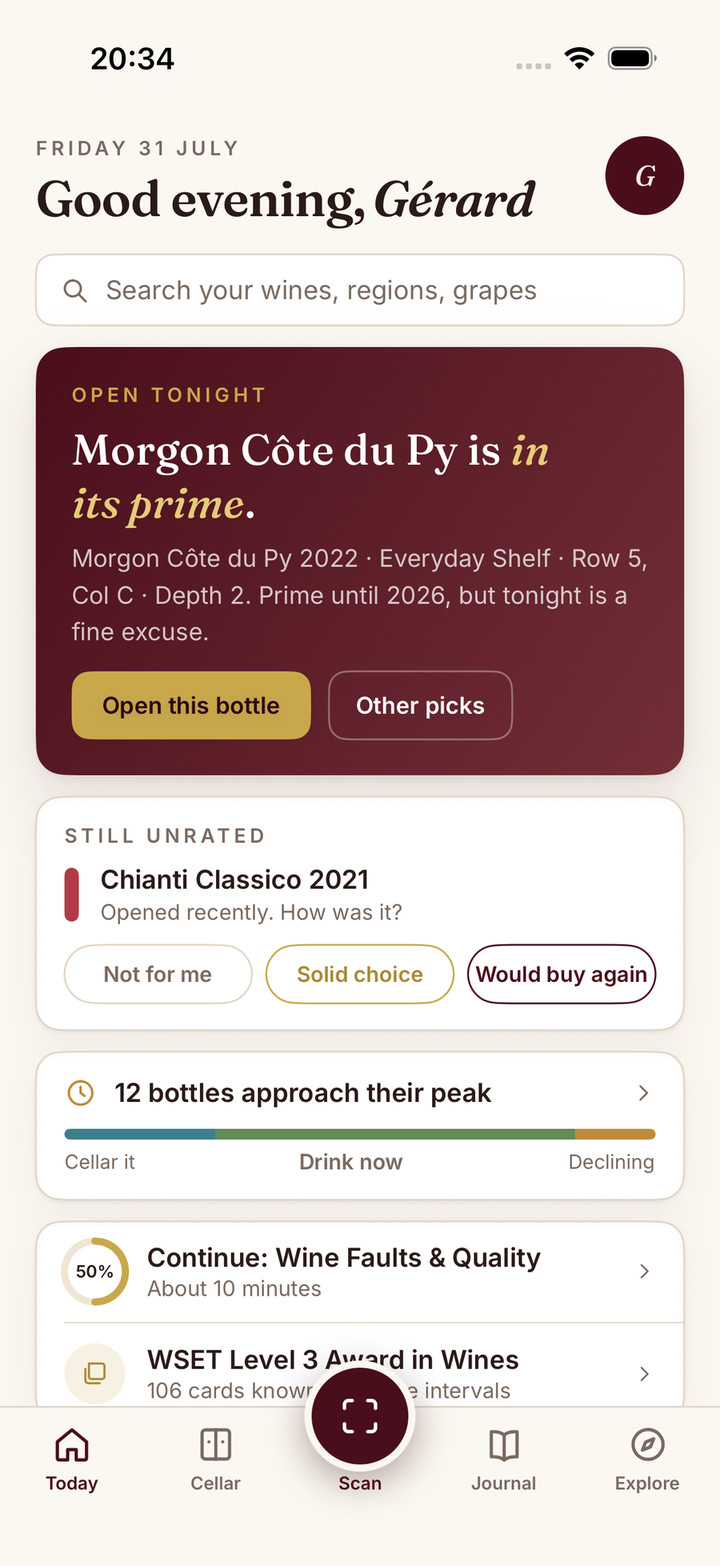
Sommo covers the part of WSET preparation that books handle worst: keeping hundreds of facts retrievable on exam day. Spaced repetition flashcards for every level, timed mock exams that match the real format, adaptive practice that targets your weak topics, and a wine journal that turns bottles you actually drink into structured tasting practice. Read the books for depth, then use Sommo for retention. Download Sommo and start with the free flashcards before your course begins.
The focused WSET Level 1 books guide explains why the official material plus one visual companion is usually enough.
Diploma candidates can use the unit-by-unit WSET Level 4 reading list for D1 through D6.