Wine at a wedding is one of those line items that looks small on the spreadsheet and turns into chaos in practice. Most couples either dramatically overbuy (and end up with 40 leftover bottles in the garage) or underbuy (and watch the bar run dry by 9pm). The middle ground takes ten minutes of planning, the right framework, and a sense of what your guests will actually drink.
This guide is built for the couple, the venue planner, or the wedding party member trying to make smart wine decisions for a 2026 wedding. We will cover how much to buy by guest count and event length, how to split the budget across sparkling, white, red, and rosé, and which specific bottles consistently overdeliver at wedding price points. It also includes a section on the venue mark-up math, which is where most wedding budgets quietly bleed out.
How Much Wine to Buy: The Real Math
The standard rule of thumb you will hear is one bottle per person for a full evening event. That is a starting point, not a final number. The free wine party calculator runs the adjustment for your exact guest count and event length, or you can work through it manually based on three variables.
Event length. A four-hour reception consumes meaningfully less than a six-hour reception. For each additional hour past four, add roughly 0.2 bottles per guest.
Guest profile. A 30-something crowd at a destination wedding will drink more than a multigenerational gathering with kids and elderly relatives. Take 10 percent off your base estimate if more than 20 percent of guests are unlikely to drink (children, designated drivers, non-drinkers, expectant mothers).
Cocktail availability. If your bar is wine-only, plan on 1.0 to 1.3 bottles per guest. If you have a full bar with spirits and cocktails, drop to 0.6 to 0.8 bottles per guest. People split their consumption.
A working formula for a 100-guest reception, four to six hours, wine-only or wine-led bar:
- 100 to 130 bottles total
- Roughly 1 standard bottle = 5 servings (5 ounces / 150 ml each)
For the split across styles, work backwards from your guest demographics, but a reliable default is:
- 40 percent sparkling for the toast and cocktail hour
- 30 percent white (mix of crisp and richer)
- 20 percent red (mostly medium-bodied, food-friendly)
- 10 percent rosé (especially for summer weddings)
A 100-guest wedding would land around 50 bottles sparkling, 36 white, 24 red, and 12 rosé. Round up on sparkling: it gets consumed faster than people expect, especially during golden-hour photos and the cake cut.
The Budget Tiers
Wedding wine budgets divide into three meaningful tiers, and the smart strategy looks different at each level.
Budget Tier ($300 to $800 for 100 guests)
You are spending around $5 to $9 per bottle. This is tight but workable if you shop carefully.
Sparkling: Cava from Spain (under $12, often as low as $8). Look for producers like Freixenet’s higher-end bottlings or Llopart Brut Reserva.
White: Vinho Verde from Portugal ($8 to $10), basic Pinot Grigio from Friuli ($9 to $11), or basic Côtes de Gascogne from France ($7 to $9).
Red: Côtes du Rhône from France ($9 to $12), basic Chianti from Italy ($9 to $12), or Chilean Cabernet Sauvignon ($8 to $11).
Rosé: Côtes de Provence at the entry level ($10 to $12) or Spanish Garnacha rosado ($8 to $10).
Buy by the case at a wine shop that will negotiate (most do at 12 bottles or more). Many shops also accept returns of unopened bottles, which is enormous insurance against overbuying.
Mid Tier ($800 to $1,800 for 100 guests)
You are spending around $9 to $18 per bottle. This is the sweet spot where wedding wine genuinely shines.
Sparkling: Crémant de Loire or Crémant de Bourgogne from France ($16 to $22), Cava Reserva or Gran Reserva ($14 to $20), or top-tier Prosecco DOCG from Conegliano-Valdobbiadene ($15 to $20).
White: Sancerre from a serious producer ($22 to $28 if you stretch, $18 if you find a sale), Albariño from Rías Baixas ($14 to $20), or Grüner Veltliner from Austria ($15 to $20).
Red: A serious Beaujolais Cru like Brouilly or Fleurie ($16 to $22), a Côtes du Rhône Villages ($14 to $18), or a Spanish Garnacha from Aragón ($14 to $18). See our Beaujolais wine guide for context.
Rosé: A top Provence rosé from a real producer like Domaine Tempier (if your budget allows the splurge, $30 to $40, or roughly $25 by the case) or a serious Tavel from the southern Rhône ($18 to $25).
Premium Tier ($1,800+ for 100 guests)
You are spending $20 or more per bottle. The strategy here shifts: do not waste money on famous-name labels. Spend it on quality regions and producers your guests will recognise as serious.
Sparkling: Real Champagne from a grower house (Egly-Ouriet, Pierre Péters, Larmandier-Bernier), $50 to $75. Or a top Franciacorta from Italy at a slightly lower price point.
White: Premier Cru Chablis ($35 to $50), village-level white Burgundy (Mâcon-Villages or Saint-Véran at $25 to $40), or a serious Riesling from Alsace or the Mosel.
Red: Village-level Burgundy or a serious Bordeaux Cru Bourgeois ($30 to $50), top-tier Brunello or Chianti Classico Riserva, or a quality Napa Cabernet from a respected mid-tier producer.
Rosé: Bandol rosé from Domaine Tempier or Château Pradeaux ($30 to $45). These are the rare rosés that age and reward serious thought.
The Venue Mark-Up Trap
If your venue requires you to buy wine through them, the math changes dramatically. Venue wine programmes typically mark up bottles 200 to 400 percent over retail. A wine that costs $12 at retail will be billed at $36 to $60 on the wedding bill.
Three strategies to manage this.
Negotiate corkage if BYOB is allowed. Many venues allow you to bring your own wine for a corkage fee, typically $10 to $30 per bottle. If your retail wine is $15 and the venue’s equivalent is $50, you save $25 per bottle minus the corkage. On 100 bottles, that is $1,500 to $2,000.
Negotiate the venue’s wine list. Most venues will let you customise the wines they pour. If their default Sauvignon Blanc retails at $9 but is priced at $36, ask if they will swap to a higher-quality $14 wine that retails close to the same final price. Better wine for the same spend.
Stick to their bulk house wines. If you must use the venue’s wine list and want to minimise spend, the house wine is usually the best value, even if it is not the most exciting bottle. The mark-up is similar, but the base cost is lower.
What Pleases the Most Guests
Wedding wine has one rule above all others: it has to please a range of palates without offending anyone. This is not the time for an obscure orange wine or a heavily oaked Australian Shiraz. Stick to styles that have broad appeal.
Sparkling that everyone drinks: Brut Champagne or Brut sparkling. Avoid extra brut (too dry for casual drinkers) and avoid demi-sec or doux (too sweet for serious drinkers). The brut vs demi-sec guide covers the full sweetness ladder, and the free WSET Level 2 sparkling wines quiz tests whether you can tell Cava from Crémant on paper.
White that everyone drinks: Unoaked or lightly oaked. Pinot Grigio, Sauvignon Blanc, Albariño, Grüner Veltliner, basic Chablis. Avoid heavily oaked Chardonnay, off-dry Riesling, or anything with significant residual sugar.
Red that everyone drinks: Medium-bodied, low to moderate tannin. Beaujolais Cru, Pinot Noir, Côtes du Rhône, Chianti Classico, basic Rioja. Avoid Cabernet-led wines that need food (they read as too tannic to casual sippers), and avoid the more rustic Italian reds like Aglianico or Nebbiolo.
Rosé that everyone drinks: Pale, dry, Provence-style. Avoid darker, sweeter rosés (white Zinfandel style), which now read as old-fashioned to most wedding crowds.
For more on pairing wine across food courses, see how to pair wine with food and our wine and dinner party guide.
The Cocktail Hour Sparkling Hack
Sparkling wine gets consumed faster than any other style during a wedding’s cocktail hour, and most weddings underbuy. Two adjustments help.
Open early. Pop the first six to eight bottles before guests arrive at the cocktail hour space. Pre-poured flutes on trays disappear in the first 15 minutes. This sets the tone and reduces bar queue pressure.
Pour smaller. A standard Champagne flute holds 6 ounces (180 ml) but should be poured to 4 ounces (120 ml). This stretches each bottle from 5 servings to 7 or 8, and the smaller pour stays cold longer. A bottle that produces 5 servings at 6 ounces produces 7 at 4 ounces. Across 50 sparkling bottles, that is 100 extra servings.
Mixing Cases for Variety
One of the best moves for a wedding wine buyer is to mix cases at your wine shop. Most shops will let you build a custom 12-bottle case with four or six different wines. This gives you variety on the table without committing to 12 of any single style that might not work.
A mixed dinner-wine case for a 100-guest wedding might include:
- 6 bottles of Beaujolais Cru (light red)
- 6 bottles of Côtes du Rhône Villages (medium red)
- 6 bottles of Sancerre (crisp white)
- 6 bottles of Mâcon-Villages (rounder white)
- 6 bottles of Provence rosé
- 6 bottles of Vinho Verde (high-acid white)
Multiply across the number of cases you need.
Working With the Caterer
If the caterer is handling service, two conversations to have early.
Confirm corkage policy. Some caterers charge their own corkage on top of venue corkage. Get this in writing.
Confirm pour size. The caterer’s default pour size will drive your total consumption. Most caterers pour 5 to 6 ounces for wine. If you want to stretch the budget, request 4 to 5 ounce pours, and make sure your serving staff knows.
For more on hosting and serving wine, see our wine tasting party guide.
What to Do With Leftover Wine
Buying with a return policy is the simplest answer (call the shop before the wedding and confirm). If returns are not available:
- Unopened bottles keep for years. Use them as gifts for the wedding party.
- Opened bottles last 24 to 48 hours, sealed in the fridge. Plan brunch the next morning.
- Magnum or large-format bottles add visual drama on the cocktail hour bar and reduce per-bottle handling.
A Note on Welcome Bags
If you are doing welcome bags for out-of-town guests, a single half-bottle (375 ml) of a regional wine is one of the most appreciated touches. It signals thoughtfulness, costs $10 to $15 per bag, and welcomes guests to the destination. The half-bottle format also fits into hotel mini fridges, which standard 750 ml bottles often do not.
Explore with Sommo
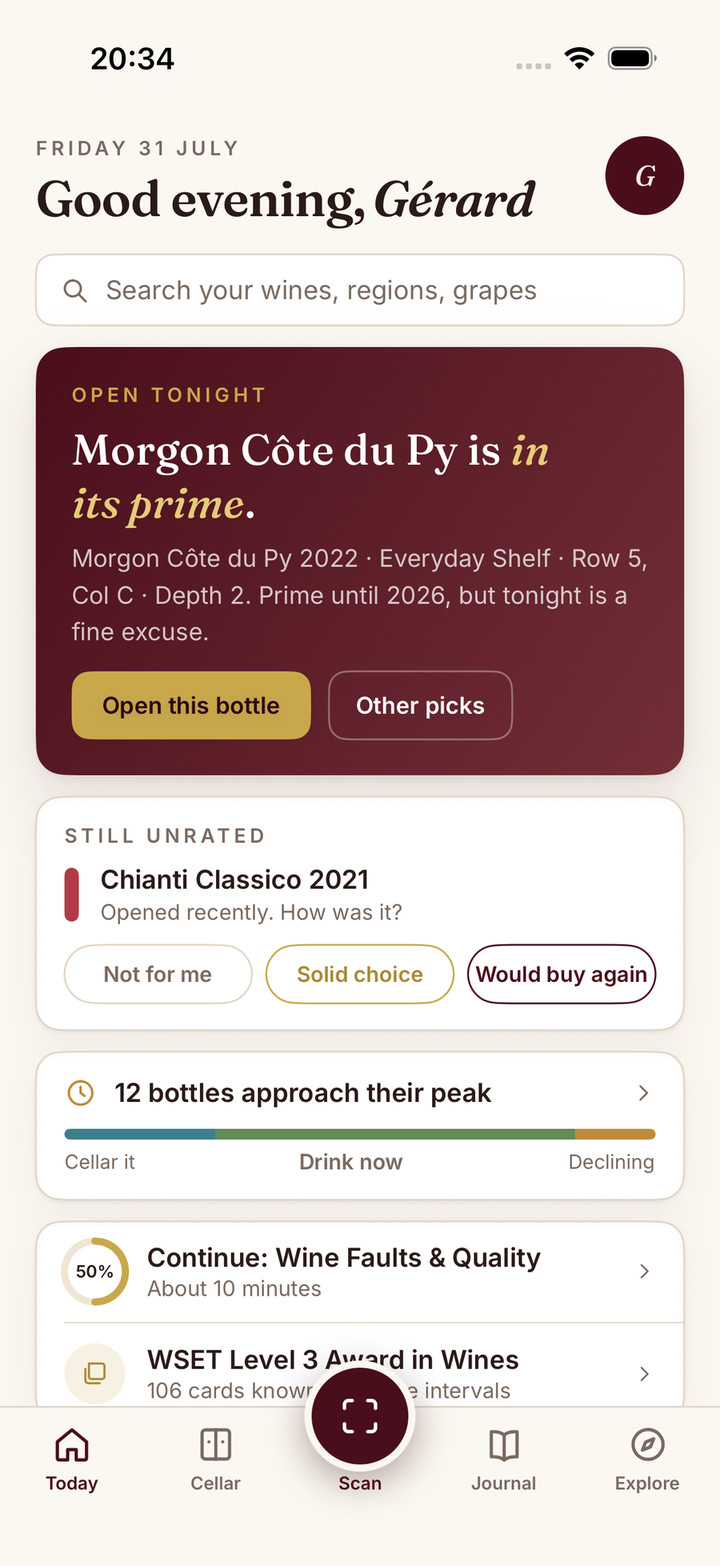
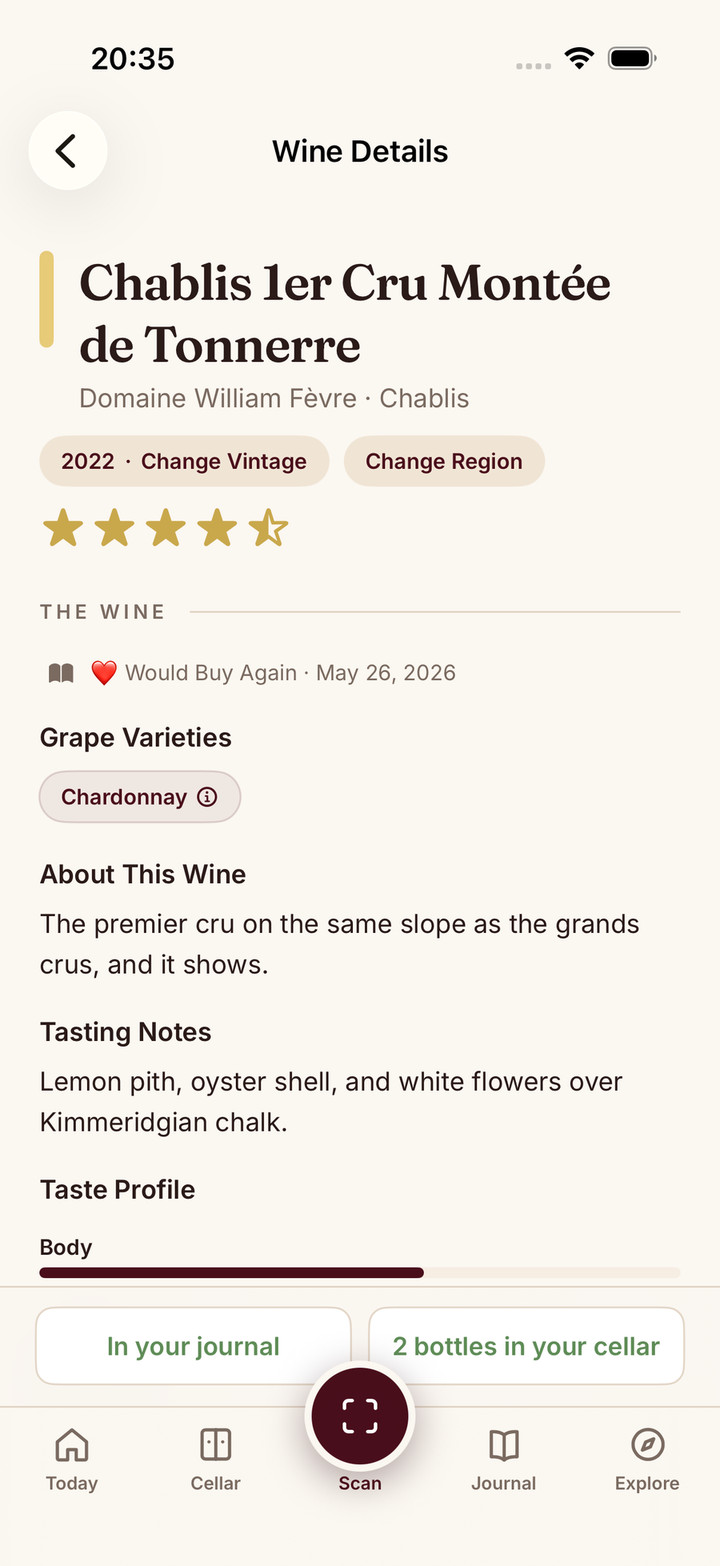
Wedding wine planning is one of those situations where having a record matters. The bottles you serve at your wedding will be poured at every anniversary dinner you ever cook. Sommo lets you scan each wedding bottle, save notes about which wines worked, and build a cellar of the wines that defined the day. Years later, you can find a bottle of the same producer to open on your fifth or tenth anniversary. The continuity is the gift.
Download Sommo free and start a wine memory that compounds with every milestone.