There is a theory in wine that the best value does not sit at the bottom of the price ladder or the top, it sits somewhere in the middle. At around $20, you are past the zone where producers cut corners to hit a price point, but you are still spending well below the range where you pay for marketing, prestige, and land costs rather than what is in the bottle.
The $20 bottle is also the most contested price tier in the world. It is where casual drinkers buy regularly, where supermarket wines compete with specialist shops, and where the gap between mass-market product and genuine quality is widest. Spend $20 carelessly and you get a forgettable bottle. Spend the same $20 well and you can find wines that would cost three times as much from the same producer in a different region.
The 15 picks below span reds, whites, rosés, and sparkling wines, so whatever you are buying for, there is a bottle on this list for it. Start with the table if all you want is the shortlist.
The 15 picks at a glance
| Wine | Style | Price band | Best for |
|---|---|---|---|
| Beaujolais Cru (Brouilly, Fleurie) | Light red, bright cherry | $16 to $22 | Roast chicken, pizza, lightly chilled |
| Côtes du Rhône Villages | Medium red, peppery | $14 to $20 | Grilled lamb, stews |
| Spanish Garnacha | Medium red, ripe, spiced | $12 to $18 | Tapas, the grill, a crowd |
| Mendoza Malbec | Full red, plummy | $14 to $20 | Steak and chorizo |
| Chianti Classico | Medium red, savoury | $16 to $22 | Pasta al ragù, hard cheeses |
| Douro red | Medium red, structured | $14 to $20 | Roast pork, winter food |
| Albariño (Rías Baixas) | Crisp white, saline | $14 to $20 | Seafood and sushi |
| Marlborough Sauvignon Blanc | Aromatic, zesty white | $13 to $20 | Goat cheese, Thai food |
| Mâcon-Villages | Unoaked Chardonnay | $14 to $20 | Roast chicken, white fish |
| Picpoul de Pinet | Crisp coastal white | $12 to $16 | Oysters, hot days |
| Mosel Riesling Kabinett | Off-dry, low alcohol white | $16 to $22 | Spicy food, gifts |
| Provence rosé | Pale, bone-dry rosé | $16 to $20 | Almost anything in summer |
| Tavel rosé | Deeper, structured rosé | $16 to $20 | Grilled lamb, ratatouille |
| Cava Reserva | Traditional-method sparkling | $14 to $20 | Celebrations, fried food |
| Prosecco DOCG | Light, fresh sparkling | $16 to $20 | Brunch, aperitivo |
Where this list sits
This is the all-styles list. If you only drink red, the best red wines under $20 is the red-only list, twelve picks deep and organised by body. For the rest of the price ladder, the best white wines under $15 covers a category where value arrives even earlier, and the best wines under $10 is a different exercise entirely: at that price the question stops being which bottle and becomes which regions still deliver at all.
Why $20 is the sweet spot
Below $10, most wines are technically competent but rarely exciting. Something has to give: grape sourcing, barrel ageing, labour, yield control. Between $10 and $20, producers have enough margin to do the work properly. At $20, you can find:
- Wines with genuine regional character rather than anonymous “red blend” anonymity
- Proper oak treatment (even if brief) rather than oak chips
- Lower-yield, hand-picked fruit from quality-focused growers
- Honest representation of variety, you will actually taste the Cabernet Sauvignon or Riesling
Go much higher and you are buying diminishing returns. Stay here and you are drinking very well.
How I picked
Three rules shaped the list.
Real producers, not labels. Every bottle below comes from an estate or producer with a track record. The marketing-creation wines (cute names, animal characters, slogans) are excluded, even when they price competitively.
Repeatable quality. Each pick has been tasted across at least two vintages. Wines that depend on one strong vintage to deliver are not on the list.
Genuinely under $20. Prices vary by market. I targeted bottles that consistently sit at $20 or below in their primary markets, not wines that occasionally dip into the tier on sale.
The 15 picks
Red wines (6 picks)
1. Beaujolais Cru: Brouilly or Fleurie ($16 to $22)
The single most reliable red wine under $20 in the world. Gamay from the granite slopes of Beaujolais Cru villages produces light-to-medium-bodied reds with bright cherry, raspberry, and floral notes, with low tannin and food-flexible character.
Producers to look for: Château Thivin (Brouilly), Domaine de la Madone (Fleurie), Jean-Paul Brun (any Cru). For the full picture, see the Beaujolais wine guide.
Best with: Roast chicken, charcuterie, pizza, salmon. Serve slightly chilled.
2. Côtes du Rhône Villages from a serious producer ($14 to $20)
Southern Rhône blends of Grenache, Syrah, and Mourvèdre at the villages level overdeliver consistently. Look for the named villages (Cairanne, Rasteau, Vinsobres) for the most concentrated expressions.
Producers to look for: Domaine Santa Duc, Château de Saint Cosme, Domaine de la Janasse.
Best with: Grilled lamb, beef stews, hard cheeses, herb-driven Mediterranean food.
3. Spanish Garnacha from Aragón or Catalonia ($12 to $18)
Spain’s most underrated red category. Old-vine Garnacha (the same grape as Grenache) from inland Spain produces wines with depth, spice, and serious value.
Producers to look for: Borsao, Las Rocas, Alto Moncayo (their Garnacha at the lower end).
Best with: Tapas, lamb, paella, anything off the grill.
4. Argentine Malbec from a top Mendoza estate ($14 to $20)
Real Mendoza Malbec, not the supermarket version. Look for producers with actual vineyards, not blended labels. Catena’s standard bottling at around $15 is the benchmark: high-altitude fruit with natural acidity to balance the ripe plum and blackberry, soft tannins, and exceptional consistency year on year.
Producers to look for: Catena, Achaval-Ferrer Quimera (at the entry level), Bodega Norton Reserva. The Malbec wine guide covers the producer landscape in detail.
Best with: Steak, grilled chorizo, hard cheeses, hearty pasta.
5. Chianti Classico ($16 to $22)
The DOCG label guarantees real Sangiovese from the heart of Tuscany. Avoid basic Chianti (no Classico), which is often mass-produced.
Producers to look for: Felsina, Fontodi, Castello di Ama (their second wine), Isole e Olena. See the Tuscany wine region guide.
Best with: Pasta al ragù, Florentine steak, mushroom risotto, hard Italian cheeses.
6. Portuguese Douro red ($14 to $20)
The Douro produces some of the best-value reds in Europe. Indigenous grapes like Touriga Nacional, Touriga Franca, and Tinta Roriz produce structured, food-friendly wines that punch well above their price. See the Douro Valley wine region guide and the Touriga Nacional grape page for context.
Producers to look for: Quinta do Crasto (their basic Douro red), Niepoort, Quinta do Vallado.
Best with: Roast pork, lamb stew, aged cheeses, hearty winter food.
White wines (5 picks)
7. Albariño from Rías Baixas ($14 to $20)
The textbook coastal Spanish white. Slightly saline, peach-and-citrus character, perfect with seafood. See the Rías Baixas region guide.
Producers to look for: Martín Códax, Mar de Frades, Pazo de Señorans.
Best with: Seafood, sushi, salad, grilled chicken.
8. Sauvignon Blanc from Marlborough ($13 to $20)
The most recognisable style of crisp white wine on earth. Kim Crawford is the bottle that put New Zealand Sauvignon Blanc on the global map: intense passion fruit, gooseberry, and cut grass at around $15. Not subtle, but perfectly clean and refreshing. For the full breakdown of styles, see Sauvignon Blanc Decoded.
Producers to look for: Kim Crawford, Greywacke, Saint Clair, Dog Point.
Best with: Goat cheese, asparagus, sushi, Thai food.
9. Mâcon-Villages ($14 to $20)
The accessible entry to white Burgundy, and the antidote if over-oaked Chardonnay put you off the grape. Typically unoaked or lightly oaked: pure, fresh, mineral-driven, with ripe apple and a clean stony finish. Genuine Burgundian character at a fraction of anything with “Côte d’Or” on the label.
Producers to look for: Joseph Drouhin, Olivier Leflaive, Louis Jadot.
Best with: Roast chicken, white fish, cream-based pasta.
10. Picpoul de Pinet ($12 to $16)
The underrated alternative to basic Pinot Grigio. From the southern French coast, made for seafood and warm weather.
Producers to look for: Domaine Felines Jourdan, Hugues Beaulieu.
Best with: Oysters, grilled fish, salads, light pasta.
11. Riesling Kabinett from Mosel ($16 to $22)
Off-dry, low alcohol, food-friendly. The most versatile white wine in the world at this price tier. See the Riesling wine guide and the Mosel wine region guide. Closer to $10, Château Ste. Michelle’s off-dry Columbia Valley Riesling is the American value alternative, and exceptional with spicy food.
Producers to look for: Selbach-Oster, Dr. Loosen, Joh. Jos. Prüm (their basic bottlings).
Best with: Spicy Asian food, pork dishes, cheese plates.
Rosé wines (2 picks)
12. Provence rosé from a real producer ($16 to $20)
Pale, dry, summer-perfect. Skip the celebrity-branded bottles and look for actual producers. The one celebrity-linked estate that still drinks like proper Provence is Miraval: pale salmon, bone-dry, with delicate strawberry, white peach, and herbs, worth its slight premium over basic Provence.
Producers to look for: Château Sainte Marguerite, Domaines Ott (Les Domaniers at the entry level), Château Minuty (basic bottling).
Best with: Salads, grilled fish, charcuterie, almost anything in summer.
13. Tavel rosé ($16 to $20)
The serious alternative to Provence. Deeper colour, more body, more structure. From the southern Rhône.
Producers to look for: Château d’Aquéria, Domaine de la Mordorée, Château de Trinquevedel.
Best with: Grilled lamb, ratatouille, tomato-based dishes.
Sparkling wines (2 picks)
14. Cava Reserva ($14 to $20)
Made in the traditional method (same as Champagne), aged for at least 18 months. Real complexity at a fraction of Champagne prices. At the bargain end, Segura Viudas Reserva at around $10 shows genuine autolytic character, toasted bread, brioche, and apple, that no tank-fermented sparkling wine can replicate at this price.
Producers to look for: Llopart, Recaredo, Raventós i Blanc, Codorníu Reserva, Segura Viudas.
Best with: Aperitifs, oysters, fried food, anything celebratory.
15. Prosecco DOCG (Conegliano-Valdobbiadene) ($16 to $20)
The DOCG designation marks real quality Prosecco. Light, fresh, immediately pleasing. And if you want an American wildcard instead: Gruet Brut from New Mexico, at around $14, is one of America’s best sparkling wines at any price, clean, crisp, and elegant with fine persistent bubbles.
Producers to look for: Adami, Bisol, Nino Franco.
Best with: Brunch, aperitivo, fruit-based desserts.
Named bottles that keep delivering
Beyond the 15 categories, four specific bottles from the wider under-$20 shelf have earned a permanent place through sheer consistency:
- Cono Sur Bicicleta Pinot Noir, Chile (~$12). Pinot Noir at this price is usually a disappointment; this is the exception. Light-bodied, genuine red cherry, a touch of earthiness. Serve slightly chilled.
- Château Ste. Michelle Columbia Valley Cabernet Sauvignon (~$12). Washington State’s flagship value Cabernet. Dark fruit, firm but approachable tannins, and a freshness that Napa Cabernet at this price rarely achieves.
- Rioja Crianza (various producers, $15 to $18). Faustino, Viña Real, or Campo Viejo’s premium tier. The Crianza designation guarantees at least two years’ ageing including one in oak, giving the Tempranillo a complexity no unaged $15 red can match. Leather, cherry, vanilla, structure.
- Santa Margherita Pinot Grigio, Alto Adige (~$18). The gold standard of commercial Pinot Grigio, from cool Alpine foothills: crisp acidity, white pear, almond, and a genuine mineral finish. It costs a few dollars more than the competition for good reason.
What to buy when
A practical guide by occasion.
For a Tuesday-night meal: Beaujolais Cru (red), Picpoul de Pinet (white), or basic Provence rosé. All under $18, all food-flexible.
For a casual dinner party (4 to 6 guests): Mix a Côtes du Rhône Villages with a Mâcon-Villages and a Cava. Total spend roughly $50 to $55.
For takeout or pizza: Beaujolais Cru, Chianti Classico, or a basic Spanish Garnacha. Pair the lighter reds with lighter takeout (Thai, Vietnamese), the bolder reds with pizza or burgers.
For a gift bottle under $20: Riesling Kabinett from Mosel, Cava Reserva, or a serious Beaujolais Cru. All three feel deliberate rather than default.
For a hot summer day: Picpoul de Pinet, Provence rosé, or Cava. Serve all three properly cold.
If you are matching a specific dish rather than an occasion, the free wine pairing finder gives you an answer in seconds. For more on building a smart wine pantry, see the grocery store wine picking guide and the broader best wines for the money post.
The most common under-$20 mistakes
Four categories that consistently disappoint at this price tier.
Supermarket Napa Cabernet: The famous regions need premium production budgets the under-$20 tier cannot support. Spend the same money on a Spanish Garnacha or a Côtes du Rhône instead.
Generic Pinot Grigio (Delle Venezie): The mass-market version of this grape is the most over-produced wine in Italy. If you want serious Pinot Grigio at this price, look for Friuli or Alto Adige on the label, not Delle Venezie. See Pinot Grigio in 2026 for the full breakdown.
Celebrity rosé: The wine in the bottle is usually inferior to a real Provence producer at the same price. The brand pays for the marketing.
Heavily oaked Chardonnay under $15: Real oak barrels are expensive. Cheap “oaky” wines almost always get their flavour from oak chips or staves, which read as harsh and artificial. Stick to unoaked Mâcon-Villages or Chablis for crisp Chardonnay under $20.
Where to buy
A few practical sourcing notes.
Build a relationship with one local independent shop. A good shop will steer you to the best wines in their inventory at any given moment and often beat supermarket prices on the same bottles by buying in case quantities.
Buy by the case. Most shops give 10 to 15 percent off on 12 or more bottles. A mixed case lets you taste across styles without committing to 12 of any single wine.
Online options: Wine.com, K&L Wine Merchants, and Total Wine all carry most of the picks above. For the broader online landscape, see the best wine delivery services 2026 guide.
Track what actually works for you
If you want to test where value stops, the $15 versus $50 wine guide explains what the premium can buy, what blind-tasting research actually measures and how to run a fair two-bottle comparison at home.
Do not treat the $20 ceiling as a barrier, treat it as a filter. When you are standing in a wine shop with fifteen minutes and a budget, these are the bottles that repay your trust.
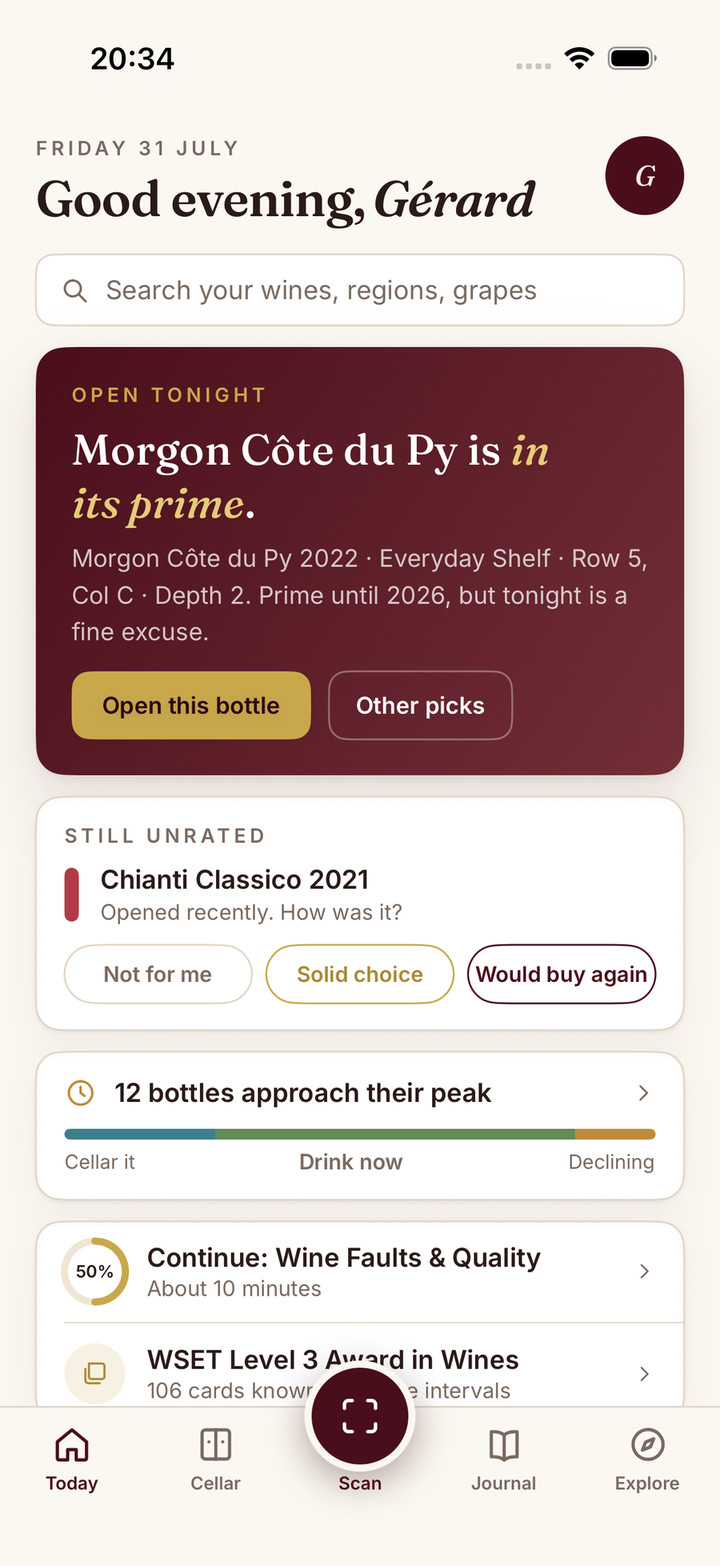
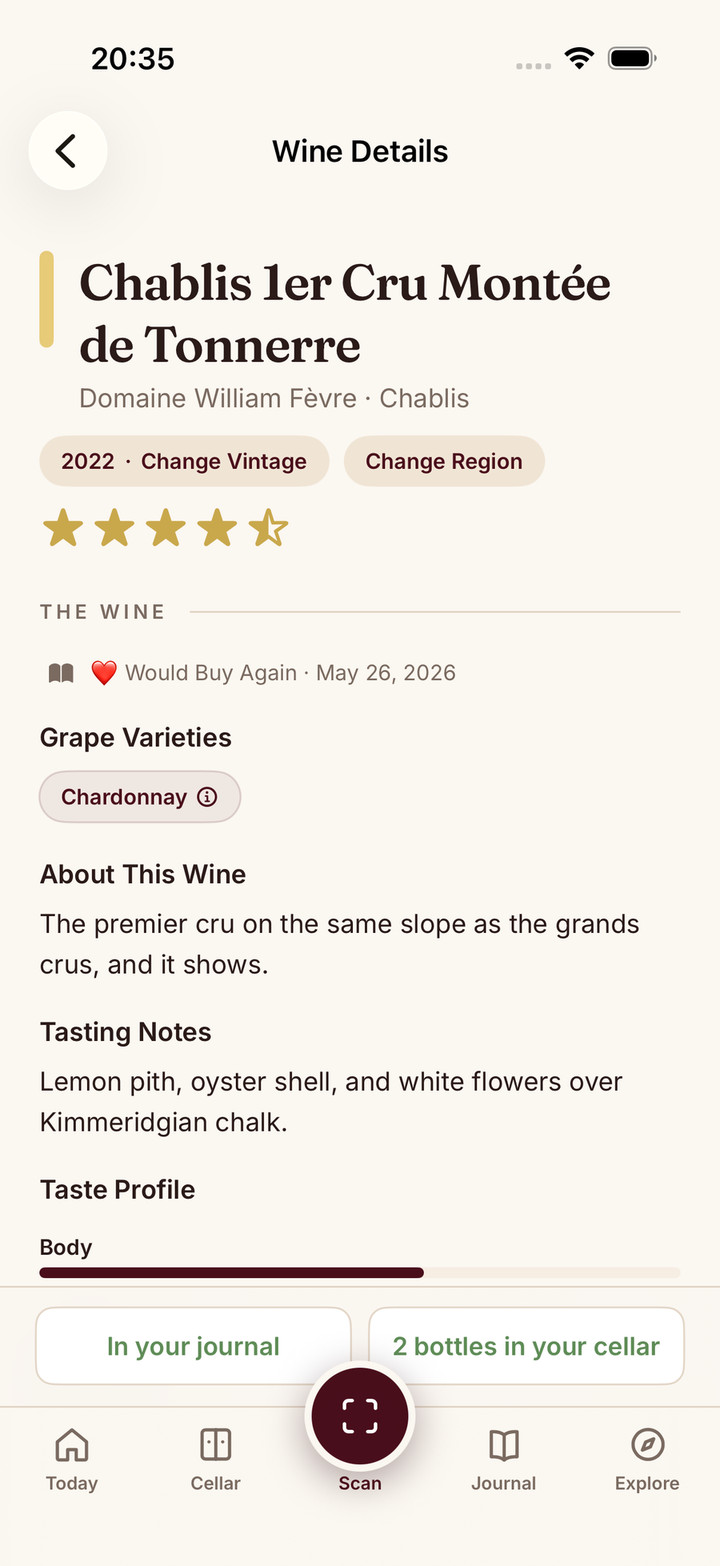
The fastest way to sharpen that filter is to log everything you try. Sommo lets you scan each bottle, rate it, and build a personal record of which producers and styles work for your palate. After 20 or 30 entries, your Wine Character Analysis will surface patterns that no general guide can capture, and the next $20 bottle you buy will land more reliably than the last one. If you want to understand why these regions overdeliver, the WSET learning path turns that curiosity into structured knowledge.
Download Sommo free and start mapping your value wines.
Which should you pick tonight?