Best Wines for the Money: 12 Bottles That Punch Above Price
Stop overpaying. These best wines for the money prove that $10 to 25 bottles can rival $50+ ones. The exact price-quality sweet spots, revealed.
Wine pricing is weird. A $50 bottle isn’t necessarily five times better than a $10 bottle. In fact, the relationship between price and quality follows a curve that flattens dramatically after a certain point.
Understanding where the sweet spots are, where quality dramatically outpaces price, is one of the most valuable things a wine drinker can learn.
The Wine Value Curve
Here’s the truth about wine pricing:
$5-10: Hit or miss. Some gems, some regrettable purchases. Value depends heavily on region.
$10-20: The sweet spot. This is where the best quality-to-price ratio exists globally. Wines here are made by skilled producers who just happen to work in regions with lower costs.
$20-35: Consistently good to excellent. You’re paying for better vineyard sites, more careful winemaking, and sometimes oak aging. Diminishing returns start here.
$35-60: Very good to outstanding. Premium vineyards, meticulous production. The improvement over the $20-35 range is real but smaller.
$60+: Excellence, but increasingly driven by scarcity, reputation, and collector demand rather than proportional quality gains. A $100 wine is not twice as good as a $50 wine.
Value Champions by Price Point
Under $10: The Everyday Heroes
The best sub-$10 wines come from regions where land and labor are affordable:
- Portugal: Douro reds, Alentejo reds, Vinho Verde whites ($6-10)
- Spain: Garnacha from Calatayud, Tempranillo from La Mancha ($6-10)
- Argentina: Entry-level Malbec, Bonarda ($7-10)
- Chile: Cabernet Sauvignon, Sauvignon Blanc ($6-10)
- Southern France: Languedoc blends, Pays d’Oc varietals ($7-10)
Pro tip: Portuguese reds under $10 are the single best value in wine today.
$10-20: The Sweet Spot
This is where serious quality becomes consistent:
- Côtes du Rhône ($10-16), Grenache/Syrah blends that taste like $25 wine
- Malbec from Mendoza ($10-18), Argentina’s gift to value-seeking red wine lovers
- Riesling from Mosel ($12-18), German precision at accessible prices
- Cru Beaujolais ($14-20), Gamay from named villages with real terroir expression
- Douro Valley reds ($10-18), Complex blends from Portugal’s premium region
- Albariño from Rías Baixas ($10-15), Spain’s best white at its best price
- Crémant ($12-20), Traditional method sparkling at non-Champagne prices
$20-35: The Upgrader’s Range
At this level, you access better vineyard sites and more careful winemaking:
- Burgundy village wines ($22-35), Entry point to the world’s most revered wine region
- Rioja Reserva ($18-30), Spanish Tempranillo with years of oak aging included in the price
- Barossa Valley Shiraz ($18-30), Bold, generous Australian reds
- Oregon Pinot Noir ($20-30), New World elegance from the Willamette Valley
- Chianti Classico ($18-28), Sangiovese from Tuscany’s historic heartland
- New Zealand Sauvignon Blanc from single vineyards ($18-25), Step up from the mass-market style
$35-50: The Special Occasion Sweet Spot
The best value at this level comes from regions where prestige hasn’t inflated prices beyond quality:
- Cru Beaujolais from top producers ($30-45), Morgon, Moulin-à-Vent, Côte de Brouilly at their finest
- Barolo from emerging producers ($35-50), Nebbiolo’s greatest expression, entry level
- Châteauneuf-du-Pape ($30-50), Prestigious Rhône wines at the lower end of their range
- Priorat, Spain ($30-50), Dense, mineral Garnacha from slate soils
- Napa Valley Cabernet from smaller producers ($35-50), Before the famous names push into triple digits
The Value Destroyers: Where NOT to Look
Some categories consistently deliver poor value:
Entry-level wines from famous regions: A $15 Burgundy or a $12 Napa Cabernet is almost always disappointing. The region’s reputation inflates prices beyond what the entry-level quality justifies. You’ll get more for your money from an unfashionable region.
Celebrity wines: The markup for a famous name on the label rarely translates to quality in the glass.
Oversized bottles for the sake of it: Magnums and larger formats from mass-market producers are often marketing exercises, not quality statements.
Extremely old vintages at low prices: If a 15-year-old wine is selling for $12, it’s probably because nobody wanted it when it was young. Age doesn’t improve bad wine.
How to Develop Your Value Instinct
The best wine buyers share one skill: they can identify value without relying on scores or marketing. Here’s how to develop it:
Learn the Regions
Understanding which wine regions have high production costs (and therefore higher prices) versus low costs (and therefore better value) is the single most useful piece of knowledge for wine shopping.
Know the Grapes
Some grape varieties are inherently more expensive to grow and produce. Pinot Noir requires more care and lower yields than Malbec. Understanding this explains price differences.
Trust Your Palate
The wine you enjoy at $12 is better value than the wine you tolerate at $40. Use a wine journal to track what you actually enjoy drinking, and let that guide your purchases.
Scan Before You Buy
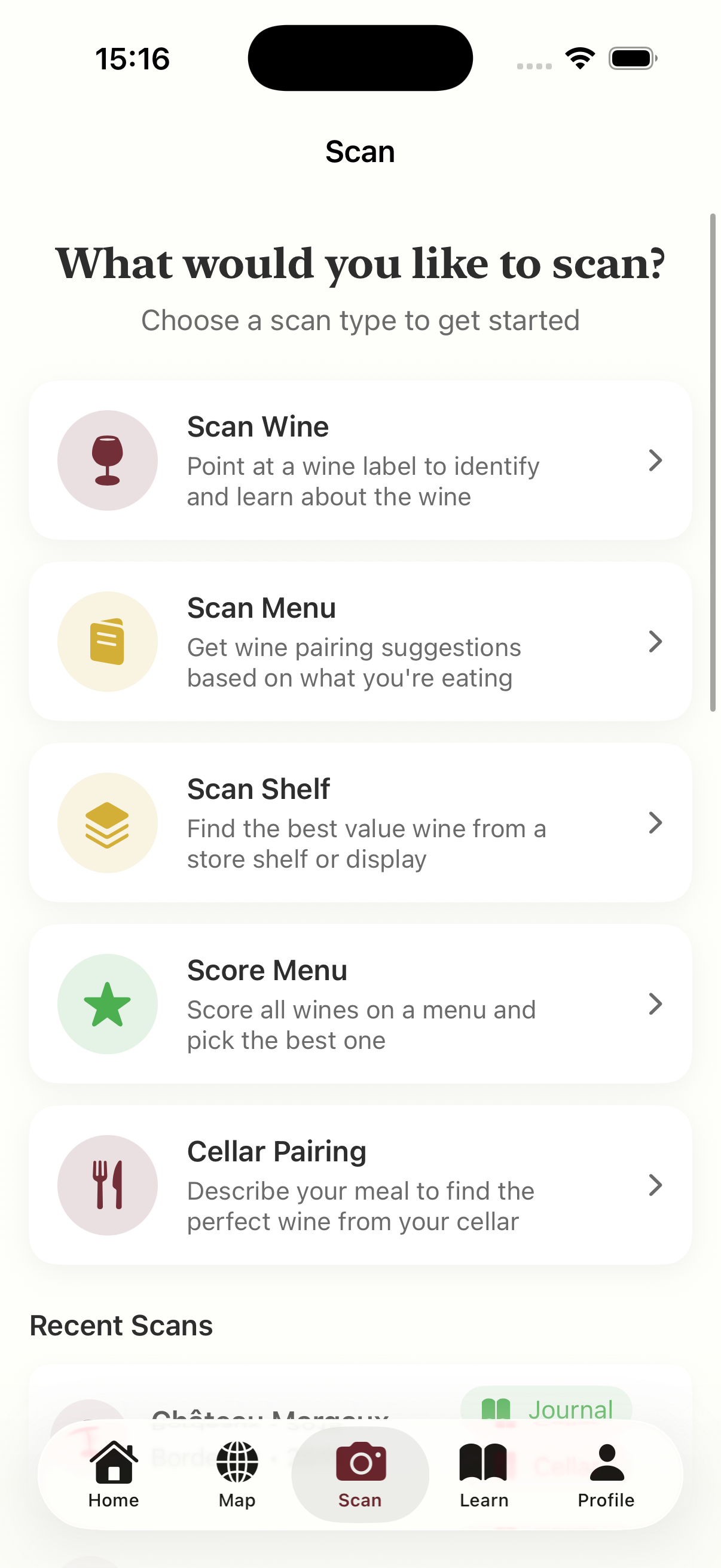
Use Sommo to learn about any bottle before you commit. Understanding the region, grape, and style helps you assess whether the price is fair for what you’re getting.
The goal isn’t to always buy cheap wine. It’s to always buy smart wine, wine where the quality justifies the price. Sometimes that’s a $9 Portuguese red. Sometimes that’s a $45 Barolo. The skill is knowing the difference.
Liked this read? Try the app.
Scan any wine label with AI, build your tasting journal, and learn wine your way.