Choose tonight’s wine in four passes: what is available, what seems ready, what suits the meal, and what fits the occasion. Start with bottles you own rather than a list of wines to buy. A shortlist of two or three bottles is usually easier to judge than an entire cellar.
An app can help with that shortlist, but only if its stock record is accurate. A recommendation for a consumed bottle or a case still offsite is not useful at dinner. The method below works with a notebook, spreadsheet or cellar app.
First, check what you can actually open
Remove bottles that are pending, already consumed, reserved for someone else or inaccessible tonight. Confirm the physical location of each remaining candidate and distinguish a magnum from a standard bottle if the number of guests matters.
Keep the choice small. Take one familiar wine, one overlooked bottle and one sensible fallback. If you cannot find them, the first improvement is inventory upkeep rather than another recommendation. The rack planner can help you make locations clearer.
Use readiness as a guide
Check the producer, cuvée, vintage and storage history. A broad window for a wine style is a starting assumption; it is not proof that your particular bottle is at its best.
Look for recent observations about the exact vintage when available, and be cautious if storage is unknown. Do not keep postponing a bottle simply because a displayed range still extends several years ahead. Your preference for fresher fruit or developed flavours is part of the choice.
The drinking-window explanation and free checker help you interpret a range without turning it into an expiry date.
Match the whole dish
Describe the sauce, cooking method, richness, sweetness and chilli, not just the protein. Roast chicken with a light herb sauce and chicken in a sweet, hot glaze are different pairing questions.
Then add the occasion: one glass with a simple meal, dinner for four, or a bottle you want to follow over time. Include preferences and exclusions explicitly. A good explanation tells you why the suggested wine’s acidity, weight or sweetness suits the food and acknowledges an alternative.
A three-bottle decision example
This is a fictional shortlist for a roast chicken dinner with a creamy mushroom sauce. Its readiness labels are assumptions from the owner’s records, not recommendations about all wines of these ages.
| Candidate | Owner’s record | Reason to consider it | What to check |
|---|---|---|---|
| A: a Chardonnay | Ready; one bottle in the fridge | A familiar option with enough weight for the sauce | Whether its oak and richness suit your preference |
| B: a Pinot Noir | Ready; two bottles in the rack | A lighter red alternative for the mushrooms | Exact location and whether you want to open a duplicate now |
| C: a Cabernet blend | Still being held; one bottle offsite | A possible wine for a different, richer meal | It is unavailable tonight and need not enter this shortlist |
The useful answer explains A and B, and excludes C. It should not insist on one universally correct bottle. If your guests prefer a lighter wine or the sauce changes, the order may change too. For broader pairing principles, use the food-pairing guide.
Which apps can help with owned bottles?
Official features checked on 5 October 2026 show substantial overlap. These are documented capabilities, not a timed test of recommendation quality.
CellarTracker: CellarChat uses your inventory, windows, community notes and preferences to answer dinner and owned-bottle questions. It is a subscriber tool in the new mobile app. Keeping CellarTracker as your existing record and using that guidance may be simpler than moving a maintained collection.
InVintory: Vincent answers from the collection you have open. The free collection gets one conversation; further conversations and the bottle-page assistant require a paid plan. Its dinner-planning guide also describes readiness and food filters, with some location and serving tools differing by device.
Vivino and Wine-Searcher: these can add wine, rating or shopping context, but check the exact feature you need rather than assuming a crowd score or merchant result considers every bottle in your storage. They can complement an inventory workflow.
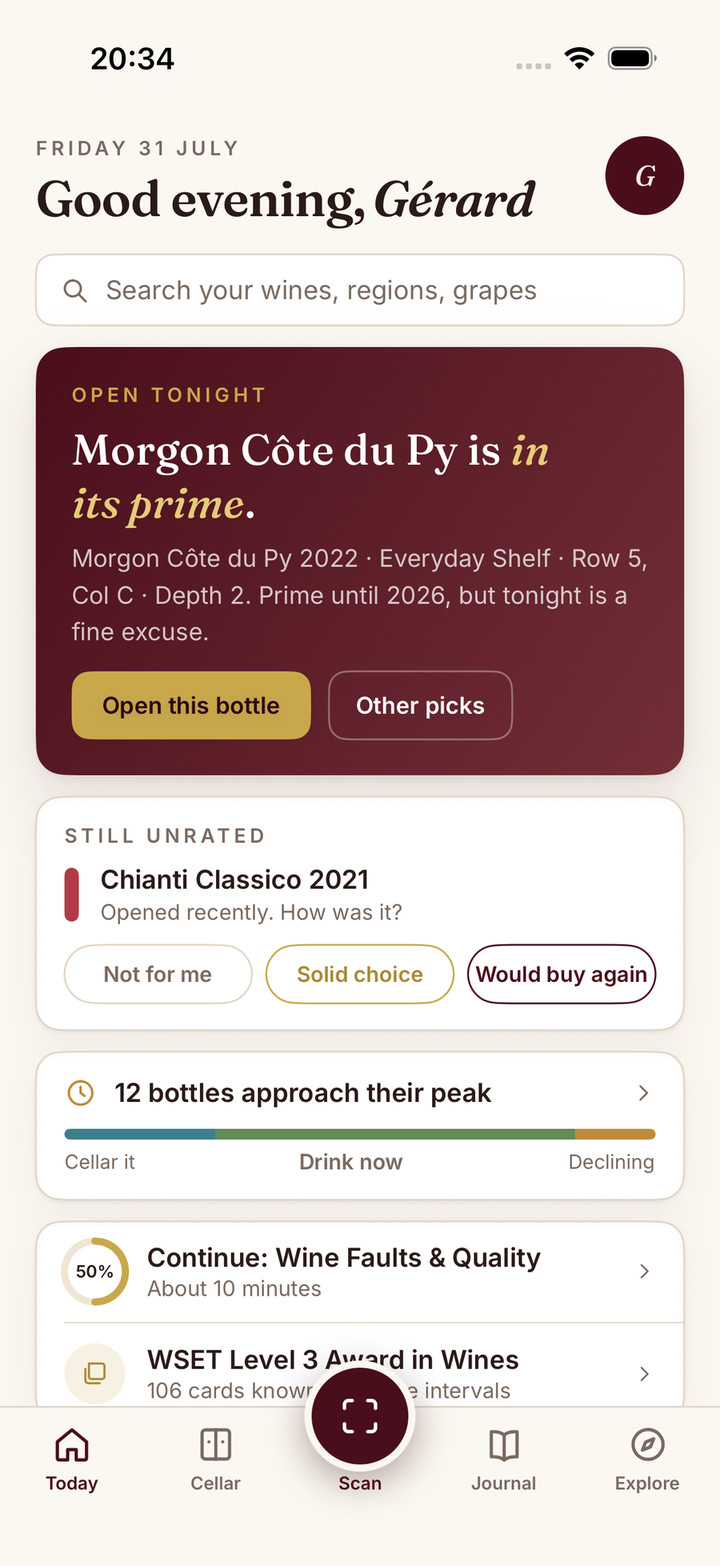
Sommo: full disclosure, I build Sommo. Premium cellar tools include Open Tonight and meal-aware pairing from your recorded bottles. Use the shortlist as a suggestion, verify the available bottle and let your own preference decide. The cellar feature and window method explain the approach.
Close the loop after dinner
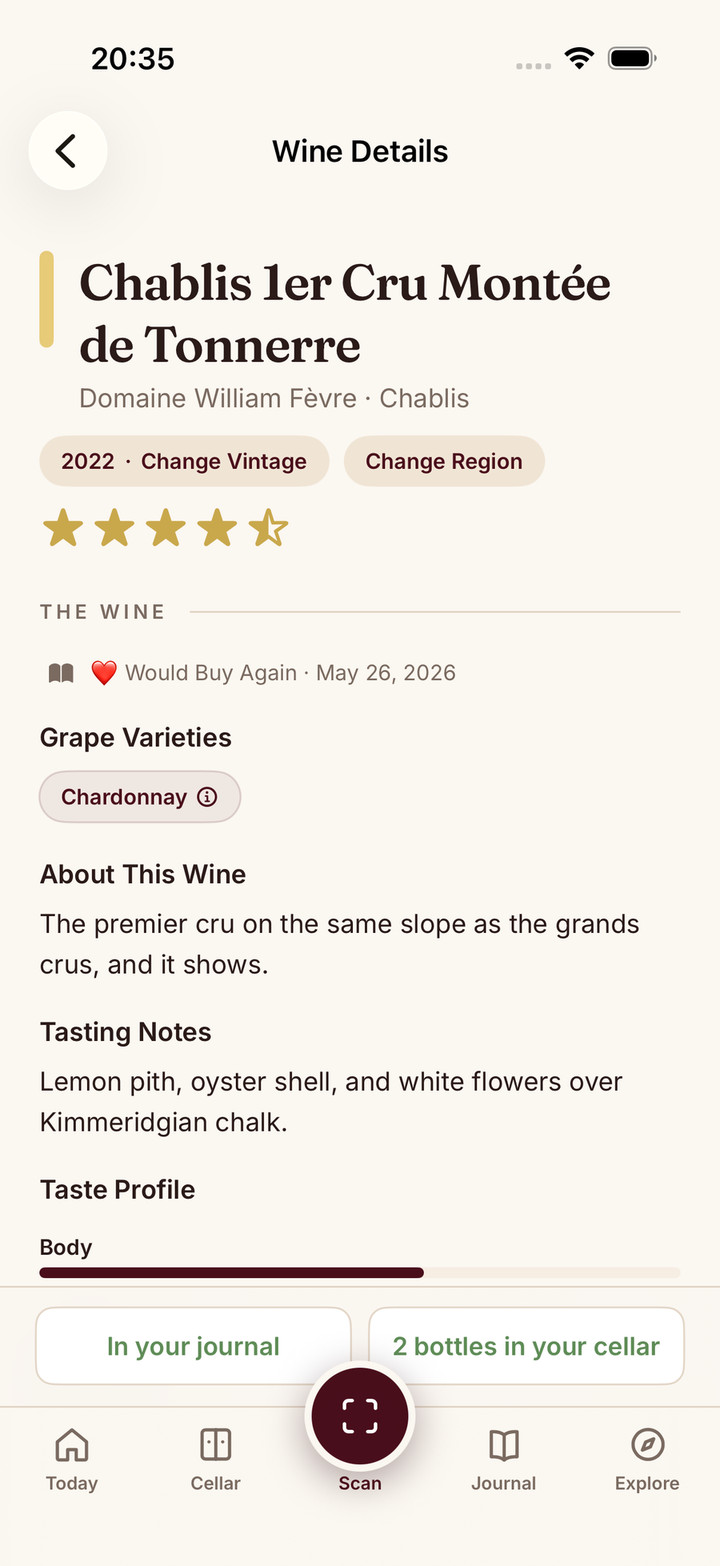
Record the opening so stock remains accurate, then save your own tasting note. Write whether the wine and meal worked, including a useful reason such as too heavy, pleasantly fresh or better after time in the glass. That is more informative than leaving only a score.
If an app repeatedly suggests the same bottle, examine the inventory, recorded preferences and question you asked before concluding that you need different software. If you want to evaluate Sommo, start a personal wine record. Its free journal covers recent entries; ranking and pairing owned stock require Premium.
What is stopping you choosing tonight's bottle?