Wine for a dinner party is two questions pretending to be one. How much do you need, and what should it be? Get the first wrong and the evening stops early. Get the second wrong and nothing clashes badly, but nothing sings either.
Both questions have short answers. Here they are, along with the arithmetic, the lineup, the budget split, and the logistics that make the night run without you disappearing into the kitchen.
How Many Bottles You Need
A standard 750ml bottle pours five glasses at a restaurant measure, or four generous ones at home. Seated dinner guests average about half a bottle each across an evening, which is two to three glasses.
The formula: guests × 0.5, then round up. Add a bottle if the evening runs past four hours, and add one sparkling bottle for welcome pours no matter what.
| Guests | Seated dinner | Longer or livelier night | Welcome sparkling |
|---|---|---|---|
| 4 | 2 bottles | 3 bottles | 1 |
| 6 | 3 bottles | 4 bottles | 1 |
| 8 | 4 bottles | 5 bottles | 1 to 2 |
| 10 | 5 bottles | 6 bottles | 2 |
| 12 | 6 bottles | 8 bottles | 2 |
| 16 | 8 bottles | 10 bottles | 2 to 3 |
| 20 | 10 bottles | 13 bottles | 3 |
Buy one extra beyond whatever the table says. An unopened bottle keeps, a dry table at 10pm does not. Most wine shops will take back unopened bottles, so ask about the return policy before you buy and then overbuy without anxiety.
If you want the numbers run for a specific headcount and party length, our wine party calculator does the math and splits the total across red, white, and sparkling for you. For a stand up party rather than a seated dinner, the per person figure climbs, and how much wine for a party covers that case.
Building the Lineup by Course
The default for a three course dinner is one sparkling, one white, one red. It works because it moves the table from light to heavy in step with the food.
| Course | Style | Why it works | Rough spend |
|---|---|---|---|
| Welcome and canapés | Dry sparkling: Cava, Crémant, Prosecco | Cuts through salt and fat, and gets everyone talking | $12 to $18 |
| Starter or fish | Crisp unoaked white: Albariño, Sauvignon Blanc, Verdicchio | Acidity keeps a light plate lively | $12 to $20 |
| Main course | Medium bodied red: Barbera, Chianti, Côtes du Rhône, Pinot Noir | Enough structure for roast meat, soft enough for vegetables | $18 to $28 |
| Cheese | Whatever is left of the red, or a glass of the sparkling | Nobody needs a fourth bottle here | Nothing extra |
| Dessert | Half bottle of Moscato d’Asti, Sauternes, or Tawny Port | Sweeter than the dessert, or it tastes sour | $15 to $25 |
Two rules keep the sequence honest. The wine should be at least as sweet as the food it accompanies, and each pour should not make the next one taste thin. That is why the light white goes before the red, and why a rich dessert wine goes last. These are the same principles the free WSET Level 2 food pairing quiz drills, if you enjoy the theory behind the table.
When to Break the Default
The one white, one red, one sparkling formula is a safety net, not a law. Break it when the evening has a clear shape.
- A single dish dinner. For a paella, a curry, or a big pot of ragù, buy two bottles of one well chosen wine instead of three different ones. Consistency beats variety when there is only one thing on the plate.
- All fish, or all vegetables. Skip the red and run two whites, one crisp and one richer. Nobody misses it.
- Summer, outdoors. Replace the red with a chilled light red or a dry rosé and serve everything cool.
- A group that only drinks red. Believe them. Buy two reds of different weights instead of a white nobody opens.
- A tasting shaped evening. If the point is the wine rather than the food, pour three versions of one grape and let people compare. That is a different kind of party and a very good one.
What to Do When You Do Not Know the Menu
Sometimes you are the guest, or the host has not decided. Two bottles cover almost everything.
A dry sparkling wine. It matches starters, salty snacks, fried food, and awkward menus, and it never looks like a low effort choice.
A medium bodied red with soft tannin. Côtes du Rhône, Barbera, a village Beaujolais, or a straightforward Pinot Noir. These sit comfortably next to roast chicken, pasta, mushrooms, and most vegetable mains.
The two styles to avoid when you are guessing are heavily oaked whites and big tannic reds. Both are excellent with the right plate and jarring with the wrong one. If it is a date rather than a dinner party, wine for date night narrows the field further.
Where to Spend the Money
Your budget should not be spread evenly. Put it where the most glasses get poured.
- The main course wine is where quality shows. It gets the most pours and the most attention. Spend the top of your range here.
- The welcome pour can be cheap and still be good. Cava and Crémant deliver serious quality well under $20, and the first glass of the night is drunk in conversation rather than in contemplation.
- Dessert wine is sold in half bottles for a reason. A 375ml bottle pours six small glasses, which is exactly right.
- Do not buy four bottles at the same middling price. One clearly good bottle plus three sensible ones reads as more generous than four identical compromises.
A useful ratio for a $70 wine budget across eight guests: $14 sparkling, two whites at $14, and two reds at $14, with one of the reds swapped for a $22 bottle you actually want to talk about.
Glassware, Chilling, and the Serving Order
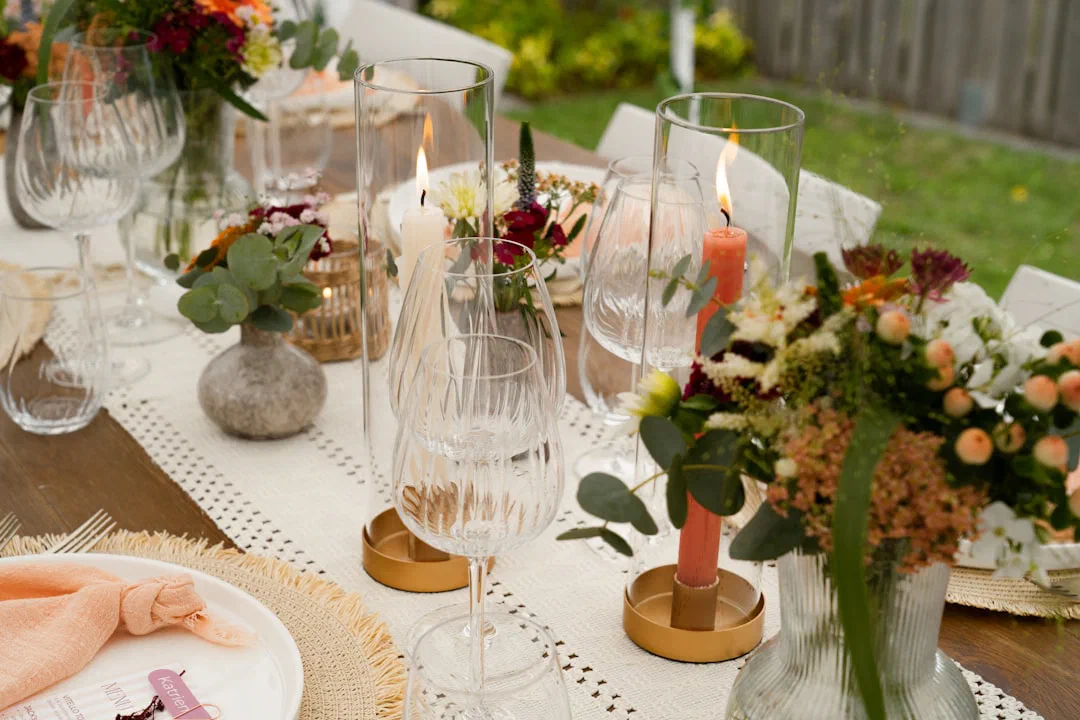
Glasses. Two per guest is enough for a three course dinner: one for sparkling and white, one for red. A third only if dessert wine appears. If you are short, one universal glass each is completely acceptable, and a quick rinse between courses solves the rest. Fill each glass a third full, which is less than most people pour and the reason wine tastes better in restaurants. If you want the full breakdown, see the wine glass guide.
Chilling. This is where dinner parties usually go wrong. Sparkling and white need two hours in the fridge or 30 minutes in a bucket of ice and water, which is faster than ice alone. Red needs 15 to 20 minutes in the fridge, because room temperature in a kitchen with the oven on is far too warm. Target 60 to 65°F for red and 45 to 55°F for white. Our serving temperature guide has the numbers by style.
Order of service. Sparkling, then white, then red, then sweet. Light before full, dry before sweet, young before old. Open the reds when guests arrive so they have an hour of air, and decant anything young and tannic.
Timing the pours. Open the sparkling as the first guest walks in, the white as people sit down, and the red when the main course leaves the kitchen. Nothing kills momentum like a host wrestling with a corkscrew mid conversation.
Frequently Asked Questions
How many bottles of wine do I need for a dinner party?
Plan half a bottle per guest for a seated dinner, then round up to the next whole bottle. Six guests need three to four bottles, eight guests need four to five, and twelve guests need six to seven. Add one extra sparkling bottle for welcome pours regardless of headcount.
What wine should I serve if I do not know the menu?
Bring a dry sparkling wine and a medium bodied red with soft tannin. Sparkling works with almost every starter, and a soft red handles roasted meat, pasta, and vegetable dishes alike. Avoid heavily oaked whites and big tannic reds, which are the two styles most likely to clash.
In what order should wines be served at dinner?
Sparkling first, then white before red, light before full, dry before sweet, and young before old. The logic is that each pour should not make the next one taste thin. If you break one rule, break the young before old one, because a great older bottle deserves an attentive table.
How many wine glasses do I actually need per guest?
Two per person covers a three course dinner: one for sparkling and white, one for red. Add a third only if you are pouring a dessert wine. A single universal glass per guest works fine for a casual table, and rinsing between courses is entirely acceptable.
How much should I spend on wine for a dinner party?
Spend the middle of your range on the wine that gets the most pours, usually the main course bottle. A $12 sparkling for the welcome, a $20 bottle for the main, and a modest dessert wine reads as more generous than four bottles all at the same middling price.
Plan It in Two Minutes
Run the headcount through the wine party calculator, pick one bottle per course from the lineup table, and buy one spare. That is the whole job.
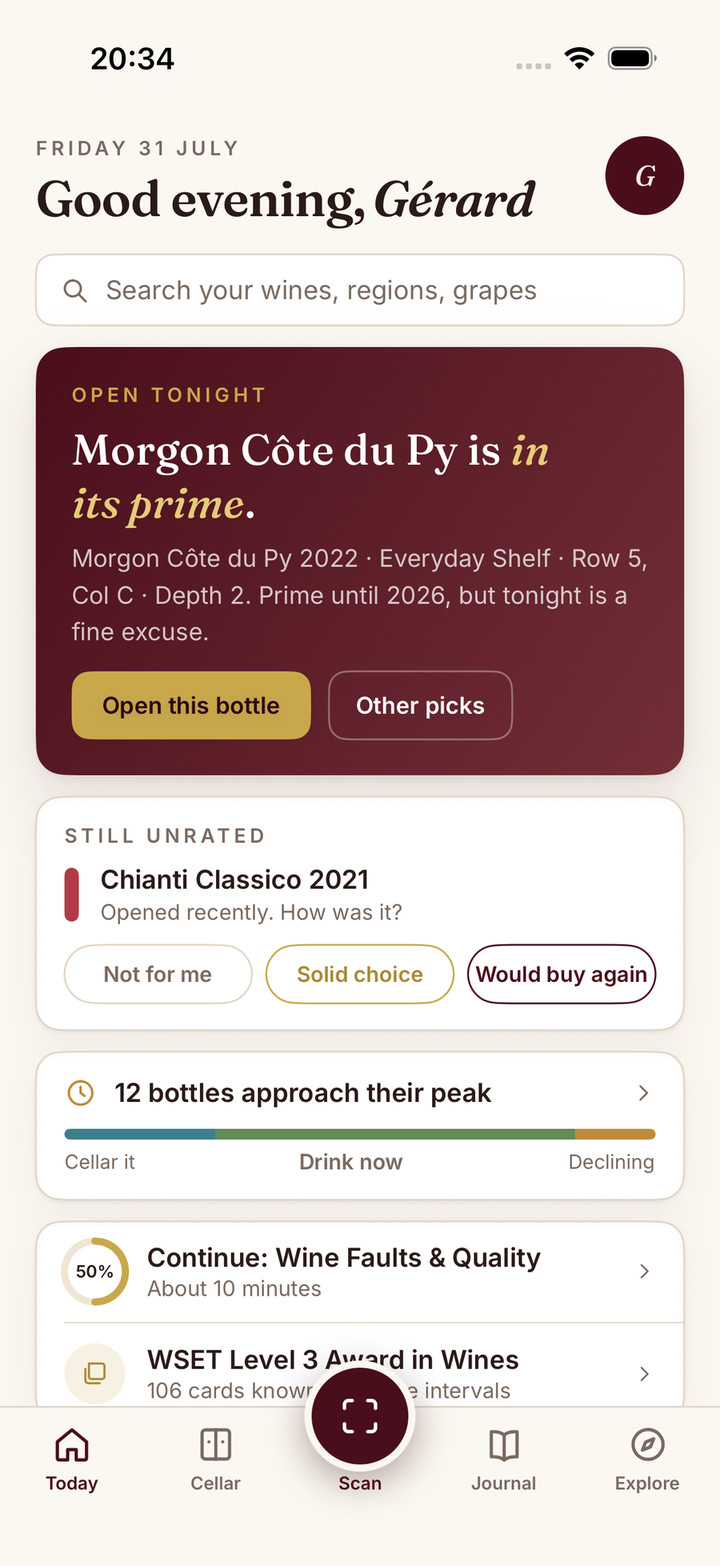
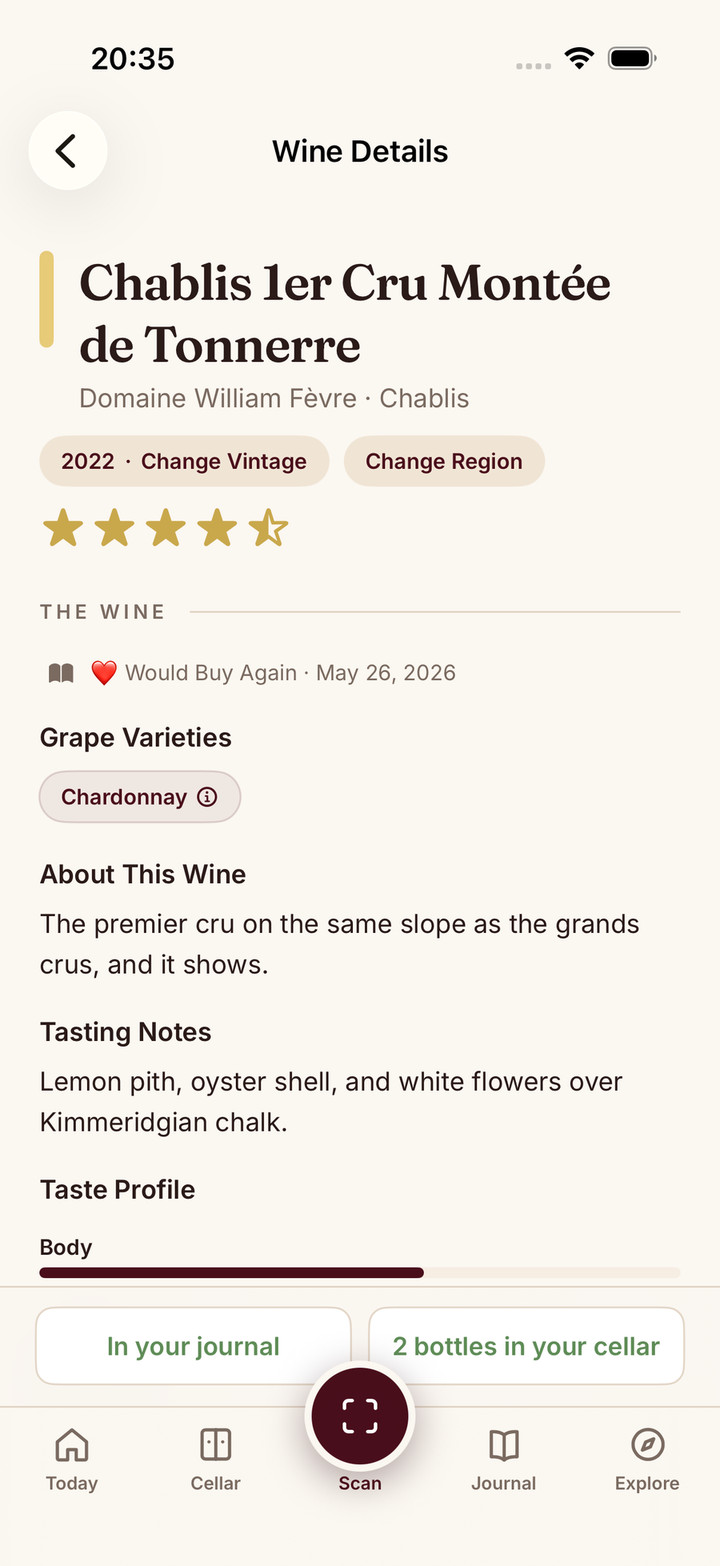
Scan anything you are unsure about with Sommo before you buy, get the grape, the region, and the pairing suggestions in seconds, and log what worked so next time you are copying a plan rather than building one.
Download Sommo and host the easy way.