Somewhere between $20 and $30 the wine aisle changes character. Below that line you are buying grapes and regions. Above it you start buying names: appellations with rules, mandatory ageing, single villages, sometimes single hillsides. This is the rung of the ladder where the regional classics stop being aspirational and start being affordable.
If your ceiling is lower, the ladder starts at the best wines under $10, climbs through the best red wines under $15, and hits its value peak at the best red wines under $20. This page is for the nights that deserve one step more.
The 12 picks at a glance
| Wine | Style | Price band | Best for |
|---|---|---|---|
| Cru Beaujolais | Light, silky, floral | $18 to $28 | Charcuterie, roast chicken |
| Willamette Pinot Noir | Light, perfumed, red-fruited | $22 to $30 | Salmon, duck, Pinot lovers |
| Etna Rosso | Light to medium, mineral | $22 to $30 | Drinking something new |
| Chianti Classico Riserva | Medium, savoury, structured | $22 to $30 | Italian food, Sunday lunch |
| Rioja Reserva | Medium, mellow, oak-aged | $18 to $30 | Gifts, lamb, easy grandeur |
| Barbera d’Asti | Medium, bright, juicy | $18 to $28 | Tomato dishes, weeknights |
| Bierzo Mencía | Medium, fresh, herbal | $20 to $28 | Adventurous drinkers |
| Crozes-Hermitage | Medium to full, peppery | $24 to $32 | Steak, sausages, Syrah fans |
| Valpolicella Ripasso | Full, raisined, plush | $20 to $28 | Rich stews, hard cheese |
| Vacqueyras / Gigondas | Full, warm, spiced | $22 to $35 | Winter cooking, crowds |
| Bordeaux Cru Bourgeois | Full, classic, cedar-edged | $20 to $30 | Roast beef, traditionalists |
| Priorat | Full, dense, mineral | $22 to $32 | Slow evenings, dark chocolate moods |
What actually changes at $30
At $15 a good producer makes honest wine from a broad region. At $30 the same money buys narrower geography and more time. Riserva on a Chianti Classico label means at least 24 months of ageing before release. Reserva on a Rioja label means three years, one of them in oak barrels the winery had to buy. Crozes-Hermitage means Syrah from one stretch of the northern Rhône, not a blend trucked in from anywhere.
Every pick below is a style and a place rather than a single bottle, because specific bottles vanish and categories do not. Named producers are large enough to actually find. If a name like Crozes-Hermitage or Gigondas is new to you, the WSET Level 2 French regions quiz is a painless way to make the map stick.
Lighter and perfumed
1. Cru Beaujolais: Morgon and Moulin-à-Vent ($18 to $28)
One step above the Beaujolais-Villages on the under $20 list sit the ten named crus, and the two most structured are Morgon and Moulin-à-Vent. This is Gamay grown on granite, with dark cherry, iris, and a savoury depth that basic Beaujolais never reaches. Château Thivin and Dominique Piron are reliable and widely shipped.
Why it earns the step up: cru Beaujolais is the closest thing to affordable Burgundy texture left on the shelf.
2. Willamette Valley Pinot Noir ($22 to $30)
Cheap Pinot Noir is the most disappointing category in wine, which is exactly why the entry bottlings from serious Willamette Valley houses matter. A to Z Wineworks, Erath, and Cloudline all land under $30 with real perfume: cranberry, red cherry, forest floor, silky weight.
Why it earns the step up: this is roughly the minimum price at which Pinot Noir tastes like the grape people fall in love with.
3. Etna Rosso ($22 to $30)
Nerello Mascalese grown on the volcanic slopes of Mount Etna in Sicily drinks more like Pinot Noir than like a southern Italian red: sour cherry, dried herbs, a smoky mineral line. Tornatore and Tenuta delle Terre Nere’s entry bottling both sit at the top of this band.
Why it earns the step up: one of the most distinctive reds in Europe, from vineyards on an active volcano, still priced like a curiosity rather than a classic.
The midweight classics
4. Chianti Classico Riserva ($22 to $30)
The heartland of Tuscany, the black rooster seal, and a legal minimum of 24 months of ageing. Sangiovese at this level gives dried cherry, leather, and tea leaf over bright acidity that was born to sit next to food. Ruffino Riserva Ducale and Castello di Volpaia are dependable and genuinely distributed.
Why it earns the step up: basic Chianti is a weeknight wine; Riserva is the same grape taken seriously, and the price gap is smaller than the quality gap.
5. Rioja Reserva ($18 to $30)
Nobody else ages wine for you at this price. A Rioja Reserva spends at least three years at the winery before release, so the Tempranillo arrives mellowed into vanilla, dried strawberry, tobacco, and soft leather. Marqués de Riscal, CVNE, and Muga cover the band from $18 to $30.
Why it earns the step up: the ageing is done, the barrels are paid for, and the wine is ready the night you buy it.
6. Barbera d’Asti ($18 to $28)
Barbera is Piedmont’s everyday grape, but the top cuvées from Asti are another wine entirely: black cherry and plum with electric acidity and almost no tannin. Vietti’s Tre Vigne and Braida’s Montebruna show what the grape does when it gets the good slopes that Nebbiolo usually claims.
Why it earns the step up: serious producers, serious vineyards, and a grape that fashion keeps cheap.
7. Bierzo Mencía ($20 to $28)
Spain’s northwest corner grows Mencía, a grape that tastes like someone crossed Cabernet Franc with Pinot Noir: crunchy red fruit, wild herbs, slate. Descendientes de J. Palacios Pétalos is the widely available benchmark.
Why it earns the step up: old hillside vines and low yields at a price that fashionable regions abandoned years ago.
8. Crozes-Hermitage ($24 to $32)
The largest appellation of the northern Rhône, and the affordable expression of pure Syrah grown next door to Hermitage itself. Expect blackberry, black pepper, olive, and a savoury grip that Australian Shiraz at the same price trades for jam. Guigal, Delas, and Yann Chave are the names to look for.
Why it earns the step up: this is where northern Rhône Syrah, one of the world’s great wine styles, becomes a realistic Tuesday purchase.
Full and generous
9. Valpolicella Ripasso ($20 to $28)
Ripasso is Valpolicella from the Veneto refermented on the pressed skins of Amarone, which is why it gets called baby Amarone. Corvina picks up raisined dark cherry, fig, and cocoa while keeping enough acidity to work at the table. Allegrini’s Palazzo della Torre and Zenato’s Ripassa are the two easiest to find.
Why it earns the step up: most of Amarone’s richness at a third of Amarone’s price.
10. Vacqueyras and Gigondas ($22 to $35)
The satellites of Châteauneuf-du-Pape grow the same Grenache led blends on the same sun baked stones. Vacqueyras stays in the $22 to $30 window; Gigondas starts around $30 and creeps upward for good producers like Famille Perrin and Château de Saint Cosme. The comparison with the famous neighbour is the whole story, and the Côtes du Rhône vs Châteauneuf-du-Pape guide walks through it.
Why it earns the step up: Châteauneuf character, garrigue and all, without the Châteauneuf name tax.
11. Bordeaux Cru Bourgeois ($20 to $30)
Below the famous classified growths of Bordeaux sits the Cru Bourgeois tier of the Médoc: Cabernet Sauvignon and Merlot blends with cassis, cedar, and gravel dust. Château Greysac, Cru Bourgeois Supérieur in the 2025 classification, is dependable and exported widely, and Château Cambon la Pelouse (Cru Bourgeois Exceptionnel on its 2020-classified vintages) remains a smart buy where you find it.
Why it earns the step up: classical claret structure, made by neighbours of châteaux charging five times more.
12. Priorat ($22 to $32)
Old Garnacha and Cariñena vines rooted in black slate, in a region of steep terraces inland from Barcelona. Priorat is dense, dark, and mineral, and Álvaro Palacios’ Camins del Priorat brings the entry point down to the low twenties.
Why it earns the step up: one of only two Spanish regions with the top DOCa classification, still available under $30 if you catch the entry cuvées.
How to buy at $30 without wasting the step up
Buy the classification, not the adjectives. Riserva, Reserva, and cru names are legal terms with teeth. Words like “old vine” and “winemaker’s selection” are decoration.
Mind the vintage on aged styles. A Rioja Reserva on the shelf today should carry a vintage four to six years back; that is the system working, not old stock. For everything else, two to four years past the vintage remains the window. When in doubt, run the bottle through the drinking window checker.
Decant the structured ones. Crozes-Hermitage, Priorat, and young Cru Bourgeois all improve visibly with thirty minutes of air. At this price the wine has something to unfold, so give it the chance.
Match the wine to the table, not the shelf. A $28 bottle poured with the wrong food drinks worse than a $14 bottle with the right one. The wine pairing finder settles it in seconds.
A note on the $50 shelf
The next rung up, the best red wines under $50, is where the famous names finally let you in: entry level Barolo and Barbaresco built on Nebbiolo, Châteauneuf-du-Pape proper, village Burgundy from honest negociants, and single vineyard Oregon Pinot Noir. It is a rewarding shelf, but a trickier one, because prestige pricing arrives before prestige quality and a famous appellation on a weak producer’s label is the worst buy in wine. Between $30 and $50, the producer’s name matters more than the region’s, which is the reverse of everything below $30. If you are heading there, when is Barolo ready to drink is the homework worth doing first.
Keep score of your own ladder
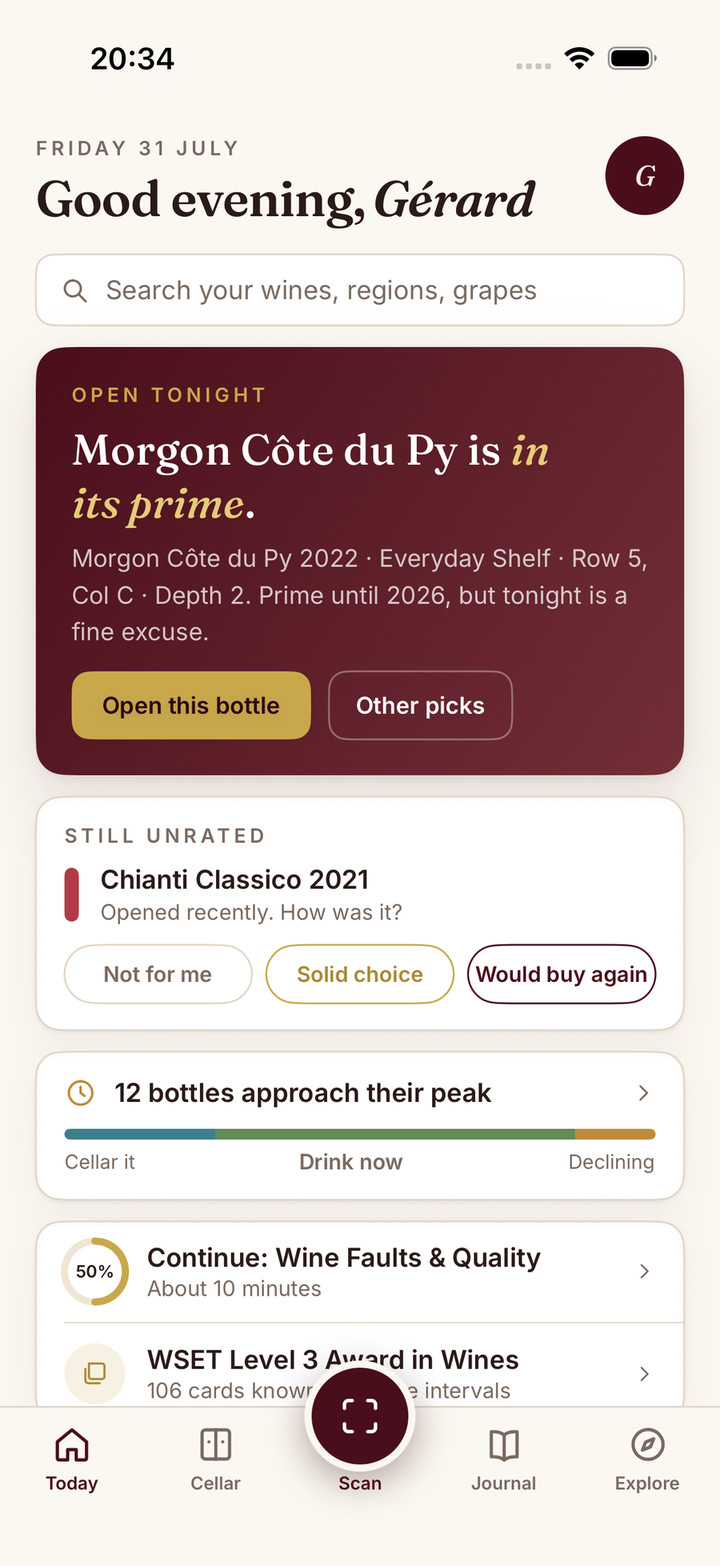
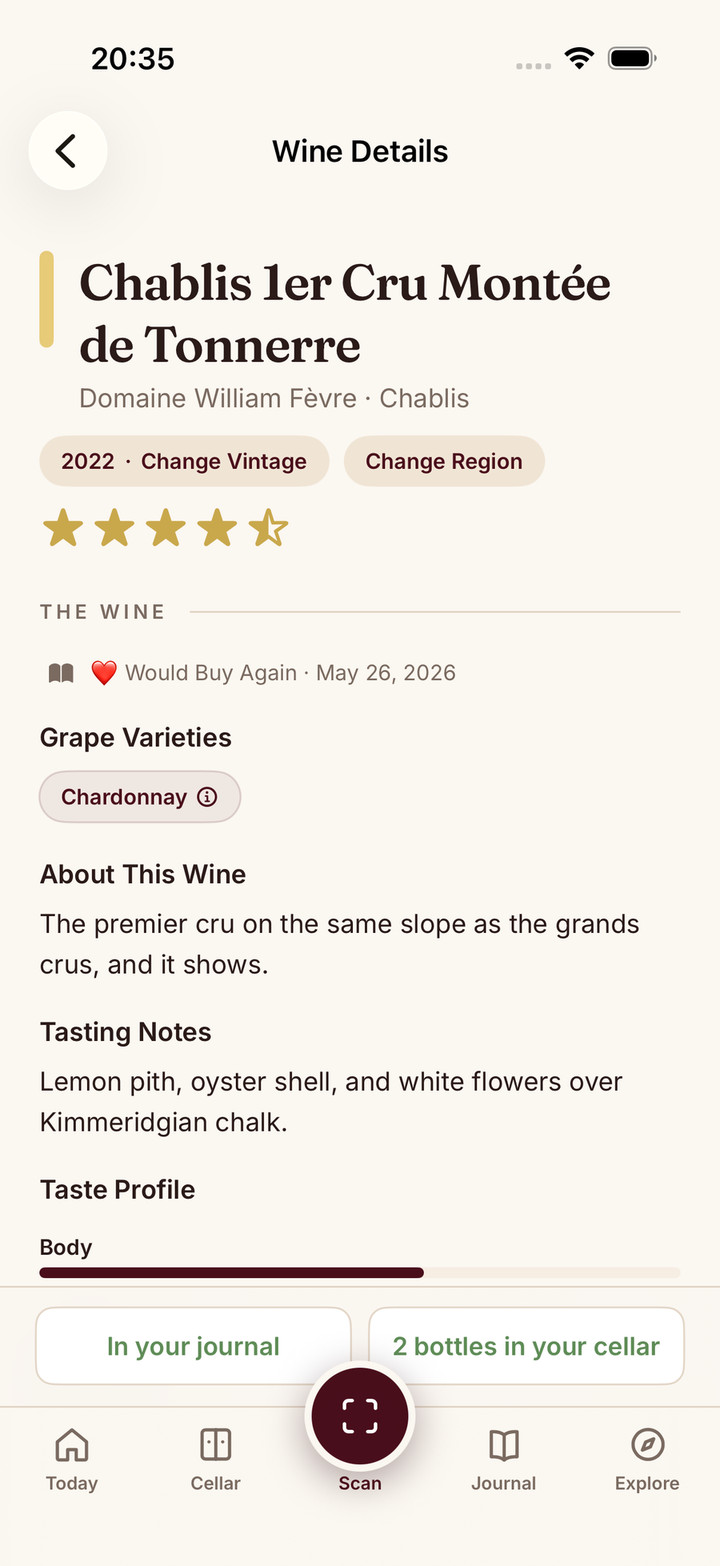
The point of stepping up is finding out what the extra money buys for your palate, not anyone else’s. Scan each bottle with Sommo before you open it, keep a wine journal entry on whether the Riserva actually beat the $15 Tuscan on your table, and after a dozen bottles the pattern is yours. Some drinkers discover they are $18 people with $30 curiosity. That discovery alone pays for the app being free.
What is the step up for?