Let us address the elephant in the room. In the 2004 film Sideways, Paul Giamatti’s character famously declared he was “not drinking any Merlot,” and the grape’s reputation took a hit that lasted the better part of two decades. Wine shops saw Merlot sales dip. Sommeliers watched diners pivot to Pinot Noir and Cabernet Sauvignon. The irony, of course, is that the most prized bottle in the film, a 1961 Cheval Blanc, is predominantly Merlot.
The truth is that Merlot has always been one of the world’s great red grapes. It produces the velvety, plummy wines of Pomerol and Saint-Émilion, some of the most expensive bottles on earth. It also makes some of the most reliably enjoyable everyday reds available. What Merlot does better than almost any other grape is deliver approachable, generous, food-friendly wine without requiring years of cellaring or a sommelier’s vocabulary to enjoy.
In 2026, Merlot is having something of a quiet renaissance. Winemakers in Washington State, South Africa, and Chile are producing Merlots with real character, and the classic Bordeaux Right Bank continues to set the standard for the grape at its finest. Here are seven bottles worth buying right now.
The 7 picks at a glance
| Wine | Region | Price band | Best for |
|---|---|---|---|
| Casillero del Diablo | Central Valley, Chile | $9 to $12 | Weeknight staple |
| Boschendal 1685 | Franschhoek, South Africa | $12 to $15 | Character on a budget |
| Columbia Crest H3 | Washington State | $14 to $18 | The value sweet spot |
| Château Poesia | Saint-Émilion, France | $25 to $30 | A taste of the homeland |
| Duckhorn Vineyards | Napa Valley, California | $28 to $35 | Converting sceptics |
| Leonetti Cellar | Walla Walla, Washington | $75 to $95 | American Merlot at its peak |
| Château La Fleur-Pétrus | Pomerol, France | $120 to $180 | The pinnacle splurge |
What Makes Great Merlot?
Understanding what to look for will help you navigate the wide range of styles available.
Soft, ripe tannins. This is Merlot’s calling card. Where Cabernet Sauvignon can be firm and structured, Merlot is plush and round. The best examples have tannins that feel like velvet rather than sandpaper.
Plummy, dark fruit. Plum, black cherry, and blackberry are the core of the Merlot flavour profile. Great bottles also offer secondary layers: chocolate, herbs, spice, or earthy notes depending on the region and winemaking.
Balance and drinkability. Merlot should be inviting. Even serious, cellar-worthy Merlots tend to be more approachable in their youth than equivalent Cabernets. If a Merlot feels harsh, overly tannic, or aggressively oaky, something has gone wrong.
A sense of place. The best Merlots reflect where they come from. A Pomerol tastes different from a Washington State Merlot, which tastes different from a Chilean one. That diversity is part of the grape’s appeal.
Entry-Level vs Serious Merlot: What Changes?
At the entry level (under $15), Merlot tends to be fruit-forward, soft, and straightforward. These wines are designed for immediate enjoyment: pour, sip, enjoy. They rarely see much oak, and the fruit profile leans toward juicy red plum and cherry.
As you move up in price, several things change. The fruit deepens and darkens (black cherry, blackberry, cassis). Oak ageing introduces vanilla, toast, and spice. The tannins become more defined, giving the wine structure and ageability. Secondary and tertiary flavours emerge: dried herbs, tobacco, truffle, dark chocolate. The finish lengthens from a few seconds to a minute or more.
The most important shift is complexity. A $10 Merlot gives you one or two flavours. A $50 Merlot gives you a dozen, layered and evolving in the glass. Both have their place, but understanding this spectrum helps you choose the right bottle for the occasion.
If you are still deciding whether Merlot is even your grape, two comparisons settle it quickly: Pinot Noir vs Merlot if you want to know which is lighter, and Cabernet Sauvignon vs Merlot if you want to know which is smoother.
Best Merlot Under $15
1. Casillero del Diablo Merlot (Chile)
Region: Central Valley, Chile Price: $9 to $12
Concha y Toro’s Casillero del Diablo range has been a reliable entry point for Chilean wine for years, and the Merlot is one of the strongest bottles in the lineup. Chile’s warm, dry climate produces ripe, generous Merlot without the green, vegetal notes that plague lesser versions of this grape.
Tasting notes: Ripe plum, red cherry, a hint of dark chocolate, and soft, easy tannins. The finish is clean with a touch of spice.
Food pairing: Burgers, pizza, roast chicken, or a simple pasta with tomato sauce. This is comfort food wine.
Why it is worth buying: Consistent, widely available, and genuinely enjoyable at a price that makes it a weeknight staple. You will never be disappointed opening this bottle.
2. Boschendal 1685 Merlot (South Africa)
Region: Franschhoek, South Africa Price: $12 to $15
South Africa’s Franschhoek Valley has the warm days and cool nights that Merlot loves. Boschendal is one of the oldest wine estates in the country, with a history stretching back over three centuries. Their 1685 range (named for the year the farm was established) offers serious quality for the price.
Tasting notes: Dark plum, mulberry, a touch of mocha from judicious oak ageing, and a savoury, herbal undertone. The tannins are ripe and medium-bodied, with a lingering finish.
Food pairing: Bobotie (if you want to go South African), lamb kofta, or aubergine parmigiana.
Why it is worth buying: It delivers more complexity and character than most Merlots at this price. The Franschhoek terroir gives it a distinctive personality that sets it apart from generic entry-level reds.
Best Merlot Under $30
3. Duckhorn Vineyards Merlot (California)
Region: Napa Valley, California Price: $28 to $35
Duckhorn has been a Merlot champion since the 1970s, long before and long after the Sideways backlash. Their Napa Valley Merlot is arguably the benchmark for American Merlot: rich, polished, and layered, with the kind of structure that rewards cellaring but is also delicious on release.
Tasting notes: Black cherry, plum, vanilla, baking spice, a hint of cocoa, and fine-grained tannins. The oak is present but integrated, supporting the fruit rather than dominating it. The finish is long and smooth.
Food pairing: Grilled lamb chops, beef short ribs, mushroom risotto, or aged cheddar.
Why it is worth buying: Duckhorn proves that California Merlot at its best can stand alongside any Cabernet Sauvignon. This is the bottle to pour for anyone who claims they do not like Merlot.
4. Château Poesia Saint-Émilion Grand Cru (France)
Region: Saint-Émilion, Bordeaux, France Price: $25 to $30
Saint-Émilion is Merlot’s spiritual home. On the Right Bank of Bordeaux, Merlot is the dominant grape (unlike the Left Bank, where Cabernet Sauvignon reigns). Château Poesia offers an accessible entry point to this prestigious appellation, with the limestone and clay soils that give Right Bank wines their distinctive elegance.
Tasting notes: Red and black plum, violet, cedar, a mineral edge from the limestone soils, and fine tannins. This is elegant rather than powerful, with a freshness and lift that makes it supremely food-friendly.
Food pairing: Duck confit, lamb navarin, aged Gruyère, or a simple steak frites.
Why it is worth buying: Drinking Grand Cru Saint-Émilion for under $30 is remarkable value. This wine punches well above its weight and offers a genuine taste of one of the world’s great wine regions.
5. Columbia Crest H3 Merlot (Washington State)
Region: Horse Heaven Hills, Washington State Price: $14 to $18
Washington State is quietly producing some of America’s best Merlot, and Columbia Crest’s H3 range is one of the best values in the entire state. The Horse Heaven Hills AVA benefits from warm days, cool nights, and a long growing season that allows Merlot to ripen fully while retaining balancing acidity.
Tasting notes: Blackberry, dark cherry, espresso, and a touch of dried herbs. The tannins are smooth and medium-bodied, with an earthy quality that distinguishes it from typical California Merlot.
Food pairing: BBQ brisket, pulled pork, bean chilli, or smoked gouda.
Why it is worth buying: Washington Merlot deserves far more attention than it receives. This bottle delivers complexity and regional character at an everyday price. If you have never tried a Washington State Merlot, start here.
Best Merlot: Splurge-Worthy
6. Château La Fleur-Pétrus, Pomerol (France)
Region: Pomerol, Bordeaux, France Price: $120 to $180
Pomerol is where Merlot reaches its pinnacle. This tiny appellation on the Right Bank of Bordeaux produces some of the most sought-after wines in the world, led by Pétrus and Le Pin. Château La Fleur-Pétrus, managed by the Moueix family (who also manage Pétrus), offers a more accessible entry point to the Pomerol experience, though “accessible” is relative at this price.
Tasting notes: Black truffle, dark plum, violets, liquorice, dark chocolate, and a silky, seamless texture that defines great Pomerol. The tannins are present but extraordinarily fine-grained. The finish lasts for well over a minute, evolving through waves of fruit, mineral, and spice.
Food pairing: Fillet of beef with a truffle jus, braised oxtail, or simply on its own with focused attention.
Why it is worth buying: This is Merlot at its absolute finest: a wine of profound complexity, elegance, and longevity. It will reward cellaring for fifteen to twenty-five years, but it is also approachable in its youth. If you want to understand why Merlot is considered one of the noble grapes, this bottle will show you.
7. Leonetti Cellar Merlot (Washington State)
Region: Walla Walla Valley, Washington State Price: $75 to $95
Leonetti Cellar was one of the first wineries in Washington State, founded in 1977, and their Merlot has been a cult favourite for decades. Produced in small quantities from estate vineyards in the Walla Walla Valley, this is American Merlot at its most ambitious and accomplished.
Tasting notes: Black cherry, cassis, dark chocolate, espresso, sandalwood, and dried sage. The texture is opulent and velvety, with perfectly integrated oak and tannins that are firm yet smooth. This is a wine that rewards patience: decant it for an hour or cellar it for five to ten years.
Food pairing: Prime rib, venison loin, wild mushroom ragout, or a selection of aged hard cheeses.
Why it is worth buying: Leonetti proves that world-class Merlot is not exclusive to Bordeaux. This wine has the depth and complexity to stand alongside the finest Pomerols, with a distinctly American generosity of fruit and texture.
How to Serve Merlot
Temperature: Serve between 16°C and 18°C (61°F to 64°F). Most people serve red wine too warm. If the bottle has been sitting at room temperature in a warm house, fifteen minutes in the fridge will bring it to the ideal range.
Decanting: Entry-level Merlots do not need decanting. For bottles over $25, especially young ones, thirty minutes to an hour in a decanter will allow the tannins to soften and the aromas to open up. The Leonetti and La Fleur-Pétrus in particular benefit from an hour of air.
Glassware: A standard red wine glass with a generous bowl works well. The bowl allows the wine’s aromas to collect and develop, while the narrower rim directs them to your nose.
Universal Food Pairings for Merlot
Merlot is one of the most versatile food wines among red grapes. Its soft tannins and plummy fruit complement a wide range of dishes without overwhelming them.
Red meat is the classic pairing. Beef, lamb, and venison all work beautifully, whether grilled, roasted, or braised.
Roast poultry is an underrated match. Merlot has enough fruit and softness to pair with roast duck, turkey, or even a well-seasoned roast chicken.
Mushrooms are a natural partner. The earthy, savoury quality of mushrooms mirrors the secondary flavours found in many Merlots. A wild mushroom risotto with a glass of Right Bank Bordeaux is a combination everyone should try.
Hard cheeses like aged cheddar, Gruyère, Comté, and manchego are excellent alongside Merlot. The fat in the cheese softens the tannins, and the savoury flavours complement each other.
Tomato-based dishes work better with Merlot than with many other reds. The wine’s fruit and moderate acidity complement the acidity of tomatoes rather than clashing with it. Think pasta with bolognese, margherita pizza, or aubergine parmigiana.
What to avoid: Very spicy dishes can clash with Merlot’s soft fruit. Delicate fish and seafood are generally better served by white wine. Very sweet dishes will make the wine taste thin and tannic.
For a specific dish not covered here, the wine pairing finder matches it to a style in seconds.
Rediscovering Merlot
The seven bottles in this guide span four countries, a tenfold price range, and styles from casual weeknight sippers to wines worthy of the most special occasions. What they share is the quality that makes Merlot great: generosity. These are wines that welcome you in rather than keeping you at arm’s length. Bordeaux’s grape geography is also a staple of wine study, and the WSET Level 2 French regions quiz will fix the Right Bank in your memory for good.
If you wrote off Merlot years ago, now is the time to come back. Start with the Columbia Crest or the Boschendal, and work your way up. You might find that Merlot is exactly what you have been missing. The longer case for the grape’s comeback is in why Merlot deserves a second look, and if your budget stops at $20, most of the best red wines under $20 share Merlot’s generous, food-friendly temperament.
Build Your Merlot Knowledge with Sommo
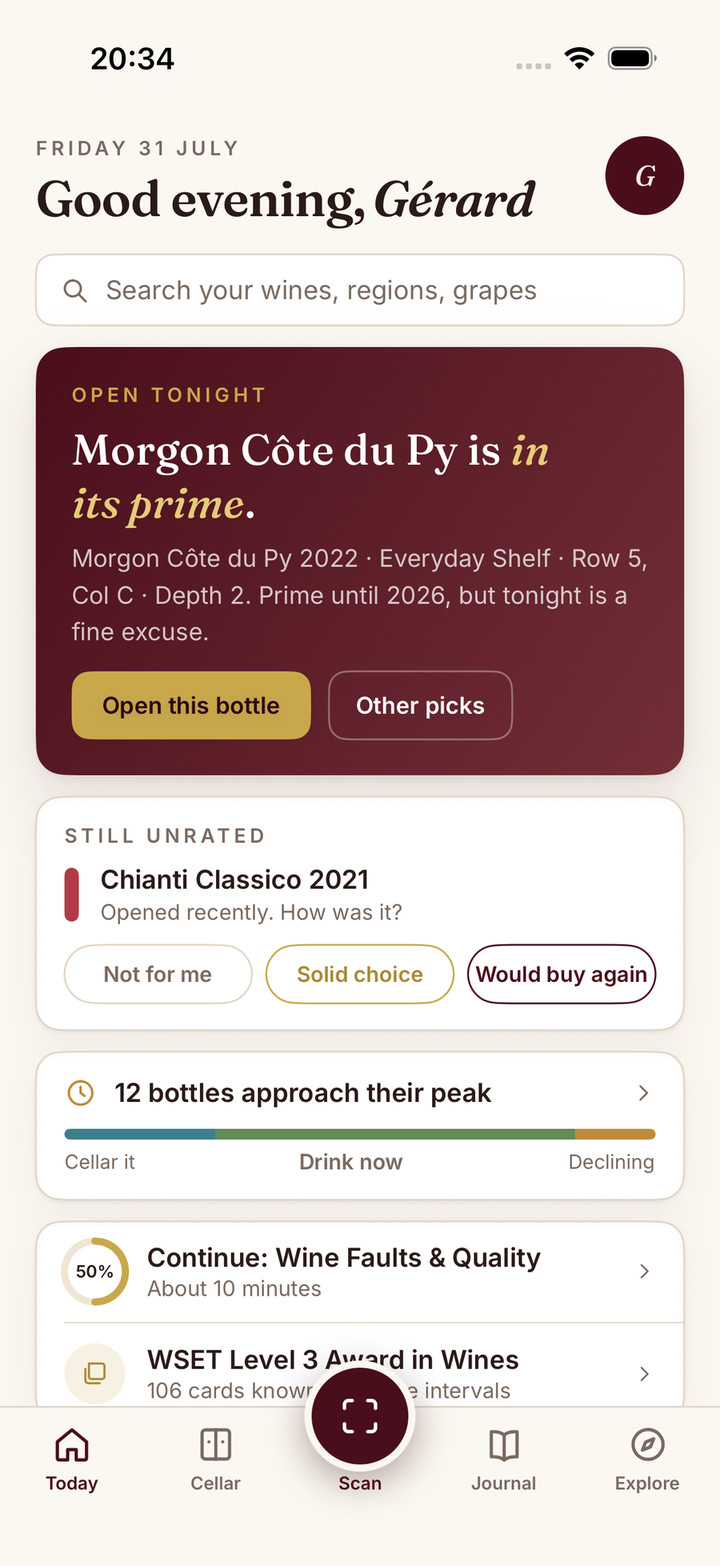
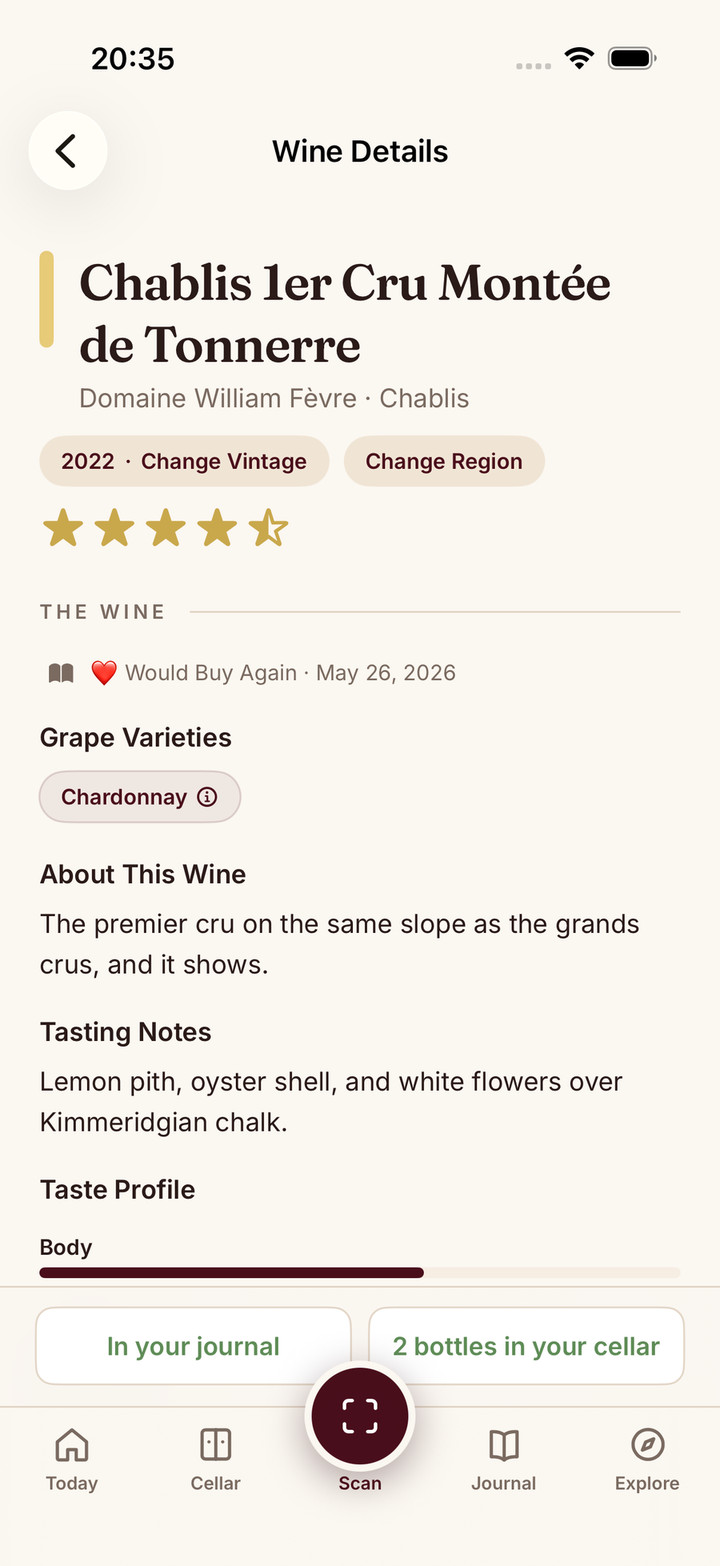
Sommo helps you track every bottle you taste, record your tasting notes, and build a personal wine journal that reveals your evolving preferences. Scan a label to log a wine instantly, compare your notes across regions and price points, and discover which styles of Merlot you enjoy most.
Download Sommo free and start your wine journey today.
Which Merlot should you buy?