What is the best free wine rating app?
Vivino is best for a fast crowd rating, CellarTracker for detailed community notes and a real cellar, Wine-Searcher for price research, Delectable for a professional-led feed, and Sommo when your own rating should join a journal, cellar, Taste DNA and private sharing.
Free wine apps do not all give away the same thing. One offers unlimited crowd ratings and makes money around shopping. Another gives away serious inventory but reserves valuations and enhanced drinking windows for subscribers. Another limits scans but connects the rating to a wider personal wine record.
The right question is not which app is free. It is which job stays useful before you pay.
The five picks
| App | Best free job | Strongest signal | Main limitation |
|---|---|---|---|
| Vivino | Scan a bottle and see crowd opinion | Scale and recognition | Ratings are broad averages; commercial shopping layer |
| CellarTracker | Read deep notes and track bottles | Serious collectors and vintages | Dense interface; premium valuation and window tools |
| Wine-Searcher | Find bottles and compare merchants | Price and availability | Not a personal tasting coach |
| Delectable | Follow wine professionals | Curated social discovery | Smaller ecosystem and fewer practical tools |
| Sommo | Rate and build one personal wine record | Journal, cellar, Taste DNA and private progress | Free scan allowance is limited |
1. Vivino: best free crowd rating
Vivino’s official app page describes more than 70 million users and billions of scanned labels. That scale is the reason to install it. In a shop, it can recognise a common bottle and show ratings, reviews and taste summaries within seconds.
The number is a popularity signal. It does not tell you whether a high-alcohol, oak-rich wine that pleases the crowd suits your lighter palate. Read notes from people whose preferences resemble yours and check the vintage. The Vivino alternative comparison covers the trade-offs in detail.
2. CellarTracker: best free depth
CellarTracker’s current subscription comparison confirms that free accounts can track inventory and access millions of community tasting notes and ratings. Paid features add wine prices, automatic valuation, enhanced drinking-window coverage and other collector tools.
The notes are often detailed and vintage-specific because the community skews serious. Choose it for a cellar or an older bottle, not because it is the prettiest way to log one glass. The CellarTracker comparison and cellar app ranking help decide whether that depth is necessary.
3. Wine-Searcher: best free price context
Wine-Searcher answers a different question: where is this bottle sold, and what does it cost? That context can keep a crowd score from becoming an impulsive purchase. Its free search is useful for ordinary shopping; advanced market data belongs to the paid product.
Do not mistake a listing count for quality or storage assurance. A merchant price needs shipping, tax, bottle condition and reputation around it. See Sommo versus Wine-Searcher for the clean division between shopping research and a personal wine record.
4. Delectable: best free professional feed
Delectable makes more sense when you want people rather than averages. Follow sommeliers, winemakers and writers, photograph a bottle and build a feed around palates you trust.
Its smaller community is a feature when curation matters and a weakness when you need instant consensus on an obscure supermarket label. It is discovery through voices, not exhaustive inventory.
5. Sommo: best free personal record
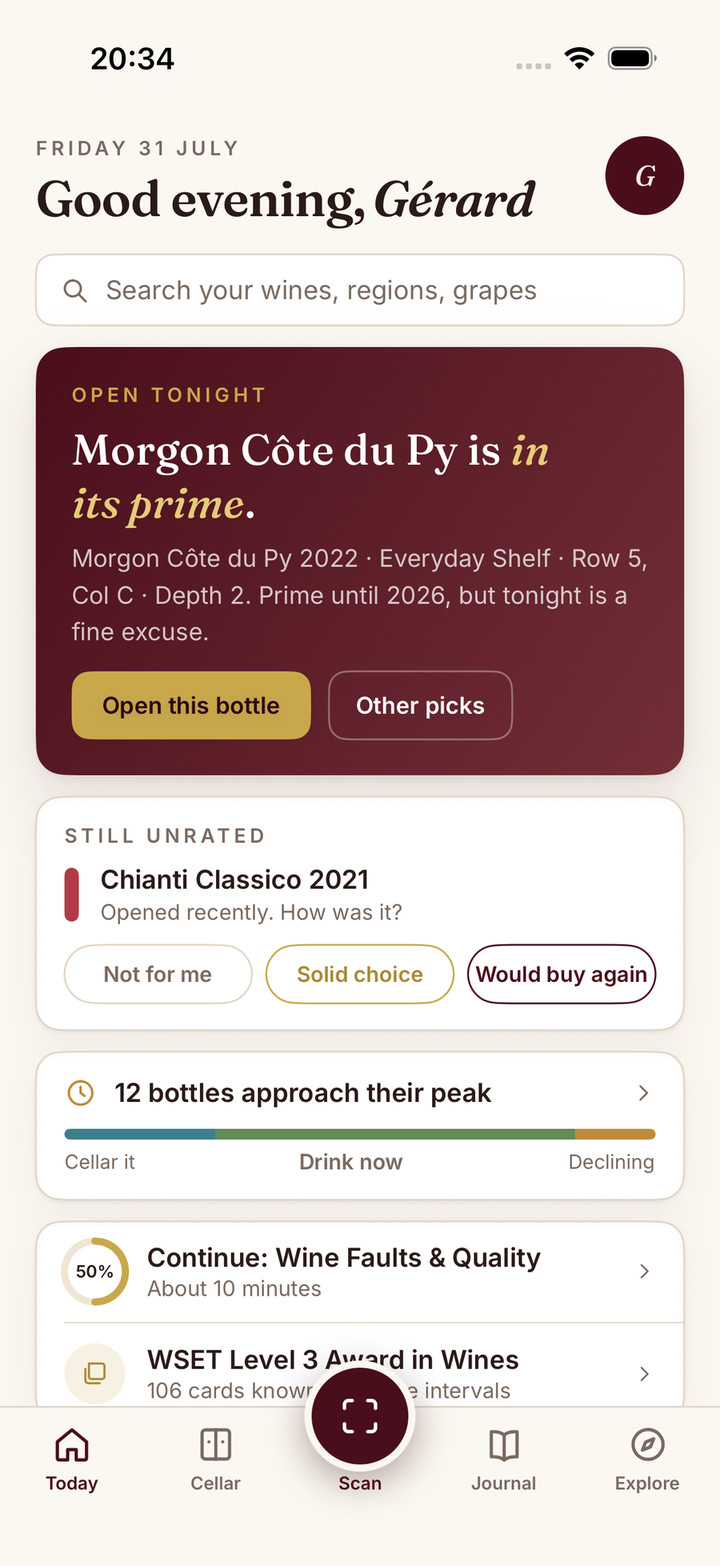
Full disclosure: Sommo is my app. The free tier is not designed to win on unlimited scan volume. It gives you a limited set of label scans, a 30-day journal, the wine atlas, WSET Level 1, free data export and the ability to join Sharing Parties and Mix Palate groups.
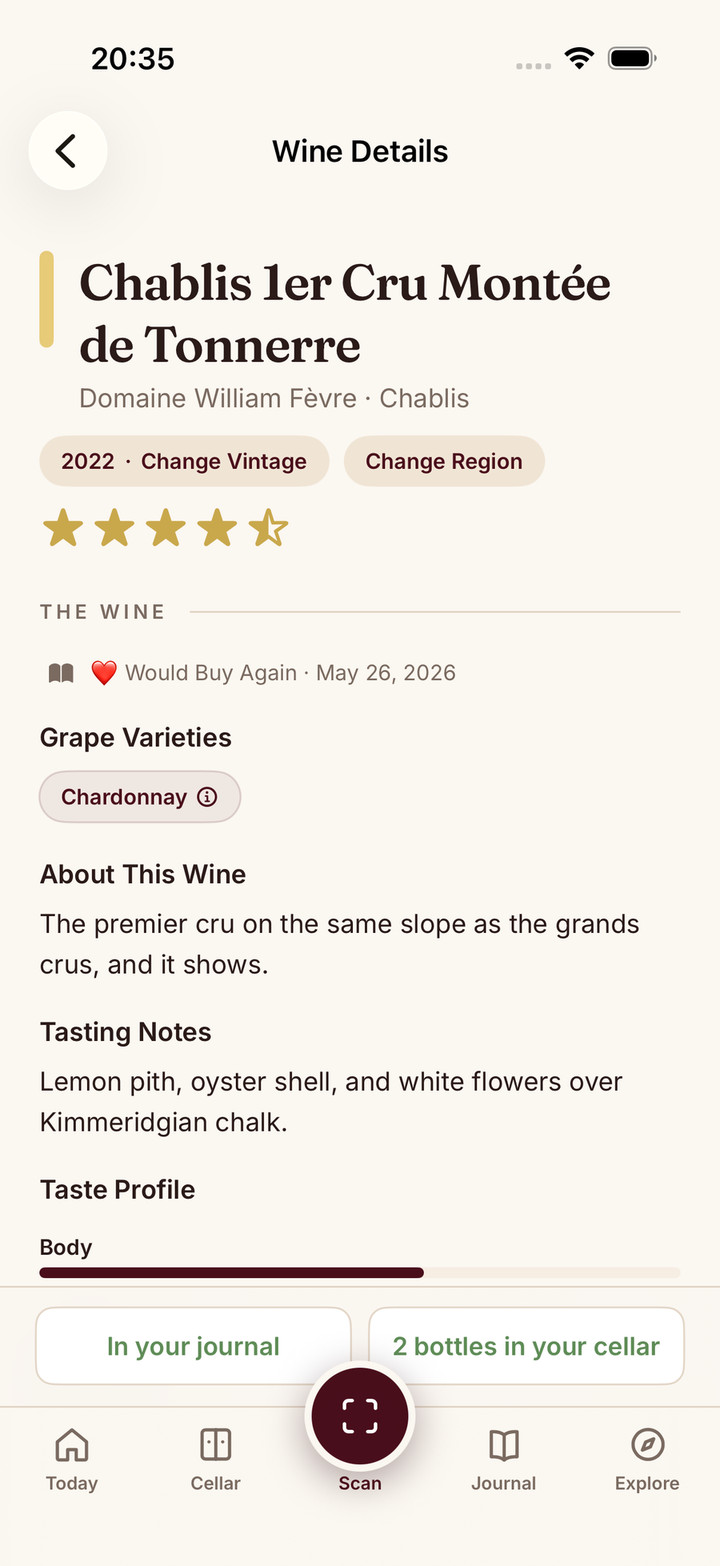
Instead of replacing your judgement with a crowd average, Sommo keeps a simple personal rating or structured note and connects it to the bottle’s place in your journal, cellar, food pairings, Taste DNA and shared tastings. There are no ads on either tier. The wine-sharing feature shows how a personal record can still become social on your terms.
How to read a wine rating
Check four things before trusting the number:
- Vintage: a label-level average may combine years that performed differently.
- Sample size: six ratings and six thousand ratings do not carry the same signal.
- Style bias: ripe, sweet-fruited and powerful wines often attract broad immediate approval.
- Your history: a 4.2 crowd bottle is irrelevant if every similar wine in your journal scored poorly.
The 90-point wine trap applies to app stars too. A score compresses a preference; it does not explain it.
The best free setup
If you shop often, pair Vivino or Wine-Searcher with a personal journal. If you have a large collection, CellarTracker can remain the inventory source. If you want fewer apps, begin with Sommo and test whether one connected record can cover the bottle after it leaves the shop: cellar, dinner, journal, friends and all.
The Untappd for wine guide focuses on check-ins and social features, while the broader best wine apps ranking covers paid value and platforms.
Try your own rating first
Hide the crowd number until after you write three words and a personal score. That one habit prevents consensus from becoming your palate. Download Sommo free and keep that judgement inside a wine life you own.
What should your free wine app do first?