What is the best Chardonnay under $30?
The best bottle depends on style. Choose Domaine Laroche Chablis for a steely, unoaked Chardonnay; Sonoma-Cutrer Russian River Ranches for a balanced oaked style; or Chilean unoaked Chardonnay for the safest value below $16. Decide between lean and creamy before choosing a producer.
Chardonnay is the most planted white grape on earth and the most misunderstood. Say the word and half the room pictures razor-sharp, mineral Chablis while the other half pictures a golden, oak-drenched California wine. Both are right, which is the problem.
The grape itself is fairly neutral. What you actually taste is a set of winemaking decisions: oak or steel, malolactic fermentation or not, lees contact or none. So the useful question is never “do I like Chardonnay” but “which Chardonnay do I like.” Start with the style table, then pick a bottle.
Chardonnay by style
| Style | What it tastes like | Classic regions | Price band |
|---|---|---|---|
| Unoaked and steely | Green apple, lemon, chalk, salt | Chablis (France) | $20 to $30 |
| Unoaked and fruity | Apple, pear, melon, clean finish | Mâconnais, Casablanca, Limarí | $10 to $18 |
| Balanced, lightly oaked | Stone fruit, hazelnut, gentle cream | Pouilly-Fuissé, Sonoma, Monterey | $18 to $30 |
| Rich and oaked | Pineapple, vanilla, butter, toast | Napa, Carneros, South Australia | $12 to $30 |
| Sparkling (blanc de blancs) | Citrus, green apple, brioche | Crémant de Bourgogne, Franciacorta | $18 to $30 |
The 10 picks at a glance
| Wine | Style | Price band | Best for |
|---|---|---|---|
| Domaine Laroche Chablis | Steely, dry, mineral | $20 to $28 | Oysters and raw shellfish |
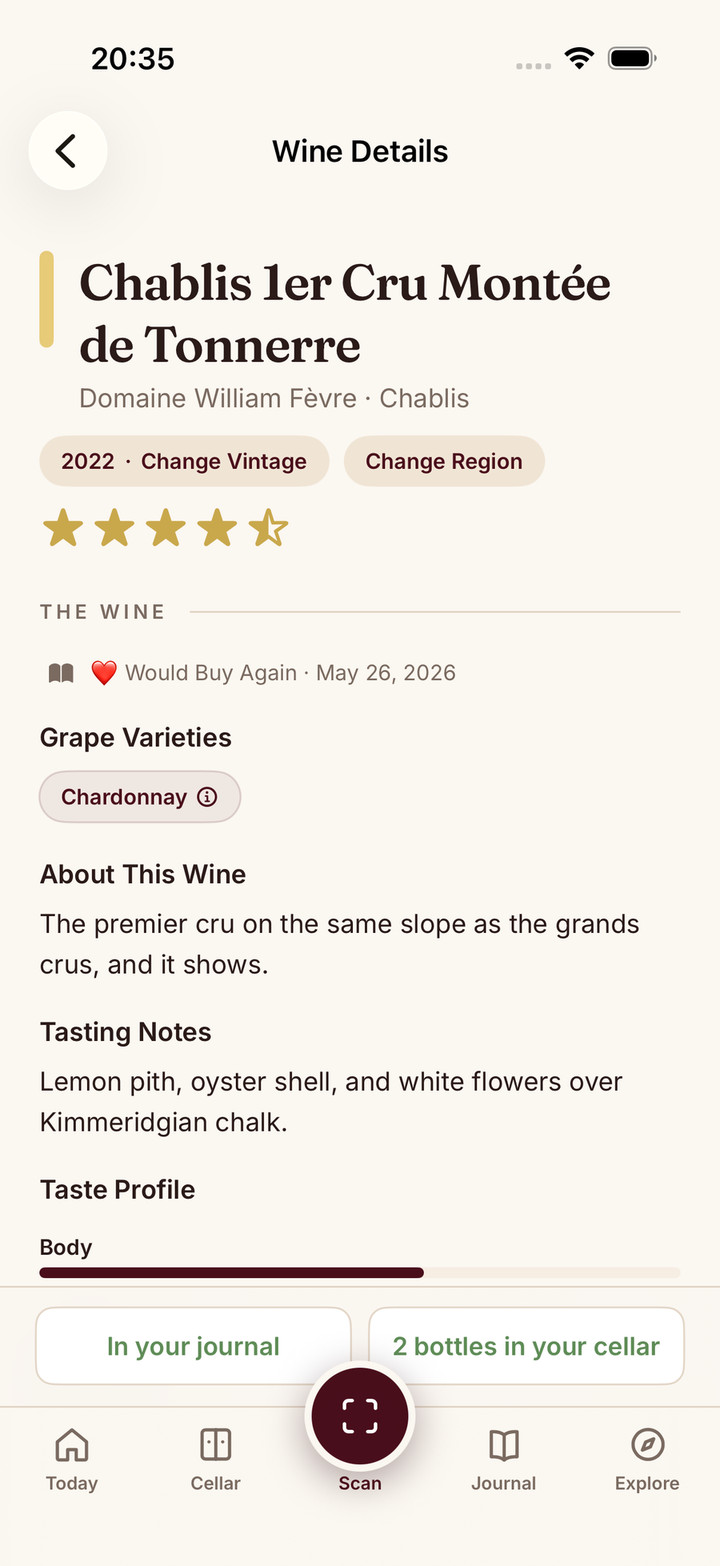
| Domaine William Fèvre Chablis | Precise, taut, saline | $22 to $30 | Understanding real Chablis |
| Louis Latour Mâcon-Villages | Light, apple, unoaked | $14 to $18 | Everyday white Burgundy |
| Chilean unoaked Chardonnay | Pure, clean, fruit-driven | $10 to $16 | The cheapest safe buy |
| Louis Jadot Pouilly-Fuissé | Balanced, nutty, ripe | $22 to $30 | The classic middle ground |
| Talbott Kali Hart, Monterey | Bright, citrus, light oak | $18 to $24 | California without the weight |
| Sonoma-Cutrer Russian River | Rounded, apple, hazelnut | $25 to $30 | The best all-rounder here |
| Kendall-Jackson Vintner’s Reserve | Tropical, soft, vanilla | $12 to $16 | Crowd-pleasing richness |
| Penfolds Koonunga Hill | Melon, peach, gentle oak | $11 to $15 | Cheap oaked Chardonnay done right |
| Crémant de Bourgogne blanc de blancs | Sparkling, citrus, brioche | $18 to $26 | Champagne flavor, lower price |
How I picked these
These are wines and categories that stay on shelves. Chardonnay is a grape where a single producer’s style holds steady across vintages, so naming reliable houses is more useful here than in most value guides. Where no producer is named, the region does the work: any competent Chilean unoaked Chardonnay or Crémant de Bourgogne blanc de blancs will land close to the description.
Price bands are checked monthly against typical US retail; the last pass was 24 July 2026. Availability and duty vary by state, so treat the bands as guidance rather than a promise.
Unoaked and steely
1. Domaine Laroche Chablis ($20 to $28)
If you think you dislike Chardonnay, start here. Steely, bone-dry, and mineral, with green apple, lemon zest, and a chalky finish. No oak, no butter, no padding. The Kimmeridgian limestone of Chablis does the talking. Superb with oysters.
2. Domaine William Fèvre Chablis ($22 to $30)
Fèvre is a Chablis benchmark and even the village-level bottling is excellent: crisp green fruit, white flowers, oyster shell, and a taut, precise finish. Slightly more generous than Laroche but still firmly lean. Taste the two side by side and you will learn more about minerality than any article can teach you.
Unoaked and fruity
3. Louis Latour Mâcon-Villages ($14 to $18)
The Mâconnais is Burgundy’s best-kept secret for value white. Latour’s version is clean and fruit-driven, all ripe apple, pear, and white peach, with no oak and bright acidity. Straightforward, honest, and very easy to drink.
4. Chilean unoaked Chardonnay ($10 to $16)
Casablanca and Limarí are cooled by Pacific fog and cold currents, and their unoaked Chardonnay gives pure apple, pear, and citrus with a clean finish. This is the cheapest place to buy real varietal character. It also appears on the list of the best white wines under $15.
Balanced and lightly oaked
5. Louis Jadot Pouilly-Fuissé ($22 to $30)
Pouilly-Fuissé is the Mâconnais at its most serious, and Jadot’s is a reliable benchmark: ripe peach and white nectarine, a hint of hazelnut, subtle oak, medium body, and a clean, persistent finish. This is the middle ground between austerity and richness, and a proper introduction to white Burgundy without premier cru money.
6. Talbott Kali Hart Chardonnay, Monterey ($18 to $24)
Monterey’s cold marine air makes a California Chardonnay that leans toward elegance rather than power. Citrus and green apple with subtle tropical notes, gentle oak, and a refreshing finish. This is the bottle to pour for someone who insists they hate California Chardonnay.
7. Sonoma-Cutrer Russian River Ranches ($25 to $30)
California with genuine restraint. The Russian River Valley’s fog shows in bright apple and citrus alongside hazelnut and wet stone. Barrel-fermented but not heavy-handed. It has New World generosity with an Old World spine, and it is arguably the best single bottle in this price range. More on the area in the Sonoma County guide.
Rich and oaked
8. Kendall-Jackson Vintner’s Reserve ($12 to $16)
America’s best-selling Chardonnay, and there is a reason. Ripe tropical fruit, mango and pineapple, with vanilla and a soft, round texture from oak aging. It is not trying to be Burgundy and never pretends otherwise. Remarkably consistent vintage to vintage.
9. Penfolds Koonunga Hill Chardonnay ($11 to $15)
Penfolds built its name on Shiraz, but the entry-level Chardonnay is quietly excellent: melon, peach, and citrus with gentle oak and a soft finish. Generous without being heavy, and the best value in the oaked category.
If you want the full-throttle version of this style, Rombauer Carneros Chardonnay is the reference point: golden, buttery, and unashamedly rich. It usually sits just above $30, so it sits just outside this list, but it is worth knowing as the far end of the spectrum. The guide to oaked versus unoaked wine explains what the barrel is actually doing.
Sparkling
10. Crémant de Bourgogne blanc de blancs ($18 to $26)
Blanc de blancs means 100% Chardonnay. In Champagne that bottle starts well above $45, but Crémant de Bourgogne is made from the same grape in the same region by the same traditional method, and costs half as much. Expect citrus, green apple, and a light brioche note from lees aging. Franciacorta from Lombardy is the Italian equivalent, usually from $25 upward. More context in the sparkling wine guide.
Stepping up: best Chardonnay under $50
Between $30 and $50 the grape starts repaying serious money. In Burgundy that budget moves you from the Mâconnais into village-level bottles from named communes, where the extra spend buys better sites and more careful oak. In California it buys single-vineyard Russian River Valley fruit rather than blended appellation wine, with the fog-cooled balance that Sonoma-Cutrer hints at lower down. In Australia it opens up Margaret River, arguably the New World’s most consistent Chardonnay region, where the top estates sit comfortably in this band. Rombauer Carneros, the full-throttle buttery reference mentioned above, also lives just past $30. The step up is real, but it refines the styles on this list rather than replacing them.
Getting the most out of it
Serve it warmer than the fridge. Lean Chablis-style wines show best around 50 to 54°F; richer oaked bottles around 54 to 57°F. Ice-cold Chardonnay tastes of nothing. The serving temperature chart has the full range.
Match the style, not the grape. Unoaked with shellfish and light fish. Lightly oaked with roast chicken, creamy pasta, or pork. Full oaked with lobster, rich sauces, or mild curry.
Do not age it. At this price, drink within one to three years of the vintage.
Give the grape a second chance. If you have only had buttery California Chardonnay, buy Chablis. If you have only had steely French Chardonnay, buy Sonoma-Cutrer. It is the same grape and a completely different drink.
Regions to watch
- Limoux, France: high-altitude vineyards in the far south making surprisingly cool-climate Chardonnay
- Adelaide Hills, Australia: refined and citrus-driven, cooler than most of the country
- Casablanca Valley, Chile: coastal fog, bright fruit, excellent prices
- Willamette Valley, Oregon: better known for Pinot Noir, increasingly serious about Chardonnay
- Margaret River, Australia: arguably the New World’s most consistent Chardonnay region
Where Chardonnay sits next to other whites
Chardonnay is the most textural of the mainstream white grapes, which is exactly why it divides people. If you want more aromatic lift and racier acidity, Riesling versus Chardonnay lays out the trade-off. If you want something lighter and simpler for everyday pouring, Chardonnay versus Pinot Grigio covers the difference. And if herbaceous, zesty whites are more your thing, compare it with Sauvignon Blanc.
Track your own results with Sommo: scan the label, record what you tasted, and build a map of the producers and styles that actually suit you. See how it compares in the roundup of the best wine apps for 2026. And if telling Chablis from Carneros blind sounds like fun, the WSET Level 2 grape varieties quiz makes a sport of it.
Which Chardonnay should I open tonight?